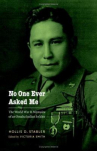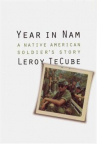
November is Native American Heritage Month, a time to celebrate the cultures, histories, traditions, and achievements of Native people. We also honor veterans this month, on November 11. This is the perfect time to honor the Native Americans who have fought for the United States in every major American war since the Revolutionary War. They volunteered to fight in World War I despite the fact that the United States Congress did not grant citizenship to all Native Americans until 1924. They have continued to serve and honor the Native tradition of protecting their land and their people.
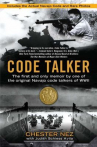
Perhaps the most famous Native American veterans are the code talkers. During World War I, Choctaw soldiers transmitted battle messages by telephone in order to secure communications from German intelligence who were tapping phone lines. This tactic was repeated during World War II. Comanches, Choctaws, Hopis, and Cherokees transmitted messages in their native languages. The U.S. Marine Corps recruited Navajos to create a complicated secret code using the Navajo language and word substitution. This code had to be committed to memory and had to be transmitted under great pressure. The Navajos served with the Marines in the Pacific Theater, transmitting messages. Six Navajo code talkers worked round the clock during the Battle of Iwo Jima, transmitting messages without error. The Navajo code was never broken by the Japanese, and the code talkers were widely credited for helping to secure the American victory at Iwo Jima.
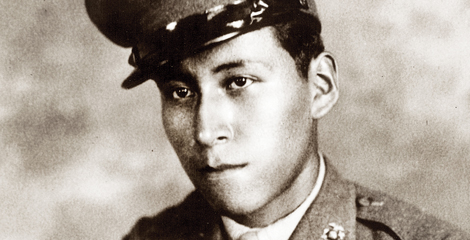
Numerous Native Americans have been awarded the Medal of Honor, the military’s highest decoration. Medal of Honor recipients shows extreme courage and self-sacrifice at risk of their own life, beyond the call of duty. One of these heroes was Corporal Mitchell Red Cloud, a Winnebago from Wisconsin. Red Cloud served with Company E in the Korean War. One dark night in 1950, Red Cloud was maintaining a listening post atop a ridge. Chinese forces snuck up on Company E from the rear, killing many soldiers in their sleep. Red Cloud sounded the first alarm and began firing at approaching troops. He was eventually shot and fell wounded. Refusing help, he got up and continued firing at Chinese troops until he was killed. He was posthumously awarded the Medal of Honor for his bravery and for preventing the enemy from overrunning Company E. The anniversary of Red Cloud’s death falls during this month, on November 5. Mitchell Red Cloud is just one of many Native American veterans who deserve to be remembered and recognized.
This tradition of service will soon receive official national recognition. In 2013, the United States Congress charged the National Museum of the American Indian, a Smithsonian Museum in Washington, D.C., with creating a National Native American Veterans Memorial. The Honorable Ben Nighthorse Campbell, a Cheyenne veteran, and Chickasaw Nation Lieutenant Governor Jefferson Keel are heading an advisory committee of tribal leaders and veterans. The goal is to open the Memorial at the National Mall on Veterans Day, 2020. The Native American Veterans Memorial will take its place near the Korean War Veterans Memorial, the Vietnam Veterans Memorial, and the World War II Memorial.

Recommended Reading