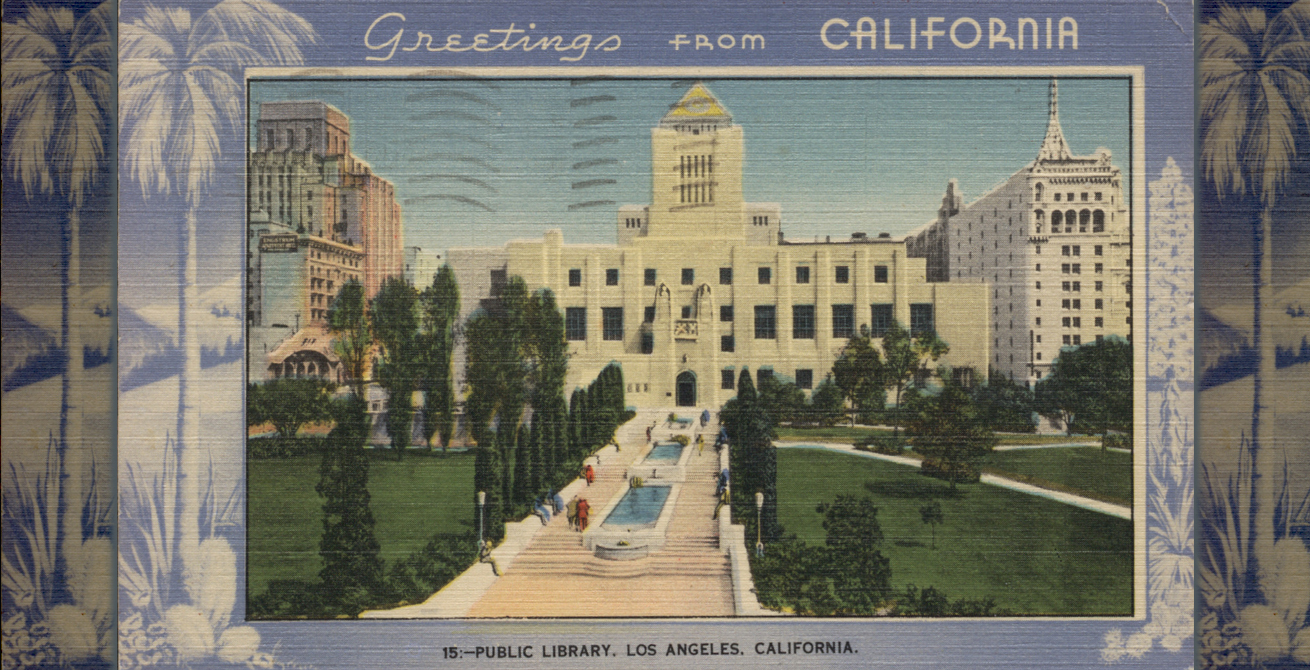
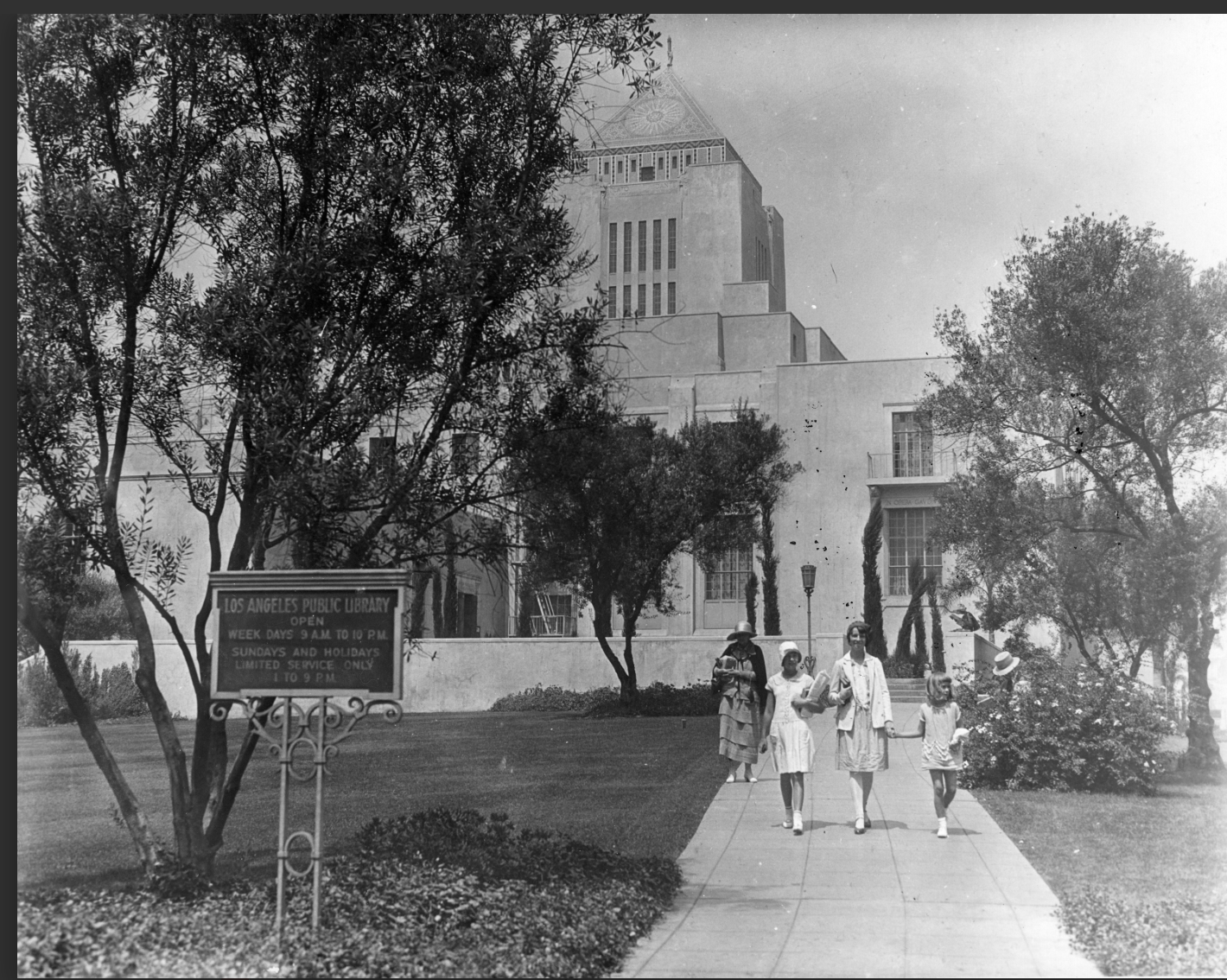
When Central Library opened in July 1926, the press spoke of lawns (east and west), a Grand Terrace, and Library Park. Today, we can see the beauty of the Maguire Gardens, but we no longer have a mental image of the Library's original landscaping. But what lovely and manicured spaces they were!
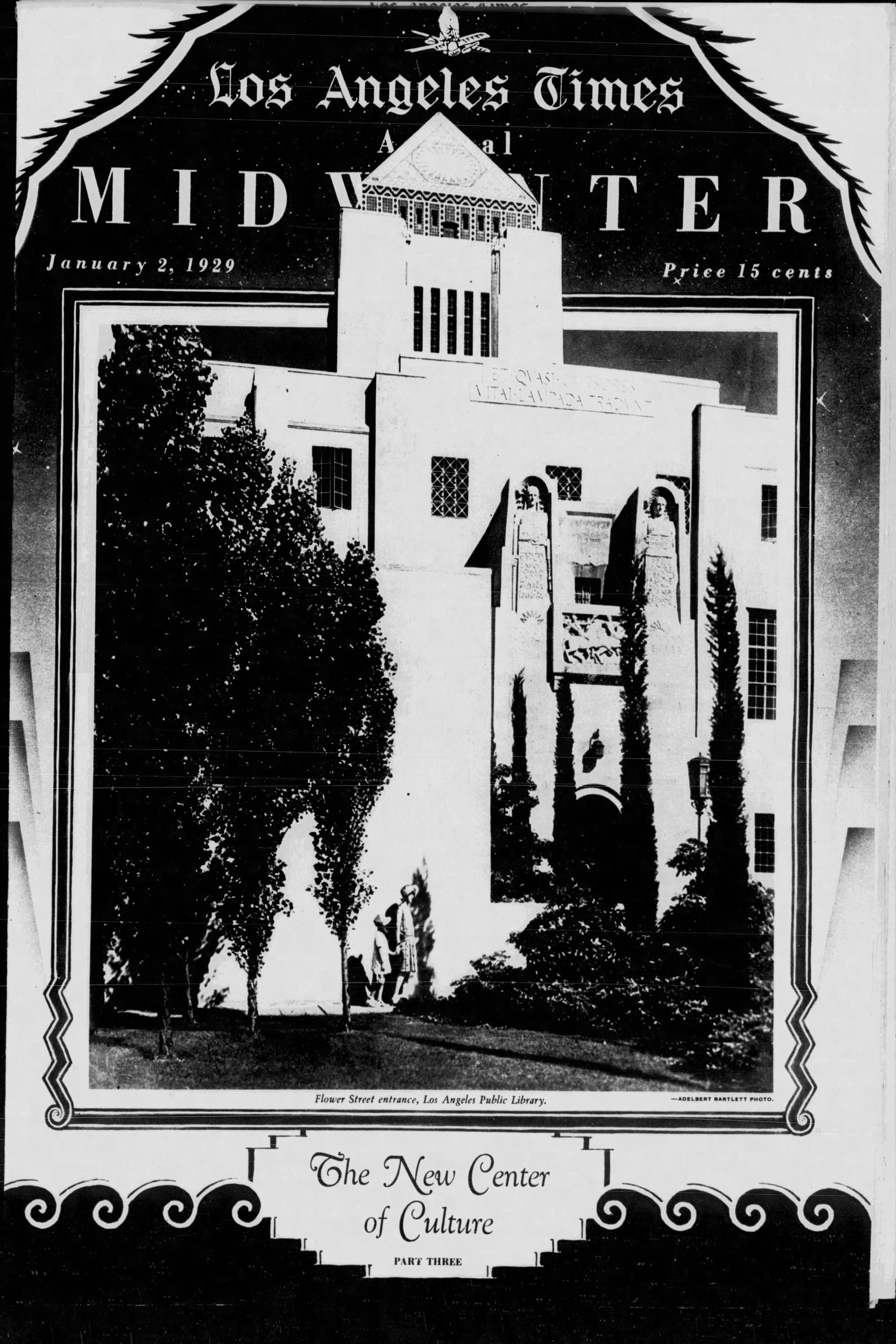
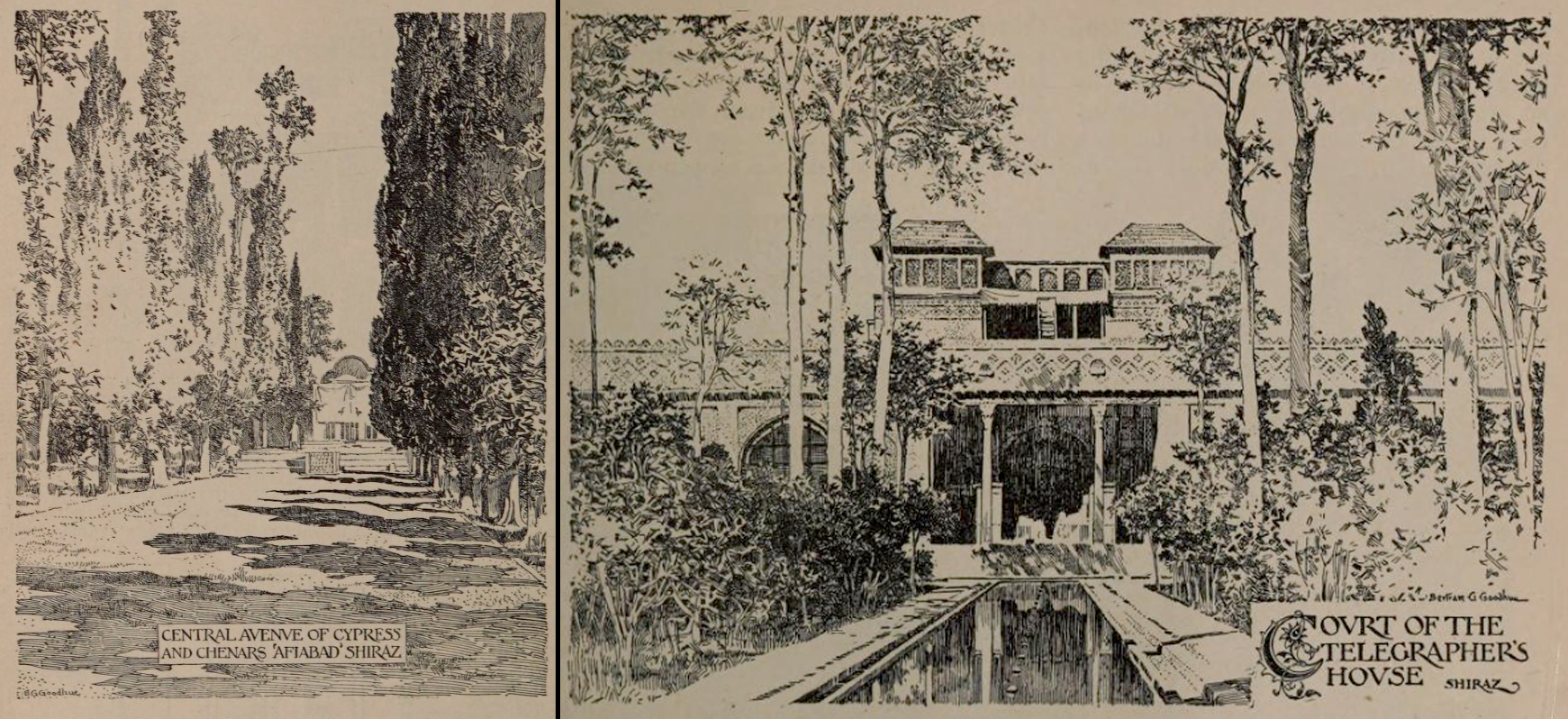
Originally, the west (Flower Street) and east (Grand Street) sides of the Library had extensive landscaping. The pools and walkways up to the Flower Street entrance that you see today are part of a 1993 project known as Spine, by the artist Jud Fine, and are not original to 1926. The Flower Street side was originally graced with similar three-tiered tile pools with walkways on either side that led from Flower Street up to the Library's western entrance, which architect Carleton Winslow called "architecturally the chief entrance." The walkways alongside the tiled pools were lined with Italian Cypress. These were likely inspired by trips that architect Bertram Goodhue took to Europe and the Middle East. He wrote of one trip to visit Persian gardens in the March 1907 issue of Century Magazine. He described the shadows made by trees, the "lordly" Cypress, and beautiful Persian pools that are "shallow, lucent, and motionless." However, the Library's pools were not always motionless.
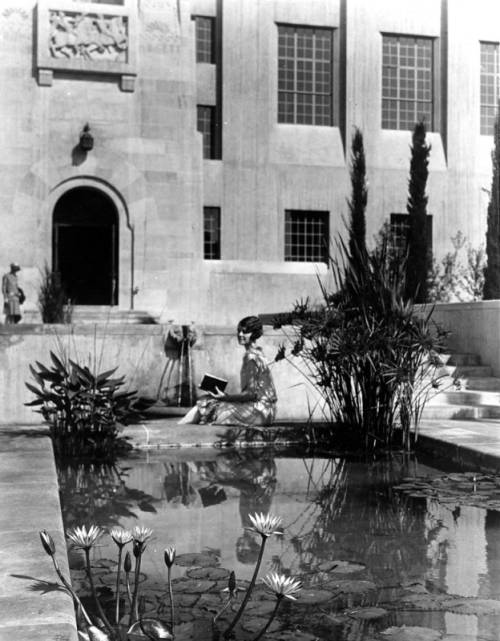
Lily ponds and water gardens were a Southern California trend in the early twentieth century. City Librarian Everett Perry was approached by at least two firms about the possibility of converting the tiered pools into a water garden. Charles P. Hayes of Sunny Slope Water Gardens ultimately won the bid to outfit the Library's pools. He proposed "five varieties of water lilies, approximately one hundred goldfish of various varieties, and oxygenating plants such as Anacharis, Vallisneria, and Myriophyllum" as well as the satisfactory care and maintenance of the pools for one year. Ultimately, the Library's gardeners were tasked with maintaining the water garden along with all of their other duties of keeping the grounds beautiful. It's unknown how long the pools actually contained the plant life.
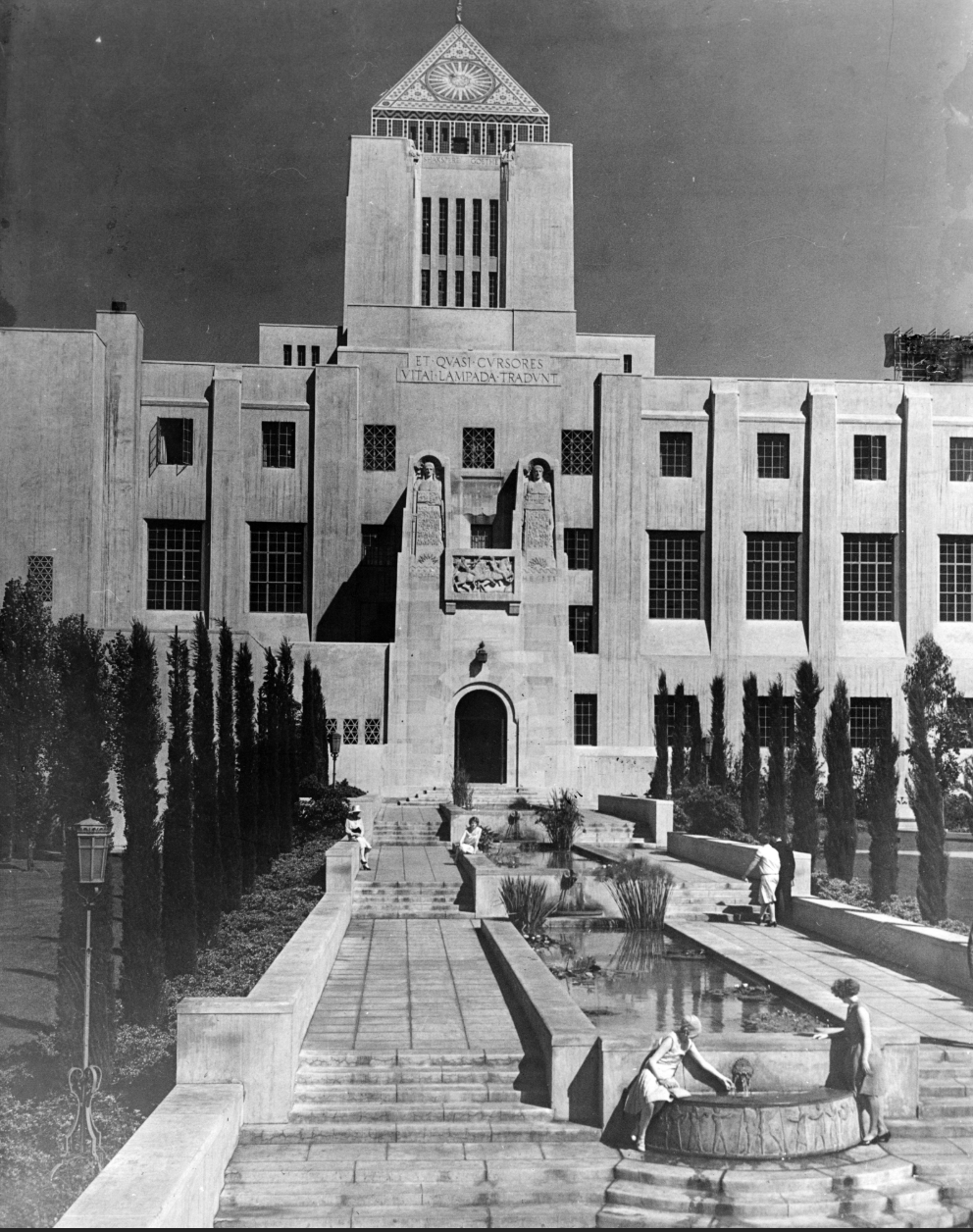
The Well of the Scribes can be seen in the foreground, read about its mystery here.
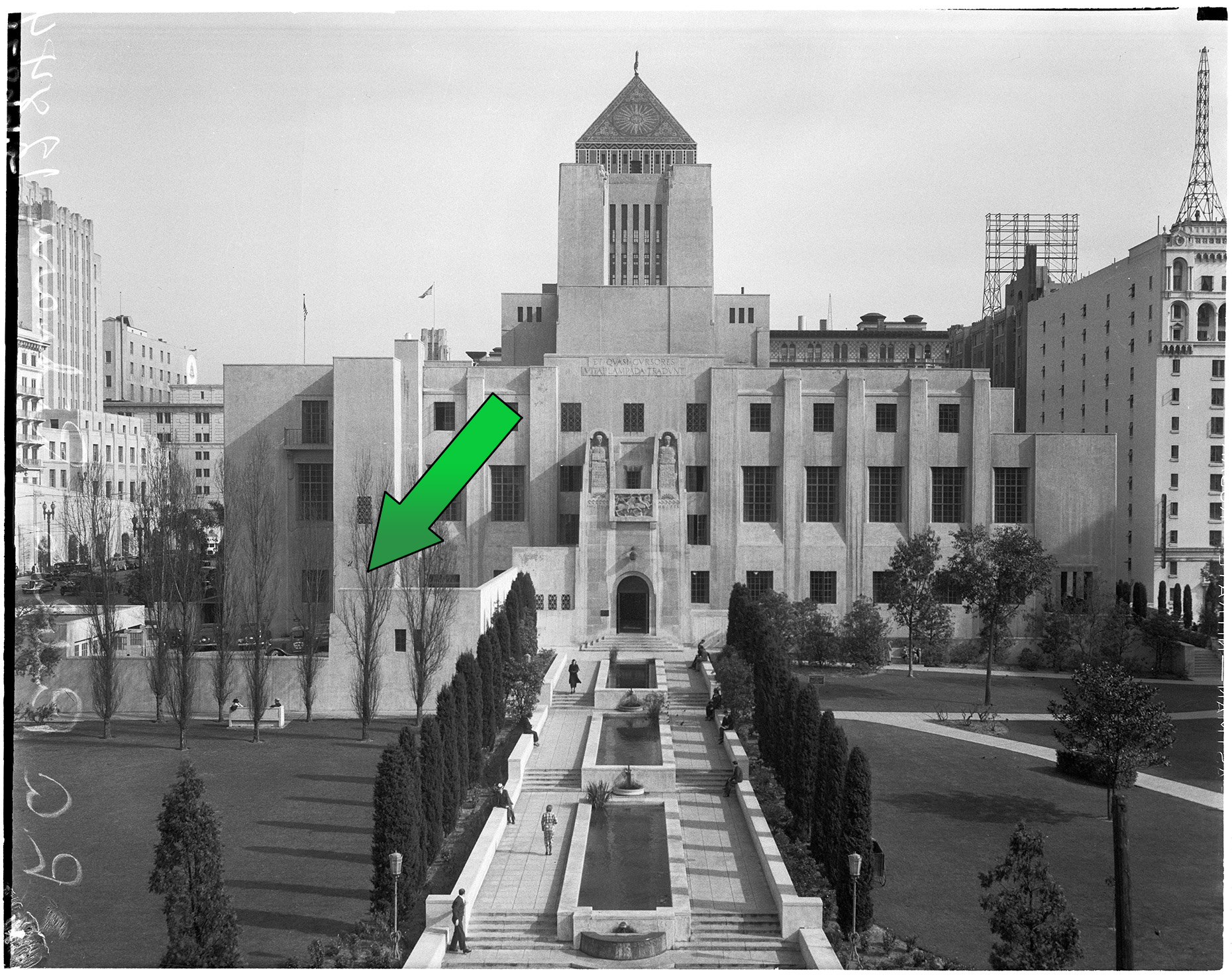
Historic photos of the Flower Street side of the Library have always had me wondering, what was hiding behind the walled area that was north of the entrance? Turns out that it was a service yard and garages for library vehicles, including the trucks that delivered books requested from the branches. By 1930, the fleet of library vehicles had increased, and more garages were built within the service yard.
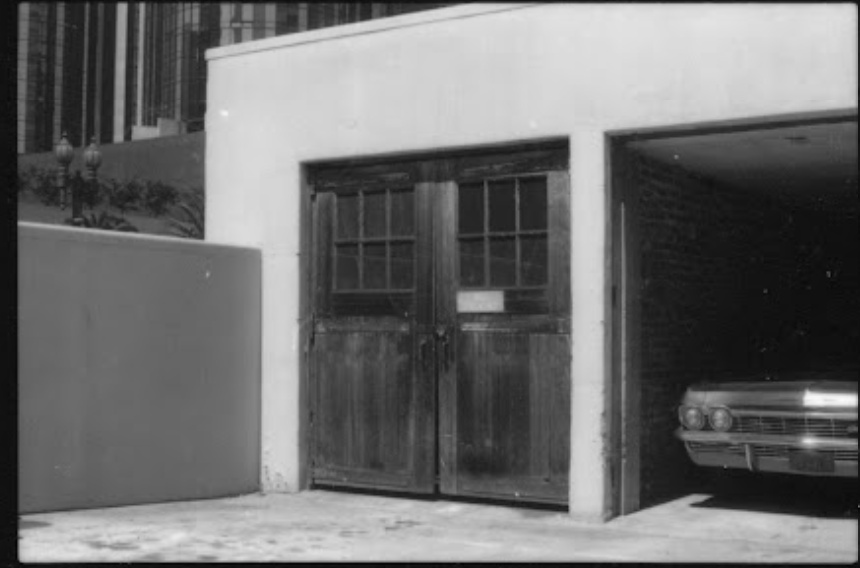
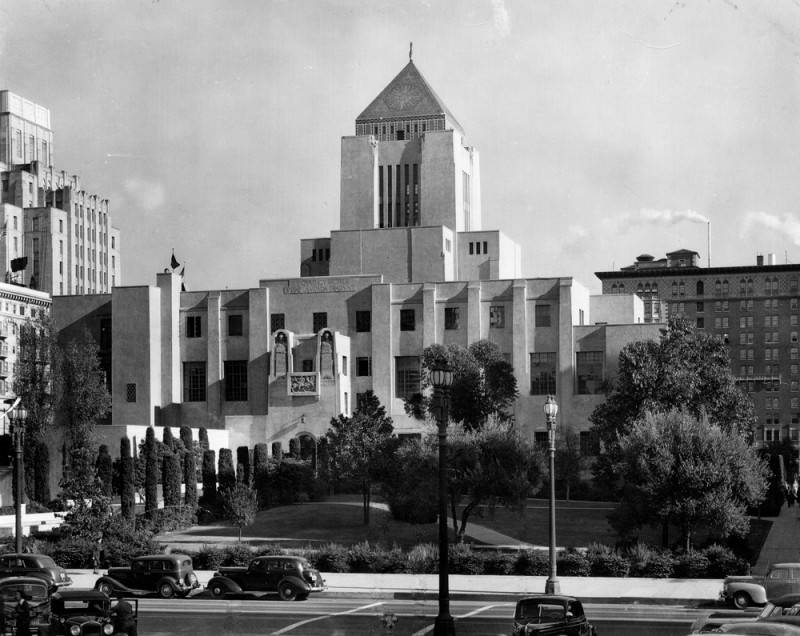
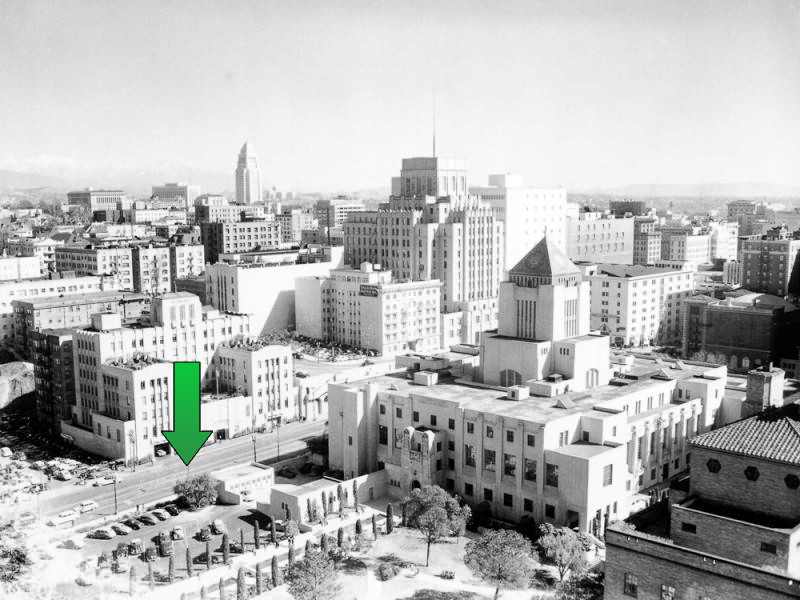
Today, there is a parking lot below the Library, but that wasn't always the case. Staff and patrons who drove once had to rely on street parking or paid parking lots, which filled up quickly in the downtown area. Railway lines no longer stopped in front of the Library as they did during Central Library's early days. In 1947, staff requested that the Library Board of Commissioners look into adding a parking lot for staff and patrons. The solution was to tear up the landscaping on the northwest corner of the library grounds that extended from behind the service yard all the way to Flower Street. This 1947 parking lot construction meant the removal of a grove of Lombardy Poplar trees that were planted in memory of longtime Board of Library Commissioner member Frank Hervey Pettingell shortly after he died in May 1926. Pettingell was very invested in the realization of the Central Library and was even master of ceremonies at the laying of the cornerstone. Sadly, he didn't live to see Central's dedication.
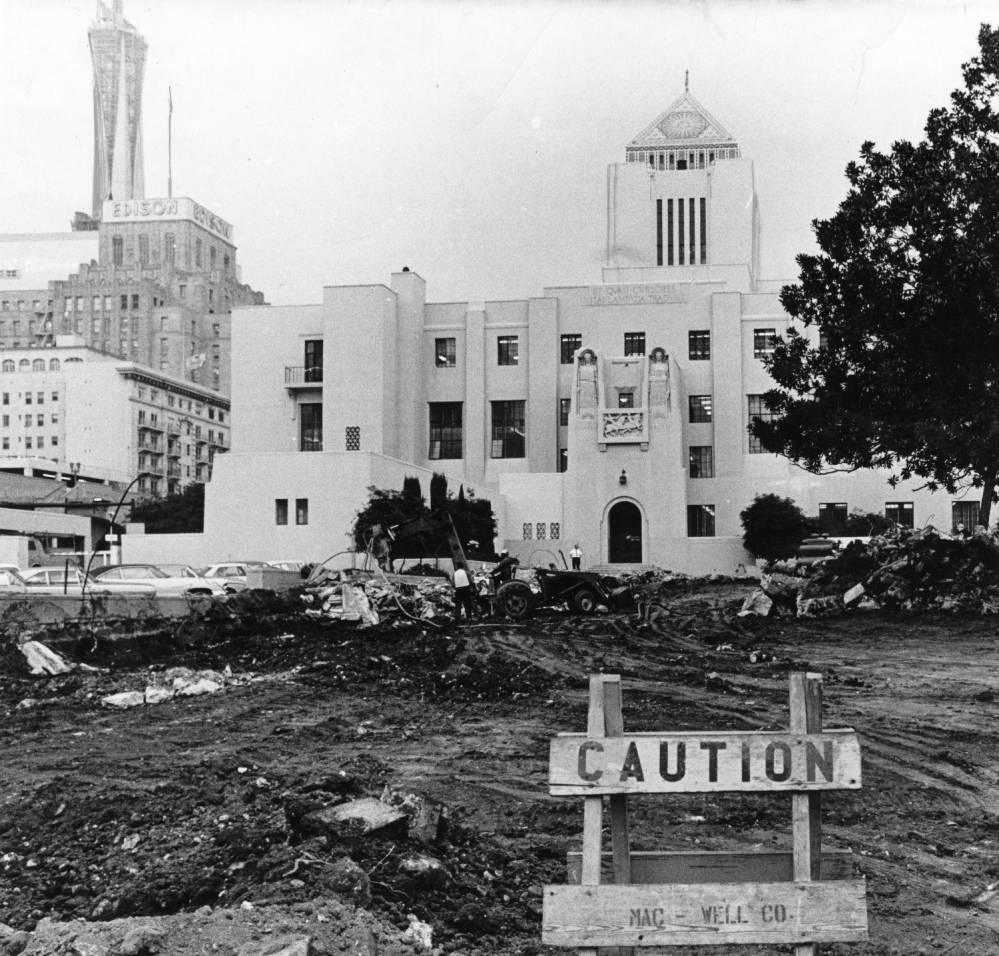
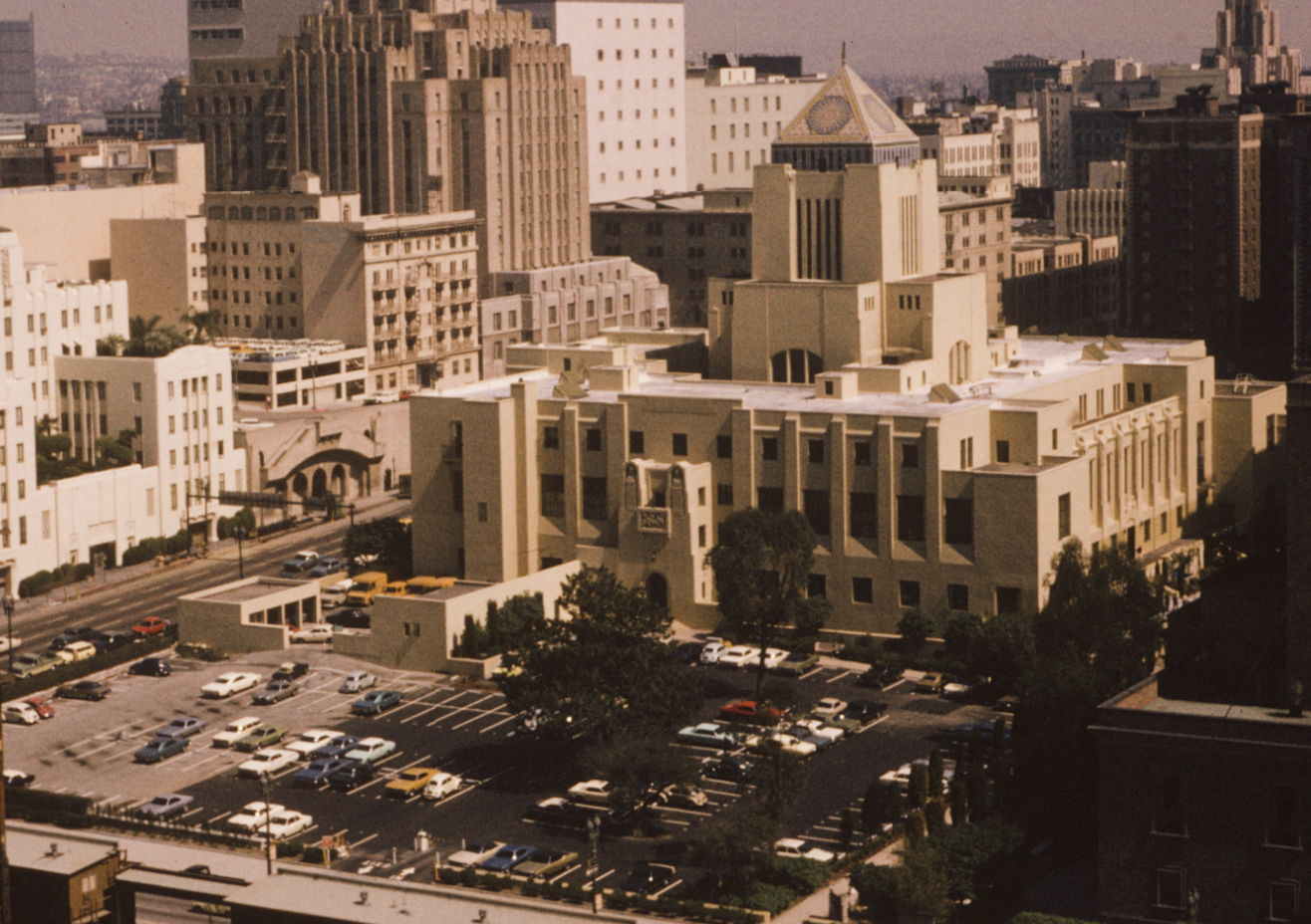
Eventually, the parking lot was enlarged, which meant the destruction of the tiered pools, Italian Cypress-lined walkways, limestone benches, and lampposts designed by associate architect Carleton M. Winslow. On the positive side, staff who drove to Central Library were no longer paying $30 a month (approximately $250 per month today) to park many blocks away from the Library. On the negative side, it was a literal example of paving over paradise for a parking lot. This lot was eventually moved underground and replaced by a 1993 restoration of the original landscaping concept, updated with modern fountains, and known today as Maguire Gardens. (Learn more about Maguire Gardens here.)
I've come to take a deep personal interest in the success of this building—
I would make of it a charming oasis hemmed in by its lines of busy—too busy streets.—Architect Bertram Goodhue in a letter to Los Angeles City Librarian Everett R. Perry, date unknown. Reprinted in Handbook of the Central Building Los Angeles Public Library (1927) via California Index on TESSA
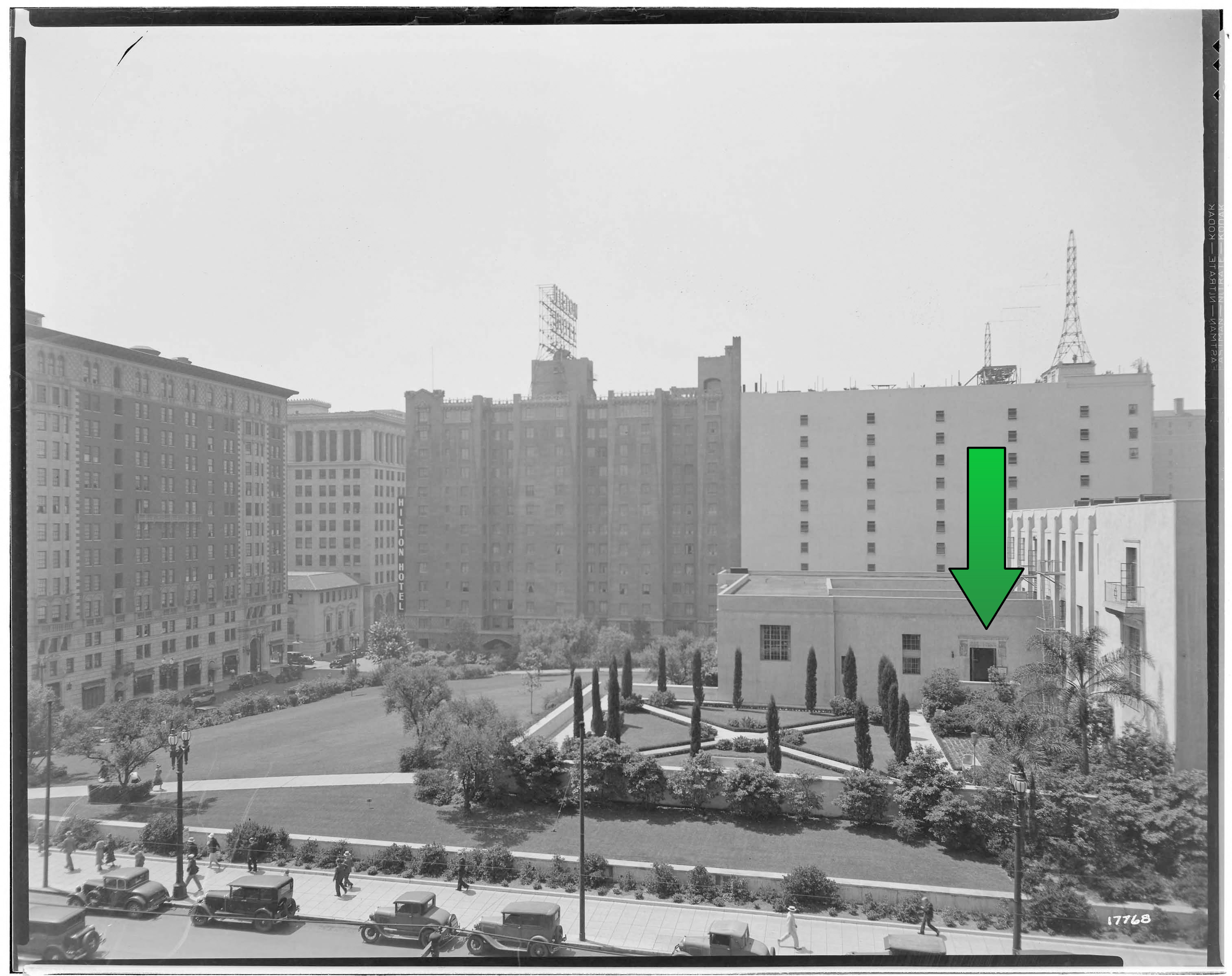
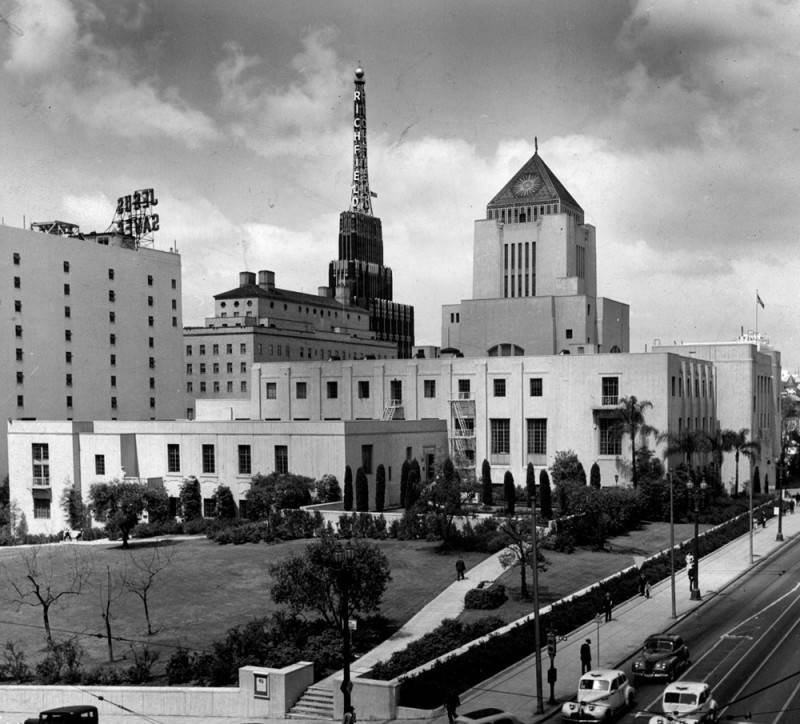
While most postcard views of the Library (and there have been a lot of postcards of the Library!) focus on the Flower Street entrance, historic photos reveal an elaborate park-like lawn on the Library's east side. The Grand Avenue side, also known as the east lawn and informally as Library Park, appeared from the photos to have a large variety of plants, walkways, and patios. Olive trees are among the trees that dotted the east lawn, and 8-foot-long Indiana limestone benches sat alongside the walkways. There was also a low-walled terrace, known as the Garden Terrace or the Northeast Terrace, that was planted with Italian Cypress and shrubbery. Today, this terrace area is covered by Central Library's Tom Bradley Wing.
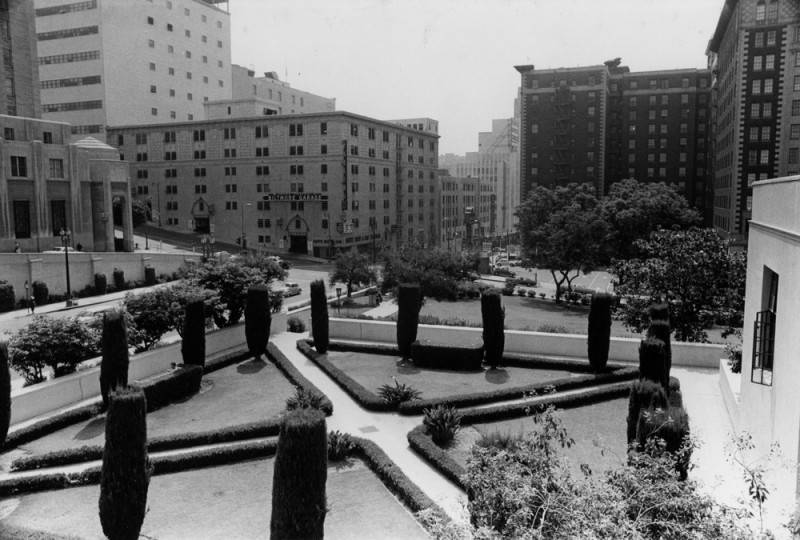

The hotel is known as the Hilton Checkers today.
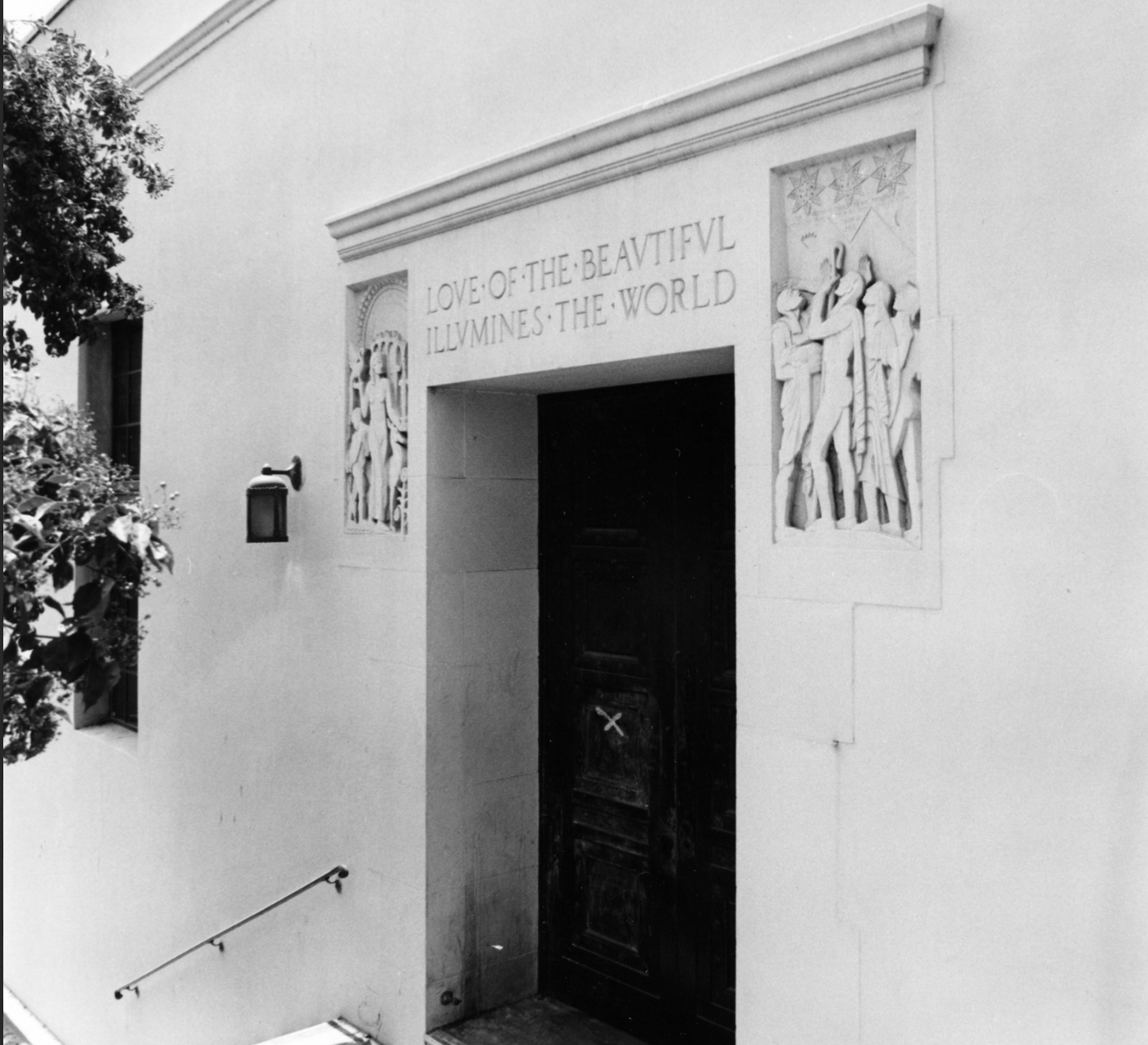
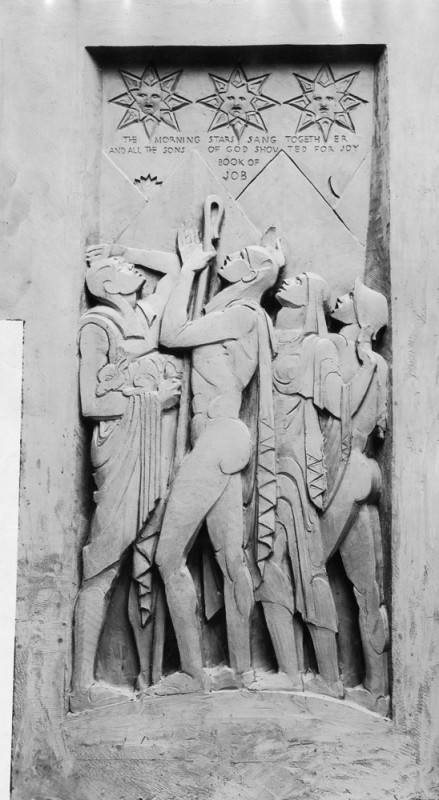
The Garden Terrace held one of two entrances to the Library that were accessible from the east lawn, and that entrance proved the most elusive to find information about. A search of the photo collection revealed a doorway flanked by carved panels depicting art and music, and featuring verses from Job and Psalms. Over the door was carved the sentiment "Love of the Beautiful Illumines the World." The door, which no longer exists, once led you into the main floor of the Library (which was actually the second floor), where you could easily access the original Music and Art Departments.
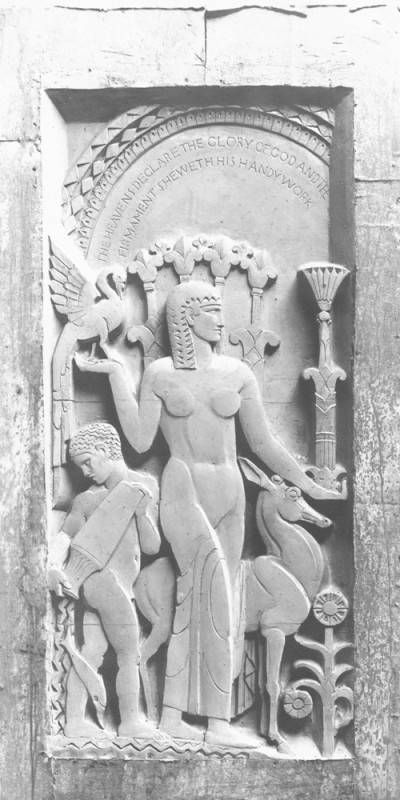
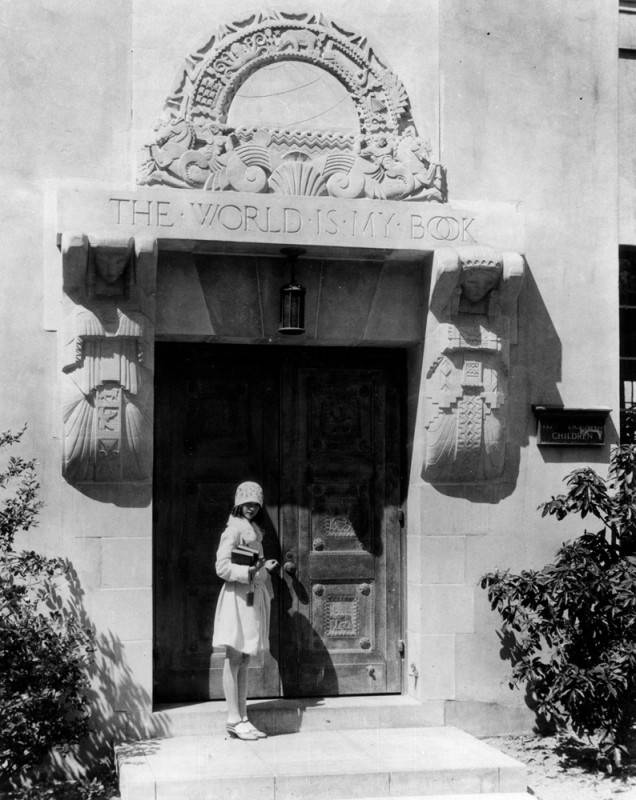
The second library entrance on the Grand Avenue side of the Library was the beautifully carved doorway to the children's room. The children's entrance, designed by Lee Lawrie and carved by Edward Ardolino, like the other Library entrances, was carved after the Garden Terrace entrance was completed. When the Bradley Wing was built, the children's room doors were relocated to the entrance of the Mark Taper Auditorium, where they remain today. (You can read more about the Library's six historic entrances here.)
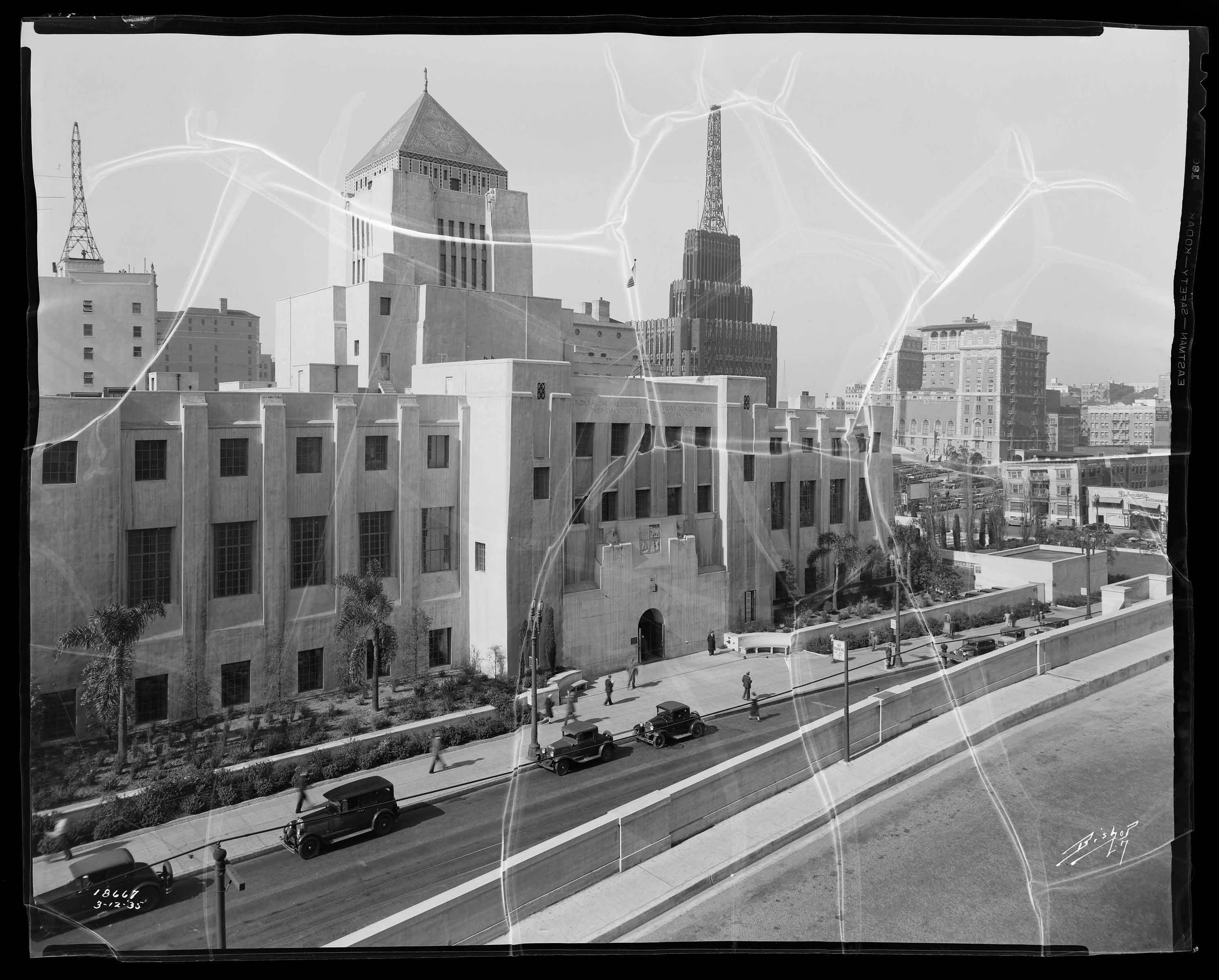
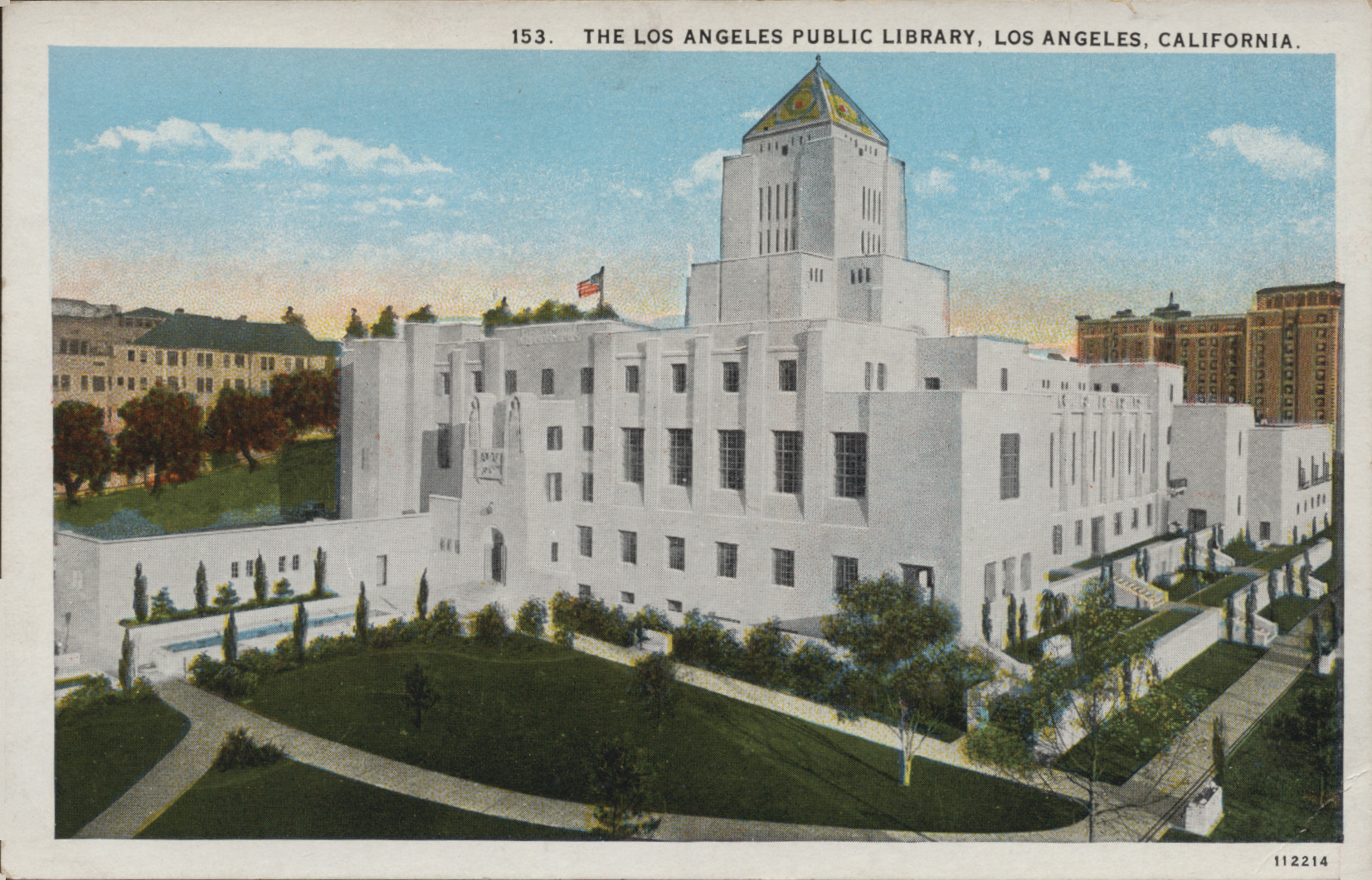
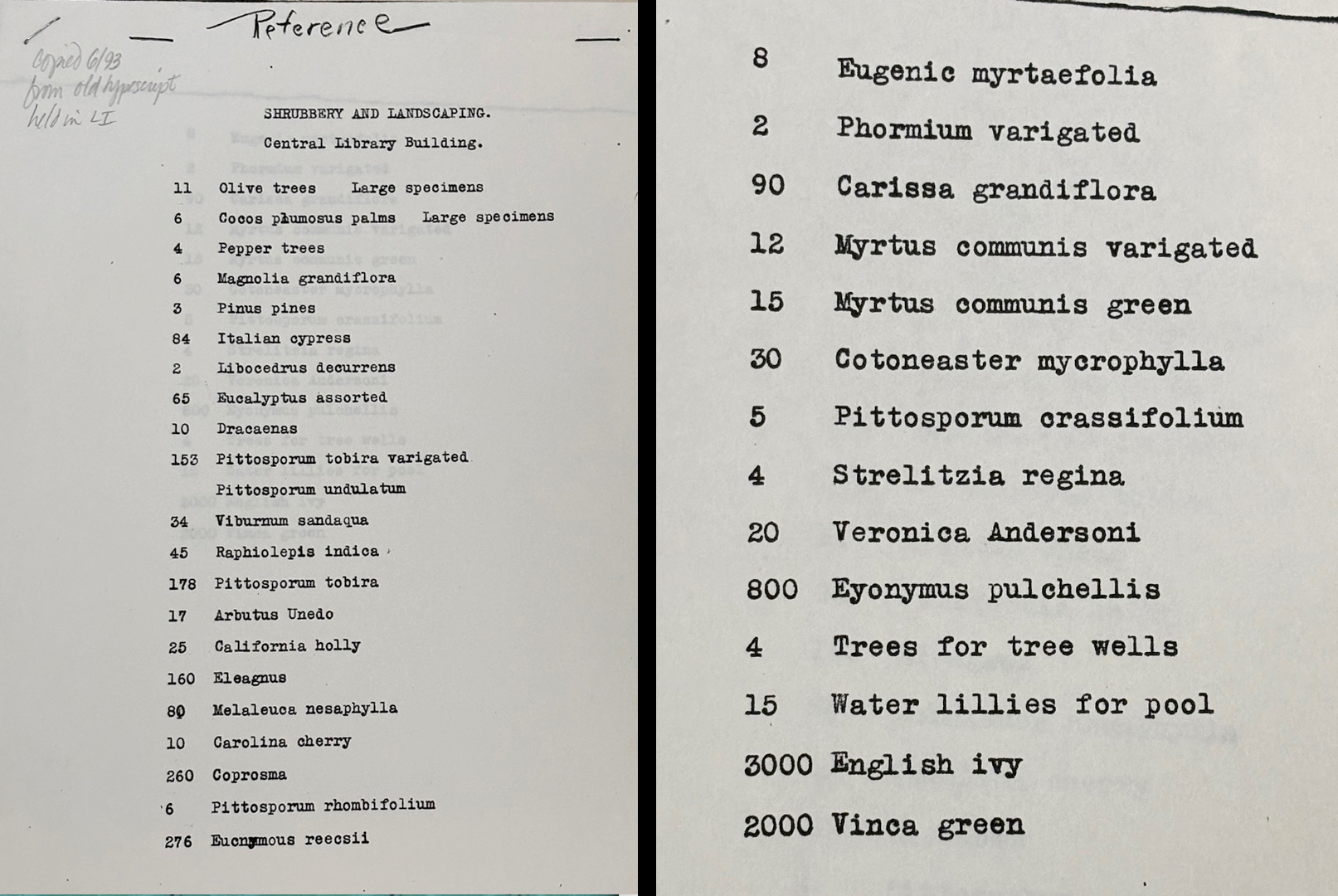
Carleton Winslow, the lead architect after the death of Bertram Goodhue, conferred with the Library's original landscapers, Beverly Hills Nurseries, many times in early 1926. The nursery noted that the exposure to traffic, especially the dust and fumes, would be detrimental to some plants. I believe that the plant choices for the Fifth Street side of the Library took that into account since the planting areas were right next to the street. Based on historic photos of the Library, the plants appear to be all small shrubs and a few palm trees. Similarly, the Hope Street entrance had plantings only on the upper levels, not at street level. I hereby submit a list of the original landscaping plants for all plant lovers with sleuthing skills.
Many thanks to Christina Rice, Kate Kaplan, Raquel Borden, and everyone in Central Library's Special Collections for their help piecing together various historic aspects of Central Library's outdoor space. Are you interested in touring Maguire Gardens? Custom group tours of the gardens around Central Library are available upon request. To schedule, email your requested dates to docents@lapl.org or call 213-228-7168. A group tour requires at least four weeks' advance notice.
