The Library will be closed on Sunday, April 5, 2026, in observance of Easter.

Science/Nature

LAPL ID: 
12

The Autistic Brain: Thinking Across the Spectrum

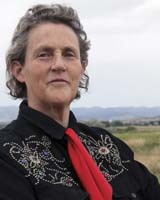
Temple Grandin
Lecture and Presentation
Wednesday, May 22, 2013
01:11:14
Listen:
Episode Summary

Weaving her own experience with remarkable new discoveries, Grandin brings her singular perspective to the thrilling journey through the revolution in the understanding of autism. She introduces advances in neuroimaging and genetic research that link brain science to behavior, even sharing her own brain scans from numerous studies.


Participant(s) Bio

Temple Grandin is the author of several best-selling books, which have sold more than a million copies, and one of the world’s most accomplished and well-known adults with autism. The HBO movie based on her life, starring Claire Danes, received seven Emmy Awards. Grandin is a professor at Colorado State University. Her new book is The Autistic Brain: Thinking Across the Spectrum.


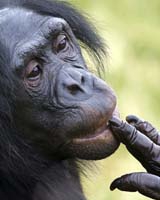
The Bonobo and the Atheist

Frans de Waal
In conversation with primatologist Amy Parish
Wednesday, April 17, 2013
01:09:46
Listen:
Episode Summary

Esteemed primatologist de Waal discusses his pioneering research on primate behavior, the latest findings in evolutionary biology, and insights from moral philosophy to prove that morality does not require the specters of God or the law of man.


Participant(s) Bio

Frans de Waal is the author of Our Inner Ape, Chimpanzee Politics, The Age of Empathy, and most recently, The Bonobo and the Atheist: In Search of Humanism Among the Primates. He has been named among Time magazine’s 100 Most Influential People and is the C. H. Candler Professor in Emory University’s Psychology Department.

Dr. Amy Parish is a biological anthropologist, primatologist, and Darwinian feminist, who has conducted ground-breaking research on patterns of female dominance and matriarchal social structure in one of our closest living relatives, the bonobo. Formerly a professor at the University of Southern California for 13 years, she has now affiliated with faculty at Georgetown University and is a research associate at University College London.  Parish is currently working on a book about love, marriage, and the experience of being a wife.


Wild: From Lost to Found on the Pacific Crest Trail

Cheryl Strayed
In conversation with Judith Lewis Mernit
Wednesday, April 10, 2013
01:04:56
Listen:
Episode Summary

At age twenty-six, in the wake of a divorce and her mother’s death, Cheryl Strayed made the most impulsive decision of her life: to hike the Pacific Crest Trail from the Mojave Desert to Washington State—and to do it alone. Wild, Strayed’s best-selling memoir, is the utterly compelling story of a young woman finding her way—and herself—one brave step at a time.


Participant(s) Bio

Cheryl Strayed is the author of the critically acclaimed novel Torch and Tiny Beautiful Things: Advice on Love and Life from Dear Sugar, a collection of writings from her "Dear Sugar" column in The Rumpus. Her memoir Wild: From Lost to Found on the Pacific Crest Trail was chosen by Oprah Winfrey as the inaugural title for Oprah’s Book Club 2.0. Her stories and essays have been published in The New York Times Magazine, The Washington Post Magazine, Allure, The Rumpus, The Missouri Review, The Sun, The Best American Essays, and elsewhere.

Judith Lewis Mernit is a contributing editor at High Country News, where she writes about politics, the environment, and natural resources. Her work has also appeared in Mother Jones, The Atlantic, Sierra, Audubon, the LA Weekly and the Los Angeles Times.


From the Ground Up: Sustainable Coffee Culture

Panel Discussion With Alexandra Katona-Carroll, Program Manager, Coffee Quality Institute; Jay Ruskey, owner, Good Land Organics; Angel Orozco, Owner and Roaster, Cafecito Orgánico
Moderated by Peter Giuliano, Specialty Coffee Association of America
Thursday, March 21, 2013
01:13:02
Listen:
Episode Summary

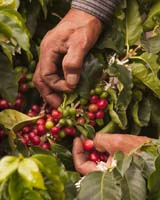
More valuable than gold, more ubiquitous than water, what is really brewing behind the $100 billion global coffee industry? Local coffee connoisseurs gather to discuss the journey of the bean from seed to cup. From the role of organic farming and the livelihood of producers, to trends in curating the consumer’s palate, the nuances of this beloved beverage have never been so complex.


Participant(s) Bio

Alexandra Katona-Carroll has been working in the specialty coffee industry for nearly seven years. She is the programs manager for the Coffee Quality Institute (CQI) and a member of the Specialty Coffee Association of America’s (SCAA) Sustainability Council, where she worked for two years. While in college, Katona-Carroll worked with a coffee cooperative in Chiapas and helped co-found a student-run coffee business. She has also lived and worked in Ecuador with a cacao cooperative and is involved in the Women in Coffee Leadership Program.

Jay Ruskey is the founder of Good Land Organics (GLO), an organic farm in Goleta, CA, that grows and markets organic and rare fruits locally and nationally, including coffee, cherimoya, passion fruit, avocado, lychee, longan, and micro-citrus. GLO has been collaborating on the coffee growing project with Mark Gaskell of the University of California Cooperative Extension. This trial evaluates all aspects of growing coffee in California with over a dozen named varieties. Ruskey also developed a crop risk model design and applied beta testing for evaluating crops over long periods of time with uncertain variables. He works and collaborates with several agricultural business boards.

Angel Orozco is the founder of Cafecito Orgánico, a locally based roaster and brick-and-mortar coffee shop with four locations in Southern California. Prior to opening Cafecito Orgánico, Orozco worked with community advocacy groups, such as Strategic Actions for a Just Economy, the Los Angeles County Bicycle Coalition, Mama’s Hot Tamales Café, and the Salvadoran American Leadership and Education Fund. He also helped lay the groundwork for the City of Los Angeles’ Plastic Bag Ban.  Orozco’s passion and commitment to working for economic and social justice translates perfectly to working in the coffee industry and in influencing working conditions in his native Guatemala.

Peter Giuliano has worked for a quarter century in specialty coffee as a coffee educator, taster, roaster, and buyer.  He was a founder and president of the Roasters’ Guild and served as president of the Specialty Coffee Association of America.  As co-owner and Director of Coffee for Counter Culture Coffee, he pioneered what has come to be known as Direct Trade Coffee, an approach that emphasizes quality, equity, and transparency in the supply chain.  Giuliano is currently the Director of the Specialty Coffee Symposium, a cutting-edge conference and community of thought leaders in coffee.
The Great Animal Orchestra: Finding the Origins of Music in the World's Wild Places

Bernie Krause
Sound lecture
Tuesday, March 12, 2013
01:07:28
Listen:
Episode Summary

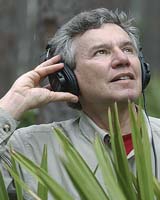
Krause, a musician and naturalist and one of the world’s leading experts in natural sound, explores how the myriad voices and rhythms of the natural world—from snapping shrimp to cracking glaciers—formed a basis from which our own musical expression emerged. His book is an impassioned plea for the conservation of one of our most overlooked natural resources—the music of the wild.


Participant(s) Bio

Dr. Bernie Krause is both a musician and a naturalist. During the 1950s and 60s, he devoted himself to music and replaced Pete Seeger as the guitarist for the Weavers. For more than forty years, Krause has traveled the world, recording and archiving the sounds of creatures and environments large and small. He has recorded more than fifteen thousand species and four thousand hours of wild soundscapes, over half of which no longer exist in nature, due to encroaching noise and human activity.


A Guide to Living on our Radioactive Planet

Dr. Robert Peter Gale, M.D. and Eric Lax
Monday, February 11, 2013
01:12:21
Listen:
Episode Summary

Gale, one of the world's leading experts on radiation, together with writer Eric Lax, draw on the most up-to-date research and on Gale's extensive experience treating victims of radiation accidents around the globe to correct myths and establish facts about life on our radioactive planet in our post-Chernobyl, post-Fukushima world.


Participant(s) Bio

Eric Lax is the author of Faith, Interrupted; Conversations with Woody Allen; Life and Death on 10 West (A New York Times Notable Book of the Year); The Mold in Dr. Florey's Coat (A Los Angeles Times Best Book of 2004); and co-author, with A. M. Sperber, of Bogart (nominated for the Los Angeles Times Book Prize in Biography). His biography Woody Allen was a New York Times and international bestseller and a Notable Book of the Year. His books have been translated into eighteen languages, and his writing has appeared in The Atlantic, Vanity Fair, Esquire, and The New York Times Magazine. He is an officer of PEN International.

Dr. Robert Peter Gale, M.D. is the author of more than twenty books, eight hundred scientific articles, and numerous pieces on medical topics and nuclear energy for The New York Times, Los Angeles Times, and The Wall Street Journal. For twenty years, Gale was on the faculty of the UCLA School of Medicine and has served as chairman of the Scientific Advisory Committee of the International Bone Marrow Transplant Registry. Dr. Gale was appointed by the Soviet Union government in 1986 to lead the medical relief efforts for victims of the Chernobyl nuclear power station accident, and in 2011, the Japanese government requested that Gale be in charge of treating radiation victims from the deadly Fukushima nuclear disaster.

Photo Credit: Jeremy Sutton Hibbert for Greenpeace. Image taken in Fukushima, Japan.


How Children Succeed: Grit, Curiosity, and the Hidden Power of Character

In conversation with Patt Morrison
Tuesday, September 18, 2012
01:18:04
Listen:
Episode Summary

Imagine a world where kids got gold stars for grit and curiosity. Paul Tough introduces us to a new generation of scientists and educators who are radically rethinking our understanding of how children develop character, how they learn to think, and how they overcome adversity.


Participant(s) Bio

Paul Tough is the author of Whatever It Takes: Geoffrey Canada’s Quest To Change Harlem and America. He has written extensively about education, child development, and poverty in cover stories for the New York Times Magazine, and for The New Yorker, Slate, GQ, Esquire, and the op-ed page of the New York Times. Tough has worked as an editor at the New York Times Magazine and Harper’s Magazine, and as a reporter and producer for NPR’s This American Life. He is founding editor of Open Letters, an online magazine.

Patt Morrison is a writer and columnist for the Los Angeles Times and host of the daily Patt Morrison public affairs program on KPCC. She has won six Emmys and six Golden Mike awards as founding host and commentator on Life & Times Tonight, the nightly news and current affairs program on KCET. Her one-on-one television interview subjects include Salman Rushdie, Henry Kissinger, Frank Gehry, Ray Bradbury, Joan Didion, and many more.


Knocking on Heaven’s Door: How Physics and Scientific Thinking Illuminate the Universe and the Modern World

In conversation with Lynda Obst
Monday, November 19, 2012
01:02:48
Listen:
Episode Summary

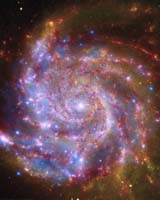
With excursions into culture and public policy, a theoretical physicist named one of Time Magazine’s “100 Most Influential People” explores how we decide which scientific questions to study, how we go about answering them, and how science might radically revise our understanding of the world.


Participant(s) Bio

Lisa Randall is the Frank B. Baird, Jr. Professor of Science at Harvard University. She studies theoretical particle physics and cosmology and her research connects theoretical insights to puzzles in our current understanding of the properties and interactions of matter. Randall’s current research focuses in large part on the Large Hadron Collider and dark matter searches and models. Her book Warped Passages: Unraveling the Mysteries of the Universe's Hidden Dimensions was included in the New York Times' 100 notable books of 2005. Randall has also recently pursued art-science connections, writing a libretto for Hypermusic: A Projective Opera in Seven Planes that premiered in the Pompidou Center in 2009, and Measure for Measure, an art exhibit she co-curated, opened in Los Angeles in 2010.

Lynda Obst authored the best-selling book, Hello He Lied: And Other Truths from the Hollywood Trenches and blogs frequently about meta-business issues for The Atlantic.com culture channel as well as The Huffington Post. She is a prolific film & television producer who has made films at almost every major motion picture studio including such titles as: How to Lose a Guy in 10 Days, Contact, Sleepless in Seattle, The Siege, One Fine Day, Hope Floats and The Fisher King. Obst executive produced NBC's Emmy Nominated miniseries The 60's, is currently an Executive Producer on TVLAND's Hot In Cleveland, and is producing TV and movies out of her office at Sony. Lynda studied the Philosophy of Science at Columbia and is an abiding science geek.


Exit: The Endings That Set Us Free

In conversation with Robin Kramer
Tuesday, June 19, 2012
01:05:41
Listen:
Episode Summary

As a culture, we are often focused on beginnings— the start of things instead of the endings. Acclaimed sociologist and MacArthur prize-winning Harvard professor Lawrence-Lightfoot examines moments that define how we transition through our lives. From looking at an Iranian teenager who leaves the political strife of his native land, to a middle-aged gay man who reflects on his ‘exit’ from the closet, to the director of a hospital ICU who oversees patients facing death, Lawrence-Lightfoot examines new ways of seeing our farewells.


Participant(s) Bio

Sara Lawrence-Lightfoot, a MacArthur prize-winning sociologist, is the Emily Hargroves Fisher Professor of Education at Harvard. As a sociologist, she examines the culture of schools, the patterns and structures of classroom life, socialization within families and communities, and the relationship between culture and learning styles. She is the author of ten books, including Balm in Gilead, The Third Chapter and her most recent work, Exit: The Endings that Set Us Free.

Robin Kramer has been an active leader in Los Angeles civic affairs for over three decades. She was the first woman to hold the position of Chief of Staff to both Mayor Antonio Villaraigosa and Richard Riordan, and was a senior executive at the California Community Foundation, Broad Foundation and Coro Southern California. She is currently working as Senior Advisor to The Annenberg Retreat at Sunnylands, chairs the Pitzer College Board of Trustees, and serves as one of five commissioners of the Port of Los Angeles, the economic engine for Southern California.


The Elemental West: Reflections on Moving Water

In conversation with William Deverell
Co-sponsored by the Huntington-USC Institute on California and the West
Wednesday, June 6, 2012
01:16:04
Listen:
Episode Summary

Two celebrated writers deeply influenced by the riparian and other landscapes of the American West will read from their work and explore how storytelling, in the tradition of Thoreau and Emerson, can give voice to natural resources. Activist and award-winning author Kathleen Dean Moore discusses her newest book Moral Ground: Ethical Action for a Planet in Peril and Craig Childs, the author of more than a dozen acclaimed books on nature and science, reflects on expedition adventures from Colorado to Tibet.

The Elemental West: Fire, Water, Air, Earth (Program two of four)


Participant(s) Bio

Kathleen Dean Moore is an essayist and activist who writes about cultural and spiritual connections to wet wild places. Her award-winning books include Riverwalking, Holdfast, The Pine Island Paradox, and Wild Comfort. Moral Ground: Ethical Action for a Planet in Peril, her newest book, gathers calls from the world's moral leaders to honor our obligations to future generations. Moore, Distinguished Professor of Philosophy at Oregon State University, publishes in both environmental ethics and popular journals such as Audubon, Discover, and Orion, where she serves on the Board of Directors.

Craig Childs is a writer who focuses on natural sciences, archaeology, and remarkable journeys into the wilderness. He has published more than a dozen critically acclaimed books on nature, science, and adventure. He is a commentator for NPR's Morning Edition, and his work has appeared in many publications, including The New York Times, Outside, and Orion. His subjects range from pre-Columbian archaeology to U.S. border issues to the last free-flowing rivers of Tibet and Patagonia. He has won several awards for his writing.

William Deverell is a professor of history at USC, where he specializes in the history of California and the American West and directs a scholarly institute that collaborates with the Huntington Library in Pasadena. He is the author of Whitewashed Adobe: The Rise of Los Angeles and the Remaking of Its Mexican Past and Railroad Crossing: Californians and the Railroad, 1850-1910. With Greg Hise, he is co-author of Eden by Design: The 1930 Olmsted-Bartholomew Plan for the Los Angeles Region. William is a Fellow of the Los Angeles Institute for Humanities at USC.


Pages

Top