The Library will be closed on Sunday, April 5, 2026, in observance of Easter.

Science/Nature

LAPL ID: 
12

Love: Three Perspectives—Two Novels and a Psychoanalyst
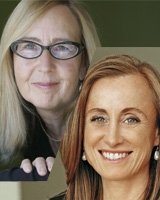
Michelle Huneven and Mona Simpson
In Conversation with Psychoanalyst Christopher Bollas
Wednesday, June 18, 2014
00:55:54
Listen:
Episode Summary

New novels from Michelle Huneven (Off Course) and Mona Simpson (Casebook) both deal with love and its moral varieties, from quite different perspectives. As their characters variously struggle to forge lasting connections, they evoke issues long familiar to the psychoanalyst. Is it possible to separate out the strands of fantasy and projection, family patterning, and primal need from adult love? What makes highly intelligent, thoughtful people so thoroughly lose their way in love’s enchantment? Joining the authors to discuss love’s tangled and complex morality is eminent psychoanalyst and theorist Dr. Christopher Bollas.


Participant(s) Bio

Michelle Huneven is the author of three previous novels:Blame, which was a finalist for the National Book Critics Circle Award, Jamesland, and Round Rock.

Mona Simpson’s novels include My Hollywood, A Regular Guy, Off Keck Road, The Lost Father and Anywhere But Here. Her work has been recognized with numerous prizes, including the Chicago Tribune’s Heartland Prize, the Whiting Writer’s Award, and a Guggenheim fellowship. Most recently, she was the recipient of a Literature Award from the American Academy of Arts and letters. Her short fiction has been published in Granta, Harpers, The Atlantic, McSweeney’s and The Paris Review.

Christopher Bollas, Ph.D., is a member of the British Psychoanalytical Society, the Los Angeles Institute and Society for Psychoanalytic Studies, and an Honorary Member of the Institute for Psychoanalytic Training and Research (IPTAR) in New York. Among his books are Catch Them Before They Fall (The Psychoanalysis of Breakdown) and The Christopher Bollas Reader, with forward by Adam Phillips.
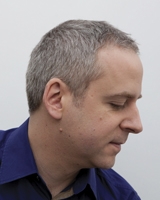


Beautiful Acts of Attention: Performance and Conversation

Jeremy Denk
With Jeffrey Kahane, Los Angeles Chamber Orchestra Music Director
Saturday, May 10, 2014
01:09:55
Listen:
Episode Summary

One of America’s most talented pianists (Musical America’s 2014 Instrumentalist of the Year), and thought-provoking writers on music, Jeremy Denk (2014 Ojai Music Festival Music Director) expounds upon the magic of music making—from learning how to practice and the daily rites of discovery, to the mastery of reasoning with your muscles and the sheer joy of no longer needing to think. Denk illuminates the paradox of seeking perfection while full knowing the possibilities are infinite.


Participant(s) Bio

American pianist Jeremy Denk has steadily built a reputation as an unusual and compelling artist with a broad and thought-provoking repertoire. In 2013 he became a MacArthur Grant recipient and was named Instrumentalist of the Year by Musical America. He has appeared as a soloist with many major orchestras in the USA and abroad and regularly gives recitals around the United States. Denk is the artistic director of the 2014 Ojai Music Festival, for which he is also composing the libretto to a semi-satirical opera. He is also known for his witty and personal writing in the New Yorker, New York Times Book Review,Newsweek and NPR Music’s website and for his blog Think Denk.

Jeffrey Kahane, equally at home at the keyboard or on the podium, has established an international reputation as a truly versatile artist, recognized around the world for his mastery of diverse repertoire ranging from Bach, Mozart and Beethoven to Gershwin, Golijov and John Adams. Now in his 17th season as music director of the Los Angeles Chamber Orchestra, he previously served as music director of the Colorado and Santa Rosa symphonies. He has garnered tremendous critical acclaim for his innovative programming and commitment to education and community involvement and received multiple ASCAP Awards for Adventurous Programming for his work in both Los Angeles and Denver.


Michael Pollan: In Defense of Food

In Defense of Food
In conversation with Barry Glassner
Wednesday, May 10, 2006
01:16:03
Listen:
Episode Summary

The author of the national bestseller The Omnivore's Dilemma returns with a manifesto for our times: what to eat, what not to eat, and how to think about health.


Participant(s) Bio

Michael Pollan is a contributing writer to The New York Times Magazine and the author of four books, The Botany of Desire: A Plant's-Eye View of the World, Second Nature, A Place of My Own, and The Omnivore's Dilemma. The recipient of numerous journalistic awards, including the Reuters-I.U.C.N. Global Award in Environmental Journalism, Pollan served for many years as executive editor of Harper's. His articles have been anthologized in Best American Science Writing, Best American Essays , and the Norton Book of Nature Writing. At Berkeley, he serves as Director of the Knight Program in Science and Environmental Journalism. He earned his college degree at Bennington College, studied at Oxford University (Mansfield College), and received a master's in English from Columbia University in 1981.

Barry Glassner is a sociologist with his finger on the pulse of American culture. His provocative research has found many Americans' concerns to be largely unfounded. He has studied scary stories in the media; scares about adolescents, crime, minority groups, and related social issues; false fears in marketing and politics; and fear and the power of exploiting it for product sales and political careers. His recent work examines the sources of Americans' assumptions about what and where to eat and the chefs, nutritionists, restaurant critics, journalists, and food marketers who perpetuate those views. USC's Executive Vice Provost, his articles have appeared in American Sociological Review, Social Problems, American Journal of Psychiatry, and Journal of Health and Social Behavior, among other journals.


Plato at the Googleplex: Why Philosophy Won't Go Away

Rebecca Goldstein
In Conversation With Alex Cohen
Tuesday, March 18, 2014
01:19:39
Listen:
Episode Summary

Imagine that Plato came to life in the twenty-first century and embarked on a multicity speaking tour. How would he handle the host of a cable news program who denies there can be morality without religion? How would he mediate a debate between a Freudian psychoanalyst and a tiger mom on how to raise the perfect child? Philosopher and novelist Rebecca Newberger Goldstein provide an original plunge into the drama of philosophy, revealing its hidden role in today’s debates on religion, morality, politics, and science. Does philosophy itself ever make progress? And if it does, why is so ancient a figure as Plato of any continuing relevance? Plato at the Googleplex is Goldstein’s startling investigation into these conundra.


Participant(s) Bio

Rebecca Newberger Goldstein received her doctorate in philosophy from Princeton University. Her award-winning books include the novels The Mind-Body Problem, Properties of Light, and Mazel, and nonfiction studies of Kurt Gödel and Baruch Spinoza. She has received a MacArthur Foundation Fellowship and Guggenheim and Radcliffe fellowships, and she was elected to the American Academy of Arts and Sciences in 2005. She lives in Massachusetts.

Alex Cohen is co-host of KPCC's Take Two show. Prior to that, she was a host of KPCC's All Things Considered. Before joining Southern California Public Radio, Cohen was a host and reporter for NPR's Day to Day. She's also served as a host and reporter for NPR's Morning Edition and All Things Considered as well as American Public Media's Marketplace and Weekend America. Prior to that, she was the L.A. Bureau Chief for KQED FM in San Francisco. She has won various journalistic awards, including the LA Press Club’s Best Radio Anchor prize.


Edward Frenkel and Chris Carter

Love, Mathematics and The X-Files
In conversation
Thursday, February 13, 2014
01:13:46
Listen:
Episode Summary

Frenkel, one of the 21st century’s leading mathematicians, works on one of the biggest ideas to come out of mathematics in the last 50 years: the Langlands Program. In his lyrical autobiography, he reveals a side of math we’ve never seen, suffused with all the metaphysical beauty and elegance of a work of art. Known for his controversial erotic film about math, Frenkel believes a mathematical formula can carry a charge of love. Frenkel is joined by screenwriter and The X-Files creator Chris Carter to discuss how mathematics reaches to the heart of all matter, uniting us across culture, time, and space.


Participant(s) Bio

Edward Frenkel is a professor of mathematics at the University of California, Berkeley, and was previously on the faculty at Harvard University. He is a Fellow of the American Mathematical Society and winner of the Hermann Weyl Prize in mathematical physics. His recent work has focused on the Langlands Program and dualities in Quantum Field Theory. Frenkel has authored two books and over eighty research articles in mathematical journals, and he has lectured on his work around the world. He co-produced, co-directed, and played the lead in the film "Rites of Love and Math," which French newspaper Le Monde called "a stunning short film... offering an unusual romantic vision of mathematicians."

Described by Time Magazine as a "televisionary," Chris Carter created one of the most successful television franchises of all time with his award-winning show The X-Files. The show ran a remarkable nine seasons, is still seen today in over 60 countries, and spawned two films as well as a comic book and video game adaptations. Carter also created the shows Millennium, Harsh Realm, and The Lone Gunmen. The impact of Carter’s series is such that in 1997, Time Magazine named him one of "The 25 Most Influential People in America. After a hiatus from television, Carter is about to return to the medium, helming Amazon Studios' very first TV drama pilot The After, which he wrote and directed.


Orfeo: A Novel

Richard Powers
In Conversation With Michael Silverblatt, host of KCRW's "Bookworm"
Tuesday, January 28, 2014
01:06:24
Listen:
Episode Summary

This new work by the MacArthur Award-winning novelist begins when composer Peter Els opens the door to find the police on his doorstep. His home microbiology lab—where he experiments to find music in surprising patterns—has aroused the suspicions of Homeland Security. Seeking help from family and a longtime collaborator, this "Bioterrorist Bach" hatches a plan to turn his disastrous collision with the security state into a work of art that will reawaken its audience to the sounds all around them.


Participant(s) Bio

Richard Powers is the much-lauded author of eleven novels, including The Echo Maker, which won the 2006 National Book Award for Fiction. He is also a recipient of a MacArthur Fellowship and a Lannan Literary Award. His fiction often explores the effects of modern science and technology.

Michael Silverblatt is the host of KCRW's half-hour radio show Bookworm, where he introduces listeners to new and emerging authors along with writers of renown. He created Bookworm for KCRW-FM in 1989. The complete Bookworm archive can be heard at kcrw.com/bookworm.


Far From the Tree: Parents, Children, and the Search for Identity

Andrew Solomon
In Conversation With Tom Curwen, Staff-Writer Los Angeles Times
Tuesday, October 22, 2013
01:11:54
Listen:
Episode Summary

The National Book Award-winning author of The Noonday Demon: An Atlas of Depression, mines the eloquence of ordinary people facing extreme challenges in his new book. From families coping with deafness, dwarfism, Down syndrome, autism, and schizophrenia, to children who are prodigies or transgender—Solomon illuminates the universal experiences of difference and the triumph of love.


Participant(s) Bio

Andrew Solomon is the author of the New York Times bestsellers Far from the Tree: Parents, Children, and the Search for Identity, winner of the National Book Critics Circle Award, and The Noonday Demon: An Atlas of Depression, a Pulitzer Prize finalist and winner of the 2001 National Book Award; and of the critically acclaimed novel A Stone Boat. He is a lecturer in psychiatry at Cornell University and a special advisor on LGBT affairs at the Yale School of Medicine’s Department of Psychiatry. His journalism frequently appears in The New Yorker, The New York Times, and other publications.

Thomas Curwen is an award-winning staff writer at the Los Angeles Times, where he has worked as the editor of the Outdoors section, a writer-at-large and editor for the features sections, and as the deputy editor of the Los Angeles Times Book Review. He has received an Academy of American Poets Prize, a Rosalynn Carter Fellowship for mental health journalism, and in 2008 he was a finalist for a Pulitzer Prize.

Photo credit: Annie Leibovitz


Countdown: Our Last, Best Hope for a Future on Earth?

Alan Weisman
In Conversation With Ursula K. Heise, Professor of English and Faculty, UCLA Institute of the Environment and Sustainability
Tuesday, October 15, 2013
01:18:16
Listen:
Episode Summary

Weisman offers a long-awaited follow-up to The World Without Us, his brilliant thought experiment that considered how the Earth could heal if relieved of humanity’s constant pressures. Now, after traveling to more than 20 countries to ask four questions that experts agreed were probably the most important on Earth—he explores the complexity of calculating how many humans this planet can hold without capsizing.


Participant(s) Bio

Alan Weisman is the author of several books, including The World Without Us- an international bestseller translated into 34 languages, a finalist for the National Book Critics Circle Award, and winner of the Wenjin Book Prize of the National Library of China. His work has been selected for many anthologies, including Best American Science Writing. An award-winning journalist, his reports have appeared in Harper's, The New York Times Magazine, The Atlantic Monthly, Discover, Vanity Fair, Wilson Quarterly, Mother Jones, and Orion, and on NPR. A former contributing editor to the Los Angeles Times Magazine, he is a senior radio producer for Homelands Productions.

Ursula K. Heise is a Professor in the Department of English at the Institute of the Environment and Sustainability at UCLA, and a 2011 Guggenheim Fellow. She served as President of ASLE (Association for the Study of Literature and the Environment) in 2011. Her research and teaching focus on contemporary literature, environmental culture in the Americas, Western Europe, and Japan, literature and science, globalization theory, and media theory. Her books include Chronoschisms: Time, Narrative, and Postmodernism, Sense of Place and Sense of Planet: The Environmental Imagination of the Global, and Nach der Natur: Das Artensterben und die moderne Kultur (After Nature: Species Extinction and Modern Culture.) She is currently finishing a book called Where the Wild Things Used to Be: Narrative, Database, and Endangered Species.


Moby Dick: How Scientists Came to Love the Whale

D. Graham Burnett
In Conversation With Amy Parish, primatologist and Darwinian Feminist
Thursday, October 3, 2013
01:19:52
Listen:
Episode Summary

How was our understanding of whales transformed from grotesque monsters, useful only as wallowing kegs of fat, to playful friends of humanity and bellwethers of environmental devastation? Burnett, a historian of science and energetic polymath, offers a sweeping history of how science, politics, and simple human wonder have transformed our way of seeing these behemoths from below.


Participant(s) Bio

D. Graham Burnett teaches at Princeton University, where he holds an appointment as Professor of History and History of Science, and affiliations with the Interdisciplinary Doctoral Program in the Humanities (I-HUM), the School of Architecture, and the Princeton Environmental Institute. He is a 2013 Guggenheim Fellow. Burnett studies the relationship between power and knowledge and writes on human beings’ changing understanding of nature, art, and technology. He is the author of five books, including Trying Leviathan, winner of the New York City Book Award, which surveys changing ideas of natural order across the hundred years that stretched from the writings of Linnaeus to those of Darwin; and The Sounding of the Whale, his study of the remarkable cultural and scientific life of cetaceans in the last century, a period that saw these animals go from industrial commodities to avatars of the Age of Aquarius. Graham Burnett is also an editor at Cabinet, the Brooklyn-based quarterly of art and culture.

Dr. Amy Parish is a biological anthropologist, primatologist, and Darwinian feminist, who has conducted ground-breaking research on patterns of female dominance and matriarchal social structure in one of our closest living relatives, the bonobo. Formerly a professor at the University of Southern California for 13 years, she has now affiliated with faculty at Georgetown University and is a research associate at University College London. Parish is currently working on a book about love, marriage, and the experience of being a wife.

Photo credit: Mike Baird


Why Does the World Exist?

Jim Holt and Sean Carroll in Conversation
Wednesday, May 29, 2013
01:16:30
Listen:
Episode Summary

Holt, an irreverent detective of metaphysics and science, dives deep into conversation with Caltech cosmologist Sean Carroll, to try and answer the most persistent mystery of existence: Why should there be a universe at all, and why are we a part of it? why is there Something rather than Nothing? Join us for a discussion of time, infinity, consciousness, the multiverse, and the haunting possibility of Absolute Nothingness.


Participant(s) Bio

Jim Holt is the author of Stop Me If You’ve Heard This, and Why Does The World Exist?: An Existential Detective Story. Holt is a frequent contributor to the New York Times and The New Yorker , where he has written on string theory, time, infinity, numbers, truth, and bullshit, among other subjects.

Sean Carroll is a physicist and author of The Particle at the End of the Universe and From Eternity to Here: The Quest for the Ultimate Theory of Time. He is on the faculty at the California Institute of Technology, where his research focuses on fundamental physics and cosmology, especially issues of dark matter, dark energy, and the origin of the universe. His writing has appeared in Scientific American, New Scientist, The Wall Street Journal.


Pages

Top