The Library will be closed on Sunday, April 5, 2026, in observance of Easter.

Science/Nature

LAPL ID: 
12

The Runaway Species: How Human Creativity Remakes the World
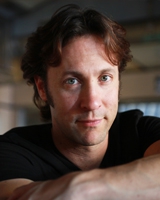
David Eagleman and Anthony Brandt
In Conversation
Tuesday, December 5, 2017
00:55:13
Listen:
Episode Summary

What lies at the heart of humanity’s ability―and drive―to create? New York Times bestselling author and neuroscientist David Eagleman teams up with internationally acclaimed composer and Associate Professor at Rice University’s Shepherd School of Music Anthony Brandt in a wide-ranging exploration of human creativity. In their new book, The Runaway Species: How Human Creativity Remakes the World, the pair studies hundreds of examples of human creativity from landing on the moon to paintings by Picasso to connect what creative acts have in common. By uncovering the essential elements of human innovation and examining them through the lens of cutting-edge neuroscience, Eagleman and Brandt consider how we can harness creativity to better our lives, schools, businesses, and institutions. Join us for an inspiring look at humanity’s unique ability to use the powerful tools of arts, technology, science, and more to improve our future.


Participant(s) Bio

David Eagleman is a neuroscientist and the New York Times bestselling author of Incognito: The Secret Lives of the Brain and Sum: Tales from the Afterlives. He is the writer and host of the Emmy-nominated PBS television series The Brain. Eagleman is an adjunct professor at Stanford University, a Guggenheim fellow, and the director of the Center for Science and Law. He has written for The New York Times, Discover Magazine, The Atlantic, Slate, Wired, and many other publications, and he appears regularly on National Public Radio and BBC.

Anthony Brandt is a composer and professor at Rice University’s Shepherd School of Music. He is also the Artistic Director of the contemporary music ensemble Musiqa, winner of two Awards for Adventurous Programming from Chamber Music America and ASCAP. Brandt has received a Koussevitzky Commission from the Library of Congress and grants from the National Endowment for the Arts, Meet-the-Composer, and the Houston Arts Alliance. He lives in Houston with his wife and children.
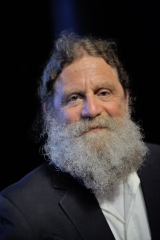
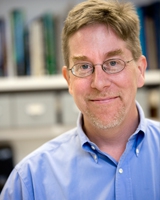
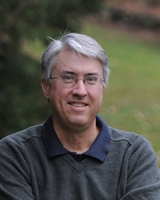
Behave: The Biology of Humans at Our Best and Worst

Robert Sapolsky
In Conversation With evolutionary biologist Amy Parish
Thursday, May 25, 2017
01:19:53
Listen:
Episode Summary

Why do we do the things we do? Author and MacArthur recipient Robert Sapolsky’s game-changing new book Behave: The Biology of Humans at Our Best and Worst attempts to answer this very question, one of the deepest questions of the human species. Moving between neurobiological factors, to the sensory world of our environment and endocrinology, to tracing individual’s childhoods and their genetic makeup, to encompassing larger categories of culture, ecology, and evolution, Sapolsky considers millions of years of science to wrestle with why we ultimately do the things we do…for good and for ill. Discussing his staggering work with evolutionary biologist Amy Parish, Sapolsky takes us on an engrossing tour of the science of human behavior.


Participant(s) Bio

Robert M. Sapolsky is the author of several works of nonfiction, including A Primate’s Memoir, The Trouble with Testosterone, and Why Zebras Don’t Get Ulcers. He is a Professor of Biological Sciences, Neurology, Neurological Sciences, and Neurosurgery at Stanford University. Dr. Sapolsky is considered one of the world’s leading neuroscientists and has been called “one of the finest natural history writers around” by the New York Times. For more than thirty years, Sapolsky has divided his time between field work with baboons and highly technical neurological research in the laboratory. His study of stress in non-human primates has offered a fascinating insight into how human beings relate to this universal pressure. Dr. Sapolsky is a recipient of a MacArthur Foundation genius grant and lives in San Francisco.

Amy Parish is a biological anthropologist, primatologist, and Darwinian feminist who has taught at the University of Southern California in the gender studies, arts and letters, anthropology, and preventive medicine programs and departments since 1999. Dr. Parish has been studying the world’s captive population of bonobos for the last twenty years. In all of her research, Dr. Parish uses an evolutionary approach to shed light on the origins of human behavior. Her work has been featured in Ms. Magazine, and she has appeared on Nova, National Geographic Explorer, NPR, and Discovery Health Channel productions.


The Evolution of Beauty

Richard O. Prum
In Conversation With evolutionary biologist Amy Parish
Tuesday, May 16, 2017
01:09:57
Listen:
Episode Summary

Deep in tropical jungles around the world are birds with a dizzying array of appearances and mating displays—from pheasants with 3D feathers to moonwalking manakins—traits that seem disconnected from selection for individual survival. Culminating 30 years of fieldwork, Richard Prum, the Head Curator of Vertebrate Zoology at the Yale Peabody Museum of Natural History and a world-renowned ornithologist, revives Darwin’s long-neglected theory of sexual selection in which the act of choosing a mate for purely aesthetic reasons—for the mere pleasure of it—is an independent engine of evolutionary change. Sharing from his latest work, The Evolution of Beauty, Prum presents a unique scientific vision for how nature’s splendor contributes to a more complete understanding of evolution and of ourselves in a conversation with evolutionary biologist Amy Parish.


Participant(s) Bio

Richard O. Prum is William Robertson Coe Professor of Ornithology at Yale University, and Head Curator of Vertebrate Zoology at the Yale Peabody Museum of Natural History. He has conducted field work throughout the world, and has studied fossil theropod dinosaurs in China. He received a MacArthur Fellowship in 2010.

Amy Parish is a biological anthropologist, primatologist, and Darwinian feminist who has taught at University of Southern California in the gender studies, arts and letters,anthropology, and preventive medicine programs and departments since 1999. Dr. Parish has been studying the world’s captive population of bonobos for the last twenty years. In all of her research, Dr. Parish uses an evolutionary approach to shed light on the origins of human behavior. Her work has been featured in Ms. Magazine and she has appeared on Nova, National Geographic Explorer, NPR, and Discovery Health Channel productions.


Where the Water Goes: Life and Death Along the Colorado River

David Owen
In Conversation With Environmental Writer Judith Lewis Mernit
Tuesday, April 18, 2017
01:11:48
Listen:
Episode Summary

The Colorado River is a crucial resource for a large part of the United States, and every gallon that flows down it is owned or claimed by someone. New Yorker staff writer David Owen, and author of more than a dozen books, delivers his latest work, Where the Water Goes: Life and Death Along the Colorado River, and takes readers on an eye-opening adventure downriver, along a labyrinth of waterways, power plants, farms, fracking sites, ghost towns, and RV parks, to the spot near the U.S.–Mexico border where the river runs dry. Exploring the complexities of this vast man-made ecosystem with environmental reporter Judith Lewis Mernit, Owen illuminates the high-stakes of the water wars of the West.


Participant(s) Bio

David Owen is a staff writer for The New Yorker and the author more than a dozen books. He lives in northwest Connecticut with his wife, the writer Ann Hodgman.

Judith Lewis Mernit is a freelance writer based in Los Angeles. Her work on energy, the environment, economic justice and public health has appeared in Capital & Main, High Country News, Sierra Magazine, Yale Environment 360, TakePart, The Atlantic and the LA Weekly.


Tides: The Science and Spirit of the Ocean

Jonathan White
In Conversation
Thursday, March 16, 2017
01:07:13
Listen:
Episode Summary

Writer, sailor, and surfer Jonathan White journeys deep into the world’s oceans in his new book Tides: The Science and Spirit of the Ocean. From investigating the growth of tidal power generation in Chile and Scotland to delving into the threat of rising sea levels in Panama and Venice, join us for this exploration of the current state of our oceans’ infinitely complex and ever-changing ecosystems and the forces that keep our planet’s waters in constant motion.


Participant(s) Bio

Jonathan White is a writer, conservationist, sailor, and educator. His first book, Talking on the Water: Conversations about Nature and Creativity, features interviews with Gretel Ehrlich, David Brower, Ursula K. Le Guin, Gary Snyder, Peter Matthiessen, and others. His writing has appeared in the Christian Science Monitor, The Sun, Sierra, the Whole Earth Review, and Fine Homebuilding. The former president of the Resource Institute, a Seattle-based nonprofit focusing on the culture and traditions of the Northwest, he now lives on Orcas Island, Washington.


Dan Flores | Coyote America

In Conversation
Featuring Performance by Melissa Cooper and Inger Tudor
Monday, January 30, 2017
01:18:13
Listen:
Episode Summary

With a brilliant blend of environmental and natural history, Dan Flores’ Coyote America traces the five-million-year-long biological story of an animal that has become the "wolf" in our backyards. The journey of the coyote to the American West and beyond isn’t just the story of an animal’s survival—it is one of the great epics of our time. Illuminating this legendary creature, Flores will be joined on stage for a conversation with playwright and chronicler of urban wildlife Melissa Cooper, who will also perform an excerpt from her play, New York City Coyote Existential.


Participant(s) Bio

Dan Flores is the A. B. Hammond Professor Emeritus of Western History at the University of Montana and the author of ten books on aspects of western US history. Flores lives just outside Santa Fe, New Mexico.

Melissa Cooper’s award-winning plays have been produced at theaters around the country, including Dallas Theater Center, Cincinnati Playhouse, Coterie Theatre, Asolo Rep, and San Diego Rep. Melissa lives in NYC, where she really did meet a coyote in Central Park. She writes about urban wildlife on her blog, Out Walking the Dog, which The New York Times called “poetic…part ecological journal, part personal meditation.” She is currently writing a play for an ensemble of formerly incarcerated men, exploring the challenges of reentering society after years of imprisonment.

Inger Tudor is a graduate of Harvard (college and law school) and the London Academy of Music and Dramatic Art. Recent credits include Honky (Ovation nomination–Best Production), Antigone, Going to St. Ives (LA Stage Scene Award, Stage Raw and NAACP nominations for Best Lead Actress), and Romeo and Juliet (NAACP nomination–Best Supporting Actress). Television and film credits include Goliath, On Time (on HBO February 2017) Doubt, Aquarius, Hand of God, Elizabeth Blue, Lemon, The Social Network, and The Making of “Grits” (Mockumentary Festival–Best Actress Award).


Alison Gopnik | Evolution and the Young Mind: Creativity and Learning

Alison Gopnik
In Conversation With Alex Cohen
Thursday, January 26, 2017
01:21:01
Listen:
Episode Summary

Young children often seem especially creative and imaginative. But can we prove that scientifically? And what is it about children’s minds and brains that makes them so imaginative? Alison Gopnik, pioneering developmental psychologist and philosopher and author of the new book, The Gardener and the Carpenter: What the New Science of Child Development Tells Us About the Relationship Between Parents and Children, discusses her cutting-edge scientific research into how children learn and how thinking like a child can make adults more creative too.


Participant(s) Bio

Alison Gopnik is a professor of psychology and an affiliate professor of philosophy at the University of California, Berkeley. She is an internationally recognized leader in the study of children’s learning and development. She writes the Mind and Matter column for The Wall Street Journal and is the author of The Philosophical Baby and coauthor of The Scientist in the Crib. She has three sons and lives in Berkeley, California, with her husband, Alvy Ray Smith.

Alex Cohen is co-host of KPCC’s Take Two show. Prior to that, she was the host of KPCC’s All Things Considered. She has also hosted and reported for NPR programs, including Morning Edition, All Things Considered and Day to Day, as well as American Public Media’s Marketplace and  Weekend America. Prior to that, she was the L.A. Bureau Chief for KQED FM in San Francisco. She has won various journalistic awards, including the LA Press Club’s Best Radio Anchor prize. Alex is also the author of Down and Derby: The Insider’s Guide to Roller Derby.


Other Minds: The Octopus, the Sea, and the Deep Origins of Consciousness

Peter Godfrey-Smith
In Conversation With Amy Parish
Wednesday, December 7, 2016
01:10:52
Listen:
Episode Summary

Leading philosopher of science Peter Godfrey-Smith dons a wet suit and journeys into the depths of consciousness in his latest book Other Minds. Combining science and philosophy with first-hand accounts of the remarkable intelligence of the octopus, Godfrey-Smith explores how primitive organisms bobbing in the ocean began sending signals to each other and how these early forms of communication gave rise to the advanced nervous systems that permit cephalopods to change colors and human beings to speak. Follow along as Godfrey-Smith shares from his underwater adventures and sheds new light on the octopus brain, the human brain, and the evolution of consciousness.


Participant(s) Bio

Peter Godfrey-Smith is a distinguished professor of philosophy at the Graduate Center, City University of New York, and a professor of history and the philosophy of science at the University of Sydney. He is the author of Other Minds: The Octopus, the Sea, and the Deep Origins of Consciousness and four scholarly books, including Theory and Reality: An Introduction to the Philosophy of Science and Darwinian Populations and Natural Selection, which won the 2010 Lakatos Award for an outstanding work on the philosophy of science. His underwater videos of octopuses have been featured in National Geographic and New Scientist, and he has discussed them on National Public Radio and many cable TV channels.

Amy Parish is a biological anthropologist, primatologist, and Darwinian feminist who has taught at University of Southern California in the gender studies, arts and letters,anthropology, and preventive medicine programs and departments since 1999. Dr. Parish has been studying the world’s captive population of bonobos for the last twenty years. In all of her research, Dr. Parish uses an evolutionary approach to shed light on the origins of human behavior. Her work has been featured in Ms. Magazine and she has appeared on Nova, National Geographic Explorer, NPR, and Discovery Health Channel productions.


How to Survive a Plague: The Inside Story of How Citizens and Science Tamed AIDS

David France, Dr. Mark H. Katz and Tony Valenzuela
In conversation
Thursday, December 1, 2016
01:12:16
Listen:
Episode Summary

In his new book, How to Survive a Plague, David France—the creator of the Oscar-nominated seminal documentary of the same name—offers a definitive history of the battle to halt the AIDS epidemic. Joined by Dr. Mark H. Katz, a physician activist on the frontlines of the affected HIV community of Southern California, and Tony Valenzuela, a longtime community activist and writer whose work has focused on LGBT civil rights, sexual liberation, and gay men’s health, France shares powerful, heroic stories of the gay activists who refused to die without a fight.


Participant(s) Bio

David France is the author of Our Fathers, a book about the Catholic sexual abuse scandal, which Showtime adapted into a film. He coauthored The Confession with former New Jersey governor Jim McGreevey. He is a contributing editor for New York and has written as well for The New York Times. His documentary film How to Survive a Plague was an Oscar finalist, won a Directors Guild Award and a Peabody Award and was nominated for two Emmys, among other accolades.

Dr. Mark H. Katz has delivered care to persons with HIV for 30 years. Since 1985, he has been affiliated with Kaiser Permanente West Los Angeles. From 1992-2006, he was the Regional HIV Physician Coordinator for the Southern California Kaiser region. In addition to his HIV outpatient work, he is currently a hospitalist at the West LA Medical Center and the Physician Lead at West LA for Clinician-Patient Communication, inspiring providers to be more empathic communicators. He has long been an educator as well as a physician activist–through work with organizations such as LA Shanti and Being Alive (for which he conducted a monthly medical update from 1988 through 1997). He is the recipient of many honors, but his greatest professional reward, he says, is "continually having the opportunity to be involved in the care of people who face the challenge of HIV with such grace and determination." Dr. Katz is at work on a series of essays and recollections about the HIV epidemic.

A graduate of the MFA in Creative Writing program of the California Institute of the Arts, Tony Valenzuela is the Executive Director of Lambda Literary, the nation’s leading nonprofit organization advancing LGBTQ literature. He is a longtime community activist and writer whose work has focused on LGBT civil rights, HIV/AIDS, and gay men’s health. He is credited with having ruptured the conventional wisdom in HIV/AIDS prevention among gay men by launching an international debate regarding sexual health beyond condom use. Out Magazine has listed him among the "Out 100." He wrote, produced, and performed his acclaimed one-man show, The (Bad) Boy Next Door, a second-generation AIDS narrative that toured in a dozen cities in the U.S. He has continued to publish essays, fiction, and journalism and is currently working on a memoir.


James Gleick and Charles Yu | Time Travel: A History

James Gleick
In Conversation With novelist Charles Yu
Tuesday, October 4, 2016
01:09:07
Listen:
Episode Summary

Leading chronicler of science and technology and best-selling author of The Information and Chaos, James Gleick visits ALOUD with a mind-bending exploration of time travel through literature and science. His latest book, Time Travel, tracks our cultural, philosophical, technological, and evolutionary understanding of time—from H.G. Wells to Doctor Who, from the electric telegraph to the steam railroad. Novelist Charles Yu, a masterful storyteller who turns time inside out in his fiction, joins Gleick in conversation to delve into the looping paradoxes of the past, present, and future.


Participant(s) Bio

James Gleick is our leading chronicler of science and technology, the best-selling author of Chaos: Making a New Science, Genius: The Life and Science of Richard Feynman, and The Information: A History, a Theory, a Flood. His books have been translated into thirty languages.

Charles Yu is the author of How to Live Safely in a Science Fictional Universe, which was named one of the best books of the year by Time magazine. He received the National Book Foundation’s 5 Under 35 Award for his story collection Third Class Superhero, and was a finalist for the PEN Center USA Literary Award. His work has been published in The New York Times, Playboy, and Slate, among other periodicals. Yu lives in Los Angeles with his wife, Michelle, and their two children.


Pages

Top