The Library will be closed on Sunday, April 5, 2026, in observance of Easter.

Science/Nature

LAPL ID: 
12

Born to be Good: The Science of a Meaningful Life

In conversation with Antoine Bachara, Professor of Psychology, USC
Thursday, February 5, 2009
01:04:49
Listen:
Episode Summary
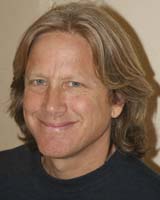
Why have we evolved positive emotions like gratitude, amusement, awe and compassion? Keltner, professor of psychology at UC Berkeley, offers a profound study of how emotion is the key to living the good life.

Participant(s) Bio
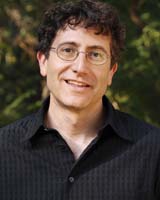
Dacher Keltner received his PhD from Stanford University in 1989 and is currently a Professor of Psychology at Berkeley, co-editor of Greater Good magazine, and director of Berkeley's Greater Good Science Center.

The Pluto Files: The Rise and Fall of America's Favorite Planet

In conversation with Dr. Laura Danly, astronomist, Curator of Griffith Observatory
Wednesday, February 4, 2009
01:21:49
Listen:
Episode Summary
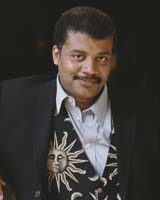
The bestselling author and director of the world-famous Hayden Planetarium chronicles America's irrational love affair with Pluto, man's best celestial friend

Participant(s) Bio
Neil deGrasse Tyson is an astrophysicist with the American Museum of Natural History, the director of the world-famous Hayden Planetarium, a monthly columnist in Natural History, and an award-winning author. He lives in New York City.

Wallace Stegner & the Shaping of Environmental Consciousness in the West

Moderated by David L. Ulin, book editor, L.A. Times
Co-presented with Heyday Books
Wednesday, January 28, 2009
01:23:43
Listen:
Episode Summary
A distinguished panel explores the legacy of one of the West's most influential writers, who fought for protection of the region's delicate environment as well as recognition of a Western regional base and influenced generations of environmental writers.

Participant(s) Bio
Page Stegner was born in Salt Lake City in 1937. He attended Stanford University, where he received his B.A. in history and his Ph.D. in American literature. From 1967 to 1995 he was a professor of American literature and director of the creative writing program at the University of California, Santa Cruz. A prolific author and editor, he recently published The Collected Letters of Wallace Stegner.

Tom Curwen is staff writer and editor at the Los Angeles Times. He was editor of the Outdoors section, a writer for the features section and deputy editor of the Book Review. He has been honored by the American Association of Sunday and Features Editors for three pieces he did for Outdoors on caving with nature writer Barbara Hurd, on Alaskan bush pilots and the annual migration of sand hill cranes to the Bosque del Apache. He has a master's degree in Creative Writing from USC and was a recipient of a 1991 Academy of American Poets prize. In 2002, he received a Rosalynn Carter Fellowship for mental health journalism.

David L. Ulin is book editor of the Los Angeles Times. He is the author of The Myth of Solid Ground: Earthquakes, Prediction, and the Fault Line Between Reason and Faith, and the editor of Another City: Writing from Los Angeles and Writing Los Angeles: A Literary Anthology, which won a California Book Award. He has written for The Atlantic Monthly, The Nation, The New York Times Book Review, LA Weekly, Los Angeles, and National Public Radio's "All Things Considered."

Jenny Price is a writer whose work focuses on L.A. environment. Author of Flight Maps: Adventures with Nature in Modern America, she has published in the Los Angeles Times, New York Times, Washington Post, L.A. Weekly, Audubon, Believer, and GOOD, and is a regular contributor to the "Native Intelligence" column on LA Observed. She has written often about the Los Angeles River and gives frequent tours. She has a Ph.D. in history from Yale University, and has been a Research Scholar at the UCLA Center for the Study of Women since 1999. She is currently working on a new book, Thirteen Ways of Seeing Nature in L.A.
ALOUD Science Series: On Seeing and Being - Seeing the Divine

Moderated by Margaret Wertheim, the Institute for Figuring
Monday, November 10, 2008
01:25:58
Listen:
Episode Summary

How, in this age of scientific rationalism, can we begin to understand religious visions and mystical experiences--now being reported by a growing number of people on the nightly news, across the internet, and by word-of-mouth? Dr. Lisa Bitel and Dr. Michael A. Arbib discuss visions from the Middle Ages to today, especially the tensions between cultural, spiritual, and neurological explanations for extraordinary sights, and consider new ways to understand these mysterious phenomena.

Made possible by a generous contribution from K&L Gates


Participant(s) Bio
Dr. Lisa Bitel is a professor of history at the University of Southern California who studies the social, cultural and religious history of medieval Europe. She is the author of Isle of Saints: Monastic Settlements and Christian Community in Early Ireland and Land of Women: Tales of Sex and Gender from Early Ireland. She has written widely about sex, gender, dreams and dreamers in the Middle Ages and has recently finished a book on the cults of Saint Genovefa in Paris and Saint Brigit of Ireland. She is currently researching the history of Christian religious visions.

Dr. Michael A. Arbib is the Fletcher Jones Professor of Computer Science, as well as a Professor of Biological Sciences, Biomedical Engineering, Electrical Engineering, Neuroscience and Psychology at the University of Southern California (USC). He has also been named as one of a small group of University Professors at USC in recognition of his contributions across many disciplines. He is the author or editor of 38 books. His edited volume, The Handbook of Brain Theory and Neural Networks is a massive compendium embracing studies in detailed neuronal function, system models of brain regions, connectionist models of psychology and linguistics, mathematical and biological studies of learning, and technological applications of artificial neural networks. His two most recent books are Who Needs Emotions: The Brain Meets the Robot(edited with Jean-Marc Fellous) and Action To Language via the Mirror Neuron System.

The Art Instinct: Beauty, Pleasure, and Human Evolution

In conversation with Michael Shermer, the Skeptic Society
Wednesday, January 7, 2009
Listen:
Episode Summary
Combining two fascinating and contentious disciplines -- art and evolutionary science -- a philosopher, professor and founder/editor of the popular Arts & Letter Daily, argues that human tastes in art are shaped by Darwinian selection.

Participant(s) Bio
Denis Dutton was born in Los Angeles and grew up in a family of bibliophiles, including brothers Dave and Doug, owners of bookstores in North Hollywood and Brentwood. For over twenty years he has been a professor of the philosophy of art at the University of Canterbury in New Zealand. Beyond his many publications in philosophy and aesthetics, Denis is founder and editor of the hugely popular website "Arts & Letters Daily," named by The Guardian as the best website in the world.

The Black Hole War: My Battle with Stephen Hawking to Make the World Safe for Quantum Mechanics

In conversation with science writer K.C. Cole
Thursday, July 17, 2008
1:03:07
Listen:
Episode Summary
The inside account-with a wild cast of characters- of the battle over the true nature of black holes with nothing less than our understanding of the entire universe at stake.

Participant(s) Bio
Leonard Susskind has been the Felix Bloch Professor in theoretical physics at Stanford University since 1978. The author of The Cosmic Landscape, he is a member of the National Academy of Science and the American Academy of Arts and Sciences, and recipient of numerous prizes including the science writing prize of the American Institute of Physics for his Scientific American article on black holes.

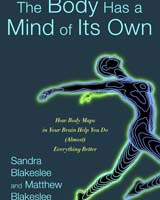
ALOUD Science Series: On Seeing and Being - The Body Has a Mind of Its Own

In conversation with Margaret Wertheim, founder, the Institute for Figuring
Tuesday, June 17, 2008
1:23:50
Listen:
Episode Summary

How does your mind know where your body ends and the outside world begins? Two acclaimed science writers discuss the largely unconscious ways that your brain builds maps of your body parts, your movements, the space around your body, the actions of others, and the sensations that lead to human emotions, health and disease.

Made possible by a generous contribution from K&L Gates


Participant(s) Bio
Sandra and Matthew Blakeslee, mother and son, are the third and fourth generation of science writers in the Blakeslee family. Sandra's grandfather Howard worked for the Associated Press starting in the 1920s and was one of the pioneers of American science writing. Howard's son Alton - Sandra's father, Matthew's grandfather - took over as AP science editor until retiring in 1985.

All You Can Eat: Panel Discussion

Moderated by Evan Kleinman, host of KCRW's \"Good Food\"
Co-presented with KCRW
Monday, June 9, 2008
01:03:38
Listen:
Episode Summary
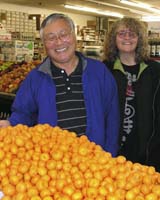
Rising concerns over food safety and the environmental impact of industrialized agriculture suggest that the true costs of \"cheap\" calories are unsustainably high. As our food economy fast approaches its limits, California's innovative food community offers hope and a salad bar full of possible solutions.

Participant(s) Bio

*Please note, this panel discussion featured a screening of the film "Eat at Bill's: Life in the Monterey Market." The film portion of the program is not included in the podcast.


Lisa Brenneis is a drought-tolerant California native who grows organic citrus with her husband in Ojai, California. She recently finished her first feature-length video documentary, Eat at Bill's: Life in the Monterey Market. She supports her movie habit by writing technical reference books for Peachpit Press.

Bill Fujimoto was born in Caldwell ID, in 1946, and raised in Berkeley, CA. A 1968 graduate of the University of California, he worked for five years as a mechanical engineer at Lockheed, Sunnyvale, before deciding to join his parents' Berkeley store. Founded in 1962, Monterey Market is an independent market, specializing in fresh produce in season. Monterey Market currently grosses $15 million/yr at a single location in north Berkeley. The business has grown up with the food revolution in Northern California, and has a strong commitment to supporting local agriculture and sustainable farming practices. Bill Fujimoto was a founding member of the San Francisco Ferry Plaza Market Collaborative.

ALOUD Science Series: On Seeing and Being - "What Do You See?"

In conversation with Margaret Wertheim, Institute for Figuring
Wednesday, May 21, 2008
01:15:51
Listen:
Episode Summary

How do our brains construct a world from a confounding and often conflicting mass of visual cues? According to Koch, professor of Cognitive and Behavioral Biology at Caltech, understanding how we see helps us understand how we arrive at a sense of a conscious "self."

This series made possible by a generous contribution from K&L Gates.


Participant(s) Bio

Christof Koch is an American neuroscientist working on the neural basis of consciousness. He currently holds the position of Lois and Victor Troendle Professor of Cognitive and Behavioral Biology, California Institute of Technology, where he has been since 1986. He is co-founder of the company "Eye-Predict" which attempts to aid in advertising by predicting eye-movements for given photos.


The Life of the Skies: Birding at the End of Nature

In conversation with Louise Steinman, curator of ALOUD
Tuesday, April 1, 2008
01:11:46
Listen:
Episode Summary
Rosen, novelist and New York Times contributor, sets out to explore birdwatching's centrality--historical and literary, spiritual and scientific--to a culture torn between the desire both to conquer and to conserve.

Participant(s) Bio
Jonathan Rosen is the author of The Talmud and The Internet: A Journey between Worlds and the novels Eve's Apple and Joy Comes in the Morning: A Novel. His essays have appeared in The New York Times and The New Yorker. He is the editorial director of Nextbook.

Pages

Top