The Library will be closed on Sunday, April 5, 2026, in observance of Easter.

Science/Nature

LAPL ID: 
12

Doppelganger: A Trip Into the Mirror World

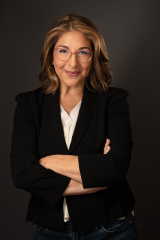
Naomi Klein
In Conversation With Cory Doctorow
Wednesday, September 6, 2023
01:20:00
Listen:
Episode Summary

In her bestselling books, celebrated activist and public intellectual Naomi Klein documents the effects of branding, austerity, and climate profiteering on our societies and our souls. Using her own story of an antithetical doppelganger, she looks at what she refers to as the "Mirror World" of our destabilized present, full of doubles and confusion. This is just the beginning of her part comic memoir and part chilling reportage about the world we’re living in and a path beyond confusion and despair.

Klein was in conversation with the Canadian-British blogger, journalist, and science fiction author Cory Doctorow.


Participant(s) Bio

Naomi Klein is the award-winning author of international bestsellers including This Changes EverythingThe Shock DoctrineNo LogoNo Is Not Enough, and On Fire, which have been published in more than thirty-five languages. She is an associate professor in the department of geography at the University of British Columbia, the founding codirector of UBC’s Centre for Climate Justice, and an honorary professor of Media and Climate at Rutgers University. Her writing has appeared in leading publications around the world, and she is a columnist for The Guardian.

Cory Doctorow is a science fiction author, activist and journalist. He is the author of many books, including Red Team Blues, a science fiction crime thriller; Chokepoint Capitalism, nonfiction about monopoly and creative labor markets; the Little Brother series for young adults; In Real Life, a graphic novel; and the picture book Poesy the Monster Slayer. His latest book is The Internet Con. In 2020, he was inducted into the Canadian Science Fiction and Fantasy Hall of Fame.


Different: Gender Through the Eyes of a Primatologist

Frans de Waal
A lecture
Tuesday, May 16, 2023
01:12:53
Listen:
Episode Summary

“This surprising look at the nature of primates has a lot to say about what it means to be human.”―Publishers Weekly

Renowned primatologist and bestselling author Frans de Waal has spent thousands of hours observing apes and monkeys both in the wild and in captivity. In his new book (now out in paperback), Different: Gender Through the Eyes of a Primatologist, de Waal challenges widely held beliefs about masculinity and femininity and common assumptions about authority, leadership, cooperation, competition, filial bonds, sexual orientation, gender identity, and the limitations of the gender binary, exceptions to which are also found in other primates. With humor, clarity, and compassion, Different seeks to broaden the conversation about human gender dynamics by promoting an inclusive model that embraces differences.


Participant(s) Bio

Frans de Waal, author of Mama’s Last Hug, is C. H. Candler Professor Emeritus of Primate Behavior at Emory University and the former director of the Living Links Center at the Yerkes National Primate Research Center. He lives in Atlanta, Georgia.


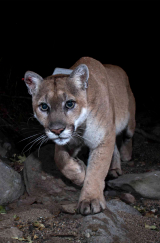
How P-22 United Our City: Love Letters to LA’s Favorite Cat

Beth Pratt, Martha Groves, Sherry Mangel-Ferber, Laura Nelson, Miguel Ordeñana, Alan Salazar, Alexander Vidal and others
Co-Presented With the Los Angeles Public Library
Wednesday, February 22, 2023
01:10:11
Listen:
Episode Summary

This program features personal stories by various individuals who made a connection with P-22 and understand the immediate need for wildlife protection, along with guests who answered an open mic call to share their knowledge and admiration for P-22. The evening features California Regional Executive Director for the National Wildlife Federation’s Beth Pratt, writer Martha Groves, author Sherry Mangel-Ferber, LA Times reporter Laura Nelson, Senior Manager of Community Science for Natural History Museum Miguel Ordeñana, Chumash and Tataviam elder Alan Salazar, and illustrator Alexander Vidal. The open mic welcomes (in order of appearance) playwright, actor, and musician Amy Raasch, LAPL librarian Tommy Bui, longtime ALOUD attendee Terrence Butcher, and Seed Program Manager of Theodore Payne Foundation Genevieve Arnold to share their remembrances.


Participant(s) Bio

A lifelong advocate for wildlife, Beth Pratt has worked in environmental leadership roles for over twenty-five years and in two of the country’s largest national parks: Yosemite and Yellowstone. As the California Regional Executive Director for the National Wildlife Federation, Pratt leads the #SaveLACougars campaign to build the Wallis Annenberg Wildlife Crossing, which broke ground on Earth Day, April 22, 2022. Her innovative conservation work has been featured by the Los Angeles Times, NPR, The New Yorker, and more. Author of I Heart Wildlife and When Mountain Lions are Neighbors, her new book Yosemite Wildlife will be published in 2024. She has also contributed to the books The Nature of Yosemite and Inspiring Generations as well as given a TEDx talk, How a Lonely Cougar in Los Angeles Inspired the World and is featured in the documentary, The Cat that Changed America. Pratt spends much of her time in Los Angeles but makes her home outside of Yosemite with her five dogs, two cats, and the wildlife that frequent her backyard.

Martha Groves, a lifelong journalist, had the good fortune to be the first reporter to write about P-22. After earning her master’s degree at Northwestern University’s Medill School of Journalism, she worked as an editor and arts and culture reporter at the Chicago Daily News. She moved to the Philadelphia Inquirer and then the Los Angeles Times, where she covered retailing, the economy of the West, tech, farming, management, education, and the Westside region. Since her retirement from the Times in 2015, she has been a freelance reporter and editor. She is a native Hoosier. In 1994, she adopted her daughter, Nora, in China. She is an avid traveler, hiker, and concertgoer and serves on the board of the Los Angeles Master Chorale.

Author Sherry Mangel-Ferber is a retired teacher who lives in Liberty Canyon in the Santa Monica Mountains. She is a volunteer for SaveLACougars and enjoys returning to the classroom to teach about the local wildlife. She spends as much time as possible outdoors, hiking, taking photographs of the scenic wonders of the area and, when possible, of the wildlife as well. When she is not outdoors, she can be found sewing, doing needlepoint, reading, baking, spending time with friends, or with her two rescue cats, Kit and Kaboodle.

Laura J. Nelson is an investigative and enterprise reporter at the Los Angeles Times. Her work has exposed and explained chaos in the U.S. Postal System, inequities in COVID-19 vaccine distribution, and the spread of far-right extremism in California’s world of health, wellness, and spirituality. She previously covered transportation, mobility, and commuting for The Times. Nelson was part of the team that won the 2016 Pulitzer Prize for its coverage of the San Bernardino terrorist attack, as well as the team that was a 2020 Pulitzer finalist for its coverage of a dive-boat fire that killed 34 people off the coast of Santa Barbara. Nelson grew up in Kansas and joined The Times in 2012.

Miguel Ordeñana is an environmental educator and wildlife biologist. He works at the Natural History Museum of Los Angeles County as a Senior Manager in the Community Science office. As a community science senior manager, Miguel promotes and creates community science projects and recruits and trains participants. Miguel utilizes his mammal research background by conducting urban mammal research in L.A. and leads NHMLAC’s Southern California Squirrel Survey and Backyard Bat Survey. Miguel serves as an advisor on a jaguar project in southwestern Nicaragua that he initiated in 2012 as well as a Board Member for the Friends of Griffith Park and National Wildlife Federation. Miguel is dedicated to making science and access to nature more equitable with the goal of increasing the representation and retention of underrepresented communities within the environmental field. He holds a bachelor’s degree in Environmental Studies from the University of Southern California and an M.S. in Ecology from the University of California Davis.

Alan Salazar (Puchuk Ya’ia’c, “Fast Runner”) is a Chumash and Tataviam elder. He draws on decades of experience as a preschool teacher, juvenile probation officer, monitor and cultural resource advisor, a traditional paddler, and builder of Chumash canoes, a spiritual adviser, and a traditional storyteller. Lifelong devoted to furthering Native American causes, he is a founding member of the Kern County Native American Heritage Preservation Council and the Chumash Maritime Association, a member of the California Indian Advisory Council for the Santa Barbara Museum of Natural History, and a community advisor with the Ventura County Indian Education Consortium. He traces his family ancestry to the Chumash village of Ta’apu, now known as Simi Valley, and the Tataviam village of Chaguayanga near Castaic, Ca. His ancestors were brought into the San Fernando Mission starting in 1799.

Photo credit: P-22© Miguel Ordeñana
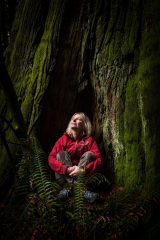
Erosion: Essays of Undoing

Terry Tempest Williams
In cConversation With Jessica Strand
Thursday, July 8, 2021
01:02:50
Listen:
Episode Summary

"Each of us finds our identity within the communities we call home," writes Terry Tempest Williams in Erosion, a galvanizing new collection of essays that navigates the emotional, geographical, and communal territories of home. Sizing up the assaults on America’s public lands and the erosion of our commitment to the open spaces of democracy, Williams fiercely examines the many forms of erosion we face—of democracy, science, compassion, and trust. From the gutting of sacred lands to Native Peoples of the American Southwest to the undermining of the Endangered Species Act, Williams testifies about the harsh reality of the climate crisis and how our earth—our home—is being torn apart. One of today’s most important writers and conservationists, Williams is the award-winning author of The Hour of Land: A Personal Topography of America’s National Parks; Refuge: An Unnatural History of Family and Place; and When Women Were Birds. Discussing her new essays, Williams blazes a way forward through dispiriting times to arrive at new truths about the beauty of human nature.


Participant(s) Bio

Terry Tempest Williams is the award-winning author of The Hour of Land: A Personal Topography of America’s National Parks; Refuge: An Unnatural History of Family and Place; Finding Beauty in a Broken World; and When Women Were Birds, among other books. Her work is widely taught and anthologized around the world. A member of the American Academy of Arts and Letters, she is currently the Writer-in-Residence at the Harvard Divinity School and divides her time between Cambridge, Massachusetts and Castle Valley, Utah.


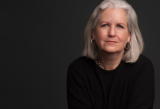
Finding the Mother Tree: Discovering the Wisdom of the Forest

Suzanne Simard
In conversation with Jia Tolentino
Tuesday, June 22, 2021
00:54:30
Listen:
Episode Summary

One of the world's leading forest ecologists shares from her first book to bring us deeper into her intimate world of trees. In Finding the Mother Tree: Discovering the Wisdom of the Forest, Suzanne Simard traces her journey from growing up in a logging community in the rainforests of British Columbia to her incredible work as a pioneer on the frontier of plant communication and intelligence. Illuminating how trees are not simply the source of timber or pulp, but are a complicated, interdependent circle of life, Simard brings a greater humanity to understanding trees and their connections to one another and to other living things. Her work has influenced filmmakers (the Tree of Souls of James Cameron's Avatar) and authors (Richard Powers’ Pulitzer Prize–winning novel The Overstory) and her TED talks have been viewed by more than 10 million people worldwide. Simard will be in conversation with The New Yorker’s Jia Tolentino, who has investigated many stories of cultural reckoning from youth vaping to sexual assault. As our world finally begins to turn its attention to the harsh reality of climate change, please join ALOUD for a profound look at how the inseparable bonds between living things enable our survival.


Participant(s) Bio
Suzanne Simard was born in the Monashee Mountains of British Columbia and was educated at the University of British Columbia and Oregon State University. She is a Professor of Forest Ecology at the University of British Columbia’s Faculty of Forestry.

Jia Tolentino is a staff writer at The New Yorker whose work includes an exploration of youth vaping and essays on the ongoing cultural reckoning about sexual assault. Previously, she was the deputy editor at Jezebel and a contributing editor at the Hairpin. She grew up in Texas, attended the University of Virginia, served in the Peace Corps in Kyrgyzstan, and received an M.F.A. in fiction from the University of Michigan. Her first book, the essay collection Trick Mirror, was published in August 2019.


Dreams, Genes, & Machines: Are We Living Science Fiction?

Dr. Mary Helen Immordino-Yang
In Conversation With Dr. Achuta Kadambi
Thursday, July 30, 2020
01:02:37
Listen:
Episode Summary

In ALOUD’s first live program, we’ll explore the science of virtual learning. As schools around the country prepare for an online fall semester, hear from neuroscientist, psychologist, and former teacher Dr. Mary Helen Immordino-Yang about the educational implications for this generation of learners. Focusing on teenagers and their developing brains, Dr. Immordino-Yang will discuss how current events are impacting the ways teenagers think, feel, and process the world. This program is generously supported by the Alfred P. Sloan Foundation.


Participant(s) Bio

Mary Helen Immordino-Yang, EdD, studies the psychological and neurobiological bases of social emotion, self-awareness, and culture and their implications for learning, development, and schools. She is a Professor of Education at the USC Rossier School of Education, a Professor of Psychology at the Brain and Creativity Institute, a member of the Neuroscience Graduate Program Faculty at the University of Southern California, and Director of the USC Center for Affective Neuroscience, Development, Learning and Education (CANDLE).

Achuta Kadambi is an Assistant Professor of Electrical and Computer Engineering at UCLA. With applications to cyberphysical systems and digital health, his research has been recognized with best paper awards, fellowships, and the Lemelson-MIT student prize. His imaging research has resulted in 15t US patent filings, specifically for AI applications for autonomous cars. Kadambi received his Ph.D. From MIT.


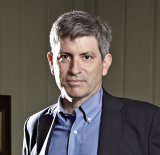
Carl Zimmer

Carl Zimmer
In conversation with Sean Carroll
Thursday, February 6, 2020
01:09:59
Listen:
Episode Summary

Quantum mechanics is the most important idea in physics, and physicists themselves readily admit that they don’t understand it. Genetics is another commonly misconceived area of science with the rise of new biomedical technologies and the popularity of at-home DNA testing kits. Fortunately for ALOUD audiences, we welcome two of the most celebrated science writers to help make sense of how we live in the world—through space and time, and what we pass along from generation to generation. Carl Zimmer is a celebrated New York Times columnist and science writer whose most recent book, She Has Her Mother’s Laugh: The Powers, Perversions, and Potential of Heredity weaves historical and current scientific research to present a new definition of what heredity is and how it is much bigger than simply genes we inherit from our ancestors. Joining Zimmer is Sean Carroll, a theoretical physicist at the California Institute of Technology, host of the Mindscape podcast, and bestselling author of The Big Picture. Carroll shares from his new book, Something Deeply Hidden: Quantum Worlds and the Emergence of Spacetime, where he demystifies the paradoxes of quantum mechanics. This illuminating, wide-reaching conversation will take us from the single cells that comprise our own bodies to the wonders of the cosmos.


Participant(s) Bio

Carl Zimmer is a columnist for the New York Times, where is his column "Matter" has appeared regularly since 2013. Over the course of his career, he has published 13 books about Science. His latest book is She Has Her Mother’s Laugh: The Power, Perversions, and Potential of Heredity. It won the 2019 National Academies Communication Award as well as many other honors.

Sean Carroll is a theoretical physicist at the California Institute of Technology, host of the Mindscape podcast, and author of From Eternity to Here, The Particle at the End of the Universe, and The Big Picture. He has been awarded prizes and fellowships by the National Science Foundation, NASA, the American Institute of Physics, and the Royal Society of London, among many others. He lives in Los Angeles with his wife, writer Jennifer Ouellette.


Dreams, Genes, & Machines: Are We Living Science Fiction? Artificial Intelligence

Dr. Achuta Kadambi
In Conversation With Nellie Bowles
Thursday, November 21, 2019
1:00:13
Listen:
Episode Summary

What if search-and-rescue robots could sense survivors through dense smoke? What if surgical robots could perform impossible surgeries by seeing details invisible to a human doctor? At Dr. Achuta Kadambi’s UCLA lab, his team works to make these possibilities a reality. By symbiotically blending camera and algorithm designs, Kadambi gives the gift of sight to machines. With journalist Nellie Bowles, who covers tech and internet culture from San Francisco for the New York Times, Kadambi discusses how computational imaging has the potential to unleash an era of superhuman robotics.


Participant(s) Bio

Achuta Kadambi received a Ph.D. degree from MIT and joined UCLA as an Assistant Professor. His publications have been presented as Orals at CVPR, ICCV, ICCP, and SIGGRAPH. He is currently co-authoring a textbook (Computational Imaging, MIT Press 2021) and is also a co-founder of a robotic imaging startup. Achuta's research has received several recognitions, including the NSF Career Award, Forbes 30 under 30 (Science), Google Faculty Award, Sony Imaging Young Faculty Award, and Army Young Investigator Award (ARO-YIP).

Nellie Bowles is a domestic correspondent for the New York Times, focused on business and culture stories. She is writing a book of essays and posting a short one about religion online once a month or so. Prior to joining the Times, she was a correspondent for VICE News Tonight on HBO and a writer for the Guardian, Recode, and California Sunday.


Dreams, Genes, & Machines: Are We Living Science Fiction? Gene Editing

Dr. April Pyle
In Conversation With Karen Kaplan
Thursday, October 10, 2019
57:25
Listen:
Episode Summary

The leaps and advances of science and technology to revolutionize human DNA have sparked fierce public debate about what the future of gene editing holds for humanity. Moving beyond some of the alarming sci-fi scenarios of gene editing, groundbreaking scientists are harnessing the power of these biological breakthroughs to save lives. At Dr. April Pyle’s laboratory at UCLA, she investigates human pluripotent stem cell biology and the differentiation of these cells for use in regenerative medicine, including therapeutic approaches for patients with muscular dystrophy. Discussing with the Los Angeles Times science and medicine editor Karen Kaplan, Dr. Pyle takes the stage to shed light on the reality of stem cell research today.


Participant(s) Bio

Dr. Pyle received her Ph.D. from the University of Tennessee in 2002 and completed her postdoctoral fellowship work with Peter Donovan in 2006 at Johns Hopkins University. She is currently an Associate Professor in the Department of Microbiology, Immunology and Molecular Genetics at UCLA and a member of the Eli and Edythe Broad Stem Cell Center, the Center for Duchenne Muscular Dystrophy, and the Jonsson Comprehensive Cancer Center at UCLA. Dr. Pyle’s lab uses multi-disciplinary approaches to study human pluripotent stem cell biology and the differentiation of these cells for use in regenerative medicine. Dr. Pyle’s lab studies both basic aspects of stem cell biology as well as more translational aspects of human pluripotent stem cell differentiation towards skeletal muscle for use in therapeutic approaches for patients with muscular dystrophy.

Karen Kaplan is the science and medicine editor at the Los Angeles Times. Before joining the science group in 2005, she covered technology in the Business section for ten years. She is a graduate of MIT and Columbia University. In a parallel universe without journalism, she’d have a career in economics, genetics, biostatistics, or some other field that describes the world in math.


Michael Pollan

In Conversation With Lera Boroditsky
Tuesday, May 14, 2019
01:13:37
Listen:
Episode Summary

In this #1 New York Times bestseller, Michael Pollan offers a mind-bending investigation into the medical and scientific revolution taking place around psychedelic drugs—and the spellbinding story of his own life-changing psychedelic experiences as he set out to research the active ingredients in magic mushrooms. Blending science, memoir, travel writing, history, and medicine, How to Change Your Mind is a triumph of participatory journalism through Pollan’s discovery of how these remarkable substances are improving the lives not only of the mentally ill, but also of healthy people coming to grips with the challenges of everyday life. Sharing his deep dive into altered states of consciousness, Pollan discusses this unexpected new frontier in our understanding of the mind, the self, and our place in the world.


Participant(s) Bio

Michael Pollan is the author of eight books, including How to Change Your Mind, Cooked, Food Rules, In Defense of Food, The Omnivore’s Dilemma and The Botany of Desire, all of which were New York Times bestsellers. A longtime contributor to the New York Times Magazine, he also teaches writing at Harvard and the University of California, Berkeley, where he is the John S. and James L. Knight Professor of Science Journalism. In 2010, Time magazine named him one of the one hundred most influential people in the world.

Lera Boroditsky is an Associate Professor of Cognitive Science at UCSD and Editor in Chief of Frontiers in Cultural Psychology. She previously served on the faculty at MIT and at Stanford. Her research is on the relationships between mind, world, and language (or how humans get so smart).


Pages

Top