The Library will be closed on Sunday, April 5, 2026, in observance of Easter.

Science/Nature

LAPL ID: 
12

The Nature of Observation
Tuesday, April 5, 2011
01:22:27
Listen:
Episode Summary
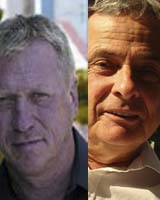
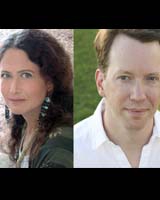
How does a poet view time, the slant of light on a windowsill? How might a theoretical cosmologist approach those same phenomena? Hirshfield and Carroll---both at the vanguard of their disciplines-- discuss different (and perhaps similar) points of entry into the realm of observation and metaphor.

Participant(s) Bio
Jane Hirshfield is the author of six collections of poetry, including After, Given Sugar, Given Salt, The Lives of the Heart, and The October Palace, as well as a book of essays, Nine Gates: Entering the Mind of Poetry. She edited and co-translated The Ink Dark Moon: Love Poems by Komachi & Shikibu, Women of the Ancient Court of Japan, Women in Praise of the Sacred: 43 Centuries of Spiritual Poetry by Women, and Mirabai: Ecstatic Poems. Her work has appeared in many publications including The New Yorker and The Times Literary Supplement. In 2004, Hirshfield was awarded the 70th Academy Fellowship for distinguished poetic achievement by The Academy of American Poets, an honor formerly held by such poets as Robert Frost and Elizabeth Bishop.

Sean Carroll is a theoretical physicist at the California Institute of Technology. His research focuses on theoretical physics and cosmology. Carroll is the author of From Eternity to Here, about cosmology and the arrow of time, has written a graduate textbook, Spacetime and Geometry: An Introduction to General Relativity, and recorded a course on dark matter and dark energy for The Teaching Company. He is a contributor to the group blog Cosmic Variance.
Fledgling

In conversation with Akasha Gloria Hull
Wednesday, November 2, 2005
01:09:33
Listen:
Episode Summary

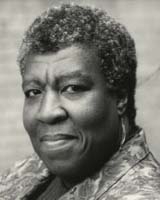
Butler, one of the world's great science fiction writers, explores the limits of  "otherness" in her new novel-the story of a young, amnesiac girl whose alarmingly unhuman needs and abilities lead her to a startling conclusion.


Participant(s) Bio

Octavia Butler is the author of eleven novels, including Kindred, Dawn, and Parable of the Sower, and one collection of short fiction, Bloodchild. Butler is the recipient of a MacArthur Foundation "genius" grant, the Nebula Award, the Hugo Award, a lifetime achievement award in writing from PEN, and numerous other literary awards.

An independent writer, teacher, poet, lecturer, and consultant, Akasha Gloria Hull has been a professor of women's studies and literature at the University of California, Santa Cruz, the University of Delaware, and the University of the West Indies-Mona in Kingston, Jamaica. She holds B.A., M.A., and Ph.D. degrees and also a honorary Doctor of Letters, awarded by Purdue University in 1992 "for pioneering work in the field of black feminist studies that has empowered others to hear and appreciate diverse voices." She has received fellowships from the National Endowment for the Humanities, the Fulbright, Rockefeller, Mellon and Ford Foundations, the American Association of University Women, and the National Humanities Center.

Her book, All the Women Are White, All the Blacks Are Men, But Some of Us Are Brave: Black Women's Studies (co-edited), garnered the National Institute's Women of Color Award. She is also the author of Give Us Each Day: The Diary of Alice Dunbar-Nelson; Color, Sex, and Poetry: Three Women Writers of the Harlem Renaissance; and Healing Heart: Poems. Her latest book, Soul Talk: The New Spirituality of African-American Women (Inner Traditions, 2001) was praised in Publishers Weekly as "powerful, practical and nourishing gumbo . . . of the heart and spirit." She is currently completing the first novel of a projected trilogy set in the contemporary United States, the slavery South, and the 23rd century future.


A Field Guide to Getting Lost

In conversation with David L. Ulin
Monday, February 12, 2007
01:09:21
Listen:
Episode Summary
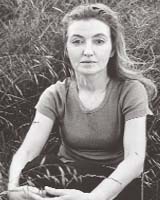
Solnit-activist and cultural historian-draws on emblematic moments of uncertainty, trust, loss, memory, desire and place in brilliant autobiographical essays exploring how we find ourselves or lose ourselves.

Participant(s) Bio

Rebecca Solnit is an essayist, historian, and activist whose work focuses on issues of environment, landscape, and place. Her books include Savage Dreams: A Journey into the Landscape Wars of the American West, A Book of Migrations: Some Passages in Ireland, Wanderlust: A History of Walking, Hollow City: The Siege of San Francisco and the Crisis of American Urbanism, As Eve Said to the Serpent: On Landscape, Gender, and Art, which was a finalist for the National Book Critics Circle Award in Criticism, River of Shadows: Eadweard Muybridge and the Technological Wild West, which won the National Book Critics Circle Award in Criticism and the Mark Lynton History Prize, and Hope in the Dark: Untold Histories, Wild Possibilities.

David L. Ulin is a book critic for the Los Angeles Times. He is the author of The Myth of Solid Ground: Earthquakes, Prediction, and the Fault Line Between Reason and Faith, and the editor of Another City: Writing from Los Angeles and Writing Los Angeles: A Literary Anthology, which won a California Book Award. He has written for The Atlantic Monthly, The Nation, The New York Times Book Review, LA Weekly, Los Angeles, and National Public Radio's "All Things Considered." His most recent book, The Lost Art of Reading, is due out this fall.


The Tell-Tale Brain

In conversation with Margaret Wertheim
Thursday, January 20, 2011
01:16:15
Listen:
Episode Summary
From autism to basic self-awareness, \"the Marco Polo of neuroscience\" traces the strange links between neurology and behavior, probing the mystery of human uniqueness.

Participant(s) Bio
V.S. Ramachandran, dubbed the "Marco Polo of neuroscience" by Richard Dawkins, reveals what baffling and extreme neurological case studies can teach us about normal brain function and how it evolved. Synesthesia becomes a window into the brain mechanisms that make some of us more creative than others. And autism-for which he opens a new direction for treatment-gives us a glimpse of the aspect of being human that we understand least: self-awareness. Ramachandran is the director of the Center for Brain and Cognition and a professor with the Psychology Department and Neurosciences Program at the University of California, San Diego.

Margaret Wertheim is a science writer and the author of books on the cultural history of physics, including Pythagoras' Trousers, a history of the relationship between physics and religion in Western culture, and The Pearly Gates of Cyberspace: A History of Space from Dante to the Internet. From 2001-2005 Wertheim wrote the "Quark Soup" column for the LA Weekly and is currently a contributor to the New York Times and Los Angeles Times. In 2003, she and her twin sister Christine Wertheim founded the Institute for Figuring, an organization based in Los Angeles that promotes the public understanding of the poetic and aesthetic dimensions of science and mathematics.

Gay, Straight and the Reason Why

In conversation with Larry Swanson
Tuesday, October 5, 2010
01:14:59
Listen:
Episode Summary
What causes a child to grow up gay or straight or bisexual? Neuroscientist LeVay summarizes where the quest for a biological explanation of sexual orientation stands today, taking us on a tour of laboratories that specialize in genetics, endocrinology, neuroscience, cognitive psychology, evolutionary psychology and more.

Participant(s) Bio
Simon LeVay is a British-born neuroscientist who has served on the faculties of Harvard Medical School and the Salk Institute for Biological Studies. He is best known for his research on the brain and sexuality, and has spent many years studying the visual system. He has written ten previous books, including the New York Times best-seller, When Science Goes Wrong.

Dr. Larry Swanson is Appleman Professor of Biological Sciences and a member of the Neuroscience Research Institute at USC, where he directs a laboratory investigating brain systems that control motivation and emotion. His recent book Brain Architecture: Understanding the Basic Plan presents a new theory of nervous system organization, and his atlas Brain Maps is in its third edition. He and his wife, Neely have translated three classic works of Santiago Ramón y Cajal (1852-1934), the Nobel Prize-winning founder of modern neuroscience. Dr. Swanson is a member of the National Academy of Sciences.

Dancing in the Streets: A History of Collective Joy

In conversation with Amy Parish
Tuesday, January 16, 2007
01:05:33
Listen:
Episode Summary
What are the deep origins of communal celebration in human biology and culture? Join us for an original and exhilarating look at one of humanity's oldest traditions.

Participant(s) Bio
Barbara Ehrenreich is a renowned social critic and most recently the author of Blood Rites: Origins and History of the Passions of War, as well as eight other books. Her much discussed essays and articles have appeared in major newspapers and magazines around the country. The recipient of several prestigious writing awards, she is currently a regular essayist for Time Magazine and a columnist for The Guardian in Great Britain. She holds a Ph.D. in biology from Rockefeller University.

Dr. Amy Parish is a Biological Anthropologist, Primatologist, and Darwinian Feminist who has taught at University of Southern California in the Gender Studies, Arts and Letters, and Anthropology programs and departments since 1999. She received her undergraduate training at University of Michigan and her graduate school education at University of California-Davis and then taught at University College London. She conducted post-doctoral research at the University of Giessen in Germany on the topic of reciprocity.

James Workman: Heart of Dryness: How the Last Bushmen Can Help Us Endure the Coming Age of Permanent Drought

In conversation with Adan Ortega
Thursday, June 17, 2010
01:03:00
Listen:
Episode Summary
Workman, a skilled storyteller, uncovers the universal politics of water and draws wisdom from tragedy in the Kalahari desert-opening our eyes to the ongoing struggle to secure water for life on earth.

Participant(s) Bio
James Workman began his award-winning career as a journalist in Washington, D.C., writing for the New Republic, Washington Monthly, Utne Reader, Washington Business Journal, Foreign Service, and Orion, among other publications. In the Clinton Administration he served as a special assistant and natural resources speechwriter to Interior Secretary Bruce Babbitt, with whom he reintroduced wolves, restored fire to its vital and natural role in western forests, and blew up obsolete dams to replenish dying rivers. For seven years in Africa and Asia, he helped prepare and launch the landmark Report of the World Commission on Dams, led investigative research safaris, lectured at universities, and advised on water policy in the developing world. Based on his experience with the Kalahari Bushmen, he is pioneering new platforms for trading the human right to water. He lives in San Francisco.

http://www.heartofdryness.com/

Adán Ortega, Jr. is co-founder of Water Conservation Partners Inc., helping property developers and water planners make water available for projects through state of the art water conservation. He handles strategic communications planning and government affairs for clients at AOA, his public affairs firm. Adán was Vice President for External Affairs of the Metropolitan Water District of Southern California ('99-05) where he created the long-running Bewaterwise.com and California Friendly water conservation advertising and branding campaigns. He was Chief Deputy Secretary of State under California Secretary of State Bill Jones during the late 1990s and Assistant General Manager of West and Central Basin Municipal Water Districts from 1994-1997. Adán is a member of the California State Board of Food and Agriculture, the Stewardship Council of Roots of Change, the Board of Directors of Mujeres de La Tierra, and is on the advisory board of Sustainable Conservation.

Newton and the Counterfeiter: The Unknown Detective

Presented in conjunction with Presented in collaboration with Distinctive Voices @ The Beckman Center
Tuesday, May 25, 2010
01:08:29
Listen:
Episode Summary
A deft and exhaustively researched account of a near-forgotten chapter of Newton's extraordinary life. Levenson, a documentary filmmaker and head of the Graduate Program in Science Writing at MIT, allows us to see how Newton's amazing mind worked when dealing with practical rather than theoretical questions.

Participant(s) Bio
Thomas Levenson is a professor of science writing at MIT and the acclaimed author of three works of nonfiction, including Einstein in Berlin, Measure for Measure, and Ice Time. He is also the producer of 10 documentaries, for which he has won numerous awards. Levenson lives outside of Boston.

How Memories Get Made

Moderated by Larry Swanson
Wednesday, April 28, 2010
01:15:53
Listen:
Episode Summary
The world-renowned neuroscientist Gary Lynch, subject of McDermott's new book, discusses his decades-long obsessive pursuit to uncover the mechanism by which the brain makes memories.

Participant(s) Bio
Terry McDermott is a former national reporter for the Los Angeles Times and the author of Perfect Soldiers: The 9/11 Hijackers-Who They Were, Why They Did It. He lives in Los Angeles.

Gary Lynch is one of the most cited neuroscientists in the world and author of more than 550 scientific articles. He is Professor of Psychiatry at the University of California at Irvine. He is the co-author of Big Brain: The Origins and Future of Human Intelligence.

Dr. Larry Swanson is Appleman Professor of Biological Sciences and a member of the Neuroscience Research Institute at USC, where he directs a laboratory investigating brain systems that control motivation and emotion. His recent book Brain Architecture: Understanding the Basic Plan presents a new theory of nervous system organization, and his atlas Brain Maps is in its third edition. He and his wife, Neely, have translated three classic works of Santiago Ramón y Cajal (1852-1934), the Nobel Prize-winning founder of modern neuroscience, including his 2,000-page masterpiece Histology of the Nervous System and Advice to a Young Investigator. Dr. Swanson is a fellow of the American Academy of Arts and Sciences.

Advancing Urban Agriculture in Los Angeles

Moderated by Mia Lehrer
Thursday, June 3, 2010
01:26:45
Listen:
Episode Summary
This panel of experts will present and analyze the urban agriculture programs emerging in Los Angeles, with a focus on key topics such as policies, challenges, trends and the programs currently in place.

Participant(s) Bio

Internationally acclaimed landscape planner and president of Mia Lehrer + Associates, Mia Lehrer, FASLA, has conducted extensive research on urban agriculture. Her "Farm on Wheels" program was the winning design for the\"redesign your farmer's market\" contest, which invited entrants to articulate and render their vision for the next generation of farmers'markets and how they will serve the community. Sponsored by GOOD magazine, The Urban & Environmental Policy Institute, CO Architects, The Los Angeles Good Food Network, and The Architect's Newspaper. http://www.mlagreen.com/

Mud Baron operates a seven-acre farm on the campus of North Hollywood High School, which serves as a nursery for the rest of LAUSD. It also maintains some 500 gardens across the LAUSD at varying levels of production. http://www.mudbaron.com/

Glen Dake, LA Community Garden Council - The LA Community Garden Council's mission as a non-profit is to connect people with community garden space in their neighborhood. Approximately 70 community gardens are growing in Los Angeles County, serving 3,900 families. http://www.glendake.com/ http://www.lagardencouncil.org/

Robert Gottlieb is the director for the Center for Food and Justice of Occidental College. Most recently, a $2.34 million grant from the W.K. Kellogg Foundation has allowed the CFJ to establish and coordinate - in collaboration with the Community Food Security Coalition - the National Farm to School Network. The effort links local farmers with school cafeterias across the country, improving student nutrition while giving small farmers access to a multi-billion dollar market.

Paula Daniels serves on the Food Policy Task Force, City of LA, and is a commissioner for the L.A. Board of Public Works. Formed by Mayor Villaraigosa, this task force will provide a report and recommendations over a six month period on city food policy and a foodshed assessment. The task force will conduct research on a number of topics, including food access and transportation, sustainable agriculture and pesticide use, nutrition education programs, and urban/rural community relationships.


Pages

Top