The Library will be closed on Sunday, April 5, 2026, in observance of Easter.

Science/Nature

LAPL ID: 
12

The Drunkard's Walk: How Randomness Rules Our Lives
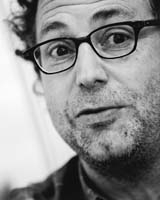
In conversation with science writer K.C. Cole
Thursday, March 11, 2010
01:16:13
Listen:
Episode Summary
Mlodinow - a physicist with the grace of a born storyteller - illuminates the improbable ways that chance and probability affect our daily lives.

Participant(s) Bio
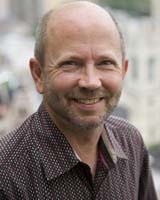
Leonard Mlodinow received his doctorate in physics from the University of California, Berkeley, was an Alexander von Humboldt fellow at the Max Planck Institute, and now teaches about randomness to future scientists at Caltech. Along the way, he has written for the television series MacGyver and Star Trek: The Next Generation. His previous books include Euclid's Window: The Story of Geometry from Parallel Lines to Hyperspace, Feynman's Rainbow: A Search for Beauty in Physics and in Life, and, with Stephen Hawking, A Briefer History of Time.

K.C. Cole is currently on the faculty at the USC Annenberg School of Journalism. Previously, she was science correspondent for the Los Angeles Times and has written for The New York Times, The New Yorker, and many other publications. Cole is also the author of seven nonfiction books, including Mind Over Matter: Conversations with the Cosmos; The Hole in the Universe: How Scientists Peered Over the Edge of Emptiness and Found Everything; and The Universe and the Teacup, the Mathematics of Truth and Beauty. She has been honored with numerous prizes, including the American Institute of Physics Science Writing prize and the Los Angeles Times award for best explanatory journalism. http://www.kccole.net/
The Great Equations: Breakthroughs in Science from Pythagoras to Heisenberg

In conversation with Larry Swanson, Appleman Professor of Biological Sciences, USC
Wednesday, February 17, 2010
01:03:31
Listen:
Episode Summary
Crease, a science historian and philosopher, takes us on a tour of ten of the most important victories in our long struggle to understand the world we live in.

Participant(s) Bio
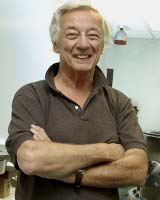
Robert P. Crease writes the "Critical Point" column for Physics World. He is the chairman of the philosophy department at Stony Brook University and lives in New York City. He is the author of, among other books, The Prism and the Pendulum.

A Force of Nature: The Frontier Genius of Ernest Rutherford

In conversation with Jennifer Ouellette, science writer
Wednesday, January 30, 2008
01:05:08
Listen:
Episode Summary
The award-winning historian offers a new intellectual biography of the twentieth century's greatest experimental physicist, whose revolutionary discoveries included the orbital structure of the atom.

Participant(s) Bio
Richard Reeves, Senior Lecturer at the Annenberg School of Communication at the University of Southern California, has written numerous works on American and world politics, and has won dozens of awards for his work in print, television, and film. His books include a trilogy on the modern American Presidency: President Kennedy: Profile of Power (1993), President Nixon: Alone in the White House (2001), and President Reagan: The Triumph of Imagination (2006). Reeves is a syndicated columnist and former Chief Political Correspondent of The New York Times, as well as a former National Editor and Columnist for Esquire and New York Magazine. He graduated from Stevens Institute of Technology in Hoboken, N.J. with a degree in mechanical engineering and worked as an engineer before becoming a journalist.

TIME

In conversation with Louise Steinman, Curator, ALOUD
Wednesday, November 4, 2009
01:01:54
Listen:
Episode Summary
From jet-lag to aging to cryogenic freezing, acclaimed scholar, historian, and memoirist Hoffman offers a broad, eye-opening look beyond the clock.

Participant(s) Bio
Eva Hoffman grew up in Cracow, Poland, where she studied music intensively before emigrating in her teens to Canada and then the United States. After receiving her B.A. from Rice University and her Ph. D. in English and American literature from Harvard University, she worked as senior editor at The New York Times, serving for a while as the newspaper's regular literary critic. She is the author of five works of non-fiction: Lost in Translation, Exit Into History, Shtetl, After Such Knowledge, and Time as well as two novels -- The Secret and Appassionata (published in the UK as Illuminations). She has studied psychoanalysis, and has written and lectured internationally on issues of exile, memory, Polish-Jewish relations, politics and culture. She has taught literature and creative writing at various universities, including the University of East Anglia, MIT and Columbia. She has written and presented radio programs, and has received the prestigious Prix Italia for Radio. Her literary awards include the Guggenheim Fellowship, the Whiting Award and an award from the American Academy of Arts and Letters. She holds an honorary doctorate from Warwick University, and is a Fellow of the Royal Society of Literature. She currently lives in London, and works as visiting professor at Hunter College, CUNY.

Unscientific America: How Scientific Illiteracy Threatens Our Future

In conversation with author/science writer Margaret Wertheim
Wednesday, August 5, 2009
01:18:11
Listen:
Episode Summary
Why, when many of the problems of the twenty-first century require scientific solutions, are Americans paying less and less attention to scientists? How might we reverse this alarming trend and integrate science into our national discourse--before it's too late?

Participant(s) Bio
Chris Mooney is a contributing editor to Science Progress and author of the New York Times bestseller The Republican War on Science, and Storm World: Hurricanes, Politics, and the Battle Over Global Warming. He contributes to many publications including WIRED, Slate, and The American Prospect. He lives in Princeton, New Jersey.

The Political Mind: A Cognitive Scientist's Guide to Your Brain and Its Politics

In conversation with Ian Masters, host of Background Briefing on KPFK 90.7 FM
Tuesday, June 23, 2009
01:22:07
Listen:
Episode Summary
One of the world's best-known cognitive scientists explains why understanding language is critical in politics and why Reason is not as reasonable as we thought.

Participant(s) Bio
George Lakoff is Richard and Rhoda Goldman Distinguished Professor of Cognitive Science and Linguistics at UC Berkeley and one of the founders of the field of cognitive science. He is author of The New York Times bestseller Don't Think of an Elephant! Moral Politics, Whose Freedom?, and many books and articles on cognitive science and linguistics.

The Means of Reproduction: Sex, Power, and the Future of the World

In conversation with Sue Horton, Op-Ed & Sunday Opinion Editor, LA Times
Tuesday, April 14, 2009
01:08:55
Listen:
Episode Summary
An award-winning investigative reporter exposes the global war on women's reproductive rights and its disastrous and unreported consequences for the future of global development.

Participant(s) Bio
Michelle Goldberg is an investigative journalist and the author of Kingdom Coming: The Rise of Christian Nationalism, a New York Times Bestseller which was a finalist for the New York Public Library's Helen Bernstein Book Award for Excellence in Journalism. A former senior writer at Salon.com, her work has appeared in Glamour, The New Republic, Rolling Stone, The Guardian (UK) and many other publications, and she has taught at NYU's graduate school of journalism. The Means of Reproduction won the 2008 J. Anthony Lukas Work-In-Progress Award

An Insomniac's Slant on Sleep

In conversation with Alice Wexler, Research Scholar, UCLA Center for the Study of Women
Monday, March 9, 2009
Listen:
Episode Summary
Deftly weaving memoir and wide-ranging scientific investigation, a life-long insomniac guides us through the hidden terrain of a devastating and little understood condition.

Participant(s) Bio
Gayle Greene is a professor of English at Scripps College, in Claremont, California, where she teaches Shakespeare, contemporary women writers, women's studies, creative nonfiction, and lately, courses on sleep. After writing several books on contemporary women's fiction and feminist theory, her interests shifted to health and the environment, and she published The Woman Who Knew Too Much: Alice Stewart and the Secrets of Radiation, a biography of the pioneer radiation epidemiologist whose research turned up the links between fetal x-ray and childhood cancer. She then turned her research to insomnia, which has been the bane of her existence since she can remember, and began attending American and European sleep conferences. Greene is a member of the American Academy of Sleep Medicine, a professional medical society for researchers and clinicians, and a board member and the patient representative of the American Insomnia Association.

The Eco-Barons: The Dreamers, Schemers, and Millionaires Who Are Saving Our Planet

In conversation with Patt Morrison, LA Times Columnist and KPCC Radio Host
Tuesday, March 10, 2009
01:04:11
Listen:
Episode Summary
A Pulitzer Prize-winning author reveals the inspiring and largely untold stories of the country's foremost environmental conservationists, activists, and visionaries.

Participant(s) Bio
Edward Humes is the author of nine previous critically acclaimed nonfiction titles including Monkey Girl, Over Here, School of Dreams, Baby E.R., and the bestseller Mississippi Mud. A recipient of the Pulitzer Prize for his journalism and numerous awards for his books, he is currently writer-at-large for Los Angeles Magazine.

How We Decide

In conversation with Dr. Larry Swanson, Appleman Professor of Biological Sciences, USC
Thursday, February 12, 2009
01:10:49
Listen:
Episode Summary
The author of Proust Was a Neuroscientist and creator of the Frontal Cortex blog draws on cutting-edge research and the real-world experience of a wide range of \"deciders\" to arm us with the tools we need to think harder (and smarter) about how we think.

Participant(s) Bio
Jonah Lehrer is editor at large for Seed magazine and the author of Proust was a Neuroscientist. A graduate of Columbia University and a Rhodes Scholar, Lehrer has worked in the lab of Nobel Prize-winning neuroscientist Eric Kandel and has written for the New Yorker, the Washington Post, and the Boston Globe. He edits the Mind Matters blog for Scientific American, and writes his own highly regarded blog, The Frontal Cortex.

Pages

Top