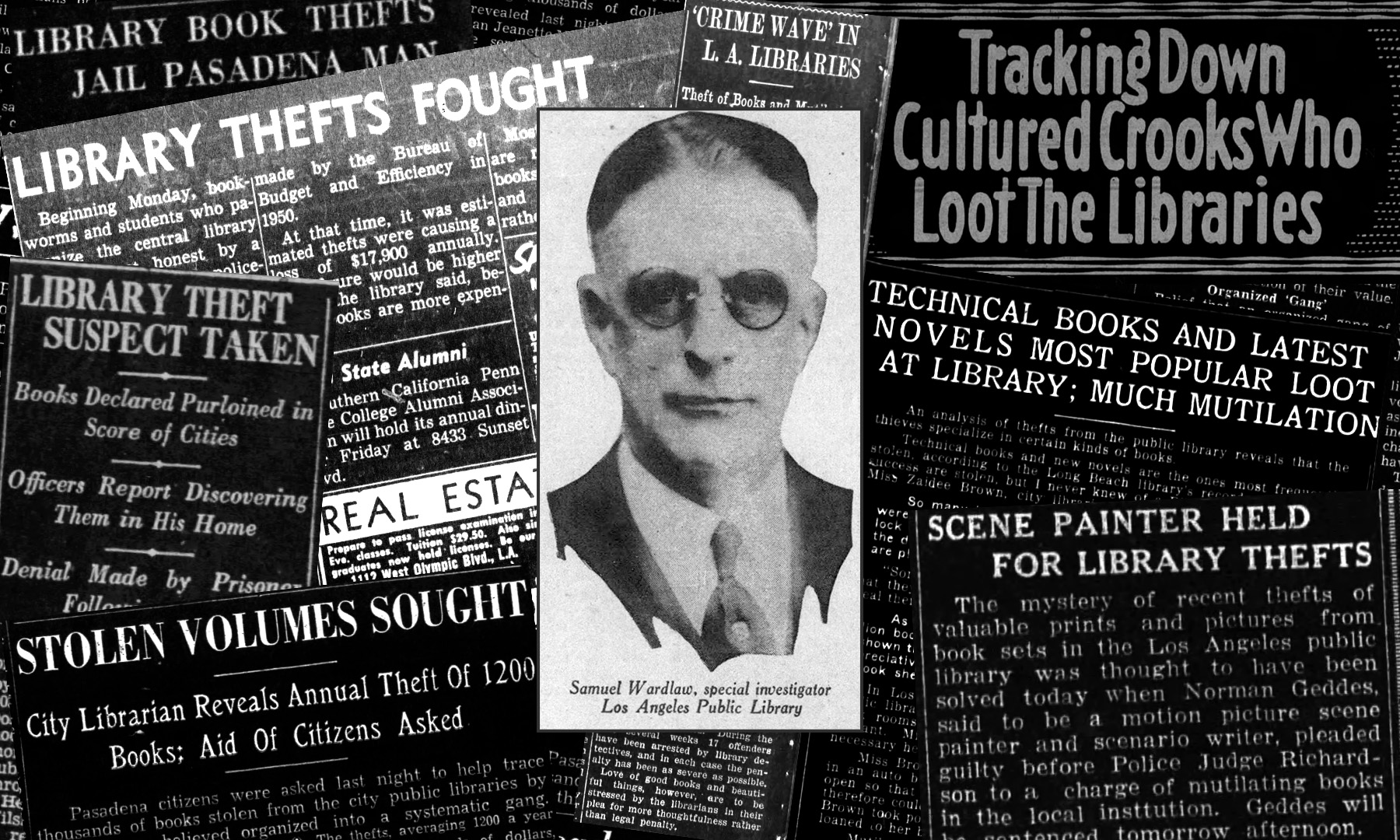
You no doubt know the names of the city's famous fictional private detectives—Philip Marlowe, Easy Rawlins, Jake Gittes—but let me introduce you to Mr. Samuel Wardlaw, Los Angeles Public Library's Special Investigator.
The theft and mutilation of library materials was a monumental problem in the early twentieth century. Multiple factors contributed to this crisis, including the lack of funds for people to buy books, the absence of accessible photocopying technology, and the limits on book borrowing at the time (e.g., books might check out for as little as seven days, and there was a limit of five books on your account). "Lost" books were either stolen outright and sold to book dealers or checked out and never returned. In the case of mutilation, photos and articles were often cut out of library books and magazines, thus making them unreadable. Consequently, the cost of replacement materials drained library budgets, while some items proved irreplaceable. What was the library to do?
In the case of the Los Angeles Public Library, they followed the example of the New York Public Library and employed an investigator. In 1913, librarian Edwin White Gaillard became the first special investigator at the New York Public Library. He worked to curtail the theft and destruction of library property and assisted in the return of lost materials. Gailliard also published a two-part article outlining "The Book Larceny Problem" in the Library Journal in 1920. Gaillard died in 1928, and G. William Bergquist took over as NYPL's special investigator. During the course of his duties, Bergquist broke up several book theft rings, including the one recounted in Travis McDade's fascinating 2013 book, Thieves of Book Row: New York's Most Notorious Rare Book Ring and the Man Who Stopped It.
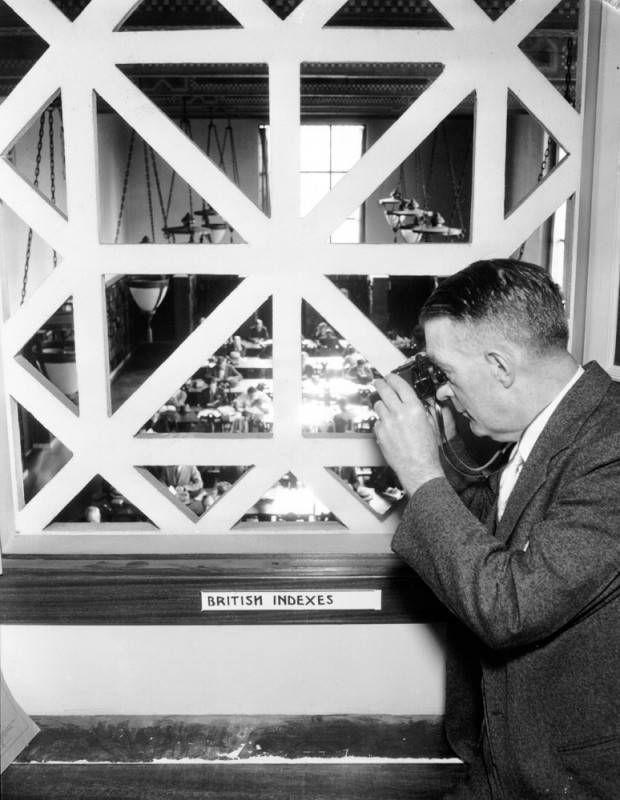
Samuel Wardlaw was hired as a special investigator by the Los Angeles Public Library in March 1924. He was tasked with duties similar to those of New York's special investigators—to get the library's overdue books back and reduce theft and destruction of library materials. The Los Angeles Times described Wardlaw as "a cheerful and diplomatic person, always able to bring peace out of strife and put heart into the disheartened." He was empathetic and proactive in his duties.
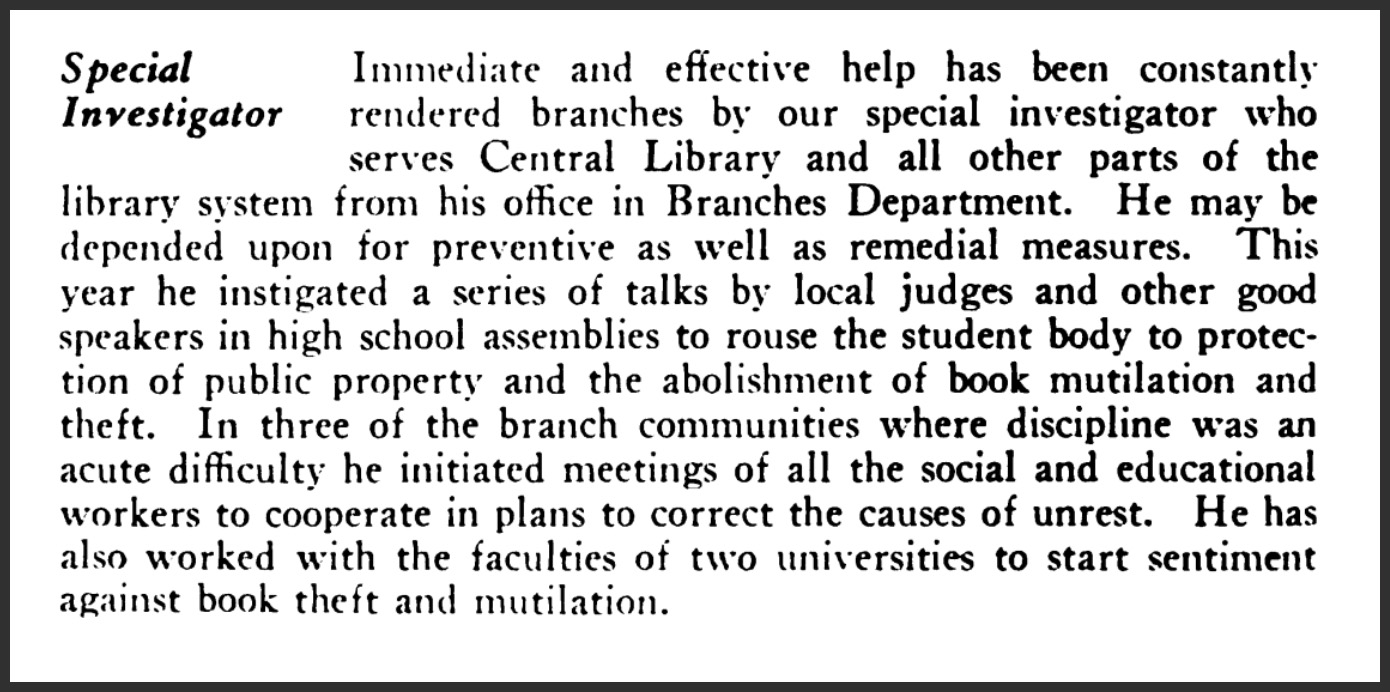
Special Investigator Wardlaw employed a direct approach to recovering "lost" library materials. He sent an overdue notice letter to the patron fourteen days after the book was due. The letter generally had the desired effect, and the books were returned. If the book was not returned, Mr. Wardlaw might follow up the letter with an in-person attempt to get the books back. According to the library's 1927-28 annual report, he collected $969.81 in fines/fees (more than $17,000 today) and retrieved almost $2,000 worth of errant books (approximately $38,000 today). The 1929-30 annual report listed the recovery of 2,647 books and the collection of $2,341 for lost or mutilated books.
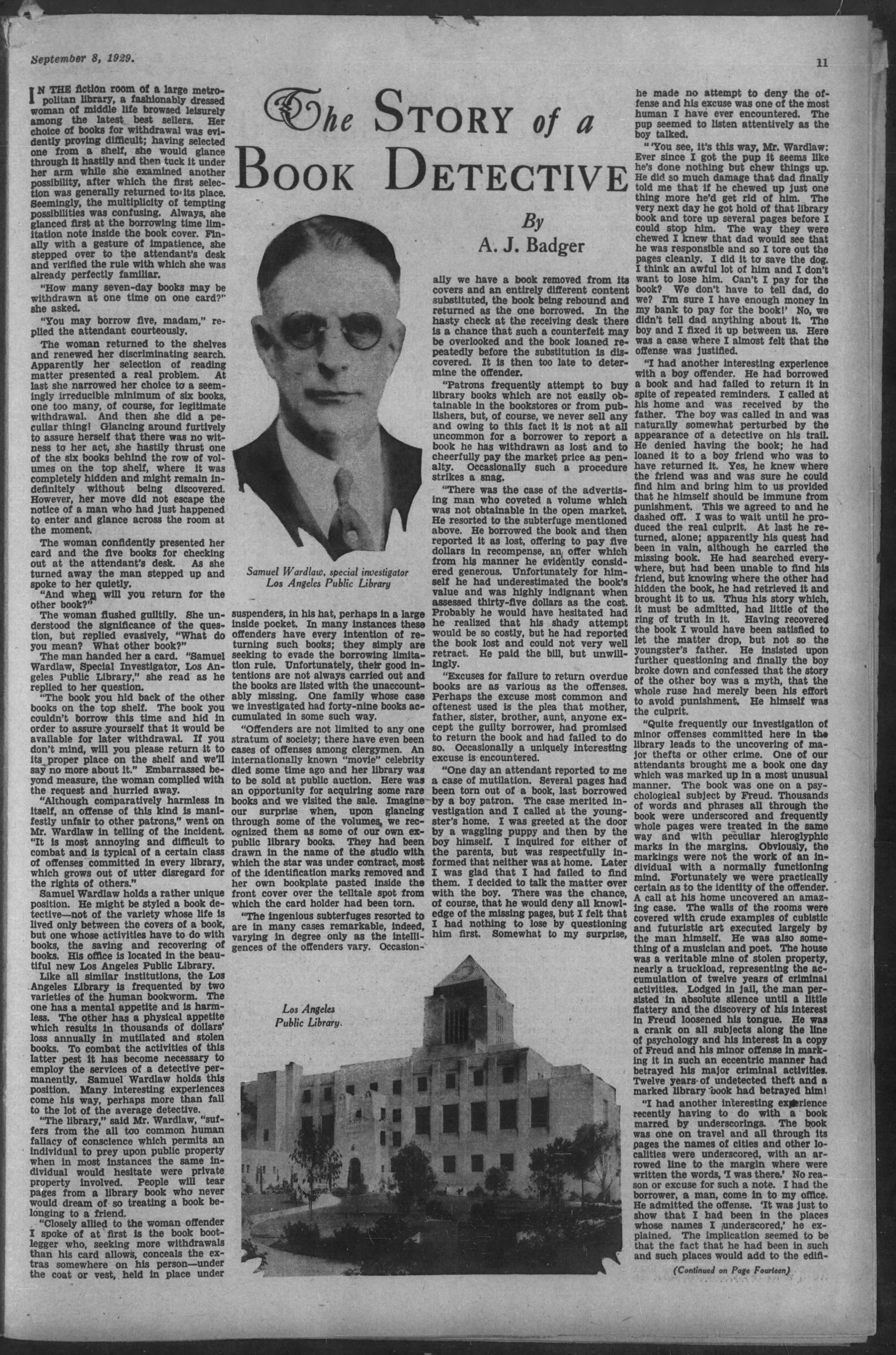
Mr. Wardlaw handled Central Library's waylaid books and had an assistant who handled the lost books from the branches. There were also several messenger clerks who were tasked with retrieving books from delinquent patrons. Additionally, Wardlaw et al. found books from the library's collection in second-hand stores, railway stations, schools and universities, and various Lost and Found departments across the city. Of the books gathered from these locales in 1929-30, according to the library's annual report, 747 belonged to the Los Angeles Public Library, and 271 belonged to other libraries.
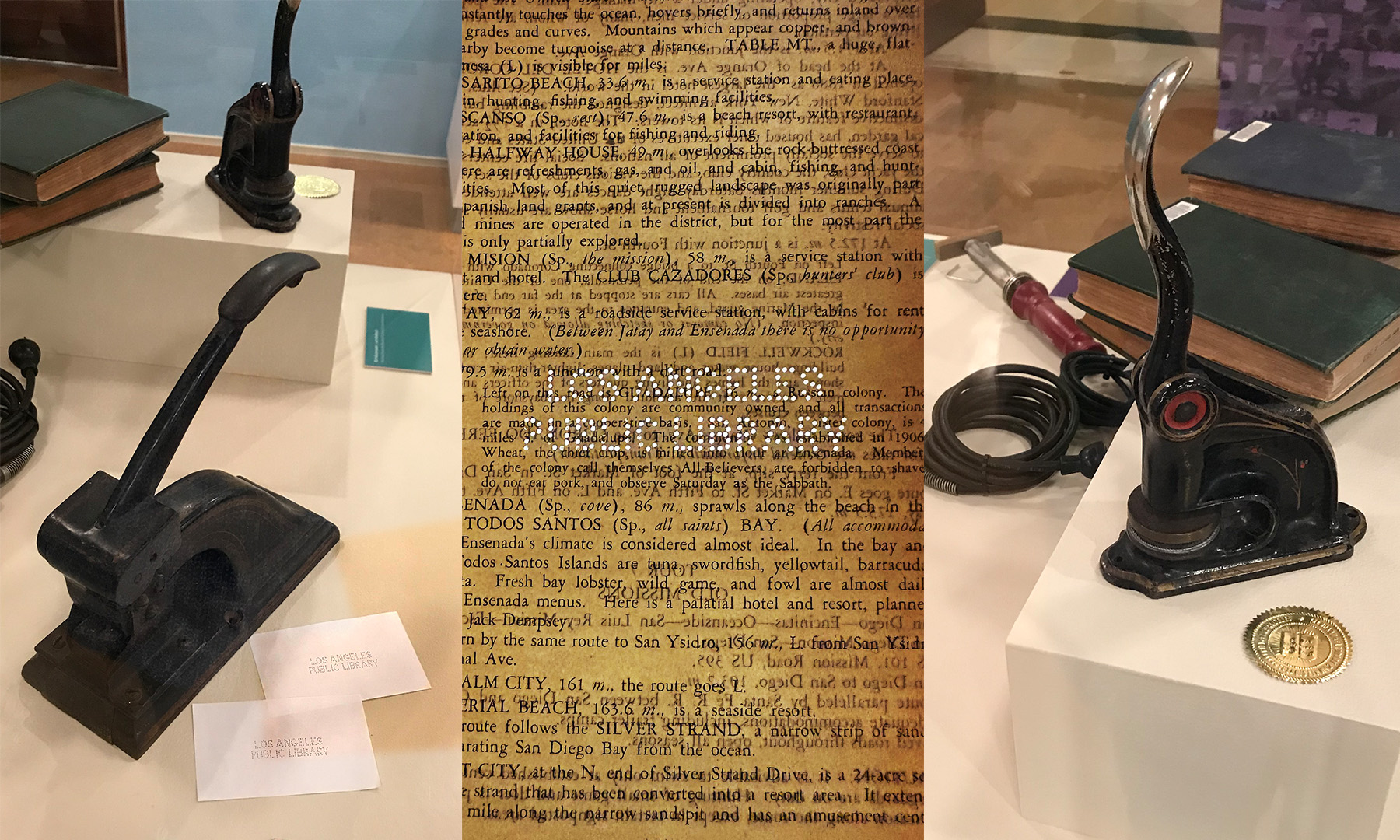
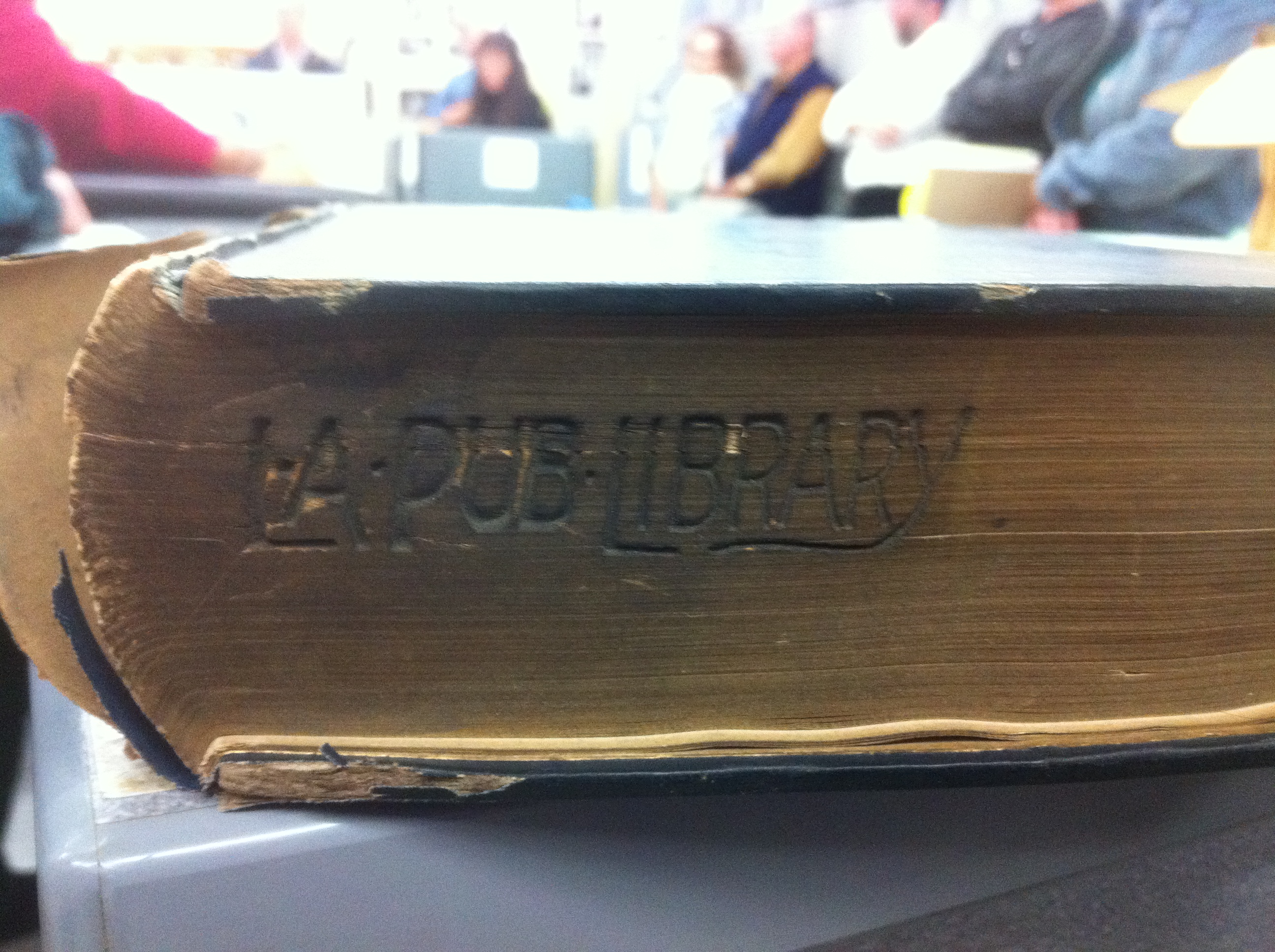
Theft and mutilation of library books were problems for most California libraries in the early twentieth century. So much so that an organization of the area's library directors, known as the Public Library Executives Association of Southern California, assembled a special committee devoted to overdue and lost books. Wardlaw was a member of this committee and helped devise a list of best practices to minimize costly losses. This included the establishment of a specific method for marking the books with a library perforation device unique to each library system (known as a mark of ownership), a distinct method for labeling books discarded by the libraries themselves, and the creation of uniform library card registration practices. [It should be noted that Charles Lummis gave a good deal of thought to the theft and destruction of library materials during his time as City Librarian (1905-1910). The problem had gotten so bad that in 1906, the Library Board ordered the library's bookshelves off limits to the public to curb the problem. Library patrons once again had to ask library employees to retrieve books from the closed stacks. Lummis also wanted library books to be identified better so that they would be difficult to resell. During his time at the Los Angeles Public Library, he revived the practice of branding rare books popularized by medieval monasteries.]
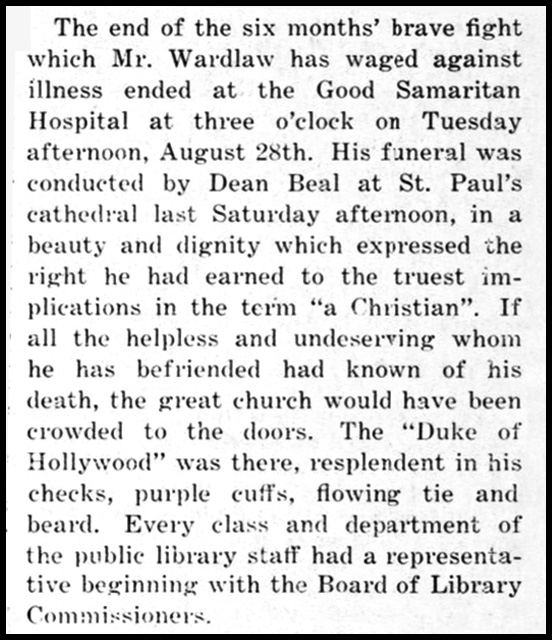
An August 16, 1925 article in the Los Angeles Times titled "Dishonesty Not Always Cause for Loss of Books from Library" highlighted Mr. Wardlaw, who shared a variety of sympathetic reasons books might become lost. The article paints Wardlaw as a problem solver, confidante, and marriage counselor all rolled into one. To pull out just one or two examples of his talents might seem fantastical. I'll leave it up to you to search out the article and read about Wardlaw's benevolence (you can access Los Angeles Times articles dating back to 1881 for free with your library card). Samuel Wardlaw died in August 1934.