Dunbar Hotel: The Jewel of Central Avenue


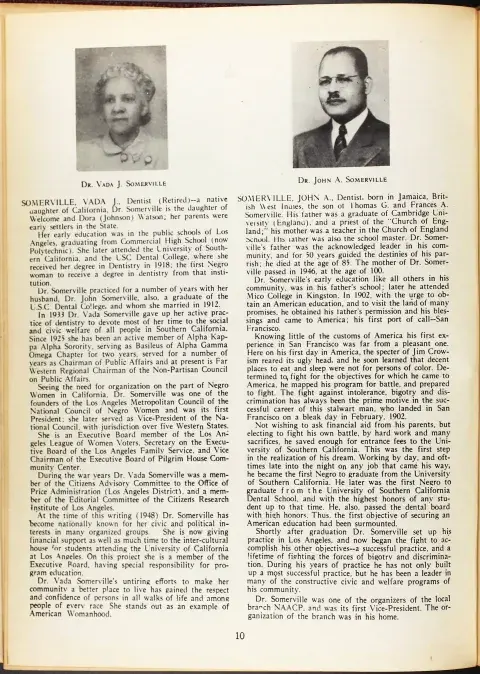
Known as "the Jewel of Central Avenue," the Dunbar Hotel holds a special place in Los Angeles history as the first hotel built expressly by and for Black people. While the hotel is most famous for housing greats such as Louis Armstrong, Ella Fitzgerald, Count Basie, W.E.B. DuBois, and Duke Ellington, the Angelenos behind its construction, John A. Somerville and Vada Watson Somerville, have a storied legacy of their own.
John Somerville was born in Jamaica and came to the United States in 1901. In 1907, he became the first Black graduate of the University of Southern California, earning a degree from the Herman Ostrow School of Dentistry. There he met Vada Watson, who would later become the school’s first Black female graduate. John and Vada married in 1912. In addition to their dental practices, the two were active in Los Angeles civic and community affairs, and in fact, the Los Angeles chapter of the NAACP was founded in their sitting room.

In 1927, John remembered the Jim Crow segregation he had experienced during his first days in the United States and was inspired to construct apartment buildings and hotels for Black people in Los Angeles.
While the hotel would become more well-known as the Dunbar, its original name was the Hotel Somerville. It celebrated its grand opening on June 23, 1928. Just a few days later, it would host W.E.B. DuBois and the 19th NAACP annual convention, the first to be held in Los Angeles.

When it opened its doors, the hotel was marketed as an opportunity for Black Angelenos to invest in and create employment opportunities for their community. However, the 1929 stock market crash was a financial setback for the hotel, and the Somervilles and their investors lost the hotel. Its new owners renamed it the Dunbar Hotel after 19th-century poet Paul Laurence Dunbar.
The early 1930s marked a period of uneasy relations between the community and the hotel, as it changed hands frequently and was involved in a maze of litigation. The hotel obtained a cabaret license in 1931, over objections from the community, who feared it would damage property values in the neighborhood. However, for the next 20 years, the Dunbar’s adjoining nightclub, Club Alabam, was a hub for political rallies, theatrical performances, drag balls, battle of the bands, beauty contests, and most famously, jazz.

In 1936, James and Kathryn Nelson took ownership of the Dunbar Hotel, renovating and revitalizing it. After Nelson’s death in 1952, the hotel stayed in the family, being taken over by his nephew, Tuskegee airman and civil rights leader Celes King III. Later in his life, King said his first exposure to the civil rights movement happened in the lobby of the Dunbar Hotel. “I listened to the elders—men like Sentinel publisher Leon Washington, journalist Lawrence Lamar, and attorney Loren Miller—who were among the men who came into the hotel every night."
On April 8, 1940, a United States census-taker visited the Dunbar Hotel and collected data on the guests and employees. Today, that list of names provides a window into an ordinary day at the hotel - and shows that even an ordinary day at the Dunbar was filled with extraordinary people.

Included on the list are James "Jimmy" Nelson, owner of the Dunbar from the mid-1930s until his death in 1952. According to Nelson’s friends, he loved to sit in the Dunbar Lobby, talking about sports with guests, and kept record books and clippings close at hand to settle bets. Also passing through that day were Baron W. Moorehead, a bandleader and trombone player at the Club Alabam, as well as a labor leader in Local 767, the Black musicians’ labor union.


Actor Charles Moore appeared in over 100 films during his career, and while his roles were small and sometimes uncredited, his filmography includes dozens of Golden Age Hollywood classics, including The Little Foxes, This Gun for Hire, Sullivan’s Travels, and Meet John Doe.

William "Strut" Mitchell reported his profession to the 1940 census-taker as “sing and dance man.” Mitchell was a beloved entertainer who performed widely in Los Angeles. He is pictured here (back row on the left) with a group of musicians and dancers from Sebastian’s Cotton Club in Culver City.

Perhaps the biggest celebrity staying at the Dunbar on April 8, 1940, was Cleopatra Brown, a bona fide radio star on WABC, New York. Known for her distinctive boogie-woogie style of piano-playing, Cleo Brown was the first female instrumentalist awarded an NEA Jazz Master Fellowship. Anytime she played Los Angeles in the 1930s and 1940s, it made headlines.
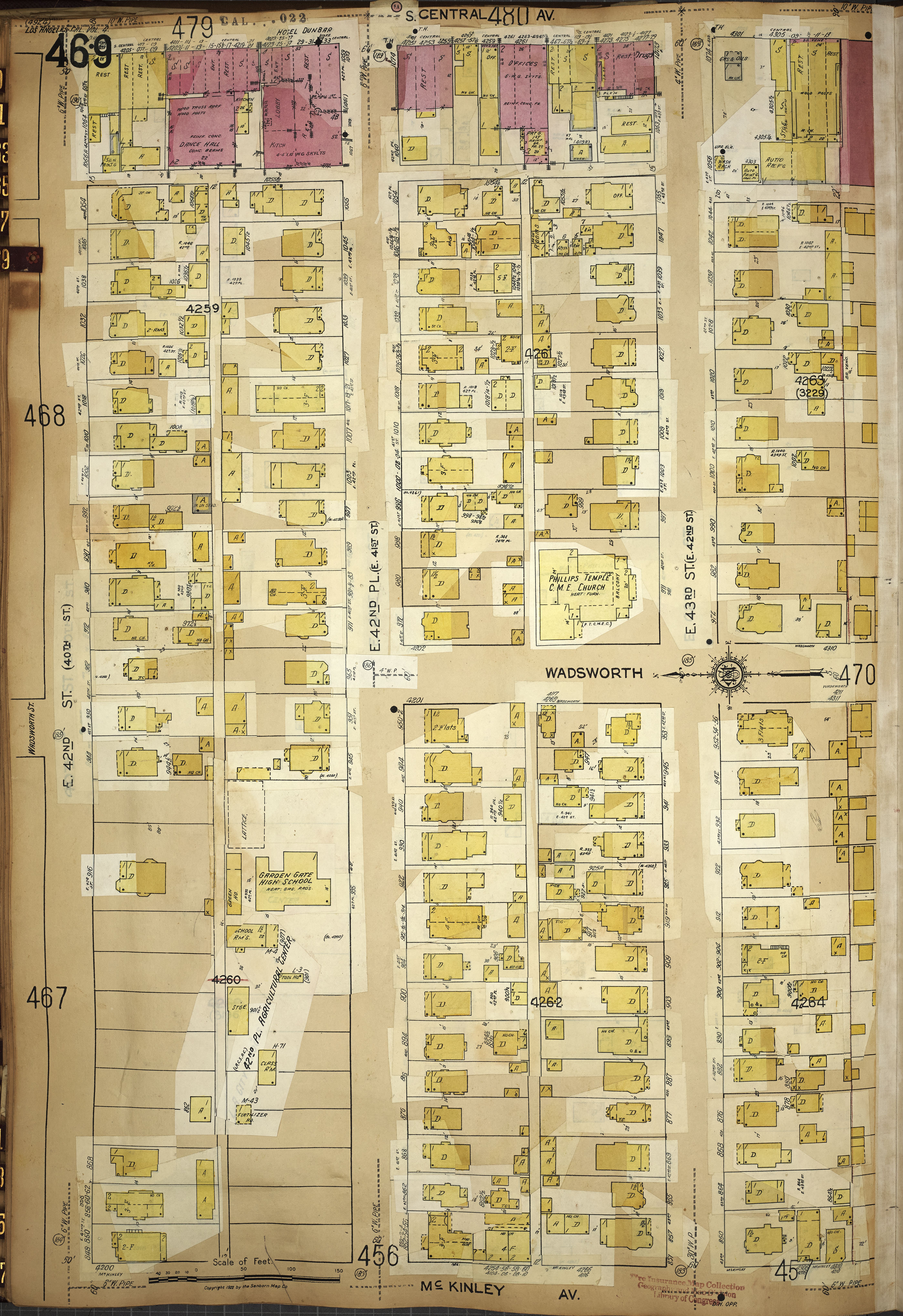
The Dunbar ceased operation as a hotel in 1974. That same year, it was designated a city Historic-Cultural Landmark, and two years later was placed on the National Register of Historic Places. Following a multimillion-dollar renovation, the Dunbar Hotel reopened in 2013 as an affordable housing community for seniors.
All images were accessed from the Los Angeles Public Library’s collection of newspapers, maps, photographs, genealogy resources, and more. Want to learn more?
Visit TESSA to access more digital collections or check out some of these titles from our collection: