The Library will be closed on Thursday, December 25, 2025, in observance of Christmas.

California/The West

LAPL ID: 
19

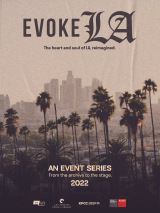
Evoke LA

Tyree Boyd-Pates, Suyapa Portillo Villeda, and Natalia Molina
In Conversation With Josh Kun
Tuesday, March 22, 2022
00:58:34
Listen:
Episode Summary

Join MacArthur Fellow and USC Annenberg Professor Josh Kun with the series historians—the Autry associate curator Tyree Boyd-Pates, Pitzer professor Suyapa Portillo Villeda, and USC professor Natalia Molina—to discuss this new collaboration with KPCC & LAist that blends live music, live conversation, and archival research from the Los Angeles Public Library’s archives.


Participant(s) Bio

Josh Kun is a professor in the Annenberg School for Communication and Journalism at the University of Southern California, where he directs the Popular Music Project of the Norman Lear Center. He is the author or editor of several books, including Audiotopia: Music, Race and America, and his writings on music and culture have appeared in The New York Times, the Los Angeles Times, The American Prospect, Los Angeles Magazine, and many other publications. As a curator and consultant, he has worked with The Getty Foundation, the GRAMMY Museum, the Santa Monica Museum of Art, the Autry Museum, the Skirball Cultural Center, and others.

Tyree Boyd-Pates is a dynamic history curator, professor, writer, and speaker who expounds on Black culture from a millennial vantage and mobilizes communities of color through journalism, social media, education, and history. With his work featured in The New York Times, Vogue, The Hollywood Reporter, Fast Company, Fortune Magazine, The Los Angeles Times, and other media outlets, Tyree's groundbreaking history exhibitions have inspired thousands to visit museums and engage with history anew. Additionally, he is a regular lecturer at universities to discuss American history, curation, and museums. Tyree is also a TEDx speaker who champions inner-city youth across the country.

Suyapa Portillo Villeda is Associate Professor of Chicana/o Latina/o Transnational Studies at Pitzer College. Her research and teaching priorities include Central American history, migration to the U.S., gender and labor in Central America, LGBTTI Latina/o populations and queer (im)migration in the Americas. Her work focuses on the intersections between labor, gender, ethnicity, race, and other marginalized identities in workers’ lives in Central America and in the U.S.

Natalia Molina is a Distinguished Professor in the Department of American Studies and Ethnicity at the University of Southern California. She is the author of two award-winning books, How Race Is Made in America:  Immigration, Citizenship, and the Historical Power of Racial Scripts and Fit to Be Citizens?: Public Health and Race in Los Angeles, 1879-1940, as well as co-editor of Relational Formations of Race: Theory, Method and Practice. Her work examines the interconnectedness of racial and ethnic communities through her concept of "racial scripts" which looks at how practices, customs, policies and laws that are directed at one group and are readily available and hence easily applied to other groups. She continues to explore the themes of race, space, labor, immigration, gender, and urban history in her forthcoming book Place-Making at the Nayarit: How a Mexican Restaurant in Los Angeles Nourished its Community (University of California Press, 2022). Professor Molina is working on a new book, The Silent Hands that Shaped the Huntington: A History of Its Mexican Workers. 

Becoming Los Angeles: Myth, Memory, and a Sense of Place

D.J. Waldie
In conversation with Carolina A. Miranda
Thursday, August 20, 2020
00:58:58
Listen:
Episode Summary

“What do we talk about when we talk about Los Angeles today?” asks D.J. Waldie. A writer whose work has been called a “gorgeous distillation of architectural and social history” by The New York Times, Waldie is the author of Holy Land: A Suburban Memoir and other books that illuminate the ordinary and the everyday in lyrical prose. Becoming Los Angeles, his newest collection, blends history, memory, and critical analysis to illuminate how Angelenos have seen themselves and their city. From the ordinariness of L.A.’s seasons to the gaudy backdrop of Hollywood illusion, Waldie considers how the city’s image was constructed and how it fostered willful amnesia about its conflicted past. Encountering the immigrants and exiles, the dreamers and con artists, the celebrated and forgotten who became Los Angeles, Waldie arrives at an intersection of the city’s history and its aspirations. Please join us for a hometown celebration as Waldie discusses his love for L.A. and the renewed hope it takes to sustain the romance.


Participant(s) Bio

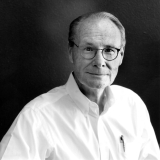
D. J. Waldie is the author of Holy Land: A Suburban Memoir and Real City: Downtown Los Angeles Inside/Out. His narratives about life in Los Angeles have appeared in Buzz magazine, Kenyon Review, the Massachusetts Review, the Georgetown Review, Salon and Dwell magazine. His book reviews and opinion pieces appear in the Los Angeles Times. He is a contributing writer for Los Angeles magazine. D.J. Waldie lives a not-quite-middle-class life in Lakewood, in the house his parents bought in 1946.

Carolina A. Miranda is a staff writer at the Los Angeles Times where she reports on art and culture. She has also been a reporter for Time magazine and worked as an independent journalist, contributing to outlets such as NPR, ARTnews and Architect. She is a regular contributor for KCRW’s “Press Play” and was the founding co-chair of the Los Angeles Times Guild employee union.

David Kipen was born and raised in Los Angeles. He founded the nonprofit Boyle Heights lending library Libros Schmibros in 2010. Former literature director of the National Endowment for the Arts, book editor/critic of the San Francisco Chronicle, and contributor to multiple volumes of California cultural history, Kipen teaches full-time in the UCLA writing program. A familiar voice on public radio, he also serves as book critic for Los Angeles magazine and is critic-at-large for the Los Angeles Times.


Dear Los Angeles: The City in Diaries and Letters, 1542 to 2018

David Kipen and guest readers
Tuesday, December 11, 2018
Listen:
Episode Summary

What might Marilyn Monroe, Cesar Chavez, Susan Sontag, and Albert Einstein have to say about Los Angeles? Their diary entries, along with those of other actors, musicians, activists, cartographers, students, geologists, cooks, merchants, journalists, politicians, composers, and many more—provide a kaleidoscopic view of Los Angeles over the past four centuries from the Spanish missionary expeditions of the 16 century to the present day. Book editor, critic, and Los Angeles native David Kipen has scoured the archives of libraries, historical societies, and private estates to assemble a remarkably eclectic story of life in his beloved Los Angeles. Join us for a special staged reading of these first-person accounts—representing a range of experiences and voices as diverse as Los Angeles itself.


Participant(s) Bio

David Kipen was born and raised in Los Angeles. He opened the nonprofit Boyle Heights lending library Libros Schmibros in 2010. Former literature director of the National Endowment for the Arts, book editor/critic of the San Francisco Chronicle, and contributor to multiple volumes of California cultural history, Kipen teaches full-time in the UCLA writing program. A familiar voice on public radio, he also serves as book critic for Los Angeles Magazine and critic-at-large for The Los Angeles Times.


The Line Becomes A River: Dispatches from the Border

Francisco Cantú
In Conversation With Independent Journalist Ruxandra Guidi
Wednesday, February 21, 2018
1:12:32
Listen:
Episode Summary

For award-winning writer and former agent for the United States Border Patrol Francisco Cantú, the border is in his blood: his mother, a park ranger and daughter of a Mexican immigrant, raised him in the scrublands of the Southwest. His new book, The Line Becomes A River: Dispatches from the Border, is haunted by the stories he experienced both while working for the Border Patrol—where he hauled in the dead and delivered to detention those he found alive—and also as a civilian after he abandoned the Patrol and helped an immigrant friend return to Mexico to visit his dying mother. Join us for an eye-opening look at the devastation the border wreaks on both sides as Cantú shares this deeply personal work with journalist Ruxandra Guidi, who frequently reports on immigration from the U.S.-Mexico border region.


Participant(s) Bio

Francisco Cantú served as an agent for the United States Border Patrol in the deserts of Arizona, New Mexico, and Texas from 2008 to 2012. A former Fulbright fellow, he is the recipient of a 2017 Whiting Award. His essays and translations have been featured on This American Life and in Best American Essays, Harper’s, Guernica, Orion, n+1 and Ploughshares. The Line Becomes a River is his first book. He lives in Tucson, Arizona.

Ruxandra Guidi, a native of Caracas, Venezuela, is an independent journalist with more than fifteen years of experience working in public radio, magazines, and multimedia. She has reported throughout the United States, the Caribbean, South and Central America, as well as Mexico and the U.S.-Mexico border region. She’s also worked as a reporter, editor, and producer for NPR’s Latino USA, the BBC daily news program, The World, the CPB-funded Fronteras Desk in San Diego-Tijuana, and KPCC Public Radio’s Immigration and Emerging Communities beat in Los Angeles. She collaborates regularly with her husband, photographer Bear Guerra, under the name Fonografia Collective.


Hitler in Los Angeles: How Jews Foiled Nazi Plots Against Hollywood and America

Steven J. Ross
In Conversation With Rob Eshman
Thursday, October 26, 2017
01:01:43
Listen:
Episode Summary

No American city was more important to the Nazis than Los Angeles, home to Hollywood, the greatest propaganda machine in the world. There were Nazi plots to hang prominent Hollywood figures like Charlie Chaplin, gun down Jews in Boyle Heights, and plans to sabotage local military installations. As law enforcement agencies were busy monitoring the Reds instead of Nazis, an attorney named Leon Lewis and his ring of spies entered the picture. Acclaimed historian and USC Professor Steven J. Ross’ new book, Hitler in Los Angeles: How Jews Foiled Nazi Plots Against Hollywood and America, tells this little-known story of Lewis, whose covert operation infiltrated every Nazi and fascist group in the area to disrupt their plans. Ross is joined by the Jewish Journal’s former Editor-in-Chief Rob Eshman, for a fascinating look at how a daring group of individuals banded together to confront the rise of hate.


Participant(s) Bio

Steven J. Ross is a professor of history at the University of Southern California and director of the Casden Institute for the Study of the Jewish Role in American Life. He is the author of Hollywood Left and Right, recipient of the Academy of Motion Picture Arts and Sciences Film Scholars Award and nominated for a Pulitzer; Working-Class Hollywood, nominated for a Pulitzer and the National Book Award; Movies and American Society; and Workers on the Edge. He lives in Southern California.

Rob Eshman is the former Publisher and Editor-in-Chief of the Jewish Journal.


Threat of Extinction: Language Activism and Preservation

Bob Holman, Vincent Medina, Odilia Romero Hernández, and Virginia Carmelo
In Conversation With Linguist Leanne Hinton
Saturday, October 21, 2017
Listen:
Episode Summary

The essence of who we are is wrapped up in our language. What is human knowledge lost when a language goes extinct? Why should we care? Join ALOUD for a freewheeling conversation among language activists working to reclaim indigenous languages in California and Mexico. For the first time together on stage, this unique group of participants includes master linguist and language preservationist Leanne Hinton; Native California language activist Vincent Medina and Virginia Carmelo; Odilia Romero Hernández, Zapotec language rights activist; and poet/activist Bob Holman, co-producer of the PBS documentary, Language Matters.

Simultaneous interpretation was provided by Antena Los Ángeles.

This program was produced as part of The Getty's Pacific Standard Time: LA/LA initiative.


Participant(s) Bio

Bob Holman has played a central role in the spoken word and slam poetry movements of the last several decades. He is the author of 16 poetry collections, most recently Sing This One Back to Me. He is a co-founder and co-director of the Endangered Language Alliance, and his study of hip-hop and West African oral traditions led to his current work with endangered languages. Holman is the producer and host of various films, including The United States of Poetry and On the Road with Bob Holman. His most recent film, Language Matters with Bob Holman, won the Berkeley Film Festival’s 2015 Documentary of the Year award and aired on PBS in January 2016. Holman is working with language revitalization centers across Alaska and Hawaii, sponsored by the Ford Foundation. He has taught at Columbia, NYU, Bard, and The New School. He was the original Slam Master and director at the Nuyorican Poets Cafe and the founder/proprietor of the Bowery Poetry Club.

Vincent Medina is an indigenous language activist and a leader of the movement to revive Chochenyo as a spoken language. He served as the assistant curator at Mission Dolores in San Francisco and worked to change the narrative of Indian history to focus on Native resistance and survival. Vincent is a contributor to the publication News from Native California and author of the blog "Being Ohlone in the 21st Century."

Odilia Romero Hernández is an indigenous Zapotec from the village of Zoogocho in the northern mountains of the state of Oaxaca, Mexico, and is based in Los Angeles, CA. She is the Vice Binational Coordinator of Frente Indígena de Organizaciones Binacionales/Indigenous Front of Binational Organizations (FIOB). She served six years as Binational Women’s Issues Coordinator of FIOB and, for more than a decade, has worked with indigenous Mexican and binational organizations in human rights and cultural and political education. She has been published in many academic papers that appear in “Otro Saberes: Collaborative Research on Indigenous and Afro-Descendant Cultural Politics” and “Indigenous Migrants and Language Barriers in the United States,” as well as "Mujer rebelde: testimonio de Odilia Romero Hernandez."

Virginia Carmelo was born in Orange County, California, and raised in Fullerton, California. In 1998, Carmelo and her family began endeavors to revitalize Tongva tribal song, dance, and regalia. In 2004, Virginia started to research the Tongva language. From 2001 to 20012, Virginia served as a Tribal Council Member of the Gabrielino/Tongva Nation, the tribe indigenous to the Los Angeles Basin. She served as Tribal Chair from 2006 to 2010. Virginia lives in Anaheim, California.

Leanne Hinton is a professor emerita of Linguistics at the University of California at Berkeley and an advisory member of the Advocates for Indigenous California Language Survival. She works with endangered languages as an advocate and practicing trainer in language revitalization. With other language activists, she has helped found organizations devoted to language revitalization and helped design language learning methods that are now used worldwide. Hinton has written, edited, and co-edited numerous books and articles on Native American languages and language revitalization, including her most recent Bringing Our Languages Home, and The Routledge Handbook on Language Revitalization.


Related Exhibit

The Challenges of American Immigration

Ali Noorani
In Conversation With Pilar Marrero
Thursday, July 27, 2017
01:01:20
Listen:
Episode Summary

Ali Noorani, the executive director of the National Immigration Forum in Washington, D.C., an advocacy organization promoting the value of immigrants and immigration, sheds new light on our nation’s brewing immigration debate in his timely book, There Goes the Neighborhood: How Communities Overcome Prejudice and Meet the Challenge of American Immigration. Although U.S. politics are more polarizing than ever, Noorani argues that our issues of immigration are more about culture and values than politics and policy. In his book, Noorani follows the personal stories of Americans from across the political spectrum, including conservative faith, business, and law enforcement leaders, who are grappling with the question: "Do we, as Americans, value immigrants and immigration anymore?" Exploring how immigration is affecting the changing nature of American identity, Noorani talks with Pilar Marrero, a journalist and author of Killing the American Dream, a chronicle of U.S. immigration policy mishaps.


Participant(s) Bio

Ali Noorani is the Executive Director of the National Immigration Forum, an advocacy organization promoting the value of immigrants and immigration. Growing up in California as the son of Pakistani immigrants, Ali learned how to forge alliances among people of wide-ranging backgrounds, a skill that has served him well as one of the nation’s most innovative coalition builders. In 2015, Ali was named a lifetime member of the Council on Foreign Relations. He holds a Master’s in Public Health from Boston University and is a graduate of the University of California, Berkeley. Ali lives in Washington, D.C.

Pilar Marrero is a journalist and author with long experience in covering social and political issues of the Latino community in the US. She is the author of Killing the American Dream, which chronicles the last 25 years of US immigration policy mishaps and was published in Spanish with the title El Despertar del Sueño Americano. Marrero is currently covering the impact of President Donald Trump’s policies on the immigrant community for Impremedia, a company with media outlets in 15 markets across the US, including the flagship La Opinion Newspaper in Los Angeles.


Terry Tempest Williams

In Conversation With Judith Freeman
Sunday, April 27, 1997
01:35:43
Listen:
Episode Summary

Terry Tempest Williams is one of the most knowledgeable and elegant voices of the American West. She brings to her writing, in the words of the poet W.S. Merwin, "the dedicated observation of a naturalist and the abiding innocence and excitement of an open heart." Williams is a Naturalist-In-Residence at the Utah Museum of Natural History in Salt Lake City. A member of the Southern Utah Wilderness Alliance, Williams is committed to protecting Americas Red Rock Desert. She is a recipient of a 1993 Fellowship for Nonfiction from the Lannan Foundation. Among her books are An Unnatural History of Family and Places and An Unspoken Hunger: Stories from the Field.

This program was produced as part of the 1997 season of Racing Toward the Millennium: Voices from the American West in partnership with the Museum of Contemporary Art, Los Angeles.


Participant(s) Bio

Judith Freeman has published a collection of short stories and three novels, including The Chinchilla Farm and A Desert of Pure Feeling.


Kathleen Norris

In conversation with Irene Borger
Sunday, May 18, 1997
01:32:44
Listen:
Episode Summary

Kathleen Norris is the author of the 1993 bestseller Dakota: A Spiritual Geography. Her newest book, The Cloister Walk, is structured around two nine-month residencies at a Benedictine monastery. In it, she links the disparate worlds of 4th-century desert monks and modern-day Benedictines to epiphanies in the tiny South Dakota town where she and her husband moved in 1974. Renowned author Dr. Robert Coles lauded Norris's work in The New York Times Book Review: "Her writing is personal and epigrammatic—a series of short takes that ironically addresses the biggest subject matter possible: how one ought to live life and with what purposes in mind." Norris's narrative and lyrical poems have appeared in The New Yorker and the Paris Review.

This program was produced as part of the 1997 season of Racing Toward the Millennium: Voices from the American West in partnership with the Museum of Contemporary Art, Los Angeles.


Participant(s) Bio

Irene Borger is a journalist and novelist, writer-in-residence at AIDS Project Los Angeles, and the editor of From a Burning House: Stories from the APLA Writers Workshop.


Ivan Doig

In Conversation With Alex Raksin
Sunday, March 23, 1997
01:08:32
Listen:
Episode Summary

Ivan Doig has described the Pacific Northwest in a number of well-known nonfiction books and novels, including Bucking the Sun (1996), Heart Earth (1993), Winter Brothers (1980), This House of Sky (1984), and the trilogy English Creek (1984), Dancing at the Rascal Fair (1987), and Ride with Me, Mariah Montana (1990). Born in White Sulpher Springs, Montana, Doig has been a ranch hand, newspaperman, magazine editor, and writer. Doig received the Distinguished Achievement Award of the Western Literature Association in 1989. He lives in Seattle, Washington.

This program was originally produced as part of the 1997 season of Racing Toward the Millennium: Voices from the American West in partnership with the Museum of Contemporary Art, Los Angeles.


Participant(s) Bio

Alex Raksin is a member of the Editorial Board of the Los Angeles Times and for many years was a columnist and deputy book editor for the LA Times book reivew.


Pages

Top