The Library will be closed on Thursday, December 25, 2025, in observance of Christmas.

California/The West

LAPL ID: 
19

Shooting Reflections: Film and Social Change

Diego Luna
In conversation With Mandalit del Barco, Correspondent, National Desk, NPR West
Tuesday, January 29, 2013
01:08:59
Listen:
Episode Summary

From acting in award-winning films such as Before Night Falls, Frida, and Milk, to directing a forthcoming feature on Cesar Chavez, Luna's passion for storytelling as an agent for social change is illuminated in his film work. As an activist, he speaks out against the bi-national arms trade and he is founder of Ambulante, a mobile documentary project bringing cinema to remote places in the Americas. Inspired by art as reflections, Luna talks about these projects and life on both sides of the border.


Participant(s) Bio

Diego Luna is a renowned film, television, and stage actor who has participated in over 30 films, including the award-winning Y Tu Mamá También. Luna has been a professional actor since he was seven years old and recently made his directorial debut with the documentary J.C. Chávez, followed by the fictional film Abel. His latest feature as a director is Chavez, based on the life of legendary farm worker and union leader, Cesar E. Chavez.

NPR correspondent Mandalit del Barco has reported and produced radio stories and photographed everything from street gangs to Hollywood, police and prisons, marijuana, immigration, natural disasters, arts, and urban street culture (including hip hop dance, music, and art). Every year, she covers the Oscars and the Grammy awards for NPR. Her news reports, feature stories, and photos filed from Los Angeles and abroad can be heard on All Things Considered, Morning Edition, Weekend Edition, alt.latino and npr.org


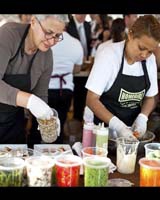
Flavor Forward: A Taste of Downtown L.A.

Moderated by Evan Kleiman
Tuesday, July 17, 2012
01:12:37
Listen:
Episode Summary

How are downtown chefs curating our cultural palate? New culinary projects are stirring up a neighborhood renaissance as the city’s best chefs are blending their ethnic and cultural traditions with the contemporary taste of eclectic Los Angeles. Join us to explore this diverse panel of chefs who are pushing downtown’s flavor forward. Stay for a post-panel tasting reception in the library courtyard, complements of participanting restaurants.


Participant(s) Bio

Born to Scottish and Israeli parents of Eastern-European descent, chef/owner Ilan Hall was exposed to international food from an early age. At seventeen, Ilan studied at the Lorenzo de Medici School’s Apicius program and cooked at the Al Lume di Candela restaurant. He graduated from the Culinary Institute of America and subsequently got his certification in Baking and Pastry Arts. In New York, Ilan cooked for Tom Collicchio at Craft, then for Mario Batali at Casa Mono under chef/co-owner Andy Nusser, originally of Batali’s acclaimed Babbo. At 24, he won Bravo TV’s reality competition, Top Chef. Ilan has been traveling the world all his life; his restless nature and tradition-shattering style have now spawned his indefinable first restaurant – The Gorbals Los Angeles.

Like many great chefs, Judy Han’s earliest memory is helping her parents in the kitchen of their family restaurant in Chicago. She moved to Los Angeles to become classically trained at culinary school; her first job was at Lucques, under Suzanne Goin, a protégé of the legendary Alice Waters of Chez Panisse. There she learned the virtues of working with local farmers who produced organically grown sustainable foods. Her culinary education continued in the kitchens of Sona, Grace and Koi, before becoming Sous Chef of Literati II. At Literati II, Chef Judy established herself as one of the largest proponents of the eating local movement, cooking almost entirely local seasonal ingredients at the boutique restaurant. At Mendocino Farms, Chef Judy is dedicated to applying her culinary philosophy to this “Fine Fast” concept by working with the best local farmers. She is also Chef Partner at one of downtown’s newest restaurants, Blue Cow.

A native of New Mexico, John Rivera Sedlar gained a following as a chef in the South Bay region of Southern California—which led him to further his culinary education through an apprenticeship to legendary French chef Jean Bertranou of L'Ermitage in Los Angeles. He opened St. Estephe restaurant in Manhattan Beach, where he won renown as the Father of Modern Southwest Cuisine—also the title of his acclaimed first cookbook. Sedlar's awards and recognitions include selection among the Top Ten Chefs in America and the First Annual Culinary Arts Hall of Fame Awards. Having traveled extensively throughout Mexico, Latin America, and Spain to study Latin food traditions first-hand, he is also the creator and founder of the first Latino food museum in the United States, Museo 26. Sedlar opened downtown’s Rivera and is executive chef at Beverly Hills’ Playa.

Mexican-born Patricia Zarate left her homeland at the age of twenty-three and within little time found herself involved in fighting for justice within marginalized communities of Los Angeles, particularly that of Boyle Heights in the Dolores Mission community. She worked as the Secretary for Father Greg Boyle when he was pastor of Dolores Mission and when Homeboy Industries began to bloom. She began catering events out of her own small kitchen before opening El Zarape in Boyle Heights. In 2005, in collaboration with Father Boyle Patricia employed and worked with a dozen young women teaching them the basics of the food service industry through Homegirl Café. A new state of the art facility was completed in October 2007, and specializes in the serving of light, healthy Mexican food with thirty homegirls undergoing training at a given time.

Evan Kleiman has been the host of Good Food on KCRW for 15 years. The show reflects her wide-ranging interest in food and how humans interact with it. Evan’s food policy interest is expressed through her participation on the Los Angeles Food Policy Council and as a member of the Stewardship Council of the statewide organization Roots of Change. Evan Kleiman was chef-owner of Angeli Caffe on Melrose for 27 years. A cookbook author of six titles, she teaches and gives food tours of her native Los Angeles. Her latest project is Easy As Pie an app for the iphone/ipad.


Desert America: Boom and Bust in the New Old West

In conversation with Alison Hawthorne Deming
Wednesday, November 7, 2012
01:17:34
Listen:
Episode Summary

Martínez, an award-winning author and performer, takes us on a deeply personal tour of the 21st century West—far from our romantic illusions of John Wayne, cacti and cowboys—and discusses the political and demographic upheaval in this most iconic of American landscapes


Participant(s) Bio

Rubén Martínez, an Emmy-winning journalist and poet, is the author of several books, including Crossing Over: A Mexican Family on the Migrant Trail and The New Americans. His new book is Desert America: Boom and Bust in the New Old West. He lives in Los Angeles, where he holds the Fletcher Jones Chair in Literature and Writing at Loyola Marymount University.

Alison Hawthorne Deming is author for four books of poetry and four books of nonfiction with Zoologies: On Animals and the Human Spirit forthcoming. Her work has been widely anthologized including in The Norton Book of Nature Writing and Best American Science and Nature Writing. Long dedicated to conversations between art and science, between environmentalism and social justice, she is coeditor with Lauret E. Savoy of The Colors of Nature: Culture, Identity and the Natural World. Former director at the University of Arizona Poetry Center, Alison is currently a professor at UA.


Artists and Survivors: Lost and Found in L.A.

In conversation with Carolyn Kellogg
Thursday, June 28, 2012
01:02:41
Listen:
Episode Summary

The struggles of an artist’s life are re-examined through a modern urban lens by these two critically acclaimed novelists. In Spiotta’s Stone Arabia, a fifty-year-old musician sinks away from public life until his niece begins to make a film about him, bringing many vulnerabilities to the surface. Fitch’s Paint it Black unravels the painful aftermath of the suicide of the son of a renowned pianist. Both novels, set in Los Angeles, vibrantly depict characters who are inspired and destroyed by music—and question the consequences of being an artist.


Participant(s) Bio

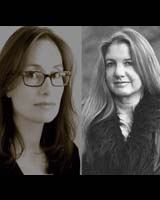
Dana Spiotta’s most recent novel is Stone Arabia, a National Book Critics Circle Award Finalist and a New York Times Notable Book of the Year. Her previous novels are Eat the Document, which was a National Book Award Finalist, and Lighting Field, which was a Los Angeles Times Best Book of the West. Spiotta is a recipient of a Guggenheim Fellowship, a New York Foundation for the Arts Fellowship, and she received the 2008 Rome Prize from The American Academy of Arts and Letters.

Janet Fitch is the author of the Los Angeles novels Paint It Black and White Oleander. Her short stories have appeared in such anthologies and journals as Black Clock, Room of One's Own, and Los Angeles Noir. She teaches creative writing in the Master of Professional Writing program at USC, and at the Squaw Valley Community of Writers. A contributing editor to the Los Angeles Review of Books, Fitch is currently working on a novel set during the Russian Revolution.

Carolyn Kellogg is an award-winning staff writer at the Los Angeles Times, where she writes book reviews and covers the publishing world. Her writing has appeared in Black Clock, the anthology The Devil’s Punchbowl and Skateboarding Magazine. She recently wrote the Poets & Writers guide to literary Los Angeles and is the former editor of LAist.com. Carolyn is a board member of the National Book Critics Circle.


A New Deal for Los Angeles

Thursday, June 21, 2012
01:18:31
Listen:
Episode Summary

In less than a decade, President Franklin Roosevelt's New Deal agencies radically transformed Los Angeles as they did other American cities in a successful, but largely forgotten, effort to extricate the nation from the Great Depression. In addition to building the region's cultural infrastructure of schools, libraries, and museums, the Federal Writers Project left us a vivid freeze frame description of what Southern California was like just before World War II. Author David Kipen discusses the recently republished Los Angeles in the 1930s: The WPA Guide to the City of Angels and geographer Gray Brechin shows the public works that revolutionized the lives of millions 75 years ago.


Participant(s) Bio

David Kipen is author of The Schreiber Theory: A Radical Rewrite of American Film History, and translator of Cervantes' The Dialogue of the Dogs. Until January 2010, he was the Literature Director of the National Endowment of the Arts. He also served from 1998 to 2005 as book critic for the San Francisco Chronicle. His introductions to the WPA Guides to Los Angeles and San Francisco were recently published. In July of 2010 he opened Libros Schmibros, a lending library/used bookstore in the once majority-Jewish, now majority-Latino neighborhood of Boyle Heights -- now in its new home above the Mariachi Plaza Gold Line station.

Dr. Gray Brechin is a visiting scholar at the U.C. Berkeley Department of Geography from which he received his Ph.D. in 1998. He is the founder of the Living New Deal, an effort to inventory and map the legacy of New Deal public works in the United States. He received an M.A. in Art History in 1976 from the U.C. Berkeley Department of Art History in 1976 with a special interest in architecture. He is the author of Imperial San Francisco: Urban Power, Earthly Ruin.


Tales from the City of Angels: An Evening of Storytelling

Presented in conjunction with the Los Angeles Review of Books
Wednesday, June 13, 2012
6/13/201
Listen:
Episode Summary

Part One: Tales of Desperation

M.C.'d by Richard Montoya of Culture Clash

Join in this first-ever edition of live storytelling at ALOUD as six local voices take us through the comedic, tragic, entertaining, and desperate tales of life in the City of Angels.

Music by Tom Lutz and Blue Tuna

In partnership with the Los Angeles Review of Books


Participant(s) Bio

L.A. native Richard Montoya is an actor, director, and member of the Latino/Chicano comedy troupe, Culture Clash. Culture Clash was founded in Los Angeles in 1984 and is still an active troupe. Montoya‘s work is often a reflection on issues of race and cultural identity; he is interested in the “multicultural experiment.”

Myriam Gurba is the author of the Edmund White Award-winning novella and short story collection Dahlia Season and the chapbook Wish You Were Me. Gurba's writing appears in anthologies published by City Lights, Seal, and other fine presses. In 2011, Gurba toured with the lezzendary (legendarily lesbian) literary roadshow Sister Spit. She is not above striking Faustian deals as long as they firmly place her in the same tax bracket as Warren Buffett. She teaches remedial high school classes in Long Beach and is the kind of teacher kids trust enough to ask for a tampon.

Erin Aubry Kaplan is a journalist and essayist who was born and raised in Los Angeles. She has been a staff writer at the LA Weekly and a weekly opinion columnist for the L.A. Times, the first African American opinion columnist in the paper's history. She has contributed to many publications, including Salon.com, Essence, Oxford American and Ms. Magazine. A collection of her journalism and essays, Black Talk, Blue Thoughts and Walking the Color Line: Dispatches from a Black Journalista, was published in 2011. She teaches nonfiction in the M.F.A. Creative Writing Program at Antioch University Los Angeles.

Philip Littell has written a lot of words that have been set to music, collaborating with a veritable roll-call of classical composers: Previn, Susa, Kernis, Tork, and many more. Meanwhile he has been producing work for the less legitimate musical theater with collaborator Eliot Douglass (No Miracle: A Consolation, The Night Market, The Wandering Whore), and Libby Larsen (Billy The Kid And What He Did), has translated Moliere and Feydeau, and clowned in cabaret and sung in clubs, while continuing to work as an actor. He has two epic/historical travesty plays in hand and ready to go.

Héctor Tobar has worked as a journalist for the Los Angeles Times for nearly twenty years. He shared a Pulitzer Prize for the paper’s coverage of the 1992 riots, and then served as the national Latino Affairs correspondent, the Buenos Aires bureau chief, and the Mexico City bureau chief. He currently writes a weekly column for the paper and is the author of three books, Translation Nation, The Tattooed Soldier, and most recently, The Barbarian Nurseries. The son of Guatemalan immigrants, he is a native of the city of Los Angeles.

Besides teaching writing and theatre, Brenda Varda is the founder of Wordspace in Los Angeles, a cultural hub for writers in all genres. Wordspace creates workshops and development opportunities that allow writers to experiment and connect with new audiences. In creating her own works for the theatre (Unknown, The Met, Sacred Fools, UCIRA), Varda looks to create narratives that reframe contemporary identities while still providing reference to common cultural experiences. Her MFA thesis work, Fables du Theatre, a fantasy of three theatrical fables produced in collaboration with a fictional theatre company (Immanence Theatre Ensemble), was produced at Unknown Theatre in 2008 and nominated for an LA Weekly Award.

Alie Ward is a former writer for the LA Times and columnist for the LA Weekly, and now covers cocktails for KCET and CookingChanneltv.com. She's the co-creator and co-host for Cooking Channel's Classy Ladies with Alie & Georgia as well as an on-camera contributor to Cooking Channel's Unique Sweets. She tells stories around town at Upright Citizens Brigade, The Meltdown and Public School and after 13 years in Los Angeles she knows to wear SPF 70 -- and take Fountain.
The Elemental West: Reflections on Moving Water

In conversation with William Deverell
Co-sponsored by the Huntington-USC Institute on California and the West
Wednesday, June 6, 2012
01:16:04
Listen:
Episode Summary

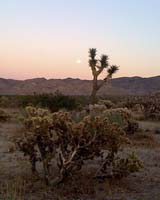
Two celebrated writers deeply influenced by the riparian and other landscapes of the American West will read from their work and explore how storytelling, in the tradition of Thoreau and Emerson, can give voice to natural resources. Activist and award-winning author Kathleen Dean Moore discusses her newest book Moral Ground: Ethical Action for a Planet in Peril and Craig Childs, the author of more than a dozen acclaimed books on nature and science, reflects on expedition adventures from Colorado to Tibet.

The Elemental West: Fire, Water, Air, Earth (Program two of four)


Participant(s) Bio

Kathleen Dean Moore is an essayist and activist who writes about cultural and spiritual connections to wet wild places. Her award-winning books include Riverwalking, Holdfast, The Pine Island Paradox, and Wild Comfort. Moral Ground: Ethical Action for a Planet in Peril, her newest book, gathers calls from the world's moral leaders to honor our obligations to future generations. Moore, Distinguished Professor of Philosophy at Oregon State University, publishes in both environmental ethics and popular journals such as Audubon, Discover, and Orion, where she serves on the Board of Directors.

Craig Childs is a writer who focuses on natural sciences, archaeology, and remarkable journeys into the wilderness. He has published more than a dozen critically acclaimed books on nature, science, and adventure. He is a commentator for NPR's Morning Edition, and his work has appeared in many publications, including The New York Times, Outside, and Orion. His subjects range from pre-Columbian archaeology to U.S. border issues to the last free-flowing rivers of Tibet and Patagonia. He has won several awards for his writing.

William Deverell is a professor of history at USC, where he specializes in the history of California and the American West and directs a scholarly institute that collaborates with the Huntington Library in Pasadena. He is the author of Whitewashed Adobe: The Rise of Los Angeles and the Remaking of Its Mexican Past and Railroad Crossing: Californians and the Railroad, 1850-1910. With Greg Hise, he is co-author of Eden by Design: The 1930 Olmsted-Bartholomew Plan for the Los Angeles Region. William is a Fellow of the Los Angeles Institute for Humanities at USC.


Mid-Century Modern: Architecture, Photography, and the Good Life in Cold War California

Thursday, January 17, 2013
01:04:36
Listen:
Episode Summary

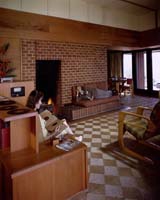
Join us for a conversation about the hugely influential photographer Maynard L. Parker, who aimed his lens at the mid-century masterworks of the L.A. architects and designers whose homes embodied the American dream during a time of demographic transitions, Cold War anxieties, and a suburban society driven to consume.


Participant(s) Bio

Maynard L. Parker (1900-1976) built a career making residential spaces look their alluring best. Based in Los Angeles, Parker was one of postwar America’s most prolific commercial photographers, his sun-kissed style of photography offering a seductive domestic vision to a new consumer age. Parker’s work appeared in House Beautiful, Architectural Digest, Better Homes and Gardens, Sunset, and other popular home and design magazines of the 1930s through the 1960s. His lens revealed the homes and lifestyles of socialites and movie stars, the masterworks of internationally acclaimed architects and designers, and the modest ranch houses, tidy gardens, and new interiors which embodied the American dream.

Jennifer A. Watts is curator of photographs at the Huntington Library in San Marino, California, where her exhibitions, research, and writing has primarily focused on the photography of California and the American West. She has coauthored several books, including This Side of Paradise: Body and Landscape in Los Angeles Photographs; Edward Weston: A Legacy; and The Great Wide Open: Panoramic Photographs of the American West. Watts is the curator of the recent exhibition, “A Strange and Fearful Interest: Death, Mourning, and Memory in the American Civil War.”

Christopher Hawthorne is architecture critic for the Los Angeles Times. Before coming to the Times he was architecture critic for Slate and a frequent contributor to the New York Times. His work has also appeared in The New Yorker, the Washington Post, Metropolis, Architect, Domus, I.D., Print, Landscape Architecture Magazine, and Architectural Record, among many other publications. He is the author, with Alanna Stang, of The Green House: New Directions in Sustainable Architecture, published by Princeton Architectural Press.

D. J. Waldie is the author of books, essays and blogs about Los Angeles and Southern California. He is a contributing writer at Los Angeles Magazine and a contributing editor for the Los Angeles Times. His commentary and reviews have appeared in the Los Angeles Times, the Wall Street Journal, and the New York Times. He is widely known for his award-winning memoir, Holy Land. His most recent book is House, in collaboration with Diane Keaton. He blogs at KCET.org.


From the Outside Looking In: Writers Finding Their Place in Los Angeles

Moderated by David L. Ulin
Thursday, March 15, 2012
01:30:45
Listen:
Episode Summary
Literary Los Angeles has always existed apart from our country's publishing capital--3,000 miles apart, to be exact. What does this distance offer writers and book artists? What are the freedoms and the challenges of being outside the traditions and trends of literature? A panel of L.A. writers-authors of fiction, essays, graphic novels, screenplays, and poetry-delve into these questions, considering their impact on both the individual and the community.

Part of Pacific Standard Time, Los Angeles Art 1945-1980

Participant(s) Bio
Bernard Cooper is the author of Maps To Anywhere; A Year of Rhymes; Truth Serum; a collection of short stories, Guess Again, and his most recent book is The Bill From My Father. Cooper's many awards include the PEN/USA Ernest Hemingway Award, O. Henry Prize, a Guggenheim grant, and a National Endowment of the Arts fellowship in literature. His work has appeared in many anthologies, including The Best American Essays and as well, in magazines and literary reviews including, Harper's, The Paris Review, Story, The Los Angeles Times Magazine, and The New York Times Magazine. Mr. Cooper teaches Creative Non-Fiction at Bennington College.

Joyce Farmer is best known for co-creating the Tits 'n Clits comics anthology in the 1970s, a feminist response to the rampant misogyny in underground comix. Her graphic memoir Special Exits is a Fall 2010 release from Fantagraphics Books.

Lynell George is an L.A.-based journalist and essayist. A longtime staff writer for both the Los Angeles Times and L.A. Weekly, she covers books, music, visual art and social issues and identity politics. Her work has also appeared in Vibe, Essence, The Smithsonian, Black Clock and Boom: A Journal of California. Currently she is an Assistant Professor of English at Loyola Marymount University in Los Angeles where she teaches journalism.

Marisela Norte is the recipient of the Ben Reitman award from San Diego State University for Peeping Tom Tom Girl, a collection of poetry and prose. Her poems featured on MTA buses in the OUT YOUR WINDOW project were recently selected among the the ten best transit poems in the world by the Atlantic. Norte continues to document life in Los Angeles in words and through photography via public transportation.

Michael Tolkin is the author of four novels: The Player, Among the Dead, Under Radar, and The Return of the Player. He won the Writers Guild of America award for his screenplay for The Player, and also directed the movies The Rapture and The New Age.

David L. Ulin is book critic for the Los Angeles Times. From 2005-2010, he was the paper's book editor. He is the author of The Lost Art of Reading: Why Books Matter in a Distracted Time and The Myth of Solid Ground: Earthquakes, Prediction, and the Fault Line Between Reason and Faith, and the editor of Another City: Writing from Los Angeles and Writing Los Angeles: A Literary Anthology, which won a 2002 California Book Award. His essays and criticism have appeared in many publications.

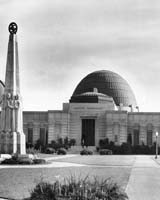
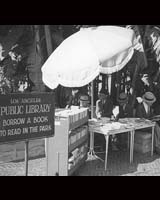
Photo: LAPL Photo collection

Concrete Rivers: The Emotional Topography of LA

In conversation with Lynell George
Thursday, April 12, 2012
01:16:23
Listen:
Episode Summary
Two celebrated poets read from their most recent work and discuss how Los Angeles has influenced their writing, how some influences overlap and others diverge. Born in Watts, Wanda Coleman witnessed Simon Rodia working on the Towers firsthand. Coleman's work is often concerned with the outsider, both in terms of race and poverty in California. Lewis MacAdams is a poet, journalist, filmmaker, and activist who has written on topics ranging from cultural history to the environment. Known as the Los Angeles River's most influential advocate, he co-founded the Friends of the LA River (FoLAR) and dubbed it \"a forty year art work.\"

Participant(s) Bio
Wanda Coleman was born in Watts and raised in South Central Los Angeles and has lived California from San Francisco to the Mexican border. The author of 18 books of poetry and prose, she is featured in Writing Los Angeles (2002), and Black California (2010). She has been an Emmy-winning scriptwriter and a former columnist for Los Angeles Times Magazine. Her honors include Guggenheim and NEA fellowships and a 2004 C.O.L.A. Fellowship in literature from the Department of Cultural Affairs, Los Angeles. Her most recent books include Ostinato Vamps; The Riot Inside Me: Trials & Tremors; Jazz & Twelve O'Clock Tales and a new collection of poems, The World Falls Away.

Lewis MacAdams is a Texas native and the author of more than a dozen books of poetry including, the most recent, Dear Oxygen. In 1970 he moved to Bolinas, a small town in West Marin County, California, where he became one of the few American poets ever to be elected to public office. In 1985, he founded Friends of the Los Angeles River, a 40-year art work to bring the Los Angeles River back to life. He remains the organization's president. His book Birth of the Cool, a history of the idea of cool, was chosen one of the best non-fiction books of the year for 2001 by the Los Angeles Times.

Lynell George is an L.A.-based journalist and essayist. A longtime staff writer for both the Los Angeles Times and L.A. Weekly, she covers books, music, visual art, social issues and identity politics. Her work has also appeared in Vibe, Essence, The Smithsonian, Black Clock and Boom: A Journal of California. George is currently an Assistant Professor of English at Loyola Marymount University in Los Angeles where she teaches journalism.

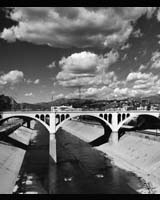
Photo: LAPL Photo collection

Pages

Top