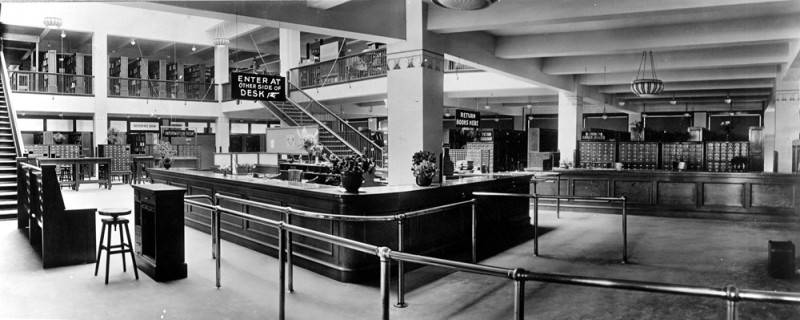
The first several decades of the Los Angeles Public Library's existence involved frequent moves into various rented spaces downtown. These locations included the Downey Block (1872-1889), City Hall (1889-1906), Homer Laughlin Building (1906-1908), Hamburger Building (1908-1914), and finally, the Metropolitan Building (1914-1926). As we celebrate our first 100 years in our own home, let's take a look back at the conditions that finally prompted the construction of the Central Library. The establishment of a permanent Central Library resolved issues of overcrowding, unsatisfactory conditions, and rent hikes. It also brought stability to the library's operations and provided a building that the city of Los Angeles could point to with pride as their own.
The library constantly moved to larger quarters as its use increased and the space proved inadequate to sustain its growth. In its last rented home, the Los Angeles Public Library opened June 1, 1914, in the Metropolitan Building at Fifth and Broadway, where the library rented the seventh, eighth, ninth, and tenth floors. The building was designed by architects John Parkinson and George E. Bergstrom. The library signed the lease while the building was still under construction and was able to request some changes, most importantly, cutting back part of the ninth floor to expose more area to natural light through a skylight in the roof. To compensate for the lost floor space, a small tenth floor was added on the north side of the skylight and held the bindery, carpentry shop, and a small lecture hall, which also served the library's training school from October to May.
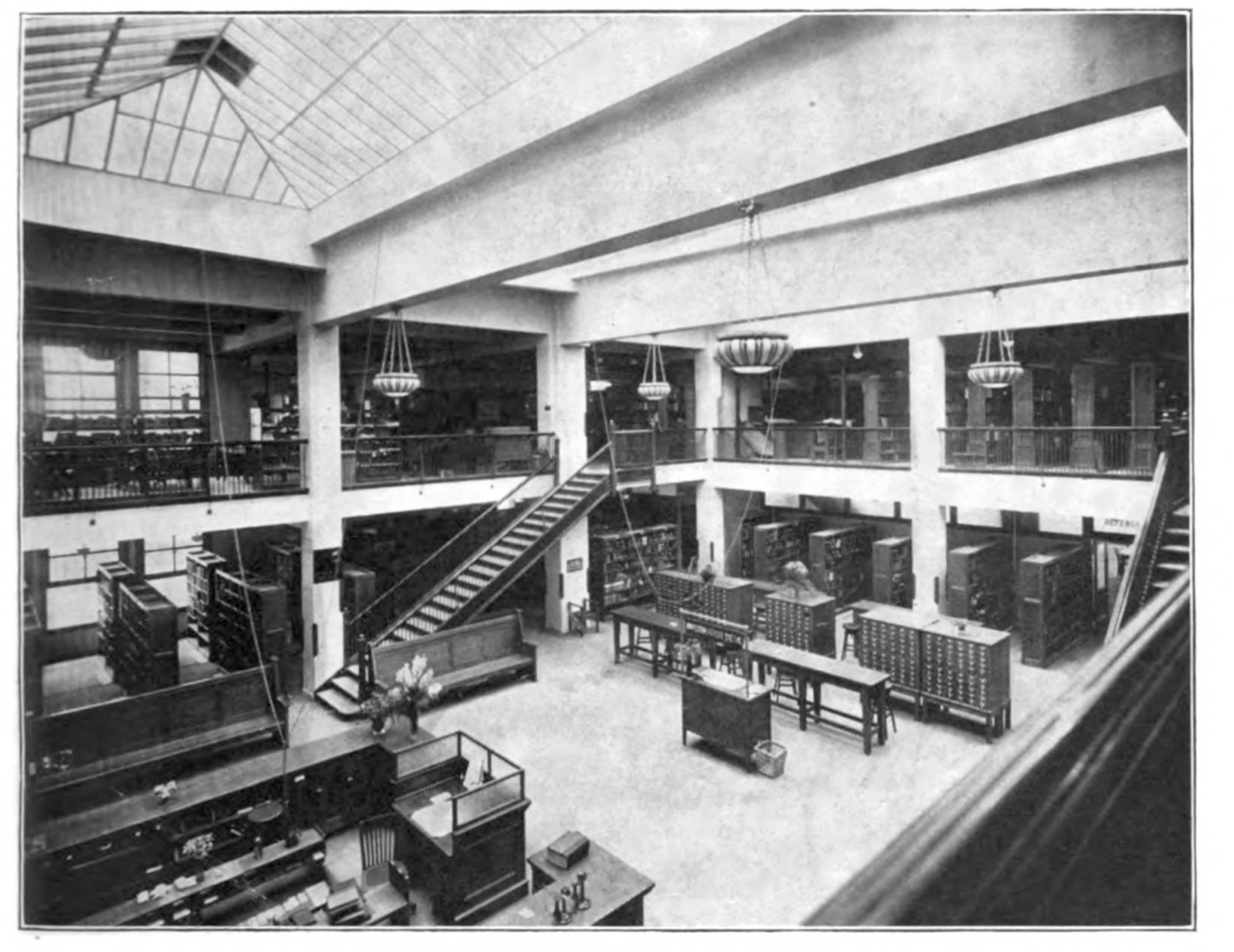
The library's May/June 1914 Monthly Bulletin listed many advantages over the library's previous home, the Hamburger Building on Eighth Street between Broadway and Hill. The move was thought to make the library more accessible for patrons because Fifth and Broadway was then considered Los Angeles' busiest intersection. The new rent was $4000 more per year (approximately $65,000 today), but the space was 15,000 sq ft larger. That meant space for 250 more people to sit at tables and room for 75,000 more books on the shelves.
![[June 2, 1914] Los Angeles Times](/sites/default/files/media/images/blog-lapl/2026/LibraryOpensFineQuarters.jpg)
Lighting and ventilation were touted in the bulletin as better than the library's previous location on the third floor of the Hamburger's department store. A large skylight over the circulation area (check-out desk, book return area, and registration desk for library card sign-up) provided natural light during the day. This location's additional space allowed for most of the books to be displayed on open shelves, making this a browseable collection.

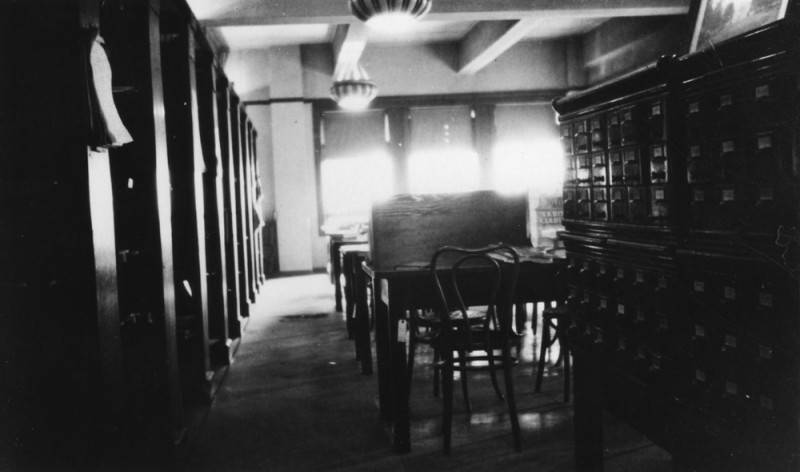
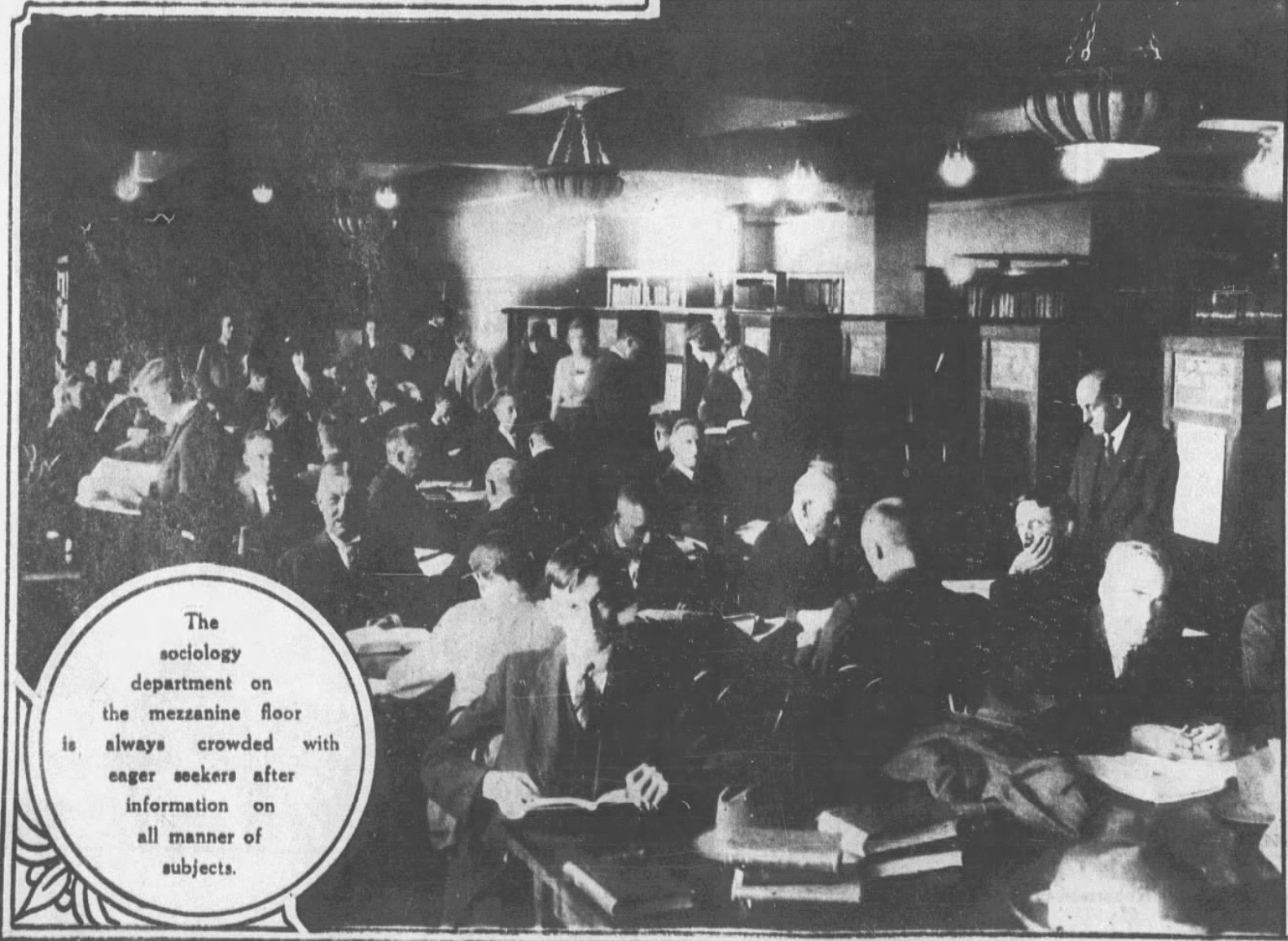
The library's Metropolitan Building location sounded great, but there were problems as well. One major issue was that the library was only accessible by elevator. Everyone who visited had to queue up to get space on the elevator. And there were lots of people going to the library. Complaints about the crowded conditions were published in the newspapers after the first few years in the Metropolitan Building. Natural light from the skylight and windows illuminated the immediate area, but bookshelves and tables farther from the windows remained dark. Although more lighting was installed, when the sun went down, the ability to read anything also did.

Los Angeles, with more readers than any other place of its size in the country, is in the humiliating position of having to pay rent for the storage of its enormous collection of books.Los Angeles Times, April 18, 1915
The push for a new library building began soon after the library moved into the Metropolitan Building. Library use increased rapidly, and the space became cramped. An April 18, 1915 front page article in the Los Angeles Times asked, "Shall [the] Public Library Be Fittingly Housed?" From April 1919 to April 1920, library circulation increased by 20%, and by September, it increased by 28% over the previous year's total. According to a report from City Librarian Everett R. Perry to the Library Board in October 1920, 7,000 people a day took the elevator to the library in the Metropolitan Building. Approximately 1500 new library cards were being issued each month, and nearly a quarter of the city's residents possessed a library card. Circulation numbers showed that 3,000,000 volumes were being checked out annually. The book collection had grown so large that they no longer fit on the shelves available for public browsing. It was more urgent than ever that the library have its own building, accessible to the growing population and something Angelenos could point to with pride.
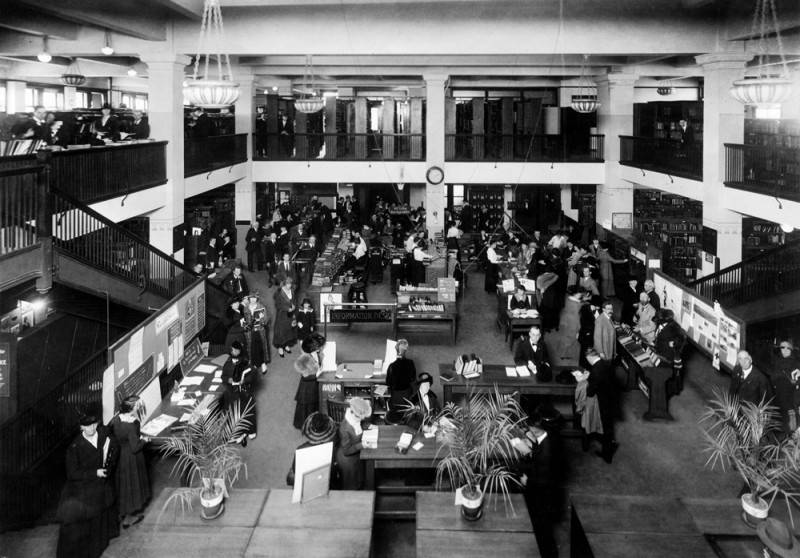
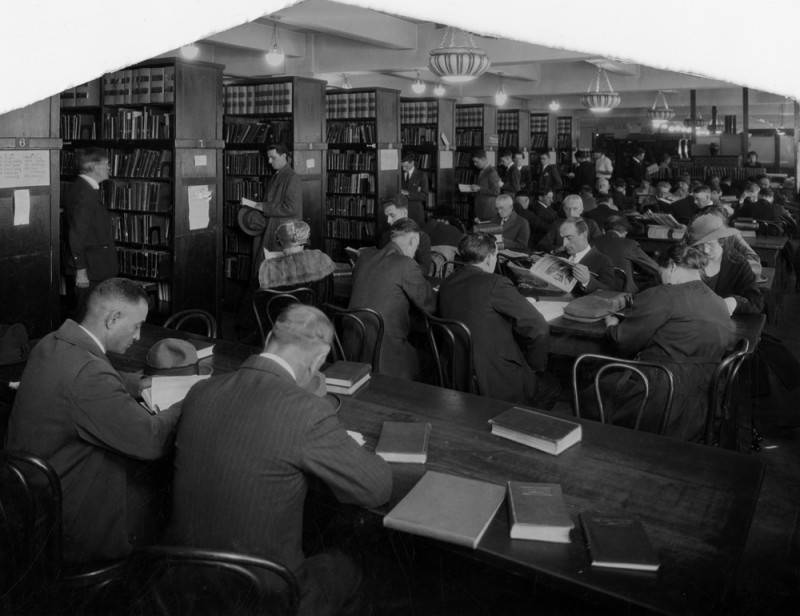
In September 1919, City Librarian Everett R. Perry assigned library worker Monica Shannon (graduate of the library's 1915 Training Class) to initiate newspaper and special publicity work for the library. Miss Shannon was instrumental in the crusade for Central Library (read more about her here). She spearheaded a campaign for a new library building that included advertisements on the side of streetcars and in movie theaters, display windows in downtown department stores, informative talks by library staff and prominent Angelenos, as well as branch-level publicity in the form of bookmarks slipped into checked out items. As a result, the 1921 library bond issue was a success, and work on a Central Library began in earnest. It took several years from planning to completion, but in 1926, the library moved out of the Metropolitan Building and into the beautiful Central Library.
There were a great many people involved over a long period of time in the quest for a Los Angeles Central Library. For more information about the lengthy fight for a permanent home, check out Kenneth A. Breisch's The Los Angeles Central Library: Building an Architectural Icon, 1872-1933, Glenna Dunning's chapter (and accompanying blog post) on the Metropolitan Building in Feels Like Home: Reflections on Central Library, and Los Angeles Public Library's California History Librarian Kelly Wallace's piece, available on YouTube, about the 1921 bond issue that funded the Central Library.