The Library will be closed on Thursday, December 25, 2025, in observance of Christmas.

Social Sci/Politics

LAPL ID: 
20

Documenting Indigenous Stories Through Film: An Alternative Lens
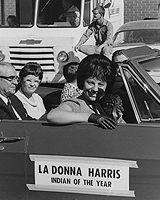
Lourdes Grobet and Julianna Brannum
In conversation with filmmaker Yolanda Cruz
Tuesday, September 30, 2014
00:58:24
Listen:
Episode Summary

Two filmmakers share and discuss excerpts from their new documentaries that illuminate indigenous stories rarely seen on film. Bering: Balance and Resistance, by Lourdes Grobet—one of Mexico’s most renowned photographers—lyrically reflects on an Inuit community’s search for new values while struggling to reconcile the past. In Indian 101, filmmaker Julianna Brannum focuses on lessons taught by her great aunt LaDonna Harris, the Comanche activist who helped negotiate the return of sacred ground to the Taos Pueblo Indians. Far apart geographically, these two communities are irrevocably linked as they navigate their contemporary history.


Participant(s) Bio

Lourdes Grobet, a contemporary photographer, is best known for her photographs of Mexican Lucha libre wrestlers. Her work has been exhibited widely in more than a hundred individual and joint exhibitions, including MoMA in New York and San Francisco and festivals such as PhotoEspaña in Madrid. Among her many published books are Lourdes Grobet: LuchaLibre, Espectacular de LuchaLibre, and Luchalibremexicana. Among her other projects are: Paisajespintados, Teatrocampesino, Strip Tease. Bering: Balance and Resistance (2013) is her first documentary film, inspired by a photographic exhibition of the same name she authored in 2009. Groubet lives in Mexico.

Julianna Brannum is a documentary filmmaker based in Austin, TX. Her first film, The Creek Runs Red, aired in 2007 on PBS’s national prime-time series, Independent Lens. In early 2008, she co-produced a feature-length documentary with Emmy Award-winning producer Stanley Nelson for PBS’s We Shall Remain – a 5-part series on Native American history. Brannum was a 2007 Sundance Institute/Ford Foundation Fellow and has been awarded many grants and fellowships for her latest documentary LaDonna Harris: Indian 101. She is a member of the Quahada band of the Comanche Nation of Oklahoma.

Yolanda Cruz is a filmmaker from Oaxaca, Mexico. She is a 2011 Sundance Screenwriting and Directing Lab Fellow, whose first feature script, La Raya, will be produced by Canana Films in 2015. Her work has been screened at venues such as the Sundance Film Festival, the Guggenheim Museum in New York, Park la Villette in Paris, the Smithsonian National Museum of the American Indian, and the National Institute of Cinema in Mexico City. She holds an MFA from the UCLA School of Theater, Film, and Television. Cruz is also an alumna of the Sundance Institute Native Lab.
Through Trying Times: Stories of Loss and Redemption in the American South

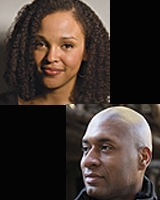
Charles M. Blow and Jesmyn Ward
In Conversation With Robin Coste Lewis
Thursday, September 25, 2014
01:10:40
Listen:
Episode Summary

New York Times columnist Charles M. Blow grew up in an out-of-time African-American Louisiana town where slavery’s legacy felt astonishingly close, reverberating in the elders’ stories and the near-constant wash of violence. Award-winning author Jesmyn Ward writes powerfully about the poverty of her Mississippi childhood and the pressures it brought on men and women, revealing disadvantages that bred a certain kind of tragedy. In this conversation, two accomplished storytellers take the stage to discuss their memoirs that pay homage to the troubled past of the South with emotional honesty and moments of stark poetry.


Participant(s) Bio

Charles M. Blow has been the visual Op-Ed columnist at the New York Times since 2008, is a CNN commentator and has appeared on MSNBC, CNN, Fox News, the BBC, Al Jazeera, and HBO. Prior to working at The Times, he was Art Director of National Geographic Magazine, and a graphic artist at The Detroit News. Blow lives in Brooklyn with his three children.

Jesmyn Ward is currently an associate professor of creative writing at Tulane University. She is the author of the novels Where the Line Bleeds and Salvage the Bones, the latter of which won the 2011 National Book Award and was a finalist for the New York Public Library Young Lions Fiction Award and the Dayton Literary Peace Prize. Her memoir, Men We Reaped, was a finalist for the National Book Critics Circle Award. Ward grew up in DeLisle, Mississippi, and lives there now.

Robin Coste Lewis is a Provost’s Fellow in Poetry and Visual Studies at USC. A Cave Canem fellow, she received her MFA from NYU and an MTS in Sanskrit from Harvard's Divinity School. A finalist for the International War Poetry Prize, the National Rita Dove Prize, and the Discovery Prize, her work has appeared in various journals and anthologies. Born in Compton, her family is from New Orleans. Her book of poems, Voyage of the Sable Venus, is forthcoming from Knopf.


The Heyday of Malcolm Margolin: The Damn Good Times of a Fiercely Independent Publisher

Malcolm Margolin and Kim Bancroft
In Conversation With Vincent Medina, Tribal Scholar
Wednesday, September 17, 2014
01:12:51
Listen:
Episode Summary

For forty years, Heyday Books has been publishing California's stories—stories no one else has told—from native peoples and newly arrived immigrants, stories about the delicate Calliope hummingbirds and 14,000 foot peaks, to the explorations of California's most original thinkers, poets, and visual artists. Bancroft's new book describes an organization run on passion and devoted to beauty. Malcolm's friend and colleague, Vincent Medina, a member of the Muwekma Ohlone Tribe of the San Francisco Area, will join the discussion.


Participant(s) Bio

Kim Bancroft is a longtime teacher turned editor and writer. Kim has edited several memoirs, including Ariel: A Memoir, by Ariel Parkinson; The Morning the Sun Went Down, by Darryl Babe Wilson; and Ruth’s Journey: A Survivor’s Memoir, by Ruth Glasberg Gold. Most recently, she edited Literary Industries, the 1890 memoir of her great-great-grandfather Hubert Howe Bancroft, historian, and founder of the Bancroft Library at the University of California, Berkeley (Heyday, 2013). She is also the author of The Heyday of Malcolm Margolin: The Damn Good Times of a Fiercely Independent Publisher.

Malcolm Margolin is executive director of Heyday, an independent nonprofit publisher and unique cultural institution, which he founded in 1974. Margolin is the author of several books, including The Ohlone Way: Indian Life in the San Francisco–Monterey Bay Area, named by the San Francisco Chronicle as one of the hundred most important books of the twentieth century by a western writer. He has received dozens of prestigious awards, including the National Endowment for the Humanities, the Fred Cody Award Lifetime Achievement from the San Francisco Bay Area Book Reviewers Association, and a Cultural Freedom Award from the Lannan Foundation. He helped found the Bay Nature Institute and the Alliance for California Traditional Artists.

Vincent Medina, Jr, a member of the Muwekma Ohlone Tribe of the San Francisco Bay Area, works for Heyday Books, where he focuses on sharing the stories of the larger California Indian world. He authors the lively multimedia blog Being Ohlone in the 21st Century, and is active in the revitalization of the Chochenyo language, the indigenous language of the eastern shores of the San Francisco Bay that many linguists had long labeled "extinct." Using wax cylinder recordings and ethnographic notes, he has helped bring the language into modern times. Vincent is currently in college and lives in San Lorenzo, California, which is part of his Jalquin Ohlone ancestral homeland.


It's Complicated: The Social Lives of Networked Teens

danah boyd
In conversation with Henry Jenkins
Tuesday, July 29, 2014
01:18:10
Listen:
Episode Summary

Has the Internet ruined everything or is it our savior? boyd, a principal researcher at Microsoft Research, skewers misunderstandings and anxieties about the online lives of teens often voiced by teachers and parents in her eye-opening new book. Integrating a decade’s worth of interviews with teens, boyd injects nuances and complexity into the discussion of how they are trying to carve out a space of their own, as their lives are increasingly mediated through services like Facebook, Twitter and Instagram. Anyone interested in the impact of emerging technologies on society, culture, and commerce in the years to come will want to catch this conversation.


Participant(s) Bio

danah boyd is a principal researcher at Microsoft Research, a research assistant professor in Media, Culture, and Communication at New York University, and a fellow at Harvard’s Berkman Center. Her research examines social media, youth practices, tensions between public and private, social network sites, and other intersections between technology and society. She holds a Ph.D. from the School of Information (iSchool) at the University of California-Berkeley, where her dissertation research was funded as a part of the MacArthur Foundation’s Initiative on New Media and Learning. She holds a Master’s Degree from MIT and a BS in computer science from Brown University.

Henry Jenkins is Provost's Professor of Communication, Journalism, and Cinematic Arts at the University of Southern California. He has written and edited more than fifteen books on media and popular culture, including Spreadable Media: Creating Meaning and Value in a Networked Culture with Sam Ford and Joshua Green. His other published works reflect the wide range of his research interests, touching on democracy and new media, the “wow factor” of popular culture, science-fiction fan communities, and the early history of film comedy. His most recent book, Reading in a Participatory Culture: Remixing Moby-Dick for the Literature Classroom, was written with Wyn Kelley, Katie Clinton, Jenna McWilliams, Erin Reilly, and Ricardo Pitts-Wiley.


The Interior Circuit: A Mexico City Chronicle

Francisco Goldman
In conversation with Rubén Martínez
Thursday, July 17, 2014
01:11:58
Listen:
Episode Summary

In a follow-up to his masterful Say Her Name, The Interior Circuit is Goldman’s emergence from the grief of his wife’s death as he embraces Mexico’s capital as his home—a city which stands defiantly apart from so many of the social ills and violence wracking Mexico. Yet as the narco war rages on and with the restoration to power of the Institutional Revolutionary Party, Mexico City’s special apartness seems threatened. In setting out to understand the menacing challenges the city now faces, Goldman delivers a poetic and philosophical chronicle that explores a remarkable and often misunderstood metropolis.


Participant(s) Bio

Francisco Goldman is the author of Say Her Name- winner of the Prix Femina Etranger and four other books. He has been a Guggenheim Fellow, a Cullman Center Fellow at the NY Public Library, and a Berlin Fellow at the American Academy, among other awards and honors. His work has appeared in The New Yorker, Harper's, The Believer, and numerous other publications. Every year he teaches one semester at Trinity College in Hartford, Connecticut, and then hightails it back to Mexico City.

Rubén Martínez, an Emmy-winning journalist and poet, is the author of several books, including Crossing Over: A Mexican Family on the Migrant Trail and The New Americans. His most recent book is Desert America: Boom and Bust in the New Old West. He holds the Fletcher Jones Chair in Literature and Writing at Loyola Marymount University.


Not Uniquely Human: The Astonishing Connection Between Human and Animal Health

Laurel Braitman, Kathryn Bowers and Dr. Barbara Natterson-Horowitz
In conversation Sanden Totten, Science Reporter for KPCC
Thursday, July 10, 2014
01:03:39
Listen:
Episode Summary

In their groundbreaking book Zoobiquity, cardiologist Barbara Natterson-Horowitz and science writer Kathryn Bowers describe how they arrived at a pan-species approach to medicine. Animals do indeed get diseases ranging from brain tumors and heart attacks to anxiety and eating disorders, just like we do—and the authors explore how animal and human commonality can be used to diagnose, treat, and heal patients of all species. In her illuminating new book, Animal Madness, Laurel Braitman chronicles her parallel discoveries of what nonhuman animals can teach us about mental illness and recovery. Join us to hear what we can learn from a blind elephant, compulsive parrots, depressed gorillas, and a cow with anger management issues.


Participant(s) Bio

Laurel Braitman is a contributing writer for Pop Up Magazine, The New Inquiry, Orion, and other publications. She holds a Ph.D. in the history of science from MIT and is a Senior TED Fellow. Her newly published book is Animal Madness: How Anxious Dogs, Compulsive Parrots, and Elephants in Recovery Help Us Understand Ourselves.

Kathryn Bowers was a staff editor at The Atlantic and a writer and producer at CNN International. She has edited and written popular and academic books and teaches a course at UCLA on medical narrative. Bowers co-authored Zoobiquity with Barbara Natterson-Horowtiz.

Barbara Natterson-Horowitz, M.D., earned her degrees at Harvard and the University of California, San Francisco. She is a cardiology professor at the David Geffen School of Medicine at UCLA and serves on the medical advisory board of the Los Angeles Zoo as a cardiovascular consultant. Her writing has appeared in many scientific and medical publications. Natterson-Horowitz co-authored Zoobiquity with Kathryn Bowers.

As KPCC's Science Reporter, Sanden Totten covers everything from space exploration and medical technology to endangered species and the latest earthquake research. Totten is the co-producer of Brains On!, a podcast for kids and curious adults about the scientific mysteries of the universe, and has won several honors, including the Radio and TV News Association’s Golden Mike for “Best Radio Medical and Science Reporting,” the National Entertainment Journalism's award for “Best Radio News Story,” and a 2011 Knight Science Journalism Fellowship at MIT.


Dear ONE: Love & Longing in Mid-Century Queer America

A Dramatic Reading Adapted and Directed by Zsa Zsa Gershick
Performed by Dalila Ali Rajah, Zsa Zsa Gershick, Hunter Lee Hughes, Paul Jacek, and Beverly Mickins; Q&A With Letters to ONE Editor Craig M. Loftin
Saturday, June 28, 2014
01:13:26
Listen:
Episode Summary

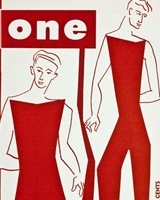
“Dear ONE,” illuminates the lives of ordinary queer Americans as recounted through letters written between 1953 and 1967, to L.A.’s ONE Magazine, the first openly gay and lesbian periodical in the United States. Looking for love, friendship, advice or understanding, readers wrote of loneliness and longing, of joy and fulfillment, and of their daily lives, hidden from history. This dramatic reading is adapted and directed by Zsa Zsa Gershick from material from ONE National Gay & Lesbian Archives at USC.


Participant(s) Bio

Dalila Ali Rajah is an actress, published poet, dancer, spoken-word artist, and filmmaker. As co-creator, executive producer, and co-host of the successful late-night talk show, Cherry Bomb!, she helped guide the show from its beginnings on the Web to television on Canada’s OutTV. Her most recent project, Secrets & Toys, which she wrote, produced, and stars in, is currently on the festival circuit.

Zsa Zsa Gershick is the writer/director of the award-winning short film Door Prize, which has screened at more than 100 film festivals worldwide; the author of the plays Coming Attractions and Bluebonnet Court (winner of the GLAAD Award for Outstanding Los Angeles Theatre); and the books Gay Old Girls and Secret Service: Untold Stories of Lesbians in the Military. She is a Dramatists Guild member and a USC alumnus.

Hunter Lee Hughes began acting at age 12 in his hometown of Houston. Roles include ‘Bobby’ in the 25th-anniversary production of Thomas Babe’s A Prayer for my Daughter (directed by Dorothy Lyman), ‘Frank Colby’ in the television pilot Project: X (directed by Starling Price) and, most recently, the lead role of ‘Evan’ in the film Narcissist (directed by Eric Casaccio). Hunter has appeared in a number of projects for Fatelink Productions, which he founded, including Fate of the Monarchs, The Sermons of John Bradley, Winner Takes All, and the upcoming feature film, Guys Reading Poems.

Teacher, author, actor, and stand-up comic Paul Jacek received his theater training at the American Academy of Dramatic Arts/West. A regular at the World Famous Comedy Store, he headlines nationwide and has been profiled in The New Yorker and in Edge magazine. He has written for and with Joan Rivers, Jack Burns, and Carl Reiner and is honored to be involved with Dear ONE.

Craig M. Loftin is the author of Masked Voices: Gay Men and Lesbians in Cold War America and the editor of Letters to ONE: Gay and Lesbian Voices in the 1950s and 1960s. He has a Ph.D. in History from the University of Southern California and currently teaches in the American Studies Department at Cal State Fullerton.

Beverly Mickins is an actor, writer, storyteller and singer. She has appeared onstage in New York and Los Angeles and was featured on Thirtysomething and Judging Amy. She is the creator and founder of L.A.’s longest-running storytelling venue Story Salon, for which she earned a Women in Theater Award. Featured on KABC and KNBC, Story Salon recently published The Story Salon Big Book of Stories, a compilation of 40 original stories. Beverly wrote and performed her successful solo show The Driving Piece and started the popular Party Pack series, which combines singing and storytelling. She can be heard regularly on Story Salon podcasts at www.StorySalon.com.


Love: Three Perspectives—Two Novels and a Psychoanalyst

Michelle Huneven and Mona Simpson
In Conversation with Psychoanalyst Christopher Bollas
Wednesday, June 18, 2014
00:55:54
Listen:
Episode Summary

New novels from Michelle Huneven (Off Course) and Mona Simpson (Casebook) both deal with love and its moral varieties, from quite different perspectives. As their characters variously struggle to forge lasting connections, they evoke issues long familiar to the psychoanalyst. Is it possible to separate out the strands of fantasy and projection, family patterning, and primal need from adult love? What makes highly intelligent, thoughtful people so thoroughly lose their way in love’s enchantment? Joining the authors to discuss love’s tangled and complex morality is eminent psychoanalyst and theorist Dr. Christopher Bollas.


Participant(s) Bio

Michelle Huneven is the author of three previous novels:Blame, which was a finalist for the National Book Critics Circle Award, Jamesland, and Round Rock.

Mona Simpson’s novels include My Hollywood, A Regular Guy, Off Keck Road, The Lost Father and Anywhere But Here. Her work has been recognized with numerous prizes, including the Chicago Tribune’s Heartland Prize, the Whiting Writer’s Award, and a Guggenheim fellowship. Most recently, she was the recipient of a Literature Award from the American Academy of Arts and letters. Her short fiction has been published in Granta, Harpers, The Atlantic, McSweeney’s and The Paris Review.

Christopher Bollas, Ph.D., is a member of the British Psychoanalytical Society, the Los Angeles Institute and Society for Psychoanalytic Studies, and an Honorary Member of the Institute for Psychoanalytic Training and Research (IPTAR) in New York. Among his books are Catch Them Before They Fall (The Psychoanalysis of Breakdown) and The Christopher Bollas Reader, with forward by Adam Phillips.


No Further West: The Story of Los Angeles Union Station

Panel discussion with Debra Gerod, Jenna Hornstock, Eugene Moy and Marlyn Musicant
Moderated by Kevin Roderick
Thursday, May 29, 2014
01:10:40
Listen:
Episode Summary

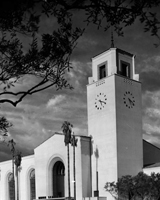
In 1939, Union Station opened on the former site of Los Angeles’s original Chinatown—displacing thousands of Chinese and Chinese Americans. The new station fulfilled the vision of civic leaders who believed that an impressive gateway was critical to the growth of Los Angeles. In place of Chinatown, a distinctive Mission Revival station proudly stands as the centerpiece of our regional transportation system. Yet balances of power and political economies were disrupted; financial and legal battles raged on for years. This panel—including members of the Union Station Master Plan team, an architectural historian (and exhibition curator), and the vice-president of the Chinese Historical Society of Southern California—will discuss the history of this architectural icon and share visions for its future.

Presented in conjunction with the Getty Research Institute's exhibition of the same name in Central Library's Getty Gallery.


Participant(s) Bio

Debra Gerod is a partner at Gruen Associates, the planning and architectural firm selected for the Union Station master plan. During her tenure at Gruen Associates, Gerod has focused on the collaborative delivery of projects, primarily in the public sector. Her work includes large-scale, significant civic and cultural projects such as courthouses, embassies, performing arts centers, museums, libraries, and transportation projects.

Jenna Hornstock has served as acting as project manager for the Union Station Master Plan for the past three years at Metro implementing the new TOD Planning Grant program, as well as managing other strategic initiatives related to transit-oriented development planning. Prior to joining Metro, Ms. Hornstock spent nearly seven years at the Community Redevelopment Agency of the City of Los Angeles (CRA/LA), most recently as Chief of Strategic Planning and Economic Development. She holds a Master's in Public Policy from Harvard University’s Kennedy School of Government and a BA in Rhetoric from UC Berkeley.

Eugene Moy is a past president and the current vice president of the Chinese Historical Society of Southern California, where he has been a member since 1976. He has conducted research and reviewed many scholarly publications on the history of Chinese in Southern California on behalf of the Historical Society. In 1981 he was part of the team that developed historical walking tours of Los Angeles Chinatown and has been continuously involved in conducting interpretive walking tours of Old and New Chinatown since that time. In addition, he currently serves as second vice president for the Chinese American Museum at El Pueblo de Los Angeles Historical Monument.  Professionally, he is retired after over 35 years in municipal planning and redevelopment, working for five different cities in Los Angeles County.  He is a native of Los Angeles, a graduate of Cal State Long Beach, and has resided with his family in Alhambra since 1986.

Marlyn Musicant; is the Senior Exhibitions Coordinator at the Getty Research Institute. She earned her M.A. in the History of Decorative Arts, Design, and Culture at the Bard Graduate Center. Her research specialties include twentieth-century industrial design and architecture—particularly German Modernism and the history of architecture and planning in Southern California. Musicant is an editor of Los Angeles Union Station, forthcoming from Getty Publications, and the curator of the exhibit of the same name on display in Central Library’s Getty Gallery. Musicant is a native Angeleno.

Kevin Roderick is a journalist, editor, blogger, and author living in Los Angeles. He is the creator and publisher of LA Observed, a widely cited news website that Forbes rated as Best of the Web. He is a contributing writer on politics and media atLos Angeles magazine, an award-winning radio commentator, and is often asked by the media to talk about Southern California issues. Currently, he is the director of the UCLA Newsroom at the University of California, Los Angeles.


Stand Up Straight and Sing!

Jessye Norman
In Conversation With Deborah Borda
Thursday, May 15, 2014
00:54:52
Listen:
Episode Summary

On the occasion of her new memoir, one of America’s most beloved and accomplished classical singers shares her life story: a descendant of generations of hardworking slaves and free ancestors who grew up amid the challenges of Jim Crow racism in the south as the civil rights movement was at its nascence. Nurtured by a close family and a tight-knit community centered on the local church, Jessye Norman grew up singing songs and spirituals within a tight-knit community. Decades later, after a meteoric rise at the Berlin Opera, a debut at the Metropolitan Opera, and forays into blues, jazz, and other roots music, she has become one of America’s cultural treasures. Join us for an evening with an inspiring artist who has lead an astonishing life.


Participant(s) Bio

Jessye Norman is one of America's greatest and most accomplished classical singers, with five Grammy Awards, dozens of international prizes, and a Kennedy Center Honor (its youngest-ever recipient) among her countless awards. She was born in segregated Augusta, Georgia, during the Jim Crow era and was inspired by singer Marian Anderson and by her loving and supportive parents, who insisted that all four of their children live up to the highest possible standards. She pursued music at Howard University and the University of Michigan and achieved early success with a contract from the Berlin Opera. Her career since then has reached from the stage of the Metropolitan Opera to concerts in honor of the Dalai Lama, the bicentennial of the French Republic, as well as multi-media presentations of American roots music.

Prior to becoming President and CEO of the Los Angeles Philharmonic in 2000, Deborah Borda was Executive Director at the New York Philharmonic and General Manager of the San Francisco Symphony. Under Borda’s leadership, the orchestra is building new bridges to the community, among them the educational initiative YOLA. As Executive Producer, Borda implemented LA Phil LIVE concert transmissions to more than 500 movie theaters. Most recently, Borda launched Take A Stand, a bi-coastal partnership with the Longy School of Music and Bard College which supports social change through music.


Pages

Top