The Library will be closed on Thursday, December 25, 2025, in observance of Christmas.

Social Sci/Politics

LAPL ID: 
20

An American Family: Being Muslim in the U.S. Military
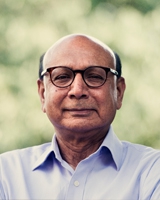
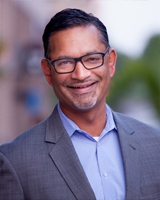
Khizr Khan
In Conversation With Jeffrey Fleishman
Thursday, December 7, 2017
01:13:28
Listen:
Episode Summary

Last fall’s presidential election brought a range of impassioned voices to the national stage, but one of the most captivating speakers rose above petty politics with a deeply personal and very different view of what it means to be American. You may recall the Muslim parent Khizr Khan from the DNC when he spoke about his son, a U.S. Army Captain who was killed while protecting his base camp in Iraq. In Khan’s inspiring new book, An American Family: A Memoir of Hope and Sacrifice, he reflects on his grief for his son as well as his family history of pursuing the American dream during these tumultuous times. From humble beginnings on a poultry farm in Pakistan to obtaining a degree from Harvard Law School and raising a family in America—Khan shows what it means to leave the limitations of one’s country behind for the best values and promises of another. Khan will now take the ALOUD stage to discuss the realities of life in a nation of immigrants and the daily struggles of living up to our ideals.


Participant(s) Bio

Khizr Khan was born in 1950, the eldest of ten children, to poultry farming parents in Gujranwala, a city in rural Pakistan. He moved to the United States with his wife Ghazala in 1980. The couple became American citizens in 1986, and raised their three sons in Silver Lake, Maryland. His middle son, Captain Humayun Khan, was killed in 2004 in a suicide attack near Baqubah, Iraq, and was posthumously awarded a Purple Heart and Bronze Star. Khizr works as a legal consultant, and is involved with the University of Virginia’s ROTC program.

Jeffrey Fleishman is a culture and film writer for the Los Angeles Times. A long time foreign and war correspondent he has had postings in Rome, Berlin and Cairo. He covered the Iraq war, the Arab Spring uprisings and the fall of Yugoslav President Slobodan Milosevic. He was a Pulitzer Prize finalist for a series of stories, including a magazine piece about his accompanying 15 Buddhist monks and nuns as they eluded Chinese soldiers on a harrowing escape trek out of Tibet and over the Himalayas and into Nepal. He is a former Nieman Fellow at Harvard University and the author of two novels, Shadow Man and Promised Virgins: A Novel of Jihad.
Locking Up Our Own: Crime and Punishment in Black America

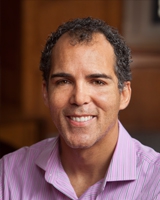
James Forman, Jr.
In Conversation With Robin D.G. Kelley
Wednesday, November 29, 2017
01:19:34
Listen:
Episode Summary

Why has our society become so punitive? In recent years, critics have assailed the rise of mass incarceration, emphasizing its disproportionate impact on people of color. However, many African American leaders in the nation’s urban centers supported the war on crime that began in the 1970s. James Forman, Jr., a professor of law at Yale Law School and former D.C. public defender, wrestles with the complexities of race and the criminal justice system in his new book, Locking Up Our Own: Crime and Punishment in Black America. Chronicling riveting stories of politicians, community activists, police officers, defendants, and crime victims, Forman illustrates with great compassion how racism plagues our current system of tough-on-crime measures. In an eye-opening conversation with Gary B. Nash Professor of American History at UCLA Robin D.G. Kelley, Forman shines a light on the urgent debate over the future of America’s criminal justice system.


Participant(s) Bio
James Forman, Jr. is a professor of law at Yale Law School. He has written for The New York Times, The Atlantic, numerous law reviews, and other publications. A former clerk for Supreme Court Justice Sandra Day O’Connor, he spent six years as a public defender in Washington, D.C., where he cofounded the Maya Angelou Public Charter School.
 
Robin D. G. Kelley is the Gary B. Nash Professor of American History at UCLA. His books include the prize-winning, Thelonious Monk: The Life and Times of an American Original; Hammer and Hoe: Alabama Communists During the Great Depression; Yo’ Mama’s DisFunktional!: Fighting the Culture Wars in Urban America; Three Strikes: Miners, Musicians, Salesgirls, and the Fighting Spirit of Labor’s Last Century, written collaboratively with Dana Frank and Howard Zinn; and Freedom Dreams: The Black Radical Imagination. His most recent book is Africa Speaks, America Answers: Modern Jazz in Revolutionary Times.

From Here to Eternity: Traveling the World to Find the Good Death

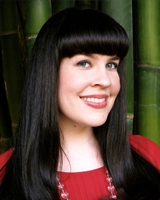
Caitlin Doughty
In Conversation With Carolyn Kellogg
Wednesday, November 1, 2017
01:07:22
Listen:
Episode Summary

Caitlin Doughty, a mortician, best-selling author, blogger, YouTube personality, and director of the nonprofit funeral home, Undertaking LA, has long been fascinated by death, what it means to treat the dead with dignity, and why we are so afraid of dead bodies. Her new book, From Here to Eternity: Traveling the World to Find the Good Death, sets out on a global journey to discover how other cultures care for their dead. With curiosity and morbid humor, Doughty encounters a range of rituals from a grandpa’s mummy being cared for in a family home in rural Indonesia to a Japanese practice of using chopsticks to pick bones from cremation ashes. As many cultures around the world celebrate their ancestors this time of year, join us for a refreshing look at death practices, mourning rituals, and how we might bring life to the way we think about death.


Participant(s) Bio

Mortician Caitlin Doughty–host and creator of “Ask a Mortician” and the New York Times best-selling author of Smoke Gets in Your Eyes–founded The Order of the Good Death. She lives in Los Angeles, where she runs her nonprofit funeral home, Undertaking LA.

Carolyn Kellogg is the book editor of the Los Angeles Times. She is a recipient of the paper’s editorial award, and she is a vice president of the board of the National Book Critics Circle. Kellogg has served as editor of LAist.com and web editor of Marketplace and has been widely published. She has an MFA in creative writing and a bachelor’s degree from USC.


The Challenges of American Immigration

Ali Noorani
In Conversation With Pilar Marrero
Thursday, July 27, 2017
01:01:20
Listen:
Episode Summary

Ali Noorani, the executive director of the National Immigration Forum in Washington, D.C., an advocacy organization promoting the value of immigrants and immigration, sheds new light on our nation’s brewing immigration debate in his timely book, There Goes the Neighborhood: How Communities Overcome Prejudice and Meet the Challenge of American Immigration. Although U.S. politics are more polarizing than ever, Noorani argues that our issues of immigration are more about culture and values than politics and policy. In his book, Noorani follows the personal stories of Americans from across the political spectrum, including conservative faith, business, and law enforcement leaders, who are grappling with the question: "Do we, as Americans, value immigrants and immigration anymore?" Exploring how immigration is affecting the changing nature of American identity, Noorani talks with Pilar Marrero, a journalist and author of Killing the American Dream, a chronicle of U.S. immigration policy mishaps.


Participant(s) Bio

Ali Noorani is the Executive Director of the National Immigration Forum, an advocacy organization promoting the value of immigrants and immigration. Growing up in California as the son of Pakistani immigrants, Ali learned how to forge alliances among people of wide-ranging backgrounds, a skill that has served him well as one of the nation’s most innovative coalition builders. In 2015, Ali was named a lifetime member of the Council on Foreign Relations. He holds a Master’s in Public Health from Boston University and is a graduate of the University of California, Berkeley. Ali lives in Washington, D.C.

Pilar Marrero is a journalist and author with long experience in covering social and political issues of the Latino community in the US. She is the author of Killing the American Dream, which chronicles the last 25 years of US immigration policy mishaps and was published in Spanish with the title El Despertar del Sueño Americano. Marrero is currently covering the impact of President Donald Trump’s policies on the immigrant community for Impremedia, a company with media outlets in 15 markets across the US, including the flagship La Opinion Newspaper in Los Angeles.


When the FBI Investigates the White House

Tim Weiner
Lecture and Q&A
Tuesday, June 6, 2017
01:19:30
Listen:
Episode Summary

Ever since J. Edgar Hoover died, six weeks before the Watergate break-in, the FBI has had to confront presidents. FBI investigations led to President Nixon’s resignation, indictments of President Reagan’s national-security team, and the impeachment of President Clinton. Now the current administration faces a major counterintelligence case. When the FBI confronts the power of the presidency, America must navigate uncharted waters. Tim Weiner, winner of the Pulitzer Prize, the National Book Award, and the Los Angeles Times Book Prize for his work on American intelligence and national security, addresses these looming confrontations and the challenges they pose for American democracy.


Participant(s) Bio

Tim Weiner has won the Pulitzer Prize, the National Book Award, and The Los Angeles Times Book Prize for his work on American intelligence and national security. He covered the CIA for The New York Times and worked in 18 nations as a foreign correspondent. His books include Legacy of Ashes and Enemies—histories of the CIA and the FBI—and One Man Against the World: The Tragedy of Richard Nixon.


How Everything Became War and the Military Became Everything

Rosa Brooks
In Conversation With Nicholas Goldberg
Thursday, April 13, 2017
01:15:21
Listen:
Episode Summary

War used to be a temporary state of affairs, but in today’s post 9/11-world America’s wars are everywhere and forever. Law professor and Foreign Policy columnist Rosa Brooks’ book, How Everything Became War and the Military Became Everything: Tales from the Pentagon, traces what happens when the ancient boundary between war and peace is erased. Part reportage and part memoir, this thought-provoking book is directly informed by Brooks’ unconventional perspective—she is a former top Pentagon official who is the daughter of two anti-war protesters. Examining the political, military, and cultural shifts in times of persistent wars, Brooks joins Los Angeles Times Editor Nick Goldberg to consider the risks facing America’s founding values, laws, and institutions.


Participant(s) Bio

Rosa Brooks is the daughter of left-wing anti-war activists and the wife of a US Army Special Forces officer. Her varied career has included work for international human rights NGOs and a recent stint as a high-level Pentagon official: from 2009 to 2011, Brooks served as Counselor to Under Secretary of Defense for Policy Michèle Flournoy, one of the Pentagon’s highest-ranking civilians. Over the years, her work has brought her to dozens of countries around the globe, from Afghanistan, Iraq, China, and Indonesia to the Balkans and Sub-Saharan Africa. Brooks is currently a tenured law professor at Georgetown University Law Center and a Senior Fellow at the New America Foundation. She is an expert on international law, constitutional law, human rights, and national security law, and has authored dozens of scholarly articles on these subjects, along is co-author of Can Might Make Rights? The Rule of Law After Military Interventions. Brooks currently writes a weekly column on war, politics, and the military for Foreign Policy magazine. She lives in Alexandria, Virginia, with her husband, children, and her dog.

Nicholas Goldberg joined the Los Angeles Times in 2002 as editor of the op-ed page. He became deputy editor of the editorial pages in 2008 and a year later was named editor of the editorial pages, a position that gives him overall responsibility for The Times‘ opinion coverage. He is a former reporter and editor at Newsday, where he worked as Middle East bureau chief from 1995 to 1998. His writing has been widely published.


Evicted: Poverty and Profit in the American City

Matthew Desmond
In Conversation With Steve Lopez
Tuesday, March 7, 2017
01:20:38
Listen:
Episode Summary

Harvard sociologist and MacArthur Prize awardee Matthew Desmond tells the story of eight families living on the edge in the New York Times bestselling Evicted: Poverty and Profit in the American City. Evictions used to be rare, but today, most poor renting families are spending more than half of their income on housing, and eviction has become ordinary, especially for single mothers. In vivid, intimate prose, Desmond’s landmark work of scholarship and reportage bears witness to the human cost of America’s vast inequality and transforms our understanding of extreme poverty. Desmond explores these devastating issues of economic exploitation with L.A. Times columnist Steve Lopez, and offers ideas for solving these uniquely American problems.


Participant(s) Bio

Matthew Desmond is the John L. Loeb Associate Professor of the Social Sciences at Harvard University and co-director of the Justice and Poverty Project. A former member of the Harvard Society of Fellows, he is the author of the award-winning book, On the Fireline, coauthor of two books on race, and editor of a collection of studies on severe deprivation in America. In 2015, Desmond was awarded a MacArthur “Genius” grant.

Steve Lopez is a California native who has been an L.A. Times columnist since 2001. He has won more than a dozen national journalism awards for his reporting and column writing at seven newspapers and four news magazines, and was a 2011 Pulitzer finalist for his columns on elder care. He is the author of three novels, two collections of columns, and a non-fiction work called “The Soloist,” winner of numerous prizes and the subject of a Dream Works movie by the same name. Lopez’s television reporting for public station KCET has won three local news Emmys, three Golden Mike awards, and a share of the Columbia University DuPont Award.


Erwin Chemerinsky | The Constitution and the Presidency

Erwin Chemerinsky
In conversation with journalist Jim Newton
Thursday, March 2, 2017
01:05:53
Listen:
Episode Summary

The first weeks of the Trump presidency have raised numerous constitutional issues and a Supreme Court appointment. What are these issues, and what others are likely to arise with Donald Trump as president? How are the courts likely to resolve them? Chemerinsky, the founding Dean and Professor of First Amendment Law at UC Irvine—and one of our leading constitutional scholars—addresses these questions with veteran journalist Jim Newton.


Participant(s) Bio

Erwin Chemerinsky is the founding dean of the University of California, Irvine School of Law. He has authored eight books, most recently The Case Against the Supreme Court (2014), and more than 200 law-review articles. He has argued several cases before the Supreme Court and various circuits of the United States Court of Appeals.

Jim Newton is a veteran journalist, author and teacher. In 25 years at the Los Angeles Times, Newton worked as a reporter, editor, bureau chief, columnist and, from 2007 through 2010, editor of the editorial pages. Newton currently serves as the editor-in-chief of Blueprint, a new UCLA magazine addressing the policy challenges facing California and Los Angeles in particular. He also teaches in the Communication Studies and Public Policy department at UCLA. Newton is currently at work on this fourth book entitled Jerry Brown and the Creation of Modern California.


Alison Gopnik | Evolution and the Young Mind: Creativity and Learning

Alison Gopnik
In Conversation With Alex Cohen
Thursday, January 26, 2017
01:21:01
Listen:
Episode Summary

Young children often seem especially creative and imaginative. But can we prove that scientifically? And what is it about children’s minds and brains that makes them so imaginative? Alison Gopnik, pioneering developmental psychologist and philosopher and author of the new book, The Gardener and the Carpenter: What the New Science of Child Development Tells Us About the Relationship Between Parents and Children, discusses her cutting-edge scientific research into how children learn and how thinking like a child can make adults more creative too.


Participant(s) Bio

Alison Gopnik is a professor of psychology and an affiliate professor of philosophy at the University of California, Berkeley. She is an internationally recognized leader in the study of children’s learning and development. She writes the Mind and Matter column for The Wall Street Journal and is the author of The Philosophical Baby and coauthor of The Scientist in the Crib. She has three sons and lives in Berkeley, California, with her husband, Alvy Ray Smith.

Alex Cohen is co-host of KPCC’s Take Two show. Prior to that, she was the host of KPCC’s All Things Considered. She has also hosted and reported for NPR programs, including Morning Edition, All Things Considered and Day to Day, as well as American Public Media’s Marketplace and  Weekend America. Prior to that, she was the L.A. Bureau Chief for KQED FM in San Francisco. She has won various journalistic awards, including the LA Press Club’s Best Radio Anchor prize. Alex is also the author of Down and Derby: The Insider’s Guide to Roller Derby.


Hiding in Plain Sight: The Pursuit of War Criminals from Nuremberg to the War on Terror

Alexa Koenig, Victor Peskin and Eric Stover
Tuesday, January 17, 2017
01:10:39
Listen:
Episode Summary

Based on years of research and in-depth interviews with prosecutors, investigators, and diplomats—authors Alexa Koenig, Victor Peskin and Eric Stover examine the global effort to capture the world’s most wanted fugitives in their seminal book, Hiding in Plain Sight. The authors trace the evolution of international justice and how to hold accountable mass murderers like Adolf Eichmann, Saddam Hussein, Ratko Mladic, Joseph Kony, and Osama bin Laden. The authors will also discuss the United States’ increasing reliance on military force to capture—or more often simply to kill—suspected terrorists, with little or no judicial scrutiny.


Participant(s) Bio

Alexa Koenig, JD, PhD, is the Executive Director of the Human Rights Center and a Lecturer-in-Residence at UC Berkeley where she teaches classes on human rights and international criminal law. In addition to co-authoring Hiding in Plain Sight, she is the editor, with Keramet Reiter, of Extreme Punishment: Comparative Studies in Detention, Incarceration and Solitary Confinement (Palgrave MacMillan 2015) and a contributor to The Guantánamo Effect: Exposing the Consequences of U.S. Detention and Interrogation Practices (UC Press 2009).

Victor Peskin is an Associate Professor in the School of Politics and Global Studies at Arizona State University and a Research Fellow at the UC Berkeley Human Rights Center. Peskin is a co-author of the recently released, Hiding in Plain Sight: The Pursuit of War Criminals from Nuremberg to the War on Terror (University of California Press). He is also the author of International Justice in Rwanda and the Balkans: Virtual Trials and the Struggle for State Cooperation (Cambridge University Press 2008), which was named a Choice Magazine Outstanding Academic Title. Peskin’s current work focuses on the politics of accountability in Kosovo and the role of the International Criminal Court in the Israeli-Palestinian conflict. Peskin received his doctorate in Political Science from the University of California, Berkeley.

Eric Stover is Faculty Director of the Human Rights Center and Adjunct Professor of Law and Public Health at UC Berkeley. In the early 1990s, Stover took part in conducting the first research on the social and medical consequences of land mines in Cambodia and other post-war countries. His research helped launch the International Campaign to Ban Land Mines, which received the Nobel Prize in 1997. During the wars in Croatia and Bosnia, he served on several medico-legal investigations as an “Expert on Mission” to the International Criminal Tribunal for the former Yugoslavia.  He conducted a survey of mass graves throughout Rwanda for the International Criminal Tribunal for Rwanda in 1995. His books include A Village Destroyed, May 14, 1999: War Crimes in Kosovo (with Fred Abrahams and Gilles Peress); My Neighbor, My Enemy: Justice and Community in the Aftermath of Mass Atrocity (edited, with Harvey Weinstein); and The Witnesses: War Crimes and the Promise of Justice in The Hague.


Pages

Top