The Library will be closed on Thursday, December 25, 2025, in observance of Christmas.

Social Sci/Politics

LAPL ID: 
20

Sacred Ground: Pluralism, Prejudice, and the Promise of America
In conversation with Rev. Ed Bacon
Tuesday, October 30, 2012
01:22:30
Listen:
Episode Summary

In the wake of 9/11 and the growth of a worrying animosity towards American Muslims, Patel—author, activist, and presidential advisor—argues that prejudice is not just a problem for American Muslims but also a challenge to the very idea of an America founded on the premise of pluralism. In this visionary book, he illuminates how faith can be a bridge of cooperation rather than a barrier of division.


Participant(s) Bio

Eboo Patel is the founder and president of Interfaith Youth Core and the author of Acts of Faith. He was a member of President Obama’s inaugural faith council. He has spoken about his belief that religion is a bridge of cooperation rather than a barrier of division at places like the TED conference, the Clinton Global Initiative, and the Nobel Peace Prize Forum, as well as college and university campuses across the country. He writes about it regularly in The Washington Post, USA Today, and The Huffington Post.

Ed Bacon is rector of All Saints Church in Pasadena, California; a 4,000 member multi-ethnic urban Episcopal parish, with a reputation for energetic worship, progressive peace and justice work, and a radically inclusive spirit. Ed’s energies focus on peacemaking, interfaith relations, and articulating the Christian faith in non-bigoted ways. He has been honored several times for his peace and interfaith work, including recognition from the Islamic Center of Southern California, ACLU of Southern California and Pasadena, The Islamic Shura Council, and Pasadena NAACP. His new book is 8 Habits of Love: Open Your Heart, Open Your Mind.


Desert America: Boom and Bust in the New Old West

In conversation with Alison Hawthorne Deming
Wednesday, November 7, 2012
01:17:34
Listen:
Episode Summary

Martínez, an award-winning author and performer, takes us on a deeply personal tour of the 21st century West—far from our romantic illusions of John Wayne, cacti and cowboys—and discusses the political and demographic upheaval in this most iconic of American landscapes


Participant(s) Bio

Rubén Martínez, an Emmy-winning journalist and poet, is the author of several books, including Crossing Over: A Mexican Family on the Migrant Trail and The New Americans. His new book is Desert America: Boom and Bust in the New Old West. He lives in Los Angeles, where he holds the Fletcher Jones Chair in Literature and Writing at Loyola Marymount University.

Alison Hawthorne Deming is author for four books of poetry and four books of nonfiction with Zoologies: On Animals and the Human Spirit forthcoming. Her work has been widely anthologized including in The Norton Book of Nature Writing and Best American Science and Nature Writing. Long dedicated to conversations between art and science, between environmentalism and social justice, she is coeditor with Lauret E. Savoy of The Colors of Nature: Culture, Identity and the Natural World. Former director at the University of Arizona Poetry Center, Alison is currently a professor at UA.


As Texas Goes...: How the Lone Star State Hijacked the American Agenda

In conversation with Anne Taylor Fleming
Tuesday, June 12, 2012
00:56:23
Listen:
Episode Summary

The popular columnist for the New York Times declares that the proud state of big oil and bigger ambitions matters most in America’s political landscape, that “what happens in Texas doesn’t stay in Texas anymore.” The country’s fundamental divide has long been seen as a war between the Republican heartland and its two liberal coasts. But after visiting Texas, Collins reconsiders where the epicenter of a conservative political agenda resides and how it is sweeping across the country to redefine our national identity.


Participant(s) Bio

Gail Collins, the best-selling author of When Everything Changed: The Amazing Journey of American Women from 1960 to the Present, is a national columnist for the New York Times. Her latest book is As Texas Goes...: How the Lone Star State Hijacked the American Agenda. She lives in New York City.

Anne Taylor Fleming is a nationally recognized commentator, writer, and longtime essayist for the NewsHour with Jim Lehrer. Her work has appeared in The New York Times, The New Yorker, Vogue, and Los Angeles Magazine where she writes a monthly column. Fleming is the associate director of the Sun Valley Writers’ Conference, and the author of three books: Motherhood Deferred, Marriage: A Duet and As If Love Were Enough. She has also won numerous awards for her TV essays.


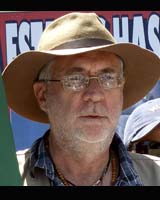
Poetics of Protest: Giving Voice to Mexico's Movement for Peace

In conversation with Rubén Martí­nez
Thursday, April 26, 2012
01:49:02
Listen:
Episode Summary

Javier Sicilia, Mexican poet-turned-activist and leader of Mexico's Movement for Peace with Justice and Dignity, is turning personal horror into hope for himself and his country. After the death of his son at the hands of drug traffickers last year, Sicilia swapped his pen for protest, pushing to stop the bloodshed. Leading the fight with a radiant intellect and deep faith, this TIME Magazine Protester of the Year speaks on the power of words as an instrument for peace, recognizing that responsibility lies on both sides of the border.


Participant(s) Bio

Javier Sicilia is the leader of the Movement for Peace with Justice and Dignity, founded in April 2011 after the death of his son to drug violence in Mexico. The movement organizes the voices of families of the victims and leads caravans throughout the country, calling for reforms to strategies used in the drug war, which has claimed some 50,000 lives in the last five years. Sicilia was awarded a "people's choice" human rights prize by Global Exchange and was profiled as one of TIME Magazine's People of the Year for 2011. Sicilia is a poet, essayist, novelist, and journalist in Mexico. In 2009 he was awarded the Aguascalientes National Award in Poetry, one of the most prestigious honors in Mexican literature.

Rubén Martínez is an author, teacher, and performer. He is the author of several books, including Crossing Over: A Mexican Family on the Migrant Trail, and the upcoming Desert America: The Ethics of Boom and Bust in the New Old West. He holds the Fletcher Jones Chair in Literature and Writing at Loyola Marymount University.

Betto Arcos, a native of Veracruz, Mexico, is a freelance reporter for BBC-PRI's The World and NPR. He has been a regular contributor to NPR's Weekend All Things Considered reviewing Latin and world music, since 2009. Betto is also host of KPFK's "Global Village" on KPFK 90.7, a daily program he created as music director in 1997.

Photo credit: Ted Lewis


The Outsourced Self: Intimate Life in Market Times

In conversation with Dr. Amy Parish
Thursday, May 24, 2012
00:00:00
Listen:
Episode Summary

From hired mourners who will scatter your loved one's ashes, to nameologists (who help you name your child)-the sociologist and acclaimed author of The Second Shift draws on original research to reveal the threats inherent in a world in which the most intuitive and emotional of human acts have become work for hire.


Participant(s) Bio
Arlie Russell Hochschild is the author of The Time Bind, The Second Shift, and The Managed Heart. She is a professor of sociology at the University of California, Berkeley. Her articles have appeared in Harper's, Mother Jones, and Psychology Today, among others.

Dr. Amy Parish is a biological anthropologist, primatologist, and Darwinian feminist who has taught at University of Southern California in the Gender Studies, Arts and Letters, and Anthropology programs and departments since 1999. She has taught at University College London and conducted post-doctoral research at the University of Giessen in Germany on the topic of reciprocity.

Incognito: The Secret Lives of the Brain

In conversation with Susan Orlean
Tuesday, May 15, 2012
00:00:00
Listen:
Episode Summary
If the conscious mind is the only part of the brain we are aware of, then what in the world else is happening up there? Renowned neuroscientist (and novelist) David Eagleman navigates the depth of the subconscious brain to illuminate surprising mysteries that take in brain damage, plane spotting, dating, drugs, synesthesia, criminal law, artificial intelligence and visual illusions.

Participant(s) Bio
David Eagleman is a neuroscientist at Baylor College of Medicine, where he directs the Laboratory for Perception and Action as well as the Initiative on Neuroscience and Law. His scientific research has been published in journals from Science to Nature, and his neuroscience books include Wednesday Is Indigo Blue: Discovering the Brain of Synesthesia (with Richard Cytowic) and the forthcoming Live-Wired. He is also the author of the internationally best-selling book of fiction Sum: Forty Tales from the Afterlives.

Susan Orlean is the bestselling author of eight books, including My Kind of Place; The Bullfighter Checks Her Makeup; Saturday Night; and Lazy Little Loafers. In 1999, she published The Orchid Thief, a narrative about orchid poachers in Florida, which was made into the Oscar-winning movie, "Adaptation". Rin Tin Tin: The Life and the Legend (2011) was a New York Times bestseller. Orlean has been a staff writer for the New Yorker since 1992. She has covered a wide range of subjects - from umbrella inventors to origami artists to skater Tonya Harding - and she has often written about animals, including show dogs, racing pigeons, animal actors, oxen, donkeys, mules, and backyard chickens.

God in Pain: Inversions of Apocalypse

In conversation with Jack Miles
Tuesday, April 24, 2012
01:17:19
Listen:
Episode Summary
Slavoj Zizek, renowned Slovenian critical theorist, dissects and reconstructs three major faith-based systems of belief in the world today, showing how each faith understands humanity and divinity-and how the differences between the faiths may be far stranger than they at first seem.

Participant(s) Bio
Slovenian philosopher and critical theorist Slavoj Zizek is among the most distinguished intellectuals of the twenty-first century. He has been a visiting professor at Princeton, Columbia, and NYU and continues to teach worldwide.

Jack Miles is Senior Fellow for Religious Affairs with the Pacific Council on International Policy and Distinguished Professor of English and Religious Studies, University of California, Irvine. A MacArthur Fellow (2003-2007), Miles won the Pulitzer Prize in 1996 for God: A Biography, which has since been translated into sixteen languages. He is currently general editor of the forthcoming Norton Anthology of World Religions.

Photo: LAPL Photo collection

Thinking the Twentieth Century

In conversation with Jonathan Kirsch
Tuesday, March 6, 2012
01:17:49
Listen:
Episode Summary
What is the power of historical perspective? How can we learn from the past to reform our society of the future? The late historian Tony Judt reframed the history of the European continent after WWII in his book Postwar. A luminous thinker, he clarified the power of historical perspective for living even ordinary lives. In this final book, written with Timothy Snyder, he traverses the complexities of the twentieth century and guides us through the great debates that made our world.

Participant(s) Bio
Tony Judt is the author or editor of fifteen books, including The Memory Chalet and Postwar, which was a finalist for the Pulitzer Prize. He was University Professor and New York University and the founder of the Remarque Institute. He died in August 2010 at the age of sixty-two.

Timothy Snyder is Professor of History at Yale University. His most recent book, Bloodlands, was selected as a best book of the year by The Economist, The New Republic, and The Guardian. Four of his previous books have received awards, including the George Louis Beer Prize for The Reconstruction of Nations and the Pro Historia Polonorum for Sketches from a Secret War.

Jonathan Kirsch is the author of 13 books, including The Grand Inquisitor's Manual: A History of Terror in the Name of God; God Against the Gods: The History of the War Between Monotheism and Polytheism; and The Harlot by the Side of the Road: Forbidden Tales of the Bible. His next book, The Exterminating Angel, a biography of a crucial but often overlooked figure in the Jewish resistance to Nazi Germany, will be published in 2012. Kirsch is the book editor of The Jewish Journal, an adjunct professor on the faculty of the Professional Publishing Institute at New York University, and a three-time president of PEN U.S.A.

An Evening with Wael Ghonim, "Revolution 2.0: The Power of the People is Greater Than the People in Power"

In conversation with Reza Aslan
Monday, February 6, 2012
01:19:47
Listen:
Episode Summary

Wael Ghonim was a little-known 30-year-old Google exec when he launched a Facebook campaign to protest the death of an Egyptian man at the hands of security forces. Now, in his new memoir, one of the key figures behind the Egyptian uprising takes us inside the making of a modern revolution- and discusses youth, activism, the Arab Spring, and why he is optimistic for the future.


Participant(s) Bio

Wael Ghonim was born in Cairo and grew up in Egypt and Saudi Arabia, earning a degree in computer engineering from Cairo University in 2004 and an MBA from the American University in Cairo in 2007. He joined Google in 2008, rising to become Head of Marketing for Google Middle East and North Africa. He is currently on sabbatical from Google to launch an NGO supporting education and technology in Egypt.

Reza Aslan, associate professor of creative writing at the University of California Riverside is author of the best-selling No god but God: The Origins, Evolution, and Future of Islam and editor of Tablet & Pen: Literary Landscapes from the Middle East. He is founder of AslanMedia, an online journal for news and entertainment about the Greater Middle East and the world.

[ALOUD] at the Los Angeles Theatre Center 514 South Spring Street Los Angeles, CA 90013

Special thanks to Human Rights Watch, Southern California, for their help in promoting this program.

Photo: Will Roth


An Odyssey Through Love, Addiction, Revolutions, and Healing

Tuesday, January 17, 2012
01:11:37
Listen:
Episode Summary

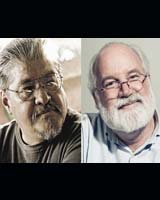
Acclaimed journalist and poet Luis J. Rodríguez, who chronicled his harrowing journey from gang member to a revered figure of Chicano literature, discusses the struggles of post-gang life with Father Gregory Boyle, the founder of Homeboy Industries and author of a bestselling memoir.


Participant(s) Bio

Luis J. Rodríguez, the son of Mexican immigrants, began writing in his early teens and has won national recognition as a poet, journalist, fiction writer, children's book writer, and critic. His memoir, Always Running La Vida Loca, Gang Days in L.A. earned a Carl Sandburg Literary Award, was designated a New York Times Notable Book and has been named by the American Library Association as one of the nation's 100 most censored books. Rodriguez co-founded Tia Chucha Press and Tia Chucha's Centro Cultural & Bookstore, a cultural center in Northeast San Fernando Valley. He is currently working as a peacemaker among gangs on a national and international level.

Father Gregory Boyle was ordained a Jesuit priest in 1982. Since 1986, Father Gregory has been the pastor of Dolores Mission in Boyle Heights, sited between two large public housing projects. In 1988, Father Gregory began what would become Homeboy Industries, now located in downtown Los Angeles. Since Father Greg started Homeboy Industries nearly twenty years ago, it has served members of more than half of the gangs in Los Angeles. Fr. Greg is the recipient of numerous awards, including the California Peace Prize, the Irvine Leadership Award and an honorary Doctorate of Humane Letters from Occidental College. His bestselling memoir, Tattoos on the Heart, has been honored by PEN USA as the 2011 Best Creative Nonfiction Book of the Year.


Pages

Top