The Library will be closed on Thursday, December 25, 2025, in observance of Christmas.

Social Sci/Politics

LAPL ID: 
20

Let the Record Show: A Conversation With Sarah Schulman
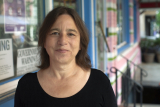
Sarah Schulman
In Conversation With David Román
Tuesday, May 3, 2022
01:00:49
Listen:
Episode Summary

In conjunction with the orchestra’s performance of John Corigliano’s Symphony No. 1, a memorial to those he lost to AIDS at the height of the epidemic, the LA Phil welcomes Sarah Schulman, author of Let the Record Show: A Political History of ACT UP New York, 1987-1993. Twenty years in the making, Schulman's Let the Record Show is the most comprehensive political history ever assembled of ACT UP and American AIDS activism. In just six years, ACT UP, New York, a broad and unlikely coalition of activists from all races, genders, sexualities, and backgrounds, changed the world. Armed with rancor, desperation, intelligence, and creativity, it took on the AIDS crisis with an indefatigable, ingenious, and multifaceted attack on the corporations, institutions, governments, and individuals who stood in the way of AIDS treatment for all. Join Schulman, one of the most revered queer writers and thinkers of her generation, for a combined reading and conversation about how a group of desperate outcasts changed America forever, and in the process created a livable future for generations of people across the world. 


Participant(s) Bio

Sarah Schulman is the author of more than twenty works of fiction (including The Cosmopolitans, Rat Bohemia, and Maggie Terry), nonfiction (including Stagestruck, Conflict is Not Abuse, and The Gentrification of the Mind), and theater (Carson McCullers, Manic Flight Reaction, and more), and the producer and screenwriter of several feature films (The Owls, Mommy Is Coming, and United in Anger, among others). Her writing has appeared in The New Yorker, The New York Times, Slate, and many other outlets. She is a Distinguished Professor of Humanities at the College of Staten Island, a Fellow at the New York Institute of Humanities, the recipient of multiple fellowships from the MacDowell Colony, Yaddo, and the New York Foundation for the Arts, and was presented in 2018 with Publishing Triangle's Bill Whitehead Award. She is also the co-founder of the MIX New York LGBT Experimental Film and Video Festival, and the co-director of the groundbreaking ACT UP Oral History Project. A lifelong New Yorker, she is a longtime activist for queer rights and female empowerment and serves on the advisory board of Jewish Voice for Peace. 
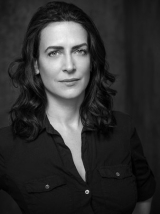
David Román is a Professor of English and American Studies at the University of Southern California. He has published several award-winning books on American theatre and performance, and he writes regularly on the literary, visual, and performing arts. He has been teaching courses on HIV/AIDS and the arts since the 1990s at Yale University and at USC.  


Invisible Child: Poverty, Survival & Hope in an American City

Andrea Elliott
In conversation with Robin J. Hayes
Wednesday, January 19, 2022
01:01:37
Listen:
Episode Summary

What if leaving poverty means abandoning your family, and yourself? Pulitzer Prize-winning journalist Andrea Elliott of The New York Times shares an unforgettable story of a girl whose indomitable spirit is tested by homelessness, poverty, and racism in an unequal America. Elliott’s latest work, Invisible Child, follows eight dramatic years in the life of a girl whose imagination is as soaring as the skyscrapers near her Brooklyn shelter. Dasani was named after the bottled water that signaled Brooklyn’s gentrification and the shared aspirations of a divided city. As Dasani comes of age, the homeless crisis in New York City has exploded, and she must guide her siblings through a city riddled with hunger, violence, drug addiction, homelessness, and the monitoring of child protection services. Out on the street, Dasani becomes a fierce fighter to protect the ones she loves. When she finally escapes city life to enroll in a boarding school, she faces an impossible choice between staying back to help her family or moving away for a chance at a better future. Join ALOUD for a conversation about the power of resilience, the importance of family, and the cost of inequality as Elliott discusses this remarkable portrait of survival.


Participant(s) Bio
<;>Andrea Elliott is an investigative reporter for The New York Times and a former staff writer at The Miami Herald. Her reporting has been awarded a Pulitzer Prize, a George Polk Award, a Scripps Howard Award, and prizes from the Overseas Press Club and the American Society of News Editors. She has served as an Emerson Collective fellow at New America, a visiting journalist at the Russell Sage Foundation, and a visiting scholar at the Columbia Population Research Center, and is the recipient of a Whiting Foundation grant. In 2015, she received Columbia University’s Medal for Excellence, given to one alumnus or alumna under the age of forty-five. She lives in New York City. This is her first book.

Dr. Robin J. Hayes is a staff writer on the forthcoming series Sandokan (from the producers of Transformers, The Shield, and Devils). After completing her studies at Yale and NYU and working as a human rights activist in Chiapas, Central America, and Cuba, she directed, wrote, and produced the award-winning documentary Black and Cuba and produced the prize-winning play 9 Grams (directed by S. Epatha Merkerson). A recipient of funding from the National Endowment for the Humanities and Tides Foundation, Robin recently authored the critically acclaimed book Love For Liberation: African Independence, Black Power, and a Diaspora Underground. 


The Matter of Black Lives: Writing from The New Yorker

Jelani Cobb
In Conversation With Charlayne Hunter-Gault
Tuesday, November 9, 2021
00:57:23
Listen:
Episode Summary

Historian and writer Jelani Cobb will present a collection of The New Yorker‘s groundbreaking writing on race in America, from stories of endurance and resilience to strength and pain—including work by James Baldwin, Toni Morrison, Ta-Nehisi Coates, Hilton Als, Zadie Smith, and more.

This anthology from the pages of the New Yorker provides a bold and complex portrait of Black life in America, told through stories of private triumphs and national tragedies, political vision, and artistic inspiration. It reaches back across a century, with Rebecca West’s classic account of a 1947 lynching trial and James Baldwin’s “Letter from a Region in My Mind” (which later formed the basis of The Fire Next Time), and yet it also explores our current moment, from the classroom to the prison cell and the upheavals of what Jelani Cobb calls “the American Spring.” Bringing together reporting, profiles, memoirs, and criticism from writers such as Chimamanda Ngozi Adichie, Elizabeth Alexander, Hilton Als, Vinson Cunningham, Henry Louis Gates, Jr., Malcolm Gladwell, Jamaica Kincaid, Kelefa Sanneh, Doreen St. Félix, and others, the collection offers startling insights about this country’s relationship with race. The Matter of Black Lives reveals the weight of a singular history and challenges us to envision the future anew.


Participant(s) Bio

Jelani Cobb is a historian, and a professor of journalism at Columbia University. A staff writer at The New Yorker since 2015, he is a recipient of the Sidney Hillman Award for Opinion and Analysis, as well as fellowships from the Ford Foundation and the Fulbright Foundation. He lives in New York City.

Charlayne Hunter-Gault is an acclaimed journalist with more than fifty years’ experience working as a correspondent and contributor for NBC, PBS, NPR, CNN, the New York Times, The New Yorker, and other outlets. She is the author of four nonfiction books, as well as the upcoming My People, which will be published in 2022 by HarperCollins. For her contributions to journalism, Hunter-Gault has earned two National News and Documentary Emmy Awards, two Peabody Awards, and the Black Enterprise Legacy Award, among other honors.


Erosion: Essays of Undoing

Terry Tempest Williams
In cConversation With Jessica Strand
Thursday, July 8, 2021
01:02:50
Listen:
Episode Summary

"Each of us finds our identity within the communities we call home," writes Terry Tempest Williams in Erosion, a galvanizing new collection of essays that navigates the emotional, geographical, and communal territories of home. Sizing up the assaults on America’s public lands and the erosion of our commitment to the open spaces of democracy, Williams fiercely examines the many forms of erosion we face—of democracy, science, compassion, and trust. From the gutting of sacred lands to Native Peoples of the American Southwest to the undermining of the Endangered Species Act, Williams testifies about the harsh reality of the climate crisis and how our earth—our home—is being torn apart. One of today’s most important writers and conservationists, Williams is the award-winning author of The Hour of Land: A Personal Topography of America’s National Parks; Refuge: An Unnatural History of Family and Place; and When Women Were Birds. Discussing her new essays, Williams blazes a way forward through dispiriting times to arrive at new truths about the beauty of human nature.


Participant(s) Bio

Terry Tempest Williams is the award-winning author of The Hour of Land: A Personal Topography of America’s National Parks; Refuge: An Unnatural History of Family and Place; Finding Beauty in a Broken World; and When Women Were Birds, among other books. Her work is widely taught and anthologized around the world. A member of the American Academy of Arts and Letters, she is currently the Writer-in-Residence at the Harvard Divinity School and divides her time between Cambridge, Massachusetts and Castle Valley, Utah.


Ongoing Challenges of Disability Discrimination in Law, Politics and Society

Jasmine E. Harris and Ruth Colker
In Conversation With Michele Bratcher Goodwin
Monday, March 1, 2021
01:03:15
Listen:
Episode Summary

As our fractured country moves forward after a year of social unrest and political division—how can we work towards inclusion, equity, and real change in our society? In celebration of Zero Discrimination Day, ALOUD is proud to welcome leading activists and academics for a discussion of the intersectional issues of gender, race, and disability rights. We’ll be joined by Jasmine Harris, Professor of Law and Martin Luther King, Jr. Hall Research Scholar at the University of California—Davis. An expert in disability law, antidiscrimination law, and evidence, Harris has published widely in law reviews as well as the New York Times, San Francisco Chronicle, and more. Also joining the conversation, Ruth Colker is a leading scholar in the areas of Constitutional Law and Disability Discrimination. A Distinguished University Professor and Heck Faust Memorial Chair in Constitutional Law at Ohio State, Colker is the author of 16 books and more than 50 articles in law journals. With other special guests to be announced, longtime ALOUD favorite, Michele Bratcher Goodwin, will moderate the panel. Goodwin is a Chancellor’s Professor at the University of California, Irvine and Director of the Center for Biotechnology & Global Health Policy. ALOUD welcomes everyone to come together for this powerful discussion about how we can break barriers and overcome biases against communities that have been historically marginalized, overlooked, and misunderstood.


Participant(s) Bio

Michele Bratcher Goodwin is a Professor at the University of California, Irvine, and founding director of the Center for Biotechnology and Global Health Policy. She is also faculty in the Gender and Sexuality Studies Department as well as the Program in Public Health. Professor Goodwin’s scholarship is hailed as “exceptional” in the New England Journal of Medicine. She has been featured in Forbes, The Washington Post, The New York Times, and the Los Angeles Times and her scholarship is published or forthcoming in The Yale Law Journal, Harvard Law Review, and Northwestern Law Review, among others.Trained in sociology and anthropology, she has conducted field research in Asia, Africa, Europe, and North America, focusing on trafficking in the human body for marriage, sex, organs, and other biologics. In addition to her work on reproductive health, rights, and justice, Professor Goodwin is credited with forging new ways of thinking in organ transplant policy and assisted reproductive technologies, resulting in works such as Black Markets: The Supply and Demand of Body Parts (2006) and Baby Markets: Money and the Politics of Creating Families (2010). She serves on the executive committee and national board of the American Civil Liberties Union. She is a highly sought-after voice on civil liberties, civil rights, reproductive rights and justice, and cultural politics.

Ruth Colker is one of the leading scholars in the country in the areas of Constitutional Law and Disability Discrimination. She is the author of 16 books, two of which have won book prizes. She has also published more than 50 articles in law journals such as the Boston University Law Review, Columbia Law Journal, Georgetown Law Journal, Harvard Law Review, Michigan Law Journal, the University of Pennsylvania Law Review, the University of Virginia Law Review, and Yale Law Journal.

Jasmine E. Harris is a Professor of Law and Martin Luther King, Jr. Hall Research Scholar at the University of California—Davis School of Law. Professor Harris is an expert in disability law, antidiscrimination law, and evidence. She is a law and equality scholar with a particular focus on disability. Professor Harris combines approaches in law and the humanities to understand better the role that perception, aesthetics, and emotions play in group subordination. By accounting for aesthetic preferences, she argues, we can better design antidiscrimination laws to address structural biases and develop novel remedial pathways. Professor Harris’s recent articles have or will appear in such publications as the Columbia Law Review, New York University Law Review, the University of Pennsylvania Law Review (print and online), Yale Law Journal Forum, Cornell Law Review Online, American Journal of Law and Medicine, and the Journal of Legal Education.


Tangled Up in Blue: Policing the American City

Rosa Brooks
In Conversation With Christy Lopez
Thursday, February 18, 2021
00:59:47
Listen:
Episode Summary

In her forties, with two children, a spouse, a dog, a mortgage, and a full-time job as a tenured law professor at Georgetown University, Rosa Brooks decided to become a cop. Despite the extreme personal and professional risks, the liberal academic and journalist served as a reserve police officer between 2016-2020 with the Washington, D.C., Metropolitan Police Department in order to better understand the usually closed world of policing. In her new book Tangled Up in Blue, Brooks chronicles her experiences of what it’s like inside the "blue wall of silence." From street shootings and domestic violence calls to the behind-the-scenes police work during Donald Trump’s 2016 presidential inauguration, Brooks presents a revelatory firsthand account of patrolling the poorest, most crime-ridden neighborhoods of the nation’s capital. With more and more news of police violence and the outrage of Americans protesting against the corruption and racial disparities in the criminal justice system, Brooks illuminates the complexities of a broken system beyond the headlines. Join us for an immersive conversation as Brooks takes ALOUD audiences through a tour of duty to find a better way to protect our society. 


Participant(s) Bio

Rosa Brooks is a law professor at Georgetown University and founder of Georgetown's Innovative Policing Program. From 2016 to 2020, she served as a reserve police officer with the Washington, DC, Metropolitan Police Department. She has worked previously at the Defense Department, the State Department, and for several international human rights organizations. Her articles and essays have appeared in The New York Times, The Washington Post, The Atlantic, and The Wall Street Journal, and she spent four years as a weekly opinion columnist for the Los Angeles Times and another four as a columnist for Foreign Policy. Her most recent book, How Everything Became War and the Military Became Everything, was a New York Times Notable Book of 2016; it was also shortlisted for the Lionel Gelber Prize and named one of the five best books of the year by the Council on Foreign Relations.

Christy E. Lopez is a Washington Post contributing columnist and a Professor at the Georgetown University Law Center in Washington, D.C. She teaches courses on policing and criminal procedure and co-directs Georgetown’s Innovative Policing Program. From 2010 to 2017, Lopez served as a deputy chief in the Special Litigation Section of the Civil Rights Division at the U.S. Department of Justice. She led the division’s group conducting pattern-or-practice investigations of police departments and other law enforcement agencies. She directly led the team that investigated the Ferguson Police Department and was a primary drafter of the Ferguson Report and negotiator of the Ferguson consent decree and helped coordinate the department’s broader efforts to ensure constitutional policing.


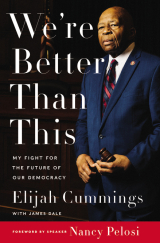
We’re Better Than This: My Fight for the Future of Our Democracy

Dr. Maya Rockeymoore Cummings
In Conversation With James Dale
Tuesday, February 9, 2021
00:55:45
Listen:
Episode Summary

In a final call to action from a dearly missed champion of democracy, Elijah Cummings’ new posthumously published memoir offers an inspiring lesson of how we can do better in this country. Born and raised in Baltimore, Cummings was the first of his family to attend college. After graduating Phi Beta Kappa and then law school, he began his career of public service in the Maryland House of Delegates. He became the first African-American in Maryland history to be named Speaker Pro Tem before being sworn in as a member of the U.S. House of Representatives in 1996, where Congressman Cummings proudly represented Maryland’s 7th District until his passing in 2019. Known for his poise, intellect, and influence, Cummings was one of the most respected figures in contemporary politics, serving the people of Baltimore and illustrating the importance of working with—and for—the underdog. Yet in his final years of life, Cummings recognized that democracy was the underdog. We’re Better Than This draws from Cummings’s own life to show the formative moments that prepared him for the disturbing first years of the Trump presidency and spurred him to hold the administration accountable for their actions. Sharing his legacy with ALOUD, the late Congressman’s widow, Dr. Maya Rockeymoore Cummings, is a social entrepreneur, speaker, writer, strategist, and a former chair of the Maryland Democratic Party who is on a mission to drive society toward inclusion. She’ll be joined in conversation with the coauthor of the book, James Dale, as they reflect on Cummings’ urgent message for preserving our democracy as our country moves forward with a new administration.


Participant(s) Bio

Congressman Elijah E. Cummings was born and raised in Baltimore, Maryland, and died there on October 17, 2019. He earned his bachelor’s degree in Political Science from Howard University, serving as Student Government President and graduating Phi Beta Kappa, and then graduated from the University of Maryland School of Law. Congressman Cummings dedicated his life of service to uplifting and empowering the people he represented. He began his career of public service in the Maryland House of Delegates, where he served sixteen years and became the first African American in Maryland's history to be named Speaker Pro Tem. First sworn in as a member of the U.S. House of Representatives in 1996, Congressman Cummings has proudly represented Maryland's 7th District since 1996. He became a Ranking Member of the House Committee on Oversight and Reform in 2011 and was appointed as Chairman of the Committee in 2019. 
 
James Dale has been an author-collaborator on a number of books on topics including business, medicine, and life lessons. His works include The Power of Nice with agent-negotiator Ron Shapiro; Just Show Up with Hall of Fame baseball player Cal Ripken Jr.; and The Q Factor with Super Bowl–winning coach Brian Billick.

Dr. Maya Rockeymoore Cummings is a social entrepreneur, speaker, writer, and strategist who’s on a mission to drive society toward inclusion. After a quarter of a century of working on innovative public policy and multimillion-dollar social change initiatives in the government, nonprofit, and private sectors, Maya is a policy and political expert who understands how to build and sustain cross-sector collaborations, diverse coalitions, dynamic diversity, equity, and inclusion strategies, and effective education campaigns. An accomplished public speaker and author, Maya has appeared in a variety of media outlets such as CBS, CNN, MSNBC, Fox News, and BET, and her writings have been published in the New York Times, The Atlantic, The Huffington Post, and the Washington Post among other publications. She has served on numerous boards, including the National Association of Counties Financial Services Corporation, the National Committee to Preserve Social Security and Medicare, and the National Academy of Social Insurance. She is the recipient of multiple honors, such as the Aspen Institute Henry Crown Fellowship Award and the Congressional Black Caucus Foundation Fellowship Award, and has been a candidate for Maryland governor and the U.S. Congress. A former chair of the Maryland Democratic Party, Maya earned her B.A. in political science from Prairie View A&M University and her M.A. and Ph.D. in political science, with an emphasis in public policy, from Purdue University. She is the widow of the late Congressman Elijah E. Cummings and lives in West Baltimore with her dog Andy.


Finding Latinx: In Search of the Voices Redefining Latino Identity

Paola Ramos
In Conversation With Fidel Martinez
Wednesday, February 3, 2021
01:00:05
Listen:
Episode Summary

The first step towards change, writes journalist and activist Paola Ramos, is for us to recognize who we are. In an empowering new work of reportage, Ramos embarks on a cross-country journey to find the communities of people defining the controversial term, "Latinx." Many voices—Afrolatino, Indigenous, Muslim, queer, and undocumented, living in large cities and small towns—have been chronically overlooked in how the diverse population of almost sixty million Latinos in the U.S. has been represented. In her debut book, Finding Latinx, Ramos calls to expand our understanding of what it means to be Latino and what it means to be American. A host and correspondent for VICE and VICE News, as well as a contributor to Telemundo News and MSNBC, Ramos was the deputy director of Hispanic media for Hillary Clinton’s 2016 presidential campaign and she also served in President Obama’s 2012 reelection campaign. She’ll be joined in a dynamic conversation with LA Times Audience Engagement Editor Fidel Martinez, who currently writes for their new Latinx Files newsletter. Shining a light on the evolving Latinx community, we’ll hear stories from individuals across the United States who are redefining their identities, pushing boundaries, and awakening politically in powerful and surprising ways.


Participant(s) Bio

Paola Ramos is a host and correspondent for VICE and VICE News, as well as a contributor to Telemundo News and MSNBC. Ramos was the deputy director of Hispanic media for Hillary Clinton’s 2016 presidential campaign and a political appointee during the Barack Obama administration. She also served in President Obama’s 2012 reelection campaign. She’s a former fellow at Emerson Collective. Ramos received her MA in public policy from the Harvard Kennedy School and her BA from Barnard College, Columbia University. She lives in Brooklyn.

Fidel Martinez is an audience engagement editor at the Los Angeles Times, focusing on sports. Previously he worked as a politics editor for Mitu, as a social storytelling producer for Fusion Media Group and as content curator and managing editor for Break Media. He is a proud Tejano who will fight anyone who disparages flour tortillas.


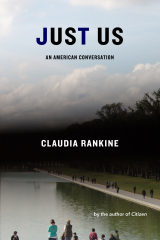
Just Us: An American Conversation

Claudia Rankine and Terrance Hayes
In Conversation With Dawn Lundy Martin
Sunday, November 15, 2020
01:13:35
Listen:
Episode Summary

How do we talk about race in America? Two of our country's most award-winning poets and unflinching voices on racism will join ALOUD for their first public event together. Claudia Rankine is an artistic innovator, Yale professor, and MacArthur fellow. Her previous groundbreaking book, Citizen: An American Lyric, won the National Book Critics Circle Award and the Los Angeles Times Book Prize. Rankine’s newest book, Just Us: An American Conversation, invites readers to engage with what is said and not said about whiteness, privilege, prejudice, and bias as our public and private lives intersect. Terrance Hayes’s most recent award-winning book, American Sonnets for My Past And Future Assassin, was written in response to the first two hundred days of Trump’s presidency. Hayes is a Professor of English at New York University and is the recipient of numerous honors, including a MacArthur fellowship, a Hurston/Wright Award for Poetry, and a National Book Award. In a broad-minded program moderated by acclaimed poet and essayist Dawn Lundy Martin, Rankine and Hayes will examine the act of reckoning with our past and present. Join us for a powerful exchange about how we might open pathways, bridge silences, share truths, and progress through this divisive and stuck moment in American history.


Participant(s) Bio

Claudia Rankine is a poet, artistic innovator, and recipient of the MacArthur Fellowship. Her next publication, Just Us: An American Conversation, is a collection of essays where Rankine questions what it means in these spaces to interrogate white privilege, well-meaning liberal politics, white male aggression, the implications of blondness, white supremacy in the White House and what it means to be an American today.

Terrance Hayes’s most recent publications include American Sonnets for My Past And Future Assassin (Penguin 2018) and To Float In The Space Between: Drawings and Essays in Conversation with Etheridge Knight (Wave, 2018). To Float In The Space Between was the winner of the Poetry Foundation’s 2019 Pegasus Award for Poetry Criticism and a finalist for the 2018 National Book Critics Circle Award in Criticism. American Sonnets for My Past And Future Assassin won the Hurston/Wright 2019 Award for Poetry and was a finalist for the 2018 National Book Critics Circle Award in Poetry, the 2018 National Book Award in Poetry, the 2018 TS Eliot Prize for Poetry, and the 2018 Kingsley Tufts Poetry Award. Hayes is a Professor of English at New York University.

Dawn Lundy Martin is an American poet and essayist. She is the author of four books of poems: Good Stock Strange Blood, winner of the 2019 Kingsley Tufts Award for Poetry; Life in a Box is a Pretty Life, which won the Lambda Literary Award for Lesbian Poetry; Discipline, A Gathering of Matter / A Matter of Gathering, and three limited edition chapbooks. Her nonfiction can be found in n+1, The New Yorker, Ploughshares, The Believer, and Best American Essays 2019. Martin is the Toi Derricotte Endowed Chair of African American Poetry at the University of Pittsburgh and Director of the Center for African American Poetry and Poetics.


Work Mate Marry Love: How Machines Shape Our Human Destiny

Debora Spar
In Conversation With Michele Bratcher Goodwin
Wednesday, October 14, 2020
00:51:47
Listen:
Episode Summary

As ALOUD examines the delicate balancing act of power and value in a special series this fall, we’ll consider how technology tips the scales to redefine the dynamics of our human relationships. What will happen to our notions of marriage and parenthood as reproductive technologies allow for new ways of creating babies? What will happen to our understanding of gender as medical advances enable individuals to transition from one set of sexual characteristics to another or to remain happily perched in between? What will happen to love and sex and romance as our relationships migrate from the real world to the Internet? Can people fall in love with robots? Harvard Business School Professor Debora Spar explores these questions in her new book, Work, Mate, Marry, Love. Discussing how technology is transforming the intimacies of our lives, Spar will be joined in conversation by Michele Bratcher Goodwin. A Professor at the University of California, Irvine, and founding director of the Center for Biotechnology and Global Health Policy, Goodwin is a leading voice on civil liberties, civil rights, reproductive rights and justice, and cultural politics. Listen to this provocative imagining of our future humanity.


Participant(s) Bio

Debora Spar, author of Work, Mate, Marry, Love, is a Professor of Business Administration at Harvard Business School and the former president of Barnard College. Her previous books include Wonder Women: Sex, Power, and the Quest for Perfection and Ruling the Waves: Cycles of Discovery, Chaos, and Wealth from the Compass to the Internet. Her new groundbreaking book covers decisions we make in our most intimate lives—whom to marry, how to have children, how to think about love and romance, and families. Spar argues that all of these choices have always been driven by technology. Technology not only promises to change our commercial and economic lives, but also our family lives, our sexual lives, and ultimately the very nature of life itself.

Michele Bratcher Goodwin is a Professor at the University of California, Irvine, and founding director of the Center for Biotechnology and Global Health Policy. She is also faculty in the Gender and Sexuality Studies Department as well as the Program in Public Health. Professor Goodwin’s scholarship is hailed as “exceptional” in the New England Journal of Medicine. She has been featured in Forbes, The Washington Post, The New York Times, and the Los Angeles Times and her scholarship is published or forthcoming in The Yale Law Journal, Harvard Law Review, and Northwestern Law Review, among others. Trained in sociology and anthropology, she has conducted field research in Asia, Africa, Europe, and North America, focusing on trafficking in the human body for marriage, sex, organs, and other biologics. In addition to her work on reproductive health, rights, and justice, Professor Goodwin is credited with forging new ways of thinking in organ transplant policy and assisted reproductive technologies, resulting in works such as Black Markets: The Supply and Demand of Body Parts (2006) and Baby Markets: Money and the Politics of Creating Families (2010). She serves on the executive committee and national board of the American Civil Liberties Union. She is a highly sought-after voice on civil liberties, civil rights, reproductive rights and justice, and cultural politics.


Pages

Top