The Library will be closed on Thursday, December 25, 2025, in observance of Christmas.

Social Sci/Politics

LAPL ID: 
20

From Tijuana to Gaza to Bosnia: Rethinking Borders in a 21st Century World

Tuesday, November 8, 2011
01:38:27
Listen:
Episode Summary

Artists, scholars, and cultural activists from Europe, Mexico, and the United States convene in Los Angeles-home to migrants, refugees, and exiles from all over the world-to share their respective experiences with and approaches to border issues. In an age of increased border militarization, how might we redefine borderlands as zones of mutual intermingling, co-existence, and dialogue? Made possible by special funding from the Polish Ministry of Culture and National Heritage, part of the 2011 Milosz Year


Participant(s) Bio

Krzysztof Czyzewski is a social activist, theater producer, essayist, and publisher, and the founder and director of the Borderland Foundation (Fundacja Pogranicze) in Sejny, Poland (near Poland's border with Lithuania). The Borderland Foundation, founded in 1990, is an innovative institution devoted to memorializing, rebuilding, and sustaining the rich cultural diversity in Central and Eastern Europe that was nearly destroyed by two world wars. Czyewski also founded the Borderland Center of Arts, Cultures, and Nations, which comprises a school, several studios, an archive, and a café as well as Borderland Publishing House (Wydawnictwo Pogranicze) and the magazine Krasnogruda--named after Czeslaw Milosz's family's manor nearby (a house that the Borderland Foundation recently dedicated as the home of its new International Dialogue Center). Czyzewski's own manifesto, The Path of the Borderland, was published in 2001.

Dorit Cypis is an award-winning visual artist as well as a professional mediator. Her explorations on identity as psychological and political, individual and collective, have been presented at museums and public venues internationally since 1980. Foreign Exchanges, founded by Dorit in 2007, is an initiative offering tools for conflict engagement and relationship building by blending tools of aesthetics and conflict transformation. Her mediation practice includes Public Dialogue forums, training, and conflict- coaching. She is a Founding Member, Mediators Beyond Borders and Chair/MBB Middle East Initiative, 2008-10, guiding mediators to critically review a mediation curriculum being developed in Israel for conflict engagement between Palestinian and Jewish Israelis.

Josh Kun is a professor in the Annenberg School for Communication and Journalism at the University of Southern California where he also directs The Popular Music Project of The Norman Lear Center. His research focuses on the arts and politics of cultural connection, with an emphasis on popular music, the cultures of globalization, the US-Mexico border, and Jewish-American musical history. He is the author of Audiotopia: Music, Race, and America, co-author of And You Shall Know Us By The Trail of Our Vinyl: The Jewish Past As Told By The Records We've Loved and Lost, and co-editor of the Duke University Press book series Refiguring American Music.

Rubén Martínez is an author, teacher and performer. He is the author of a trilogy of books on immigration and globalization: The Other Side: Notes from the New L.A., Mexico City and Beyond; Crossing Over: A Mexican Family on the Migrant Trail and The New Americans: Seven Families Journey to Another Country. He holds the Fletcher Jones Chair in Literature & Writing at Loyola Marymount University. He has been active in the spoken word and performance scenes for over two decades, and as a musician has recorded with such acts as Los Illegals, Concrete Blonde and The Roches.

Dr. Ofelia Zepeda is Tohono O'odham, born and raised in Stanfield, Arizona. She is currently a Regents' Professor of Linguistics at the University of Arizona where she works on the O'odham language and on language issues. Dr. Zepeda is also a poet writing in both O'odham and English, and the author of three books for poetry. She directs the American Indian Language Development Institute (AILDI) hosted by the U of A. Throughout her long career she has been a strong advocate for Native American education and Native American educators.

Marcos Ramírez ERRE was born in 1961 in Tijuana, Mexico; he is considered one of the preeminent artists in the region, and the senior figure in the burgeoning Tijuana artist community. He creates large-scale public installations informed by a political and social consciousness and is a longtime explicator and arbiter of the cross-border dialogue. In his work, ERRE brings a poetic sensibility to the physical, economic, linguistic, and cultural boundaries that separate people. He has exhibited in one-person shows in the United States and Mexico; was represented at the Biennial São Paulo-Valencia: Encuentro entre dos mares in Valencia, Spain, the 2007 Moscow Biennale, and the VII and VI Habana Bienal in Cuba; and showed at the 2000 Whitney Biennial in New York. He has been included in several important group exhibitions and is a recipient of a 2007 United States Artist Fellowship award and grant from the Fondo Nacional para la Cultura y las Artes, Mexico.
From Nickerson Gardens to National: An End in Sight to Violence in Inner-City America?

In conversation with Robin Kramer
Thursday, October 6, 2011
01:23:53
Listen:
Episode Summary
Award-winning criminologist Kennedy, who orchestrated the \"Boston Miracle\", a revolutionary method for gang intervention in the mid-1990s, writes about this successful approach in his new book, Don't Shoot, and discusses solving the problem of crime in our country today, along with the launch of \"Operation Ceasefire\" in Los Angeles with Chief of the Los Angeles Police Department Charlie Beck.

Participant(s) Bio
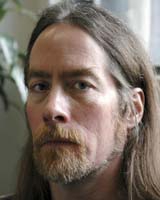
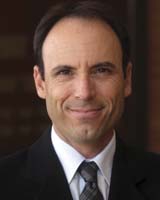
David M. Kennedy is the director of the Center for Crime Prevention and Control at John Jay College of Criminal Justice in New York City. He is the author of Deterrence and Crime Prevention: Reconsidering the Prospect of Sanction and he has been called on as an adviser on illicit drug and firearm markets, youth and domestic violence, and deterrence theory for the Justice Department, the Department of the Treasury, the Office of National Drug Control Policy, and the White House, as well as for international governmental bodies.

Charlie Beck, Chief of the Los Angeles Police Department since 2009, oversees the third largest police department in the United States. Having facilitated his predecessor's successful reengineering and reform effort, Chief Beck continues to evolve and refine those strategies to further the Department's ascendancy to the pinnacle of 21st Century Policing. Major components of this endeavor include the mitigation of crime, the reduction of gang violence, the containment of terrorism, and the continuation of the reforms that brought the Department into compliance with the Consent Decree.

Robin Kramer has been an active leader in Los Angeles civic affairs for over three decades. She was the first woman to hold the position of Chief of Staff to both Mayor Antonio Villaraigosa and Richard Riordan, and was a senior executive at the California Community Foundation, Broad Foundation and Coro Southern California. She is currently working as Senior Advisor to The Annenberg Retreat at Sunnylands, chairs the Pitzer College Board of Trustees, and serves as one of five commissioners of the Port of Los Angeles, the economic engine for Southern California.

Gunfight: The Battle Over the Right to Bear Arms in America

In conversation with Erwin Chemerinsky
Tuesday, September 27, 2011
01:04;23
Listen:
Episode Summary
In a provocative and controversial history, Winkler, a constitutional lawyer, disputes that guns--not abortion, race, or religion--are at the heart of America's cultural divide. Co-presented with the Council of the Library Foundation

Participant(s) Bio
Adam Winkler is Professor of Law at UCLA School of Law. He writes for The Daily Beast and the Huffington Post. His commentary has been featured in the New York Times, the Los Angeles Times, the Wall Street Journal, and on CNN, National Public Radio, and the Tavis Smiley Show.

Erwin Chemerinsky is the founding dean of the University of California, Irvine Law School. A graduate of Northwestern University and Harvard Law School, he has authored six previous books and more than 100 law-review articles. He has argued several cases before the Supreme Court and various circuits of the United States Court of Appeals.

Mighty Be Our Powers: How Sisterhood, Prayer, and Sex Changed a Nation at War

In conversation with Reverend Dr. Gwynne Guibord
Monday, October 3, 2011
01:15:37
Listen:
Episode Summary
In a personal account of the communal power of women to change history, the founder of the Women of Liberia Mass Action for Peace chronicles the unthinkable violence she's confronted living through civil war and the peace she helped to broker by empowering her countrywomen and others around the world to take action.

Participant(s) Bio
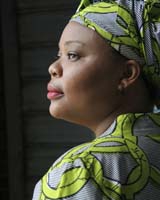
Leymah Roberta Gbowee helped organize and then lead the Liberian Mass Action for Peace, a coalition of Christian and Muslim women who sat in public protest, confronting Liberia's ruthless president and rebel warlords. The movement brought an end to the Second Liberian Civil War in 2003 and Gbowee emerged as an international leader. She is the central character in the 2009 documentary film Pray the Devil Back to Hell, which has been used as an advocacy tool in post-conflict zones in Africa, mobilizing women to petition for peace and security. This is her first book.

The Reverend Dr. Gwynne Guibord is the Founder and President of "The Guibord Center - Religion Inside Out." Interreligious dialogues initiated by Dr. Guibord in Southern California include those with the Hindu Community, the Sikh Community, and the Buddhist community. She is the co-chair of The National Muslim - Christian Initiative Dialogue on behalf of The National Council of Churches in Christ USA. She also currently represents The Episcopal Church USA for the NCCC's Christian-Jewish Dialogue. Among her many awards are The Muslim Peace Award from The Islamic Center of Southern California, and most recently The Distinguished Alumna Award for 2010 from The Claremont School of Theology. She is an award winning preacher and much sought after public speaker.

We Are Here: We Could Be Everywhere

Moderated by Kenneth Rogers
Tuesday, June 14, 2011
01:26:27
Listen:
Episode Summary
Are the media arts a sensitizing force? What is media art's capacity to respond to political conditions? Cultural practitioners and scholars explore the role artists play as innovators of media technology and instigators in the public and media art realms. Co-presented with Freewaves

Participant(s) Bio
Anikó Imre is an Associate Professor of Critical Studies at USC's School of Cinematic Arts. Her main interests are global media and cultural studies. She has published several books, including Identity Games: Globalization and the Transformation of Media Cultures in the New Europe; East European Cinemas; and Transnational Feminism in Film and Media. She co-edits the Palgrave book series Global Cinemas.

Henry Jenkins is Provost's Professor of Communication, Journalism, and Cinematic Arts at the University of Southern California. He has written and edited more than a dozen books on media and popular culture, including Convergence Culture: Where Old and New Media Collide. His other published works reflect the wide range of his research interests, touching on democracy and new media, the "wow factor" of popular culture, science-fiction fan communities, and the early history of film comedy. Prior to joining USC, Jenkins spent nearly two decades at the Massachusetts Institute of Technology as the Peter de Florez Professor in the Humanities. While there, he directed MIT's Comparative Media Studies graduate degree program from 1999-2009, setting an innovative research agenda during a time of fundamental change in communication, journalism, and entertainment.

Reed Johnson is an arts and culture reporter for the Los Angeles Times. From 2004 to 2008 he was the paper's Latin America cultural correspondent, based in Mexico City.

Fabian Wagmister teaches audiovisual creativity and new forms of digital creation at University of California, Los Angeles. As a professor in the department of Theater, Film and Television, he was instrumental in the creation and growth of the Laboratory for New Media, the HyperMedia Studio, and the Program on Digital Cultures, a center converging regional studies (Latin America) and digital communications to support the development of empowered technological identities. A native of Argentina, Fabian maintains active collaboration with artists and theorists throughout Latin America. Currently Fabian is director of UCLA's Center for Research in Engineering, Media, and Performance (REMAP), where faculty and students of engineering and of theater, film and television, develop theoretical fundaments, creative procedures, and technological toolsets for participative cultural systems.

Kenneth Rogers is Assistant Professor in the Media and Cultural Studies Department at the University of California, Riverside. His research and publication is broadly concerned with the intersection of attention, labor, political economy, and social media. He is also engaged with the practical application of digital tools and social media in experimental pedagogy and direct action politics. Rogers has been a fellow at the Center for Ideas and Society at UC Riverside. His current book project, The Attention Complex: Media Technology and Biopolitics, maps the complex of political and social forces that have, over the last two decades, dramatically reshaped how human attention is theoretically understood, technologically managed, and psychiatrically and biologically treated.

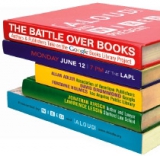
The Battle Over Books: Authors & Publishers Take on the Google Books Library Project

Presented in conjunction with The WIRED Speaker Series
Monday, June 12, 2006
01:29:01
Listen:
Episode Summary
A provocative discussion about the competing interests and issues raised by The Google Books Library Project, and whether a universal digital repository of our collective knowledge is in our future. With: Allan Adler, Association of American Publishers; David Drummond, Google; Fontayne Holmes, Los Angeles Public Library; Jonathan Kirsch, author and lawyer, Lawrence Lessig, Stanford Law School, and Gary Wolf, WIRED Magazine.

Participant(s) Bio
Allan Adler is Vice President for Legal and Governmental Affairs in the Washington, D.C. office of the Association of American Publishers (AAP), the national trade organization which represents our Nation's book and journal publishing industries, where he deals with intellectual property, freedom of speech, new technology, and other industry-related issues. From 1989 until joining AAP in 1996, Mr. Adler practiced law as a member of Cohn and Marks, the Washington, D.C. communications law firm. His practice focused primarily on government relations in areas of federal law, regulation and policy concerning information, telecommunications & technology.
www.publishers.org

David Drummond is Google's Vice President, Corporation Development and works with Google's management team to evaluate and drive new strategic business opportunities, including strategic alliances, mergers and acquisitions. He also serves as Google's general counsel.

Fontayne Holmes is the former City Librarian for the Los Angeles Public Library, the library system for the city of Los Angeles. It serves the largest population of any library in the US, with its Central Library, 73 branches and web-based services. She has successfully managed the largest library construction program in the nation, which has rebuilt more than 90 percent of the city's libraries. She also has led the library in its successful role of bridging the digital divide in every community in Los Angeles through her commitment to technology. The 3,000 computers in libraries citywide provide everyone with free and easy access to information and the valuable resources of the World Wide Web. She continues to use technology to automate library operations and services and provide equity of access for everyone.

Jonathan Kirsch is the author of the best-selling God Against the Gods: The History of the War Between Monotheism and Polytheism (Viking 2004) and nine other books, including the national best-seller The Harlot by the Side of the Road: Forbidden Tales of the Bible (Ballantine). His next book is A History of the End of the World: How the Bible's Most Controversial Book Changed the Course of Western Civilization (HarperSanFrancisco 2006). Kirsch is also a book columnist for the Los Angeles Times, a broadcaster for NPR affiliates KCRW-FM and KPCC-FM in Southern California, an Adjunct Professor on the faculty of New York University, and an attorney specializing in publishing law and intellectual property in Los Angeles.
www.jonathankirsch.com

Lawrence Lessig is a professor at Stanford Law School, the Founder and Chairman of Creative Commons, and the author of Code and Other Laws of Cyberspace; The Future of Ideas: The Fate of the Commons in a Connected World; and Free Culture: The Nature and Future of Creativity.
www.lessig.org

Gary Wolf is a contributing editor at WIRED, where he reports regularly on the dreams and realities of the information age, and has written The Great Library of Amazonia, about Amazon.com's Search-Inside-the-Book project, and The Curse of Xanadu, about Theodor Holm Nelson's thirty-year effort to build a universal information system. In the mid-nineties, Wolf was executive producer of WIRED's online division, WIRED Digital. His books include Dumb Money: Adventures of a Day Trader (2000), with Joey Anuff; and WIRED - A Romance (2003), both published by Random House. Wolf is currently a Knight Fellow in the Department of Communications at Stanford University

The Origins of Political Order: A Conversation

Thursday, April 21, 2011
01:11:47
Listen:
Episode Summary
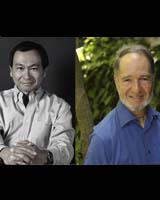
How did tribal order and society evolve into the political institutions of today? Drawing on a vast body of knowledge-- two celebrated scholars discuss the origins of democratic societies and raise essential questions about the nature of politics.

Participant(s) Bio
Francis Fukuyama is the Olivier Nomellini Senior Fellow at Stanford University's Freeman Spogli Institute for International Studies. He is the author of The End of History and the Last of Man, Trust, and America at the Crossroads: Democracy, Power, and the Neoconservative Legacy.

Jared Diamond, professor of Geography at UCLA, is the author of The Third Chimpanzee, Guns Germs, and Steel, Why Is Sex Fun?, Collapse, and Natural Experiments of History, among others. A recipient of the Pulitzer Prize, he is recognized for the breadth of his interests, which include research specialties in laboratory physiology, biogeography of New Guinea birds, and environmental history. His books have been translated into over 38 languages.

Rebecca Skloot, "The Immortal Life of Henrietta Lacks"

In conversation with Carolyn Kellogg
Tuesday, April 12, 2011
01:13:47
Listen:
Episode Summary

Skloot's stunning narrative about the use and misuse of medical authority delves into the life of a poor Southern tobacco farmer named Henrietta Lacks, whose cells-taken without her knowledge-became one of the most important tools in medicine.


Participant(s) Bio

Rebecca Skloot is a science writer whose articles have appeared in The New York Times Magazine; The Oprah Magazine; and others. She is guest editor of The Best American Science Writing 2011. Her debut book, The Immortal Life of Henrietta Lacks an instant New York Times bestseller and was named Best Book for 2010 by Amazon.com. It is currently being being adapted into a young adult book and an HBO film produced by Oprah Winfrey and Alan Ball.

Carolyn Kellogg is an LA-based book critic and the lead blogger for the LA Times book blog, Jacket Copy. She was a judge of the 2010 Story Prize and is on the board of the National Book Critics Circle.


Gayle Tzemach Lemmon, "The Dressmaker of Khair Khana"

In conversation with Kai Ryssdal
Tuesday, March 29, 2011
01:06:47
Listen:
Episode Summary

Lemmon, a former ABC news reporter, tells the remarkable true story of an unlikely entrepreneur who, against all odds, saved her family and inspired her community in Afghanistan under the Taliban.


Participant(s) Bio

Gayle Tzemach Lemmon is a Fellow and Deputy Director of the Women and Foreign Policy Program at the Council on Foreign Relations. She covered presidential politics and public affairs for ten years as a producer with ABC News and This Week with George Stephanopoulos, before leaving to write about women entrepreneurs in war zones including Afghanistan, Bosnia, and Rwanda. Her reporting on this topic has been published widely and she frequently appears on TV news shows as a policy expert on Afghanistan. She served as an informal advisor on the topic of women's economic empowerment for General McChrystal's staff in Afghanistan as well as economic officials at the American Embassy in Kabul.

Kai Ryssdal is the host of Marketplace on American Public Media. Before joining Marketplace, Kai was a reporter and substitute host for The California Report, a news and information program distributed to public radio stations throughout California. His radio work has won first place awards from the Radio and Television News Directors Association and the national Public Radio News Directors Association.

Before his career in public radio, Kai served in the United States Navy, was a Pentagon staff officer, and was a member of the United States Foreign Service.


Power, Faith and Fantasy: America in the Middle East 1776 to the Present

Monday, February 12, 2007
01:10:35
Listen:
Episode Summary
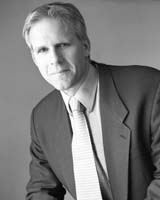
Oren, recently visiting professor at Harvard and Yale and author of the best-selling Six Days of War - covers 230 years of America's political, military, and intellectual involvement in the Middle East from George Washington to George W. Bush.

Participant(s) Bio
Michael B. Oren is a Senior Fellow at the Shalem Center, a Jerusalem research and educational institute. He is the author the best-selling Six Days of War: June 1967 and the Making of the Modern Middle East, which won the Los Angeles Times Book Prize; a history of the 1956 Sinai Campaign; as well as dozens of scholarly and popular articles on history and the politics of the Middle East. His writing has appeared in publications including The New York Times, The Washington Post, The New Republic, Commentary, and The Wall Street Journal.

Pages

Top