The Library will be closed on Sunday, April 5, 2026, in observance of Easter.

History/Bio

LAPL ID: 
6

Tales from the City of Angels: An Evening of Storytelling

Presented in conjunction with the Los Angeles Review of Books
Wednesday, June 13, 2012
6/13/201
Listen:
Episode Summary

Part One: Tales of Desperation

M.C.'d by Richard Montoya of Culture Clash

Join in this first-ever edition of live storytelling at ALOUD as six local voices take us through the comedic, tragic, entertaining, and desperate tales of life in the City of Angels.

Music by Tom Lutz and Blue Tuna

In partnership with the Los Angeles Review of Books


Participant(s) Bio

L.A. native Richard Montoya is an actor, director, and member of the Latino/Chicano comedy troupe, Culture Clash. Culture Clash was founded in Los Angeles in 1984 and is still an active troupe. Montoya‘s work is often a reflection on issues of race and cultural identity; he is interested in the “multicultural experiment.”

Myriam Gurba is the author of the Edmund White Award-winning novella and short story collection Dahlia Season and the chapbook Wish You Were Me. Gurba's writing appears in anthologies published by City Lights, Seal, and other fine presses. In 2011, Gurba toured with the lezzendary (legendarily lesbian) literary roadshow Sister Spit. She is not above striking Faustian deals as long as they firmly place her in the same tax bracket as Warren Buffett. She teaches remedial high school classes in Long Beach and is the kind of teacher kids trust enough to ask for a tampon.

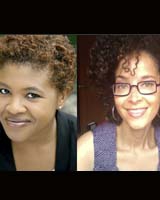
Erin Aubry Kaplan is a journalist and essayist who was born and raised in Los Angeles. She has been a staff writer at the LA Weekly and a weekly opinion columnist for the L.A. Times, the first African American opinion columnist in the paper's history. She has contributed to many publications, including Salon.com, Essence, Oxford American and Ms. Magazine. A collection of her journalism and essays, Black Talk, Blue Thoughts and Walking the Color Line: Dispatches from a Black Journalista, was published in 2011. She teaches nonfiction in the M.F.A. Creative Writing Program at Antioch University Los Angeles.

Philip Littell has written a lot of words that have been set to music, collaborating with a veritable roll-call of classical composers: Previn, Susa, Kernis, Tork, and many more. Meanwhile he has been producing work for the less legitimate musical theater with collaborator Eliot Douglass (No Miracle: A Consolation, The Night Market, The Wandering Whore), and Libby Larsen (Billy The Kid And What He Did), has translated Moliere and Feydeau, and clowned in cabaret and sung in clubs, while continuing to work as an actor. He has two epic/historical travesty plays in hand and ready to go.

Héctor Tobar has worked as a journalist for the Los Angeles Times for nearly twenty years. He shared a Pulitzer Prize for the paper’s coverage of the 1992 riots, and then served as the national Latino Affairs correspondent, the Buenos Aires bureau chief, and the Mexico City bureau chief. He currently writes a weekly column for the paper and is the author of three books, Translation Nation, The Tattooed Soldier, and most recently, The Barbarian Nurseries. The son of Guatemalan immigrants, he is a native of the city of Los Angeles.

Besides teaching writing and theatre, Brenda Varda is the founder of Wordspace in Los Angeles, a cultural hub for writers in all genres. Wordspace creates workshops and development opportunities that allow writers to experiment and connect with new audiences. In creating her own works for the theatre (Unknown, The Met, Sacred Fools, UCIRA), Varda looks to create narratives that reframe contemporary identities while still providing reference to common cultural experiences. Her MFA thesis work, Fables du Theatre, a fantasy of three theatrical fables produced in collaboration with a fictional theatre company (Immanence Theatre Ensemble), was produced at Unknown Theatre in 2008 and nominated for an LA Weekly Award.

Alie Ward is a former writer for the LA Times and columnist for the LA Weekly, and now covers cocktails for KCET and CookingChanneltv.com. She's the co-creator and co-host for Cooking Channel's Classy Ladies with Alie & Georgia as well as an on-camera contributor to Cooking Channel's Unique Sweets. She tells stories around town at Upright Citizens Brigade, The Meltdown and Public School and after 13 years in Los Angeles she knows to wear SPF 70 -- and take Fountain.
The Art of Being Unreasonable: Lessons in Unconventional Thinking

In conversation with Jim Newton
Tuesday, May 22, 2012
00:47:07
Listen:
Episode Summary

How have unreasonable principles —from negotiating to risk-taking, from investing to hiring— helped billionaire philanthropist Eli Broad in founding two Fortune 500 companies, funding scientific research and education reform, and building some of the world’s greatest contemporary art museums? Why is he drawn to the unreasonableness of contemporary artists like Richard Serra and Robert Rauschenberg? What can we learn from the wisdom of an unreasonable man?


Participant(s) Bio

Eli Broad is a renowned business leader who built two Fortune 500 companies from the ground up over a five decade career in business. He is the founder of both SunAmerica Inc. and KB Home (formerly Kaufman and Broad Home Corporation). Eli Broad and his wife, Edythe, are devoted to philanthropy as founders of The Broad Foundations, which they established to advance entrepreneurship for the public good in education, science and the arts. Over the past four decades, the Broads have built two of the most prominent collections of postwar and contemporary art worldwide: The Eli and Edythe L. Broad Collection and The Broad Art Foundation.

Jim Newton is a veteran journalist who began his career as clerk to James Reston at the New York Times. Since then he has worked as a reporter at the Atlanta Constitution and as a reporter, bureau chief, and editor at the Los Angeles Times, where he presently is the editor at large and the author of a weekly column. He is also an educator and author of two biographical books, Justice for All: Earl Warren and the Nation He Made, and most recently, Eisenhower: The White House Years.


Eisenhower: The White House Years

In conversation with A. Scott Berg
Tuesday, March 20, 2012
01:00:49
Listen:
Episode Summary
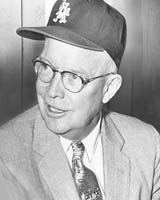
There may be more to \"Like Ike\" than we realize. Veteran journalist and editor-at-large of the Los Angeles Times, Jim Newton offers a bold reappraisal of the 34th president, who was belittled by critics as \"the babysitter in chief.\" Newton yields a portrait of a shrewd leader, a progressive politician, and a champion of peace who refused to use an atomic bomb, grounded McCarthyism, built an interstate system, and turned a $8 billion deficit into a $500 million surplus.

Participant(s) Bio
Jim Newton is a veteran journalist who began his career as clerk to James Reston at the New York Times. Since then he has worked as a reporter at the Atlanta Constitution and as a reporter, bureau chief, and editor at the Los Angeles Times, where he presently is the editor at large and the author of a weekly column. He is also an educator and author whose acclaimed biography of Chief Justice Earl Warren, Justice for All: Earl Warren and the Nation He Made, published in 2006.

A. Scott Berg has written four bestselling biographies, each chronicling a prominent twentieth-century American cultural figure: Max Perkins: Editor of Genius won the National Book Award; Goldwyn: A Biography received a Guggenheim Fellowship; Lindbergh was awarded the Pulitzer Prize; and Kate Remembered, about his longtime friend Katharine Hepburn, was a #1 New York Times bestseller in 2003. Berg lectures extensively across the U. S. and abroad and is currently writing a biography of Woodrow Wilson.

Photo: LAPL Photo collection

Thinking the Twentieth Century

In conversation with Jonathan Kirsch
Tuesday, March 6, 2012
01:17:49
Listen:
Episode Summary
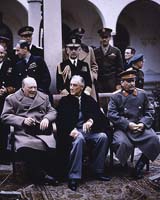
What is the power of historical perspective? How can we learn from the past to reform our society of the future? The late historian Tony Judt reframed the history of the European continent after WWII in his book Postwar. A luminous thinker, he clarified the power of historical perspective for living even ordinary lives. In this final book, written with Timothy Snyder, he traverses the complexities of the twentieth century and guides us through the great debates that made our world.

Participant(s) Bio
Tony Judt is the author or editor of fifteen books, including The Memory Chalet and Postwar, which was a finalist for the Pulitzer Prize. He was University Professor and New York University and the founder of the Remarque Institute. He died in August 2010 at the age of sixty-two.

Timothy Snyder is Professor of History at Yale University. His most recent book, Bloodlands, was selected as a best book of the year by The Economist, The New Republic, and The Guardian. Four of his previous books have received awards, including the George Louis Beer Prize for The Reconstruction of Nations and the Pro Historia Polonorum for Sketches from a Secret War.

Jonathan Kirsch is the author of 13 books, including The Grand Inquisitor's Manual: A History of Terror in the Name of God; God Against the Gods: The History of the War Between Monotheism and Polytheism; and The Harlot by the Side of the Road: Forbidden Tales of the Bible. His next book, The Exterminating Angel, a biography of a crucial but often overlooked figure in the Jewish resistance to Nazi Germany, will be published in 2012. Kirsch is the book editor of The Jewish Journal, an adjunct professor on the faculty of the Professional Publishing Institute at New York University, and a three-time president of PEN U.S.A.

From the Outside Looking In: Writers Finding Their Place in Los Angeles

Moderated by David L. Ulin
Thursday, March 15, 2012
01:30:45
Listen:
Episode Summary
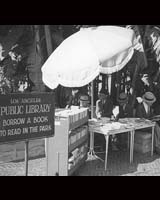
Literary Los Angeles has always existed apart from our country's publishing capital--3,000 miles apart, to be exact. What does this distance offer writers and book artists? What are the freedoms and the challenges of being outside the traditions and trends of literature? A panel of L.A. writers-authors of fiction, essays, graphic novels, screenplays, and poetry-delve into these questions, considering their impact on both the individual and the community.

Part of Pacific Standard Time, Los Angeles Art 1945-1980

Participant(s) Bio
Bernard Cooper is the author of Maps To Anywhere; A Year of Rhymes; Truth Serum; a collection of short stories, Guess Again, and his most recent book is The Bill From My Father. Cooper's many awards include the PEN/USA Ernest Hemingway Award, O. Henry Prize, a Guggenheim grant, and a National Endowment of the Arts fellowship in literature. His work has appeared in many anthologies, including The Best American Essays and as well, in magazines and literary reviews including, Harper's, The Paris Review, Story, The Los Angeles Times Magazine, and The New York Times Magazine. Mr. Cooper teaches Creative Non-Fiction at Bennington College.

Joyce Farmer is best known for co-creating the Tits 'n Clits comics anthology in the 1970s, a feminist response to the rampant misogyny in underground comix. Her graphic memoir Special Exits is a Fall 2010 release from Fantagraphics Books.

Lynell George is an L.A.-based journalist and essayist. A longtime staff writer for both the Los Angeles Times and L.A. Weekly, she covers books, music, visual art and social issues and identity politics. Her work has also appeared in Vibe, Essence, The Smithsonian, Black Clock and Boom: A Journal of California. Currently she is an Assistant Professor of English at Loyola Marymount University in Los Angeles where she teaches journalism.

Marisela Norte is the recipient of the Ben Reitman award from San Diego State University for Peeping Tom Tom Girl, a collection of poetry and prose. Her poems featured on MTA buses in the OUT YOUR WINDOW project were recently selected among the the ten best transit poems in the world by the Atlantic. Norte continues to document life in Los Angeles in words and through photography via public transportation.

Michael Tolkin is the author of four novels: The Player, Among the Dead, Under Radar, and The Return of the Player. He won the Writers Guild of America award for his screenplay for The Player, and also directed the movies The Rapture and The New Age.

David L. Ulin is book critic for the Los Angeles Times. From 2005-2010, he was the paper's book editor. He is the author of The Lost Art of Reading: Why Books Matter in a Distracted Time and The Myth of Solid Ground: Earthquakes, Prediction, and the Fault Line Between Reason and Faith, and the editor of Another City: Writing from Los Angeles and Writing Los Angeles: A Literary Anthology, which won a 2002 California Book Award. His essays and criticism have appeared in many publications.

Photo: LAPL Photo collection

Great Soul: Mahatma Gandhi and His Struggle with India

In conversation with Nicholas Goldberg
Thursday, April 5, 2012
01:15:19
Listen:
Episode Summary
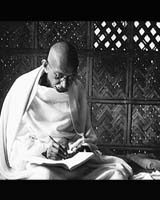
Lelyveld, Pulitzer Prize-winning journalist, offers an intricate portrait of Gandhi's conflicted mission. After shaping his philosophy of nonviolent resistance during his time in South Africa, Gandhi promoted these social values back in his native India. Although India quickly revered the \"Great Soul,\" Gandhi's following only contributed a small part to the social transformation he imagined. In this new biography, Lelyveld brings us closer to one of history's most remarkable self-creations and one of the twentieth century's most inspiring figures.

Participant(s) Bio
Joseph Lelyveld's interest in Gandhi dates back to tours in India and South Africa as a correspondent for The New York Times, where he worked for nearly four decades, ending up as executive editor from 1994 to 2001. His book on apartheid, Move Your Shadow: South Africa, Black and White, won the Pulitzer Prize for general nonfiction. He is also the author of Omaha Blues: A Memory Loop.

Nicholas Goldberg joined the Los Angeles Times in 2002 as editor of the editorial pages and the Sunday Opinion section. He became deputy editor of the editorial pages in 2008 and a year later was named editor of the editorial pages, a position that gives him overall responsibility for The Times' opinion coverage. As a former reporter and editor at Newsday, he worked as Middle East bureau chief from 1995 to 1998. His writing has been widely published.

The Anatomy of Harpo Marx

In conversation with Matias Viegener
Tuesday, April 10, 2012
00:53:33
Listen:
Episode Summary
Using film clips and text in a detailed play-by-play of Harpo Marx's physical movements, Koestenbaum celebrates the astonishing range of Harpo's body-- its kinks, sexual multiplicities, somnolence, Jewishness, \"cute\" pathos, and more. Holding up a mirror to Marx's 13 films, Koestenbaum takes a sharp look at American culture and mythology and the intimacies of how we communicate without words.

Participant(s) Bio
Wayne Koestenbaum has published six books of poetry, including: Blue Stranger with Mosaic Background, Best-Selling Jewish Porn Films, and Rhapsodies of a Repeat Offender. He has also published a novel, Moira Orfei in Aigues-Mortes, and eight books of nonfiction: The Anatomy of Harpo Marx, Humiliation, Hotel Theory, Andy Warhol, Cleavage, Jackie Under My Skin, The Queen's Throat (a National Book Critics Circle Award finalist), and Double Talk. He is a Distinguished Professor of English at the CUNY Graduate Center, and also a Visiting Professor in the painting department of the Yale School of Art.

Matias Viegener is an artist, author and critic who teaches at CalArts. He is one of the members of the art collective Fallen Fruit, which has exhibited internationally in Mexico, Colombia, Denmark, Austria (Ars Electronica), LACMA, the Yerba Buena Center for the Arts, and ARCO 2010 in Madrid. He writes regularly on art for X-tra and ArtUS, has recently published in Cabinet, Journal of Aesthetics & Protest, Radical History Review, and Black Clock, and is the co-editor of Séance in Experimental Writing and The Noulipian Analects. His book 2500 Random Things About Me, Too is just out from Les Figues Press.

The Exegesis of Philip K. Dick

Moderated by David L. Ulin
Monday, November 14, 2011
01:15:07
Listen:
Episode Summary

Philip K. Dick dedicated his life to questioning the nature of reality and perception, the malleability of space and time, and the relationship between the human and divine. Dick's two daughters and novelist Jonathan Lethem- Exegesis co-editor-serve as guides to exploring the magnificent final work of the author.


Participant(s) Bio

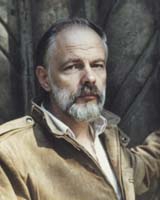
Philip K. Dick (1928-1982) published 36 science fiction novels and 121 short stories over a three decade writing career, in which he explored the essence of what makes man human and the dangers of centralized power. Toward the end of his life, his work turned to deeply personal, metaphysical questions concerning the nature of God. Eleven novels and short stories have been adapted to film, notably, Blade Runner (based on Do Androids Dream of Electric Sheep?), Total Recall, Minority Report, and A Scanner Darkly.

Jonathan Lethem is the critically acclaimed author of eight novels, including Motherless Brooklyn and his latest, Chronic City. He has published and spoken widely on Dick and is the editor of the Library of America editions of Dick's novels. His new book of essays, The Ecstasy of Influence: Nonfictions, Etc. is due out this fall.

David L. Ulin is a book critic for the Los Angeles Times. From 2005-2010 he served as the Times' book editor. He is the author of The Lost Art of Reading: Why Books Matter in a Distracted Time and The Myth of Solid Ground: Earthquakes, Prediction, and the Fault Line Between Reason and Faith, and the editor of Another City: Writing from Los Angeles and Writing Los Angeles: A Literary Anthology, which won a 2002 California Book Award. His essays and criticism are widely published.

Pamela Jackson is an independent scholar, editor, and archivist who holds degrees in Rhetoric and Library and Information Studies from the University of California Berkeley and Los Angeles, respectively. Her 1999 dissertation, The World Philip K. Dick Made, initiated a decade's study of Dick's Exegesis. She is also a graduate of Berkeley High School, Philip K. Dick's only alma mater.

Laura Leslie is the oldest of Philip K. Dick's three children and grew up in the small town of Pt. Reyes Station, California in the house that informed much of Dick's writing from 1960 - 1964 such as The Man in the High Castle, Martian Time Slip, and the Three Stigmata of Palmer Eldritch. She has been responsible for his estate since his death in 1982. She works closely with her sister, Isa Dick Hackett, to steward the legacy of their late father. She recently organized the manuscript material left by their late father and has created an extensive catalog. Ms. Leslie has worked in the information technology services industry for over two decades.

Isa Dick Hackett, daughter of Philip K. Dick, is co-founder along with her sister Laura Leslie and CEO of Electric Shepherd Productions, LLC, the company dedicated to the stewardship and adaptation of the Philip K. Dick library. Ms. Hackett served as an Executive Producer on Adjustment Bureau, based on Philip K. Dick's short story The Adjustment Team. She is also credited for her work on Richard Linklater's adaptation of A Scanner Darkly and for her guidance on and participation in the DVD special features for Blade Runner: The Final Cut, Minority Report and A Scanner Darkly.


Queen of America: A Novel

In conversation with Carolyn Kellogg
Thursday, December 1, 2011
01:10:01
Listen:
Episode Summary
Award-winning novelist Luis Alberto Urrea explores the intrepid life of his great-aunt, a healer and \"Saint of Cabora\" who flees to Arizona when she is claimed as the spiritual leader of the Mexican Revolution. This spellbinding sequel to The Hummingbird's Daughter is a turn-of-the-century journey across America. Presented in association with the exhibition, A Nation Emerges: The Mexican Revolution Revealed

Participant(s) Bio
Luis Alberto Urrea has written 11 books, including the national bestsellers The Hummingbird's Daughter and The Devil's Highway, a finalist for the 2005 Pulitzer. Urrea has also won the Kiriyama Prize for fiction, a Lannan Literary Award, an American Book Award, and Christopher Award, among others. Born in Tijuana, Mexico to a Mexican father and an American mother, Urrea uses his dual-culture life experiences to explore greater themes of love, loss and triumph. He is currently a professor of creative writing at the University of Illinois-Chicago.

Carolyn Kellogg is an award-winning staff writer at the Los Angeles Times, where she writes book reviews and covers the publishing world. Her writing has appeared in Black Clock, the anthology The Devil's Punchbowl and Skateboarding Magazine. She recently wrote the Poets & Writers guide to literary Los Angeles and is the former editor of LAist.com. She has an MFA in creative writing from the University of Pittsburgh and is a board member of the National Book Critics Circle.

1493: Uncovering the New World Columbus Created

In conversation with Richard Rodriguez
Monday, September 26, 2011
01:14:44
Listen:
Episode Summary
From the best-selling author of 1491-a study of the pre-Columbian Americas- comes a deeply engaging new history that explores the most momentous biological event since the death of the dinosaurs.

Participant(s) Bio

Charles C Mann's most recent book, 1491, won the U.S. National Academy of Sciences' Keck award for the best book of the year. A correspondent for The Atlantic Monthly, Science, and Wired, he has covered the intersection of science, technology, and commerce for many newspapers and magazines here and abroad. In addition to 1491, he has co-written four other books: The Second Creation: Makers of the Revolution in 20th-Century Physics,The Aspirin Wars: Money, Medicine, and 100 Years of Rampant Competition, Noah's Choice: The Future of Endangered Species, and @ Large: The Strange Case of the Internet's Biggest Invasion. He has also written for HBO and the television show Law and Order.

Richard Rodriguez, a journalist and writer, is the author of an autobiographical trilogy that examines, respectively, class, ethnicity, and race in America. He is finishing a book on the "ecology of monotheism"--the influence of the desert for the experience of God for the Jew, the Christian, and the Muslim.


Pages

Top