The Library will be closed on Sunday, April 5, 2026, in observance of Easter.

History/Bio

LAPL ID: 
6

The Great Unwinding: An Inner History of the New America

George Packer
In Conversation With Héctor Tobar
Thursday, March 20, 2014
01:17:20
Listen:
Episode Summary

This National Book Award-winning account illuminates the erosion of the social compact—the collapse of farms, factories, public schools—that had kept the United States stable and middle class since the late 1970s. In The Great Unwinding, Packer probes the seething undercurrents of American life, offering an intimate look into the lives that have been transformed by the dissolution of our economic glue. From unchecked banks to the rise of Walton's Walmart, this retelling of American history through Packer's voice offers "…a sad but delicious jazz-tempo requiem for the post-World War II American social contract." (David M. Kennedy).


Participant(s) Bio

George Packer is a staff writer for The New Yorker and the author of The Assassins' Gate: America in Iraq, which received several prizes and was named one of the ten best books of 2005 by The New York Times Book Review. He is also the author of two novels, The Half Man and Central Square, and two other works of nonfiction, Blood of the Liberals, which won the 2001 Robert F. Kennedy Book Award, and The Village of Waiting. His play,Betrayed, ran off-Broadway for five months in 2008 and won the Lucille Lortel Award for Outstanding Play. His most recent book is Interesting Times: Writings from a Turbulent Decade. He lives in Brooklyn.

Héctor Tobar is a novelist who has also worked as a journalist for the Los Angeles Times for nearly twenty years. He shared a Pulitzer Prize for the paper’s coverage of the 1992 riots and then served as the national Latino Affairs correspondent, the Buenos Aires bureau chief, and the Mexico City bureau chief. He is currently a book critic for the Los Angeles Times and is the author of three books: Translation Nation, The Tattooed Soldier, and the award-winning The Barbarian Nurseries. His non-fiction book on the story of the Chilean miners, Deep Down Dark: The Untold Stories of 33 Men Buried in a Chilean Mine and the Miracle that Set Them Free, is forthcoming in the fall of 2014. The son of Guatemalan immigrants, Tobar is a native of the city of Los Angeles.


Rebel Music: Race, Empire, and the New Muslim Youth Culture

Hisham Aidi
In conversation with Safa Samiezade'-Yazd
Thursday, March 13, 2014
01:15:08
Listen:
Episode Summary

In this revelatory study of Muslim youth movements that have emerged in cities around the world in the years since 9/11 and in the wake of the Arab Spring, Aidi illuminates the unexpected connections between urban marginality, music, and political mobilization. By examining both secular and religiously-fueled movements as a means of protest against the policies of the "War on Terror," he explains how certain kinds of music—particularly hip hop, but also jazz, Gnawa, Andalusian, Judeo-Arabic, Latin, and others—have come to represent a heightened racial identity and a Muslim consciousness that crisscrosses the globe.


Participant(s) Bio

Hisham Aidi is a lecturer at the School of International and Public Affairs at Columbia University. He was a George Soros OSI Fellow, a Carnegie Scholar, and co-editor of Black Routes to Islam with Manning Marable. He has been a columnist for Al Jazeera and also wrote for Africana.com based at Harvard University's W.E.B. Du Bois Institute. He lives in New York.

Safa Samiezade'-Yazd currently edits the Arts and Culture and Music sections for Aslan Media, an online media source on the Middle East and its global diaspora communities. She has blogged for Care2's Causes and News Network, where she was recognized for her cultural reporting on the Egyptian protests in Tahrir Square. Her writings on resistance art within Middle East conflict and periphery cultures can be found online at Art21 and Reorient Magazine, as well as Deutsche Welle's upcoming anthology Sitting on the Fence: The Role of Media and Conflict. She lives in Denver, Colorado.


Words Will Break Cement: The Passion of Pussy Riot

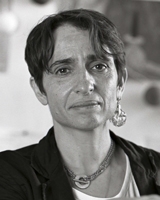
Masha Gessen
In conversation with Suzi Weissman
Wednesday, March 12, 2014
01:10:58
Listen:
Episode Summary

On February 21, 2012, five young women entered the Cathedral of Christ the Savior in Moscow wearing neon-colored dresses, tights, and balaclavas to perform a "punk prayer" beseeching the "Mother of God" to "get rid of Putin." What transformed a group of young women into artists with a shared vision, and what gave them the courage to express that vision and to deal with the subsequently devastating outcomes? Through the trial of the feminist punk band Pussy Riot, Russian-American journalist Masha Gessen, author of Putin: The Man Without a Face, tells a larger story about Vladimir Putin’s Russia, with its state-controlled media, pervasive corruption, and pliant judiciary.


Participant(s) Bio

Masha Gessen is the author of seven books, including the national bestseller The Man Without a Face: The Unlikely Rise of Vladimir Putin. Born in Moscow, she emigrated to the United States in her teens, then returned to Russia a decade later. Writing in both Russian and English, she has covered every major development in Russian politics and culture of the past two decades, receiving numerous awards and fellowships in the process. She blogs weekly for The New York Times and has written for The New York Review of Books, International Herald Tribune, The Guardian, andU.S. News & World Report (where she served as Moscow Bureau Chief), and has also edited several Russian magazines. She has recently relocated to New York City.

Suzi Weissmanis a Professor of Politics at Saint Mary’s College of California. She broadcasts the weekly Beneath the Surface with Suzi Weissman program on KPFK Los Angeles. She serves on the editorial boards of Critique and Against the Current, and is the author of Victor Serge: The Course is Set on Hope, and the editor of Victor Serge: Russia Twenty Years After and The Ideas of Victor Serge.


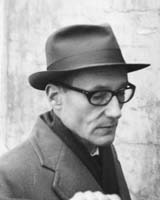
Call Me Burroughs

Barry Miles
In conversation with David L. Ulin
Monday, February 3, 2014
01:07:22
Listen:
Episode Summary

William Burroughs was the original cult figure of the Beat Movement, author of Naked Lunch, and influence to scores of artists, writers, and musicians. For the centennial celebration of Burroughs’ birth, beat historian and biographer Barry Miles discusses the long-term cultural legacy of Burroughs and his literary risk-taking.


Participant(s) Bio

Barry Miles is the author of many seminal books on popular culture, including the authorized biography of Paul McCartney, Paul McCartney: Many Years from Now; Ginsberg: A Biography; William Burroughs: El Hombre Invisible; Jack Kerouac: King of the Beats; and The Beat Hotel: Ginsberg, Burroughs, and Corso in Paris, 1957-1963. He also co-edited the revised text edition of William Burroughs’ Naked Lunch.

David L. Ulin is a book critic for the Los Angeles Times and, from 2005-2010, was the paper's book editor. He is the author of The Lost Art of Reading: Why Books Matter in a Distracted Time and The Myth of Solid Ground: Earthquakes, Prediction, and the Fault Line Between Reason and Faith, and the editor of Another City: Writing from Los Angeles and Writing Los Angeles: A Literary Anthology, which won a 2002 California Book Award. His essays and criticism have appeared in many publications.


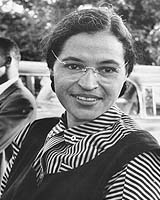
The Rebellious Life of Mrs. Rosa Parks

Jeanne Theoharis and Ericka Huggins
In Conversation With Robin D.G. Kelley, Gary B. Nash Professor of American History, University of California at Los Angeles
Tuesday, January 21, 2014
01:12:39
Listen:
Episode Summary

This first sweeping history of Parks' life challenges perceptions of her as an accidental actor in the civil rights movement. Theoharis offers a compelling portrait of the working class activist who stared poverty and discrimination squarely in the face and never stopped rebelling against them in both the segregated South and North. Ericka Huggins—former political prisoner, human rights activist, poet and teacher—who met Parks during her days of Black Panther activism—joins the discussion


Participant(s) Bio

Jeanne Theoharis is a professor of political science at Brooklyn College of the City University of New York. She is the author of numerous books and articles on the civil rights and Black Power movements, the politics of race and education, social welfare, and civil rights in post-9/11 America. Her newest book is The Rebellious Life of Mrs. Rosa Parks.

Ericka Huggins is a former Black Panther Party member, political prisoner, human rights activist, poet, and teacher. She has lectured throughout the United States on the restoration of human rights, whole-child education, family reunification, restorative justice, and the role of spiritual practice in sustaining activism and promoting social change. She teaches relaxation and resiliency skills for educators and youth in elementary and secondary schools, as well as juvenile and adult prisons and jails, and is currently a professor of sociology at Laney College in Oakland, California.

Robin D. G. Kelley is the Gary B. Nash Professor of American History at UCLA. His books include the prize-winning Thelonious Monk: The Life and Times of an American Original; Hammer and Hoe: Alabama Communists During the Great Depression; Yo’ Mama’s DisFunktional!: Fighting the Culture Wars in Urban America; Three Strikes: Miners, Musicians, Salesgirls, and the Fighting Spirit of Labors Last Century, written collaboratively with Dana Frank and Howard Zinn; and Freedom Dreams: The Black Radical Imagination. His most recent book is Africa Speaks, America Answers: Modern Jazz in Revolutionary Times.


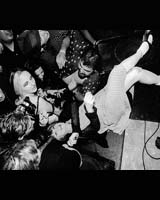
Queens of Noise - Music, Feminism and Punk: Then and Now

Exene Cervenka, Evelyn McDonnell, and Allison Wolfe
Thursday, January 9, 2014
01:14:02
Listen:
Episode Summary

McDonnell’s Queens of Noise: The Real Story of The Runaways is a testimonial to the inspiration and insecurity of the trailblazer, a look at the Los Angeles music scene of the 70s and women on the run. Joined by Exene Cervenka of seminal L.A. punk band X and Riot Grrrl Allison Wolfe—veteran journalist McDonnell will lead a discussion on music making and selling, legacies, and the women who are breaking new ground.


Participant(s) Bio

Evelyn McDonnell is the author and co-editor of five books, including Mamarama: A Memoir of Sex, Kids and Rock ‘n’ Roll. She has worked as a pop music critic for the Miami Herald and as senior editor for the Village Voice. She’s won several awards, including an Annenberg Fellowship at USC and first place for enterprise by the South Florida Black Journalists Association. She is currently a journalism professor at Loyola Marymount University.

Exene Cervenka is an American singer, songwriter, artist, and activist. Shortly after moving to Los Angeles in 1977, Exene met John Doe at a poetry workshop at Beyond Baroque. Together with guitarist Billy Zoom, they formed the seminal Los Angeles punk band, X. To this day, X continues to play nationally and internationally with all four original members: Cervenka, Doe, Zoom, and drummer D.J. Bonebrake. Over the years, Exene has published poetry, prose, and art books; exhibited her collages in museums and galleries; recorded and toured with her other bands; played solo shows with an acoustic guitar and her songs; and said "yes" to just about every insane, imaginative, worthwhile project other thinking humans have offered her.

Allison Wolfe formed the all-girl punk band Bratmobile with the intention of helping to create and expand a feminist music scene spearheaded by Kathleen Hanna and Bikini Kill. This feminist, DIY (do-it-yourself) music scene, soon to be coined "riot grrrl," had a goal of making the punk rock scene more feminist while simultaneously making academic feminism more "punk." Later recognized as a strain of third-wave feminism, riot grrrl spread throughout the 1990s, mostly in the US and UK, as a loose network of young, feminist, alternative music scene women who believed in fighting the power with cultural activism. After the demise of Bratmobile and riot grrrl, Allison continued to be active in bands such as Cold Cold Hearts, Deep Lust, Partyline, and Cool Moms. In 1999-2000, she also initiated Ladyfest, a non-profit, DIY feminist music festival. Allison currently resides in Los Angeles, where she is working on an oral history of riot grrrl book/film project.


The Soft Vengeance of a Freedom Fighter

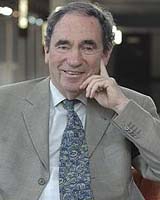
Albie Sachs
In Conversation With Renee Montagne, co-host of NPR’s “Morning Edition”
Thursday, November 21, 2013
01:27:56
Listen:
Episode Summary

As an activist lawyer and leading member of the African National Congress, Albie Sachs lost his right arm and the sight in one eye when his car was bombed by agents of South Africa’s security forces in 1988. After recuperating in London, he returned to South Africa and played a key role in drafting its democratic constitution. Nelson Mandela appointed him a judge in the new constitutional court, where Sachs made a number of landmark rulings, including recognizing gay marriage. Sachs, a man with a remarkable ability to extract positive emotions from wounding events, shares with us South Africa’s experience in healing divided societies.


Participant(s) Bio

Albie Sachs’ career in human rights activism started at the age of seventeen when as a second-year law student at the University of Cape Town, he took part in the Defiance of Unjust Laws Campaign. He started practice as an advocate at the Cape Bar at age 21. The bulk of his work involved defending people charged under racist statutes and repressive security laws. Many faced the death sentence. He himself was raided by the security police, subjected to banning orders restricting his movement, and eventually placed in solitary confinement without trial for two prolonged spells of detention.

In 1966, he went into exile, first studying and teaching law in England, then working in Mozambique as a law professor and legal researcher. In 1988 his car was blown up by a bomb by South African security agents, and he lost an arm and sight in one eye. After recovering from the bomb, he devoted himself full-time to preparations for a new democratic Constitution for South Africa. In 1990 he returned home and, as a member of the Constitutional Committee and the National Executive of the African National Congress, took an active part in the negotiations, which led to South Africa becoming a constitutional democracy. After the first democratic election in 1994, he was appointed by President Nelson Mandela to serve on the newly established Constitutional Court.

Renee Montagne is co-host of NPR's Morning Edition, the most widely heard radio news program in the U.S. She has hosted the news magazine since 2004, broadcasting from NPR West in Culver City, California. She hosted All Things Considered with Robert Siegel for two years in the late 1980s, and previously worked for NPR's Science, National, and Foreign desks.

Montage has traveled the world widely, covering stories in Afghanistan and the Vatican. In 1990, she traveled to South Africa to cover Nelson Mandela's release from prison and continued to report from South Africa for three years. In 1994, she and a team of NPR reporters won a prestigious Alfred I. duPont-Columbia University Award for coverage of South Africa's historic presidential and parliamentary elections.


Making History Graphic

Joe Sacco and Gene Luen Yang
In Conversation With Charles Hatfield, Author and Professor of English, CSUN
Tuesday, November 12, 2013
01:14:10
Listen:
Episode Summary

Hailed as the creator of war reportage comics, Joe Sacco uses darkly funny short-form comics to recount conflicts, including his latest book The Great War, an illustrated panorama of the first day of the Battle of the Somme. Gene Luen Yang, the author of the acclaimed graphic novel American Born Chinese, brings clear-eyed storytelling and magical realism to tell parallel stories of two young people caught up on opposite sides of China’s violent Boxer Rebellion in his new work, Boxers and Saints. Join these two daring writers for a conversation on how the graphic novel and graphic non-fiction —rising from the frontlines of popular culture—can serve our understanding of history.


Participant(s) Bio

Joe Sacco's acclaimed books include Palestine, which was serialized as a comic book from 1993 to 1995, the first collection of which won an American Book Award in 1996 Safe Area Gorazde, and Footnotes in Gaza, as well as a best-selling collaboration with Chris Hedges, Days of Destruction, Days of Revolt.

Gene Luen Yang began drawing comic books in the fifth grade. He was an established figure in the indie comics scene when he published his first book with graphic novel publisher First Second, American Born Chinese, which is now in print in over ten languages. Yang won the Printz Award and was a finalist for the National Book Award. His latest book is the graphic novel diptych Boxers & Saints.

Charles Hatfield, Professor of English at California State University, Northridge, teaches comics, children's literature, media, and cultural studies. He is the author of Hand of Fire: The Comics Art of Jack Kirby and Alternative Comics: An Emerging Literature and co-editor of the newly released The Superhero Reader.


The Crooked Mirror: A Memoir of Polish-Jewish Reconciliation

Louise Steinman
In Conversation With Jack Miles, Distinguished Professor of English and Religious Studies, U.C. Irvine
Thursday, November 7, 2013
00:00:00
Listen:
Episode Summary

What happens when formerly estranged peoples look at their entwined history together? After attending a Zen Peacemaker retreat at Auschwitz-Birkenau in 2000, Steinman embarked on a decade-long exploration—into her own family’s history in a small Polish town—as well as an immersion in the exhilarating and discomforting, sometimes surreal, yet ultimately healing process of Polish-Jewish reconciliation taking place in today’s democratic Poland.


Participant(s) Bio

Louise Steinman is the curator of the award-winning ALOUD series and co-director of the Los Angeles Institute for Humanities at USC. She is the author of three books: The Souvenir: A Daughter Discovers Her Father’s War; The Knowing Body: The Artist as Storyteller in Contemporary Performance; and The Crooked Mirror: A Memoir of Polish-Jewish Reconciliation. She was a recent fellow at the Robert Rauschenberg Residency in Captiva, FL. Her work appears, most recently, in The Los Angeles Review of Books, and on her Crooked Mirror blog.

Jack Miles is a Senior Fellow for Religious Affairs with the Pacific Council on International Policy and a Distinguished Professor of English and Religious Studies, at the University of California, Irvine. A MacArthur Fellow (2003-2007), Miles won the Pulitzer Prize in 1996 for God: A Biography, which has since been translated into sixteen languages. He is currently the general editor of the forthcoming Norton Anthology of World Religions.


Moby Dick: How Scientists Came to Love the Whale

D. Graham Burnett
In Conversation With Amy Parish, primatologist and Darwinian Feminist
Thursday, October 3, 2013
01:19:52
Listen:
Episode Summary

How was our understanding of whales transformed from grotesque monsters, useful only as wallowing kegs of fat, to playful friends of humanity and bellwethers of environmental devastation? Burnett, a historian of science and energetic polymath, offers a sweeping history of how science, politics, and simple human wonder have transformed our way of seeing these behemoths from below.


Participant(s) Bio

D. Graham Burnett teaches at Princeton University, where he holds an appointment as Professor of History and History of Science, and affiliations with the Interdisciplinary Doctoral Program in the Humanities (I-HUM), the School of Architecture, and the Princeton Environmental Institute. He is a 2013 Guggenheim Fellow. Burnett studies the relationship between power and knowledge and writes on human beings’ changing understanding of nature, art, and technology. He is the author of five books, including Trying Leviathan, winner of the New York City Book Award, which surveys changing ideas of natural order across the hundred years that stretched from the writings of Linnaeus to those of Darwin; and The Sounding of the Whale, his study of the remarkable cultural and scientific life of cetaceans in the last century, a period that saw these animals go from industrial commodities to avatars of the Age of Aquarius. Graham Burnett is also an editor at Cabinet, the Brooklyn-based quarterly of art and culture.

Dr. Amy Parish is a biological anthropologist, primatologist, and Darwinian feminist, who has conducted ground-breaking research on patterns of female dominance and matriarchal social structure in one of our closest living relatives, the bonobo. Formerly a professor at the University of Southern California for 13 years, she has now affiliated with faculty at Georgetown University and is a research associate at University College London. Parish is currently working on a book about love, marriage, and the experience of being a wife.

Photo credit: Mike Baird


Pages

Top