History/Bio

LAPL ID: 
6

No Further West: The Story of Los Angeles Union Station

Panel discussion with Debra Gerod, Jenna Hornstock, Eugene Moy and Marlyn Musicant
Moderated by Kevin Roderick
Thursday, May 29, 2014
01:10:40
Listen:
Episode Summary

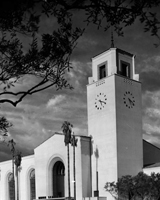
In 1939, Union Station opened on the former site of Los Angeles’s original Chinatown—displacing thousands of Chinese and Chinese Americans. The new station fulfilled the vision of civic leaders who believed that an impressive gateway was critical to the growth of Los Angeles. In place of Chinatown, a distinctive Mission Revival station proudly stands as the centerpiece of our regional transportation system. Yet balances of power and political economies were disrupted; financial and legal battles raged on for years. This panel—including members of the Union Station Master Plan team, an architectural historian (and exhibition curator), and the vice-president of the Chinese Historical Society of Southern California—will discuss the history of this architectural icon and share visions for its future.

Presented in conjunction with the Getty Research Institute's exhibition of the same name in Central Library's Getty Gallery.


Participant(s) Bio

Debra Gerod is a partner at Gruen Associates, the planning and architectural firm selected for the Union Station master plan. During her tenure at Gruen Associates, Gerod has focused on the collaborative delivery of projects, primarily in the public sector. Her work includes large-scale, significant civic and cultural projects such as courthouses, embassies, performing arts centers, museums, libraries, and transportation projects.

Jenna Hornstock has served as acting as project manager for the Union Station Master Plan for the past three years at Metro implementing the new TOD Planning Grant program, as well as managing other strategic initiatives related to transit-oriented development planning. Prior to joining Metro, Ms. Hornstock spent nearly seven years at the Community Redevelopment Agency of the City of Los Angeles (CRA/LA), most recently as Chief of Strategic Planning and Economic Development. She holds a Master's in Public Policy from Harvard University’s Kennedy School of Government and a BA in Rhetoric from UC Berkeley.

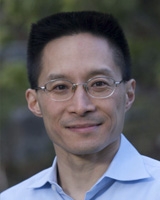
Eugene Moy is a past president and the current vice president of the Chinese Historical Society of Southern California, where he has been a member since 1976. He has conducted research and reviewed many scholarly publications on the history of Chinese in Southern California on behalf of the Historical Society. In 1981 he was part of the team that developed historical walking tours of Los Angeles Chinatown and has been continuously involved in conducting interpretive walking tours of Old and New Chinatown since that time. In addition, he currently serves as second vice president for the Chinese American Museum at El Pueblo de Los Angeles Historical Monument.  Professionally, he is retired after over 35 years in municipal planning and redevelopment, working for five different cities in Los Angeles County.  He is a native of Los Angeles, a graduate of Cal State Long Beach, and has resided with his family in Alhambra since 1986.

Marlyn Musicant; is the Senior Exhibitions Coordinator at the Getty Research Institute. She earned her M.A. in the History of Decorative Arts, Design, and Culture at the Bard Graduate Center. Her research specialties include twentieth-century industrial design and architecture—particularly German Modernism and the history of architecture and planning in Southern California. Musicant is an editor of Los Angeles Union Station, forthcoming from Getty Publications, and the curator of the exhibit of the same name on display in Central Library’s Getty Gallery. Musicant is a native Angeleno.

Kevin Roderick is a journalist, editor, blogger, and author living in Los Angeles. He is the creator and publisher of LA Observed, a widely cited news website that Forbes rated as Best of the Web. He is a contributing writer on politics and media atLos Angeles magazine, an award-winning radio commentator, and is often asked by the media to talk about Southern California issues. Currently, he is the director of the UCLA Newsroom at the University of California, Los Angeles.


Reza Aslan: The Coming Reformation of Islam: A Conversation

Reza Aslan
In Conversation With Jack Miles
Thursday, February 2, 2006
01:22:20
Listen:
Episode Summary

Join two brilliant scholars of religion for a fascinating discussion on the internal conflict within Islam over the scope and outcome of the Islamic Reformation.

This program was presented by ALOUD in 2006, and the recording from our archive was added to our podcast collection in 2014.


Participant(s) Bio

Reza Aslan, an internationally acclaimed writer and scholar of religions, is the author, most recently, of Zealot: The Life and Times of Jesus of Nazareth. His first book, No god but God: The Origins, Evolution, and Future of Islam, has been translated into thirteen languages and named by Blackwell as one of the hundred most important books of the last decade. He is also the author of How to Win a Cosmic War: God, Globalization and the End of the War on Terror (published in paperback as Beyond Fundamentalism), as well as the editor of Tablet & Pen: Literary Landscapes from the Modern Middle East. Aslan is an Adjunct Senior Fellow at the Council of Foreign Relations and Associate Professor of Creative Writing at UC Riverside.

Jack Miles is a Senior Fellow for Religious Affairs with the Pacific Council on International Policy and a Distinguished Professor of English and Religious Studies the University of California, Irvine. A MacArthur Fellow (2003-2007), Miles won the Pulitzer Prize in 1996 for God: A Biography, which has since been translated into sixteen languages. He is currently the general editor of the forthcoming Norton Anthology of World Religions.


George Packer: The Assassins’ Gate: America in Iraq

George Packer
In Conversation With Mike Shuster
Tuesday, November 8, 2005
01:17:07
Listen:
Episode Summary

Packer, award-winning staff writer for The New Yorker, explores the full range of ideas and emotions stirred up by our most controversial foreign-policy venture since Vietnam.


Participant(s) Bio

George Packer is a staff writer for the New Yorker and the author of two novels and three works of nonfiction including The Assassins' Gate, which will be published by Farrar, Straus, and Giroux in November 2005, and Blood of the Liberals (FSG, 2000), which won the 2001 Robert F. Kennedy Book Award. He is also the editor of the anthology The Fight for Democracy. He lives in Brooklyn.

Mike Shuster is a diplomatic correspondent and roving foreign correspondent for NPR. He is based in NPR's Los Angeles bureau. When he is not traveling outside the U.S., he covers issues of nuclear non-proliferation and weapons of mass destruction, terrorism, and the Pacific Rim. Shuster took up his current post in 1994, using New York as a base. He moved to Los Angeles in 2000. In the past two years, he has contributed many reports to NPR's extensive coverage of the Middle East, traveling four times to Israel since September 2000. He has also reported from Afghanistan, Iran, and Iraq. Shuster's reports have also focused on India and Pakistan, the Central Asian nations of Uzbekistan, Turkmenistan, and Tajikistan, and the Congo.


Nathan Englander: The Ministry of Special Cases

Nathan Englander
In conversation with writer/producer Tom Teicholz
Monday, May 21, 2007
01:04:14
Listen:
Episode Summary

From the celebrated author of For the Relief of Unbearable Urges, a stunning historical novel—his first—set in Buenos Aires at the start of Argentina’s Dirty War. 


Participant(s) Bio

Nathan Englander was born in New York in 1970. His short fiction has appeared in The Atlantic Monthly, The New Yorker, and numerous anthologies, including The Best American Short Stories and The O. Henry Prize Stories. Englander’s story collection, For the Relief of Unbearable Urges, earned him a PEN/Malamud Award and the American Academy of Arts and Letters Sue Kaufman Prize for First Fiction. He lives in New York City.

Tom Teicholz is a film producer in LA. Everywhere else he is an author and journalist whose work has appeared in The New York Times Sunday Magazine, Interview and The Forward. He writes the award-winning Tommywood column (www.tommywood.com) that appears in The Jewish Journal of Los Angeles. Recently he served as American Film and TV editor of the 2nd Edition of The Encyclopedia Judaica.


Michael Pollan: In Defense of Food

In Defense of Food
In conversation with Barry Glassner
Wednesday, May 10, 2006
01:16:03
Listen:
Episode Summary

The author of the national bestseller The Omnivore's Dilemma returns with a manifesto for our times: what to eat, what not to eat, and how to think about health.


Participant(s) Bio

Michael Pollan is a contributing writer to The New York Times Magazine and the author of four books, The Botany of Desire: A Plant's-Eye View of the World, Second Nature, A Place of My Own, and The Omnivore's Dilemma. The recipient of numerous journalistic awards, including the Reuters-I.U.C.N. Global Award in Environmental Journalism, Pollan served for many years as executive editor of Harper's. His articles have been anthologized in Best American Science Writing, Best American Essays , and the Norton Book of Nature Writing. At Berkeley, he serves as Director of the Knight Program in Science and Environmental Journalism. He earned his college degree at Bennington College, studied at Oxford University (Mansfield College), and received a master's in English from Columbia University in 1981.

Barry Glassner is a sociologist with his finger on the pulse of American culture. His provocative research has found many Americans' concerns to be largely unfounded. He has studied scary stories in the media; scares about adolescents, crime, minority groups, and related social issues; false fears in marketing and politics; and fear and the power of exploiting it for product sales and political careers. His recent work examines the sources of Americans' assumptions about what and where to eat and the chefs, nutritionists, restaurant critics, journalists, and food marketers who perpetuate those views. USC's Executive Vice Provost, his articles have appeared in American Sociological Review, Social Problems, American Journal of Psychiatry, and Journal of Health and Social Behavior, among other journals.


The Crusades of Cesar Chavez

Miriam Pawel and Luis Valdez
Moderated by Laura Pulido
Tuesday, April 1, 2014
01:13:36
Listen:
Episode Summary

How do you write/convey/film the story of a visionary figure with tragic flaws who founded a labor union, launched a movement, and inspired a generation? Biographer Miriam Pawel, playwright/director Luis Valdez (Teatro Campesino) lend their perspective on the crusades of an unlikely American hero who ignited one of the great social movements of our time.


Participant(s) Bio

Miriam Pawel is the author of The Union of Their Dreams, widely acclaimed as the most nuanced history of Cesar Chavez’s movement. She is a Pulitzer-winning editor who spent twenty-five years working for Newsday and the Los Angeles Times. She was recently awarded a National Endowment for the Humanities fellowship and lives in Southern California.

Luis Valdez is a playwright and founding artistic director of El Teatro Campesino (The Farm Workers’ Theater), the internationally renowned theater company founded on the picket lines of the Delano grape strike in 1965 and still in operation in San Juan Bautista, CA, where it is the longest running Chicano Theater in the United States. Valdez’s involvement with Cesar Chavez, the UFW, and the early Chicano Movement left an indelible mark that remained embodied in all his work even after he left the UFW. Valdez’s influential Zoot Suit was the first Chicano play on Broadway. His numerous feature film and television credits include, among others, La Bamba, Cisco Kid, and Corridos: Tales of Passion and Revolution. Valdez is the recipient of countless awards, including the prestigious George Peabody Award for excellence in television, the Presidential Medal of the Arts, the Governor’s Award OF the California Arts Council, and Mexico’s prestigious Aguila Azteca Award given to individuals whose work promotes cultural excellence and exchange between US and Mexico.

Laura Pulido is a Professor of American Studies and Ethnicity at the University of Southern California. She researches race, political activism, Chicana/o Studies, critical human geography, and Los Angeles. Pulido has done extensive work in the field of environmental justice, social movements, labor studies, and radical tourism.


A Sliver of Light: Three Americans Imprisoned in Iran

Shane Bauer, Josh Fattal and Sarah Shourd
In Conversation With Arun Rath
Tuesday, March 25, 2014
01:20:39
Listen:
Episode Summary

In 2009, three American hikers (and UC Berkeley grads) hiking in Iraqi Kurdistan unknowingly crossed into Iran and were captured by a border patrol. Accused of espionage, they were incarcerated in Tehran’s infamous Evin Prison—Sarah, for fourteen months and Josh and Fattal, for two long years. This poignant memoir is their story, as told through a bold and innovative interweaving of the authors’ three voices that recounts the psychological torment of interrogation and the collective strength of will that kept them alive.


Participant(s) Bio

Shane Bauer is an award-winning investigative journalist and photographer. His articles have appeared in Mother Jones, The Nation, Salon.com, the Los Angeles Times, San Francisco Chronicle, Christian Science Monitor, and many other publications. In 2013, Shane received the John Jay/Henry Frank Guggenheim Award for Excellence in Criminal Justice Reporting.

Josh Fattal, a graduate of Berkeley's program in environmental economics and policy, is an activist and organizer focused on sustainable development. Along with Shourd and Bauer, he has spoken at universities, human rights conferences, and private events to share the experience of imprisonment in Iran.

Sarah Shourd is a writer and human rights activist with the organization United4Iran. She is a regular contributor to Huffington Post and has written for the New York Times, CNN.com, Newsweek/Daily Beast, and other publications.

Arun Rath is the new weekend host of All Things Considered. Previously, Rath was a reporter, producer, and editor, most recently as a senior reporter for the PBS series Frontline and The World® on WGBH Boston, where he specialized in national security and military justice. He has produced three films forFrontline, the latest being an investigation of alleged war crimes committed by U.S. Marines in Haditha, Iraq. Rath also reports on culture and music for the PBS series Sound Tracks.


The Great Unwinding: An Inner History of the New America

George Packer
In Conversation With Héctor Tobar
Thursday, March 20, 2014
01:17:20
Listen:
Episode Summary

This National Book Award-winning account illuminates the erosion of the social compact—the collapse of farms, factories, public schools—that had kept the United States stable and middle class since the late 1970s. In The Great Unwinding, Packer probes the seething undercurrents of American life, offering an intimate look into the lives that have been transformed by the dissolution of our economic glue. From unchecked banks to the rise of Walton's Walmart, this retelling of American history through Packer's voice offers "…a sad but delicious jazz-tempo requiem for the post-World War II American social contract." (David M. Kennedy).


Participant(s) Bio

George Packer is a staff writer for The New Yorker and the author of The Assassins' Gate: America in Iraq, which received several prizes and was named one of the ten best books of 2005 by The New York Times Book Review. He is also the author of two novels, The Half Man and Central Square, and two other works of nonfiction, Blood of the Liberals, which won the 2001 Robert F. Kennedy Book Award, and The Village of Waiting. His play,Betrayed, ran off-Broadway for five months in 2008 and won the Lucille Lortel Award for Outstanding Play. His most recent book is Interesting Times: Writings from a Turbulent Decade. He lives in Brooklyn.

Héctor Tobar is a novelist who has also worked as a journalist for the Los Angeles Times for nearly twenty years. He shared a Pulitzer Prize for the paper’s coverage of the 1992 riots and then served as the national Latino Affairs correspondent, the Buenos Aires bureau chief, and the Mexico City bureau chief. He is currently a book critic for the Los Angeles Times and is the author of three books: Translation Nation, The Tattooed Soldier, and the award-winning The Barbarian Nurseries. His non-fiction book on the story of the Chilean miners, Deep Down Dark: The Untold Stories of 33 Men Buried in a Chilean Mine and the Miracle that Set Them Free, is forthcoming in the fall of 2014. The son of Guatemalan immigrants, Tobar is a native of the city of Los Angeles.


Rebel Music: Race, Empire, and the New Muslim Youth Culture

Hisham Aidi
In conversation with Safa Samiezade'-Yazd
Thursday, March 13, 2014
01:15:08
Listen:
Episode Summary

In this revelatory study of Muslim youth movements that have emerged in cities around the world in the years since 9/11 and in the wake of the Arab Spring, Aidi illuminates the unexpected connections between urban marginality, music, and political mobilization. By examining both secular and religiously-fueled movements as a means of protest against the policies of the "War on Terror," he explains how certain kinds of music—particularly hip hop, but also jazz, Gnawa, Andalusian, Judeo-Arabic, Latin, and others—have come to represent a heightened racial identity and a Muslim consciousness that crisscrosses the globe.


Participant(s) Bio

Hisham Aidi is a lecturer at the School of International and Public Affairs at Columbia University. He was a George Soros OSI Fellow, a Carnegie Scholar, and co-editor of Black Routes to Islam with Manning Marable. He has been a columnist for Al Jazeera and also wrote for Africana.com based at Harvard University's W.E.B. Du Bois Institute. He lives in New York.

Safa Samiezade'-Yazd currently edits the Arts and Culture and Music sections for Aslan Media, an online media source on the Middle East and its global diaspora communities. She has blogged for Care2's Causes and News Network, where she was recognized for her cultural reporting on the Egyptian protests in Tahrir Square. Her writings on resistance art within Middle East conflict and periphery cultures can be found online at Art21 and Reorient Magazine, as well as Deutsche Welle's upcoming anthology Sitting on the Fence: The Role of Media and Conflict. She lives in Denver, Colorado.


Words Will Break Cement: The Passion of Pussy Riot

Masha Gessen
In conversation with Suzi Weissman
Wednesday, March 12, 2014
01:10:58
Listen:
Episode Summary

On February 21, 2012, five young women entered the Cathedral of Christ the Savior in Moscow wearing neon-colored dresses, tights, and balaclavas to perform a "punk prayer" beseeching the "Mother of God" to "get rid of Putin." What transformed a group of young women into artists with a shared vision, and what gave them the courage to express that vision and to deal with the subsequently devastating outcomes? Through the trial of the feminist punk band Pussy Riot, Russian-American journalist Masha Gessen, author of Putin: The Man Without a Face, tells a larger story about Vladimir Putin’s Russia, with its state-controlled media, pervasive corruption, and pliant judiciary.


Participant(s) Bio

Masha Gessen is the author of seven books, including the national bestseller The Man Without a Face: The Unlikely Rise of Vladimir Putin. Born in Moscow, she emigrated to the United States in her teens, then returned to Russia a decade later. Writing in both Russian and English, she has covered every major development in Russian politics and culture of the past two decades, receiving numerous awards and fellowships in the process. She blogs weekly for The New York Times and has written for The New York Review of Books, International Herald Tribune, The Guardian, andU.S. News & World Report (where she served as Moscow Bureau Chief), and has also edited several Russian magazines. She has recently relocated to New York City.

Suzi Weissmanis a Professor of Politics at Saint Mary’s College of California. She broadcasts the weekly Beneath the Surface with Suzi Weissman program on KPFK Los Angeles. She serves on the editorial boards of Critique and Against the Current, and is the author of Victor Serge: The Course is Set on Hope, and the editor of Victor Serge: Russia Twenty Years After and The Ideas of Victor Serge.


Pages

Top