The Library will be closed on Sunday, April 5, 2026, in observance of Easter.

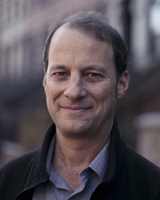
Héctor Tobar

Bio: 

Héctor Tobar has worked as a journalist for the Los Angeles Times for nearly twenty years. He shared a Pulitzer Prize for the paper's coverage of the 1992 riots, and then served as the national Latino Affairs correspondent, the Buenos Aires bureau chief, and the Mexico City bureau chief. He currently writes a w:12:27eekly column for the paper and is the author of three books, Translation Nation, The Tattooed Soldier, and, most recently, The Barbarian Nurseries. The son of Guatemalan immigrants, he is a native of the city of Los Angeles, where he lives with his wife and three children.

Jesse Katz is the author of The Opposite Field, a memoir set in the immigrant suburb of Monterey Park. As a staff writer at the Los Angeles Times, Jesse shared in two Pulitzer Prizes­-for coverage of the 1994 Northridge earthquake and the 1992 L.A. riots-and was named a Pulitzer finalist for his stories about street gangs. As a senior editor at Los Angeles magazine, he received the PEN Center USA's award for literary journalism. Jesse teaches literary journalism at the University of California, Irvine, and has mentored incarcerated teenagers as a volunteer with InsideOut Writers.

Our Migrant Souls: A Meditation on Race and the Meanings and Myths of “Latino” Héctor Tobar

Héctor Tobar
In conversation with Carribean Fragoza
Thursday, June 15, 2023
01:06:09
Listen:
Episode Summary

"'Stories about empire,' Tobar writes, 'move us because they're echoes of the memories that reside deep in our collective consciousness.' Latinos, after all, are people' living with the hurt caused by war and politics, conquest and surrender, revolution and dictatorship.'" —The New York Times

"Latino" is the most broadly defined major race in the United States. In Pulitzer-Prize-winner Héctor Tobar's new book, Our Migrant Souls: A Meditation on Race and the Meanings and Myths of "Latino," Tobar recounts his personal experiences as the son of Guatemalan immigrants and the stories told to him by his Latinx students to offer a thoughtful reproach to racist ideas about Latino people. Our Migrant Souls decodes the meaning of "Latino" as a racial and ethnic identity in the modern United States and seeks to give voice to the angst and anger of young Latino people who have seen Latinidad transformed into hateful tropes about "illegals" and have faced insults, harassment, and division based on white insecurities and economic exploitation.


Participant(s) Bio

Héctor Tobar is a Pulitzer Prize–winning journalist and novelist. He is the author of the critically acclaimed New York Times bestseller Deep Down Dark, as well as The Barbarian Nurseries, Translation Nation, and The Tattooed Soldier. His new book is Our Migrant Souls: A Meditation on Race and the Meanings and Myths of “Latino”. Héctor is also a contributing writer for the New York Times opinion pages and an associate professor at the University of California, Irvine. He’s written for The New YorkerThe Los Angeles Times and other publications. His short fiction has appeared in Best American Short Stories, L.A. Noir, Zyzzyva, and Slate. The son of Guatemalan immigrants, he is a native of Los Angeles, where he lives with his family.

Carribean Fragoza is a fiction and nonfiction writer from South El Monte, CA. Her collection of stories Eat the Mouth That Feeds You was published in 2021 by City Lights and was a finalist for a 2022 PEN Award. Her co-edited compilation of essays, East of East: The Making of Greater El Monte, was published by Rutgers University Press, and her collection of essays Writing Home: New Terrains of California is forthcoming with Angel City Press. She has published in Harper’s Bazaar, The New York Times, Zyzzyva, Alta, BOMB, Huizache, KCET, the Los Angeles Review of Books, ArtNews, and Aperture Magazine. She is the Prose Editor at Huizache Magazine and Creative Nonfiction and Poetry Editor at Boom California, a journal of UC Press. Fragoza is the founder and co-director of South El Monte Arts Posse, an interdisciplinary arts collective. She is a 2023 Whiting Literary Award recipient.
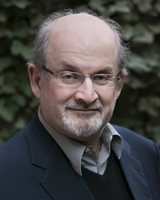
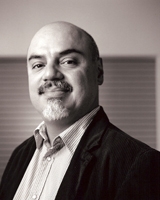
Salman Rushdie:Two Years Eight Months and Twenty-Eight Nights

Salman Rushdie in Conversation With Héctor Tobar
Thursday, September 10, 2015
01:10:16
Listen:
Episode Summary

Returning to ALOUD after receiving the 2012 Los Angeles Public Library Literary Award for his distinguished commitment to libraries and literature, Rushdie shares his newest work of fiction. Inspired by the traditional "wonder tales" of the East and set in a strange near-future New York City, Two Years Eight Months and Twenty-Eight Nights blends history, mythology, and a timeless love story. Satirical and bawdy, full of cunning and folly, kismet and karma, rapture and redemption, Rushdie’s novel is a masterpiece about the age-old conflicts that remain in today’s world. Discussing this work with Héctor Tobar, one of L.A.’s most respected voices, Rushdie takes the stage for a magical evening of storytelling.


Participant(s) Bio

Salman Rushdie is the author of twelve novels— including Midnight’s Children (Booker Prize, Best of the Booker), The Satanic Verses, and Two Years Eight Months and Twenty-Eight Nights—and one collection of short stories: East, West. He has also published nonfiction: Joseph Anton, The Jaguar Smile, Imaginary Homelands, and Step Across This Line, and co-edited the anthologies Mirrorwork and Best American Short Stories 2008. He is a member of the American Academy of Arts and Letters and a Distinguished Writer in Residence at New York University. A former president of American PEN, Rushdie was knighted in 2007 for services to literature.

Héctor Tobar is a Pulitzer Prize–winning journalist and a novelist. He is the author of The Barbarian Nurseries, Translation Nation, The Tattooed Soldier, and most recently, his book on the Chilean Miners, Deep Down Dark: The Untold Stories of 33 Men Buried in a Chilean Mine, and the Miracle That Set Them Free. The son of Guatemalan immigrants, he is a native of Los Angeles, where he lives with his wife and three children.


Deep Down Dark: The Untold Stories of 33 Men Buried in a Chilean Mine, and the Miracle that Set Them Free

Héctor Tobar
In conversation with author Jesse Katz
Thursday, October 16, 2014
01:08:40
Listen:
Episode Summary

In this master work by Pulitzer Prize-winning journalist, Héctor Tobar tells the miraculous and emotionally textured account of the thirty-three Chilean miners who were trapped beneath thousands of feet of rock for a record-breaking sixty-nine days. Join us to hear this astounding account of the personal histories that brought "Los 33" to the mine and the spiritual elements that surrounded their work in the deep down dark.


Participant(s) Bio

Héctor Tobar is a Pulitzer Prize–winning journalist and a novelist. He is the author of The Barbarian Nurseries, Translation Nation, and The Tattooed Soldier. The son of Guatemalan immigrants, he is a native of Los Angeles, where he lives with his wife and three children.

Jesse Katz is the author of The Opposite Field, a memoir set in the immigrant suburb of Monterey Park. As a staff writer at the Los Angeles Times, Jesse shared in two Pulitzer Prizes—for coverage of the 1994 Northridge earthquake and the 1992 L.A. riots. As a senior editor at Los Angeles magazine, he received the PEN Center USA’s award for literary journalism and the James Beard Foundation’s M.F.K. Fisher Distinguished Writing Award. RatPac Entertainment is producing a movie based on Jesse’s most recent story, "Escape from Cuba: Yasiel Puig’s Untold Journey to the Dodgers."


The Great Unwinding: An Inner History of the New America

George Packer
In Conversation With Héctor Tobar
Thursday, March 20, 2014
01:17:20
Listen:
Episode Summary

This National Book Award-winning account illuminates the erosion of the social compact—the collapse of farms, factories, public schools—that had kept the United States stable and middle class since the late 1970s. In The Great Unwinding, Packer probes the seething undercurrents of American life, offering an intimate look into the lives that have been transformed by the dissolution of our economic glue. From unchecked banks to the rise of Walton's Walmart, this retelling of American history through Packer's voice offers "…a sad but delicious jazz-tempo requiem for the post-World War II American social contract." (David M. Kennedy).


Participant(s) Bio

George Packer is a staff writer for The New Yorker and the author of The Assassins' Gate: America in Iraq, which received several prizes and was named one of the ten best books of 2005 by The New York Times Book Review. He is also the author of two novels, The Half Man and Central Square, and two other works of nonfiction, Blood of the Liberals, which won the 2001 Robert F. Kennedy Book Award, and The Village of Waiting. His play,Betrayed, ran off-Broadway for five months in 2008 and won the Lucille Lortel Award for Outstanding Play. His most recent book is Interesting Times: Writings from a Turbulent Decade. He lives in Brooklyn.

Héctor Tobar is a novelist who has also worked as a journalist for the Los Angeles Times for nearly twenty years. He shared a Pulitzer Prize for the paper’s coverage of the 1992 riots and then served as the national Latino Affairs correspondent, the Buenos Aires bureau chief, and the Mexico City bureau chief. He is currently a book critic for the Los Angeles Times and is the author of three books: Translation Nation, The Tattooed Soldier, and the award-winning The Barbarian Nurseries. His non-fiction book on the story of the Chilean miners, Deep Down Dark: The Untold Stories of 33 Men Buried in a Chilean Mine and the Miracle that Set Them Free, is forthcoming in the fall of 2014. The son of Guatemalan immigrants, Tobar is a native of the city of Los Angeles.


The Making of the Great Bolaño: The Man and the Myth

Moderated by Héctor Tobar, Book Critic, Los Angeles Times
Co-presented with LéaLA, Feria del Libro en Español de Los Ángeles
Thursday, May 16, 2013
01:21:32
Listen:
Episode Summary

Panel discussion with author Ben Ehrenreich; Barbara Epler, president, New Directions; author Mónica Maristain; and poet-translator David Shook. Moderated by Héctor Tobar, staff writer, Los Angeles Times

"Books are the only homeland of the true writer, books that may sit on shelves or in the memory," wrote Roberto Bolaño. Ten years after his death, the legacy of Chilean author Roberto Bolaño lives not just in his poetry and prose but also in the myth that surrounds a man who has come to define 21st-century Latin American literature. This panel delves into the Bolaño mystique, convening the voices that have engaged both with his words and his ghosts.


Participant(s) Bio

Ben Ehrenreich is the author of two novels, Ether and The Suitors and many articles, stories, and essays. He notes Bolaño as having influenced him as a writer.

Barbara Kennedy Epler is editor-in-chief, president and publisher of New Directions, an independent publisher founded in 1936. Among her many responsibilities are acquiring new authors, such as W.G. Sebald and Roberto Bolaño, as well as other great writers like Laszlo Krasnahorkhai, Victor Pelevin, Inger Christensen, Yoel Hoffmann, Yoko Tawada,  and Javier Marías. New Directions publishes about 40 new books a year and maintains more than 1,000 titles on their backlist, publishing a great deal of fiction and poetry in translation as well as American experimental poets.

Mónica Maristain is an editor, journalist, and writer. She was born in Argentina and has lived in Mexico for the past 13 years. She has written for numerous national and international publications, including the Argentine magazines Clarín, Página 12 and La Nación, as well as Playboy. In 2010 she contributed to the anthology I’ll Write It Tomorrow: Authors of the 60s and published Roberto Bolaño: The Last Interview and Other Conversations. The interview is included in New Direction’s posthumous publication (Roberto Bolaño) Between Parenthesis. Maristain is the author of the Bolaño biography El Hijo de Mister Playa: Uma semblanza de Roberto Bolaño.

David Shook studied endangered languages in Oklahoma and poetry at Oxford. His debut poetry collection, Our Obsidian Tongues, explores the multiplicity of voices that inhabit Mexico City. His many translations include Roberto Bolaño’s Infrarealist manifesto, Mario Bellatin’s novellas, and Víctor Terán’s poetry from the Isthmus Zapotec. He served as Translator in Residence for the Poetry Parnassus, where he premiered his poetry documentary Kilómetro Cero, covertly filmed in Equatorial Guinea. Shook grew up in Mexico City but now lives in Los Angeles, where he edits Molossus and Phoneme Books.

Héctor Tobar has worked as a journalist for the Los Angeles Times for nearly twenty years. He shared a Pulitzer Prize for the paper’s coverage of the 1992 riots and then served as the national Latino Affairs correspondent, the Buenos Aires bureau chief, and the Mexico City bureau chief. He is currently a book critic for the Los Angeles Times and is the author of three books: Translation Nation, The Tattooed Soldier, and the award-winning The Barbarian Nurseries. His non-fiction novel about the story of the Chilean miners is forthcoming.  The son of Guatemalan immigrants, Tobar is a native of the city of Los Angeles.


Tales from the City of Angels: An Evening of Storytelling

Presented in conjunction with the Los Angeles Review of Books
Wednesday, June 13, 2012
6/13/201
Listen:
Episode Summary

Part One: Tales of Desperation

M.C.'d by Richard Montoya of Culture Clash

Join in this first-ever edition of live storytelling at ALOUD as six local voices take us through the comedic, tragic, entertaining, and desperate tales of life in the City of Angels.

Music by Tom Lutz and Blue Tuna

In partnership with the Los Angeles Review of Books


Participant(s) Bio

L.A. native Richard Montoya is an actor, director, and member of the Latino/Chicano comedy troupe, Culture Clash. Culture Clash was founded in Los Angeles in 1984 and is still an active troupe. Montoya‘s work is often a reflection on issues of race and cultural identity; he is interested in the “multicultural experiment.”

Myriam Gurba is the author of the Edmund White Award-winning novella and short story collection Dahlia Season and the chapbook Wish You Were Me. Gurba's writing appears in anthologies published by City Lights, Seal, and other fine presses. In 2011, Gurba toured with the lezzendary (legendarily lesbian) literary roadshow Sister Spit. She is not above striking Faustian deals as long as they firmly place her in the same tax bracket as Warren Buffett. She teaches remedial high school classes in Long Beach and is the kind of teacher kids trust enough to ask for a tampon.

Erin Aubry Kaplan is a journalist and essayist who was born and raised in Los Angeles. She has been a staff writer at the LA Weekly and a weekly opinion columnist for the L.A. Times, the first African American opinion columnist in the paper's history. She has contributed to many publications, including Salon.com, Essence, Oxford American and Ms. Magazine. A collection of her journalism and essays, Black Talk, Blue Thoughts and Walking the Color Line: Dispatches from a Black Journalista, was published in 2011. She teaches nonfiction in the M.F.A. Creative Writing Program at Antioch University Los Angeles.

Philip Littell has written a lot of words that have been set to music, collaborating with a veritable roll-call of classical composers: Previn, Susa, Kernis, Tork, and many more. Meanwhile he has been producing work for the less legitimate musical theater with collaborator Eliot Douglass (No Miracle: A Consolation, The Night Market, The Wandering Whore), and Libby Larsen (Billy The Kid And What He Did), has translated Moliere and Feydeau, and clowned in cabaret and sung in clubs, while continuing to work as an actor. He has two epic/historical travesty plays in hand and ready to go.

Héctor Tobar has worked as a journalist for the Los Angeles Times for nearly twenty years. He shared a Pulitzer Prize for the paper’s coverage of the 1992 riots, and then served as the national Latino Affairs correspondent, the Buenos Aires bureau chief, and the Mexico City bureau chief. He currently writes a weekly column for the paper and is the author of three books, Translation Nation, The Tattooed Soldier, and most recently, The Barbarian Nurseries. The son of Guatemalan immigrants, he is a native of the city of Los Angeles.

Besides teaching writing and theatre, Brenda Varda is the founder of Wordspace in Los Angeles, a cultural hub for writers in all genres. Wordspace creates workshops and development opportunities that allow writers to experiment and connect with new audiences. In creating her own works for the theatre (Unknown, The Met, Sacred Fools, UCIRA), Varda looks to create narratives that reframe contemporary identities while still providing reference to common cultural experiences. Her MFA thesis work, Fables du Theatre, a fantasy of three theatrical fables produced in collaboration with a fictional theatre company (Immanence Theatre Ensemble), was produced at Unknown Theatre in 2008 and nominated for an LA Weekly Award.

Alie Ward is a former writer for the LA Times and columnist for the LA Weekly, and now covers cocktails for KCET and CookingChanneltv.com. She's the co-creator and co-host for Cooking Channel's Classy Ladies with Alie & Georgia as well as an on-camera contributor to Cooking Channel's Unique Sweets. She tells stories around town at Upright Citizens Brigade, The Meltdown and Public School and after 13 years in Los Angeles she knows to wear SPF 70 -- and take Fountain.


The Barbarian Nurseries: A Novel

In conversation with Jesse Katz
Thursday, January 26, 2012
01:12:27
Listen:
Episode Summary

A live-in maid in the conflicted Torres-Thompson household is accused of kidnapping the family's children, when in fact, she is taking them by bus from Orange Co. to L.A. to find refuge with their grandfather. An authentic rendering of social and class divides from a Pulitzer Prize-winning journalist, Tobar's brilliant novel redefines Southern California in the 21st century.


Participant(s) Bio

Héctor Tobar has worked as a journalist for the Los Angeles Times for nearly twenty years. He shared a Pulitzer Prize for the paper's coverage of the 1992 riots, and then served as the national Latino Affairs correspondent, the Buenos Aires bureau chief, and the Mexico City bureau chief. He currently writes a weekly column for the paper and is the author of three books, Translation Nation, The Tattooed Soldier, and, most recently, The Barbarian Nurseries. The son of Guatemalan immigrants, he is a native of the city of Los Angeles, where he lives with his wife and three children.

Jesse Katz is the author of The Opposite Field, a memoir set in the immigrant suburb of Monterey Park. As a staff writer at the Los Angeles Times, Jesse shared in two Pulitzer Prizes­-for coverage of the 1994 Northridge earthquake and the 1992 L.A. riots-and was named a Pulitzer finalist for his stories about street gangs. As a senior editor at Los Angeles magazine, he received the PEN Center USA's award for literary journalism. Jesse teaches literary journalism at the University of California, Irvine, and has mentored incarcerated teenagers as a volunteer with InsideOut Writers.


Top