The Library will be closed on Thursday, December 25, 2025, in observance of Christmas.

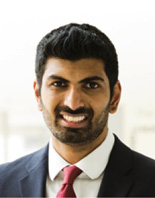
Achuta Kadambi

Dreams, Genes, & Machines: Are We Living Science Fiction?

Dr. Mary Helen Immordino-Yang
In Conversation With Dr. Achuta Kadambi
Thursday, July 30, 2020
01:02:37
Listen:
Episode Summary

In ALOUD’s first live program, we’ll explore the science of virtual learning. As schools around the country prepare for an online fall semester, hear from neuroscientist, psychologist, and former teacher Dr. Mary Helen Immordino-Yang about the educational implications for this generation of learners. Focusing on teenagers and their developing brains, Dr. Immordino-Yang will discuss how current events are impacting the ways teenagers think, feel, and process the world. This program is generously supported by the Alfred P. Sloan Foundation.


Participant(s) Bio

Mary Helen Immordino-Yang, EdD, studies the psychological and neurobiological bases of social emotion, self-awareness, and culture and their implications for learning, development, and schools. She is a Professor of Education at the USC Rossier School of Education, a Professor of Psychology at the Brain and Creativity Institute, a member of the Neuroscience Graduate Program Faculty at the University of Southern California, and Director of the USC Center for Affective Neuroscience, Development, Learning and Education (CANDLE).

Achuta Kadambi is an Assistant Professor of Electrical and Computer Engineering at UCLA. With applications to cyberphysical systems and digital health, his research has been recognized with best paper awards, fellowships, and the Lemelson-MIT student prize. His imaging research has resulted in 15t US patent filings, specifically for AI applications for autonomous cars. Kadambi received his Ph.D. From MIT.

Dreams, Genes, & Machines: Are We Living Science Fiction? Artificial Intelligence

Dr. Achuta Kadambi
In Conversation With Nellie Bowles
Thursday, November 21, 2019
1:00:13
Listen:
Episode Summary

What if search-and-rescue robots could sense survivors through dense smoke? What if surgical robots could perform impossible surgeries by seeing details invisible to a human doctor? At Dr. Achuta Kadambi’s UCLA lab, his team works to make these possibilities a reality. By symbiotically blending camera and algorithm designs, Kadambi gives the gift of sight to machines. With journalist Nellie Bowles, who covers tech and internet culture from San Francisco for the New York Times, Kadambi discusses how computational imaging has the potential to unleash an era of superhuman robotics.


Participant(s) Bio

Achuta Kadambi received a Ph.D. degree from MIT and joined UCLA as an Assistant Professor. His publications have been presented as Orals at CVPR, ICCV, ICCP, and SIGGRAPH. He is currently co-authoring a textbook (Computational Imaging, MIT Press 2021) and is also a co-founder of a robotic imaging startup. Achuta's research has received several recognitions, including the NSF Career Award, Forbes 30 under 30 (Science), Google Faculty Award, Sony Imaging Young Faculty Award, and Army Young Investigator Award (ARO-YIP).

Nellie Bowles is a domestic correspondent for the New York Times, focused on business and culture stories. She is writing a book of essays and posting a short one about religion online once a month or so. Prior to joining the Times, she was a correspondent for VICE News Tonight on HBO and a writer for the Guardian, Recode, and California Sunday.


Top