The Library will be closed on Thursday, December 25, 2025, in observance of Christmas.

Fiction/Literature

LAPL ID: 
1

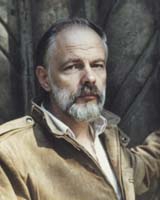
The Exegesis of Philip K. Dick
Moderated by David L. Ulin
Monday, November 14, 2011
01:15:07
Listen:
Episode Summary

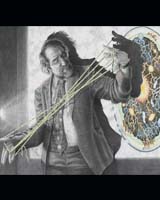
Philip K. Dick dedicated his life to questioning the nature of reality and perception, the malleability of space and time, and the relationship between the human and divine. Dick's two daughters and novelist Jonathan Lethem- Exegesis co-editor-serve as guides to exploring the magnificent final work of the author.


Participant(s) Bio

Philip K. Dick (1928-1982) published 36 science fiction novels and 121 short stories over a three decade writing career, in which he explored the essence of what makes man human and the dangers of centralized power. Toward the end of his life, his work turned to deeply personal, metaphysical questions concerning the nature of God. Eleven novels and short stories have been adapted to film, notably, Blade Runner (based on Do Androids Dream of Electric Sheep?), Total Recall, Minority Report, and A Scanner Darkly.

Jonathan Lethem is the critically acclaimed author of eight novels, including Motherless Brooklyn and his latest, Chronic City. He has published and spoken widely on Dick and is the editor of the Library of America editions of Dick's novels. His new book of essays, The Ecstasy of Influence: Nonfictions, Etc. is due out this fall.

David L. Ulin is a book critic for the Los Angeles Times. From 2005-2010 he served as the Times' book editor. He is the author of The Lost Art of Reading: Why Books Matter in a Distracted Time and The Myth of Solid Ground: Earthquakes, Prediction, and the Fault Line Between Reason and Faith, and the editor of Another City: Writing from Los Angeles and Writing Los Angeles: A Literary Anthology, which won a 2002 California Book Award. His essays and criticism are widely published.

Pamela Jackson is an independent scholar, editor, and archivist who holds degrees in Rhetoric and Library and Information Studies from the University of California Berkeley and Los Angeles, respectively. Her 1999 dissertation, The World Philip K. Dick Made, initiated a decade's study of Dick's Exegesis. She is also a graduate of Berkeley High School, Philip K. Dick's only alma mater.

Laura Leslie is the oldest of Philip K. Dick's three children and grew up in the small town of Pt. Reyes Station, California in the house that informed much of Dick's writing from 1960 - 1964 such as The Man in the High Castle, Martian Time Slip, and the Three Stigmata of Palmer Eldritch. She has been responsible for his estate since his death in 1982. She works closely with her sister, Isa Dick Hackett, to steward the legacy of their late father. She recently organized the manuscript material left by their late father and has created an extensive catalog. Ms. Leslie has worked in the information technology services industry for over two decades.

Isa Dick Hackett, daughter of Philip K. Dick, is co-founder along with her sister Laura Leslie and CEO of Electric Shepherd Productions, LLC, the company dedicated to the stewardship and adaptation of the Philip K. Dick library. Ms. Hackett served as an Executive Producer on Adjustment Bureau, based on Philip K. Dick's short story The Adjustment Team. She is also credited for her work on Richard Linklater's adaptation of A Scanner Darkly and for her guidance on and participation in the DVD special features for Blade Runner: The Final Cut, Minority Report and A Scanner Darkly.
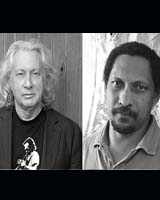

Two Novelists on Memory, Identity, and Place

Thursday, February 16, 2012
00:57:59
Listen:
Episode Summary
Percival Everett's Assumption, a baffling murder mystery and Steve Erickson's These Dreams of You, an enigmatic search for an adopted black daughter's past, both delve into race, the history of their characters, and the places they reside. From a hippie commune in Denver to a city in Ethiopia, these two acclaimed Los Angeles novelists go to great lengths in search of truth.

Participant(s) Bio
Percival Everett is the author of nearly twenty novels, three collections of short fiction, and two volumes of poetry. Among his novels are Assumption (2011), I Am Not Sidney Poitier (2009), The Water Cure (2008), Wounded, Glyph, Erasure, American Desert, For Her Dark Skin, Zulus, Cutting Lisa, Watershed, and God's Country. Swimming Swimmers Swimming is his newest collection of poems (2011). He is a Distinguished Professor of English at USC. He was awarded the 2002 Hurston/Wright Legacy Award for his novel Erasure (recently re-published), a satiric indictment of race and publishing in America.

Steve Erickson is the author of eight novels: Days Between Stations, Rubicon Beach, Tours of the Black Clock, Arc d'X, Amnesiascope, The Sea Came in at Midnight, Our Ecstatic Days and Zeroville. He also has written two books about American politics and popular culture, Leap Year and American Nomad. Over the years he has written for Esquire, Rolling Stone, Bookforum, Salon, the L.A. Weekly, the New York Times Magazine and other publications, and his work has been widely anthologized. Currently he's the film critic for Los Angeles magazine and editor of the literary journal Black Clock, published by the California Institute of the Arts where he teaches in the MFA Writing Program. He is the recipient of many awards.

Brighde Mullins is an award-winning playwright and poet. Her work includes Monkey in the Middle; Fire Eater and Pathological Venus. Current theatre projects include a commission by the Pioneer Theatre Company and a site-specific piece with the Imaginists Theatre at Ann Hamilton's Tower. She is currently the Director of the Master of Professional Writing Program at U.S.C and is a recipient of a 2010 United States Artists Fellowship in Literature.

Going Solo: The Extraordinary Rise and Surprising Appeal of Living Alone

In conversation with Laurie Winer
Tuesday, February 28, 2012
01:05:53
Listen:
Episode Summary
Independents unite! In a powerful assessment of an unprecedented social change, a renowned sociologist chronicles the biggest demographic shift since the baby boom: we thrive when we go it alone.

Participant(s) Bio
Eric Klinenberg is Professor of Sociology at New York University, and editor of the journal Public Culture. His first book, Heat Wave, won six scholarly and literary prizes, and was declared a "Favorite Book" by The Chicago Tribune. His articles have appeared in The New York Times Magazine, Rolling Stone, The London Review of Books, The Nation, The Washington Post, Mother Jones, The Guardian, Le Monde Diplomatique, and Slate, among other publications. He is also a frequent contributor to NPR's "This American Life."

Laurie Winer began her career writing for magazines and newspapers in New York, including stints as a theater critic for the New York Times and the Wall Street Journal, and as an editor at Harper's Bazaar. In 1994 she was named chief drama critic at the Los Angeles Times and served twice on the Pulitzer jury for drama. In 1998 she left the paper to write screenplays and freelance. She was West Coast editor for AARP Magazine and for More magazine and produced public panel discussion for AARP. Her pieces have appeared in The New York Times, Los Angeles Magazine, Mirabella, Vogue, Vanity Fair, Harpers, and other publications. She contributes regularly to the L.A. Times food section and Los Angeles magazine.

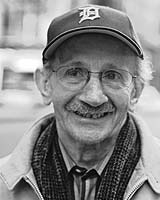
An Evening with Philip Levine, U.S. Poet Laureate

In conversation with Robert Casper
Thursday, February 23, 2012
01:13:11
Listen:
Episode Summary
The 18th Poet Laureate reads from his work and discusses life, literature, and his time in the Golden State.

Presented in collaboration with the California Center for the Book and the Center for the Book at the Library of Congress

Participant(s) Bio
Philip Levine is the author of 20 collections of poems, including most recently "News of the World". Levine won the 1995 Pulitzer Prize for "The Simple Truth," the National Book Award for "What Work Is", the National Book Critics Circle for both "Ashes: Poems New and Old," and "7 Years From Somewhere", and was a recipient of the Lenore Marshall Poetry Prize for "Names of the Lost." Levine taught for many years at California State University, Fresno, where he is professor emeritus in the English Department. In 1997 Levine was elected as a member of the American Academy of Arts and Letters, and he served as a Chancellor of the Academy of American Poets from 2000-2006.
When the Librarian of Congress, James H. Billington, announced the appointment of Philip Levine as the 18th Poet Laureate, he said, "Philip Levine is one of America's great narrative poets," adding "his plainspoken lyricism has, for half a century, championed the art of telling "The Simple Truth"- about working in a Detroit auto factory, as he has, and about the hard work we do to make sense of our lives."
The Poetry and Literature Center at the Library of Congress fosters and enhances the public's appreciation of literature. The center administers the endowed poetry chair (the U.S. Poet Laureate), and coordinates an annual literary season of poetry, fiction and drama readings, performances, lectures and symposia, sponsored by the Library's Gertrude Clarke Whittall Poetry and Literature Fund and the Huntington Fund.

Robert Casper is Head of the Poetry and Literature Center at the Library of Congress. He previously worked as Programs Director for the Poetry Society of America and as Membership Director for the Council of Literary Magazines and Presses, and served as Poetry Committee Chair for the Brooklyn Borough President's Literary Council. Casper is Founder of the literary magazine jubilat and Co-Founder of the jubilat/Jones Reading Series in Amherst, MA, and he lives in Brooklyn, NY and Washington, DC.

From Exile to Home: Los Angeles Literary Life 1945 to 1980

In conversation with David L. Ulin
Tuesday, February 21, 2012
01:13:07
Listen:
Episode Summary
In the years since World War II, the literature of Los Angeles, like much about the city, has shifted, becoming less a literature of exile than one of place. Weschler- one of our foremost practitioners of literary nonfiction discusses this definitive period in Los Angeles' literary life.

Part of Pacific Standard Time, Art in LA 1945-1980

Participant(s) Bio
Lawrence Weschler, native of Los Angeles, is commonly regarded as one of the foremost practioners of literary nonfiction. His essays long appeared in the New Yorker, and one of his most recent books, Everything That Rises, out of McSweeney's, was celebrated with the National Book Critics Circle Award for Criticism. Weschler's latest collection, Uncanny Valley: Adventures in the Narrative, a companion to the earlier Vermeer in Bosnia, continues the author's distinctive blending of political and cultural themes. He currently directs the New York Institute for the Humanities at NYU.

David L. Ulin is a book critic for the Los Angeles Times. From 2005-2010 he served as the Times' book editor. He is the author of The Lost Art of Reading: Why Books Matter in a Distracted Time and The Myth of Solid Ground: Earthquakes, Prediction, and the Fault Line Between Reason and Faith, and the editor of Another City: Writing from Los Angeles and Writing Los Angeles: A Literary Anthology, which won a 2002 California Book Award. His essays and criticism are widely published.

An Odyssey Through Love, Addiction, Revolutions, and Healing

Tuesday, January 17, 2012
01:11:37
Listen:
Episode Summary

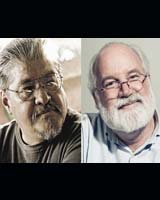
Acclaimed journalist and poet Luis J. Rodríguez, who chronicled his harrowing journey from gang member to a revered figure of Chicano literature, discusses the struggles of post-gang life with Father Gregory Boyle, the founder of Homeboy Industries and author of a bestselling memoir.


Participant(s) Bio

Luis J. Rodríguez, the son of Mexican immigrants, began writing in his early teens and has won national recognition as a poet, journalist, fiction writer, children's book writer, and critic. His memoir, Always Running La Vida Loca, Gang Days in L.A. earned a Carl Sandburg Literary Award, was designated a New York Times Notable Book and has been named by the American Library Association as one of the nation's 100 most censored books. Rodriguez co-founded Tia Chucha Press and Tia Chucha's Centro Cultural & Bookstore, a cultural center in Northeast San Fernando Valley. He is currently working as a peacemaker among gangs on a national and international level.

Father Gregory Boyle was ordained a Jesuit priest in 1982. Since 1986, Father Gregory has been the pastor of Dolores Mission in Boyle Heights, sited between two large public housing projects. In 1988, Father Gregory began what would become Homeboy Industries, now located in downtown Los Angeles. Since Father Greg started Homeboy Industries nearly twenty years ago, it has served members of more than half of the gangs in Los Angeles. Fr. Greg is the recipient of numerous awards, including the California Peace Prize, the Irvine Leadership Award and an honorary Doctorate of Humane Letters from Occidental College. His bestselling memoir, Tattoos on the Heart, has been honored by PEN USA as the 2011 Best Creative Nonfiction Book of the Year.


The Barbarian Nurseries: A Novel

In conversation with Jesse Katz
Thursday, January 26, 2012
01:12:27
Listen:
Episode Summary

A live-in maid in the conflicted Torres-Thompson household is accused of kidnapping the family's children, when in fact, she is taking them by bus from Orange Co. to L.A. to find refuge with their grandfather. An authentic rendering of social and class divides from a Pulitzer Prize-winning journalist, Tobar's brilliant novel redefines Southern California in the 21st century.


Participant(s) Bio

Héctor Tobar has worked as a journalist for the Los Angeles Times for nearly twenty years. He shared a Pulitzer Prize for the paper's coverage of the 1992 riots, and then served as the national Latino Affairs correspondent, the Buenos Aires bureau chief, and the Mexico City bureau chief. He currently writes a weekly column for the paper and is the author of three books, Translation Nation, The Tattooed Soldier, and, most recently, The Barbarian Nurseries. The son of Guatemalan immigrants, he is a native of the city of Los Angeles, where he lives with his wife and three children.

Jesse Katz is the author of The Opposite Field, a memoir set in the immigrant suburb of Monterey Park. As a staff writer at the Los Angeles Times, Jesse shared in two Pulitzer Prizes­-for coverage of the 1994 Northridge earthquake and the 1992 L.A. riots-and was named a Pulitzer finalist for his stories about street gangs. As a senior editor at Los Angeles magazine, he received the PEN Center USA's award for literary journalism. Jesse teaches literary journalism at the University of California, Irvine, and has mentored incarcerated teenagers as a volunteer with InsideOut Writers.


Ayad Akhtar and Amy Waldman: Two Novelists on The Lives of American Muslims Before and After 9/11

Wednesday, January 18, 2012
01:14:33
Listen:
Episode Summary
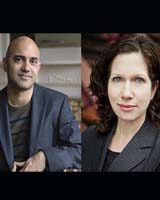
Akhtar's American Dervish and Waldman's The Submission, both explore the lives of American Muslims, one in pre-9/11 suburbia and the other in post-9/11 Manhattan. In Akhtar's family drama, a father and son are fractured by their understandings of Islam. In Waldman's story, a city is outraged when a Muslim architect wins a blind competition to design the 9/11 Memorial. Following the conflicts within and between religions, these two brilliant debut novels grapple with identity, community, and a country in crisis.

Participant(s) Bio
Ayad Akhtar grew up in Milwaukee. He holds degrees in theater from Brown University and in directing from the graduate film program at Columbia University, where he won multiple awards for his work. He is the author of numerous screenplays and was star and co-writer of The War Within, nominated for an Independent Spirit Award for Best Screenplay. He was a featured actor -playing former TARP overseer Neel Kashkari- in the recent HBO adaptation of Andrew Ross Sorkin's Too Big to Fail.

Amy Waldman was co-chief of the South Asia bureau of The New York Times and a national correspondent for The Atlantic. She has been a fellow at the Radcliffe Institute for Advanced Study and at the American Academy in Berlin. Her fiction has appeared in the Boston Review and is anthologized in The Best American Nonrequired Reading 2010. She was born in Los Angeles, studied English at Yale, and now lives in Brooklyn.

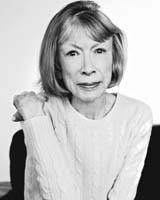
An Evening with Joan Didion

In conversation with David L. Ulin
Wednesday, November 16, 2011
01:12:45
Listen:
Episode Summary
A literary icon for Los Angeles and a cultural visionary for the rest of America, the acclaimed author of The White Album, The Year of Magical Thinking, and most recently, Blue Nights, discusses her current work and life in Los Angeles in the 60s.

Part of Pacific Standard Time: Art in LA 1945-1980

Participant(s) Bio
California-born novelist and essayist, Joan Didion's work explores disorder and personal and social unrest. Her novels include Play It as It Lays, A Book of Common Prayer, Democracy, and The Last Thing He Wanted. Her essay collections Slouching Towards Bethlehem and The White Album are perceptive, clear-eyed analyses of American culture. With her husband, John Gregory Dunne, she wrote a number of screenplays, including A Star Is Born. Her later works of nonfiction include Political Fictions, Where I Was From, The Year of Magical Thinking, and the most recent Blue Nights.

David L. Ulin is a book critic for the Los Angeles Times. From 2005-2010 he served as the Times' book editor. He is the author of The Lost Art of Reading: Why Books Matter in a Distracted Time and The Myth of Solid Ground: Earthquakes, Prediction, and the Fault Line Between Reason and Faith,, and the editor of Another City: Writing from Los Angeles and Writing Los Angeles: A Literary Anthology, which won a 2002 California Book Award. His essays and criticism are widely published.

Hollywood Left and Right

Moderated by Ella Taylor
Wednesday, November 2, 2011
01:15:35
Listen:
Episode Summary
From Chaplin to Schwarzenegger, movie stars have played a leading role in shaping the course of American politics. Join us for a conversation about how Hollywood has evolved into a vital center for American political life.

Participant(s) Bio
Steven J. Ross is Professor of History at the University of Southern California. Ross has written extensively in the areas of film and social history. He is the author of Movies and American Society and Workers On the Edge: Work, Leisure, and Politics in Industrializing Cincinnati, 1788-1890. His book, Working-Class Hollywood: Silent Film and the Shaping of Class in America was named by the Los Angeles Times as one of the Best Books of 1998. Ross' book, Hollywood Left and Right: How Movie Stars Shaped American Politics, received the Academy of Motion Picture Arts and Sciences' Film Scholars Award-the academic equivalent of an Oscar.

Mike Farrell, best known for his eight years on M*A*S*H and five seasons on Providence, is also a writer, director and producer. Beyond his work in the entertainment industry, Farrell has traveled the world for the last 30 years as part of prominent international human rights and peace delegations. He helped establish the California Committee of Human Rights Watch, and his opposition to the war in Iraq resulted in his co-founding Artists United to Win Without War. He is currently involved in an international effort in support of a worldwide moratorium on the death penalty. Farrell is the author of two books: Just Call Me Mike: A Journey to Actor and Activist, and Of Mule and Man.

Roger L. Simon, local author of ten novels and and seven screenplays, including the prize-winning Moses Wine detective series and Enemies: A Love Story, for which he was nominated for an Academy Award. Simon served on the faculty of the American Film Institute, Sundance Institute, and was president of the West Coast branch of PEN. In 2009, he published his first non-fiction book - Blacklisting Myself: Memoir of a Hollywood Apostate in the Age of Terror. It was republished in 2011 as Turning Right at Hollywood and Vine: The Perils of Coming Out Conservative in Hollywood.

Ella Taylor is a free-lance film critic, book reviewer and feature writer. She is the author of Prime Time Families: Television Culture in Post-War America and was a regular contributor to KPCC-Los Angeles' weekly film-review show FilmWeek. Taylor taught media studies at the University of Washington in Seattle, and is now based in Los Angeles.

Pages

Top