The Library will be closed on Sunday, April 5, 2026, in observance of Easter.

Essay/Memoir

LAPL ID: 
11

Fomenting Democracy: From Poland's Solidarity to Egypt's Tahrir Square

Adam Michnik and Yasmine El Rashidi
In Conversation With Mike Shuster
Tuesday, October 21, 2014
01:09:14
Listen:
Episode Summary

Co-presented with the Consulate General of Poland.

It’s been twenty-five years since the ultimate victory of the Solidarity movement in Poland, a revolution that ultimately led to the fall of communism. Adam Michnik, a Solidarity activist jailed by the Polish communist regime for his dissident activities, and now among Poland’s most prominent public figures, discusses the legacy of that revolution with Yasmine El Rashidi, a young intrepid Cairo-based journalist whose essays and articles on the (unfinished) Egyptian revolution were nominated for an Amnesty International Media Award. Can a velvet revolution offer any useful lessons to a bloody one?


Participant(s) Bio

Adam Michnik is the founder and editor-in-chief of Gazeta Wyborcza, a daily often referred to as "The New York Times of Eastern Europe." He is among Poland’s most prominent public figures, with a distinctive voice dedicated to dialogue, tolerance, and freedom. He spent a total of six years in prison between 1965 and 1986, detained by the Communist Polish regime for his dissident activities as a prominent "Solidarity" activist. In 1989, he participated in the Round Table Talks, which resulted in Poland’s nonviolent transition to democracy, and he served as a deputy in Poland’s first non-communist parliament (1989-1991). He is the author of several books and countless essays, analyses, and interviews. His four books in English include: Letters from Prison (1987); The Church and the Left (1993); Letters from Freedom ( 1998); In Search of Lost Meaning ( 2011); and The Trouble with History (2013). Among his many honors are the Robert F. Kennedy Human Rights Award and the Order of the White Eagle –the highest distinction attainable in Poland. He regularly travels throughout the world, giving lectures on democracy, totalitarianism, and the paradoxes and dilemmas of contemporary politics. He lives in Warsaw.

Yasmine El Rashidi is an Egyptian writer. She is a regular contributor to the New York Review of Books and a contributing editor to the Middle East arts journal Bidoun. A collection of her writings on the Egyptian revolution, The Battle for Egypt, was published in 2011, and her essays feature in the anthologies Diaries of an Unfinished Revolution, Best American Nonrequired Reading, and The New York Review Abroad: Fifty Years of International Reportage. Her writing on the revolution was nominated for an Amnesty International Media Award, and she was a 2013 Hodder Fellow at Princeton University's Lewis Centre for the Arts. She lives in Cairo.

Mike Shuster is an award-winning diplomatic correspondent and former roving foreign correspondent for NPR News. In recent years, Shuster has helped shape NPR’s extensive coverage of the Middle East as one of the leading reporters to cover this region—from Iraq to Iran and Israel. His 2007 week-long series The Partisans of Ali explored the history of Shi'ite faith and politics, providing a rare, comprehensive look at the complexities of the Islamic religion and its impact on the Western world. He is the recipient of numerous awards for his reporting, including an Overseas Press Club Lowell Thomas Award. He was NPR's senior Moscow correspondent in the early 1990s when he covered the collapse of the Soviet Union and a wide range of political, economic, and social issues in Russia and the other independent states of the former Soviet Union.
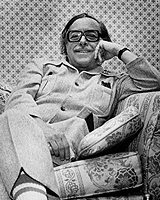

Tennessee Williams: Mad Pilgrimage of the Flesh

John Lahr
In Conversation With Author Armistead Maupin
Tuesday, October 7, 2014
01:07:58
Listen:
Episode Summary

In his thrilling new biography, Lahr—longtime New Yorker theater critic--gives intimate access to the life and mind of Williams- shedding new light on his warring family, his lobotomized sister, his sexuality, and his misreported death. In the sensational saga of Williams’ rise and fall, Lahr captures his tempestuous public persona and backstage life where Marlon Brando, Elia Kazan and others had scintillating walk-on parts. Maupin joins Lahr for a fascinating conversation about one of the most brilliant playwrights of his century, whose plays reshaped the American theater and the nation’s sense of itself.


Participant(s) Bio

John Lahr, the author of twenty books, was senior drama critic of The New Yorker for over two decades. Among his books are Notes On a Cowardly Lion: The Biography of Bert Lahr; Dame Edna Everage: Backstage with Barry Humphries; and Prick Up Your Ears: The Biography of Joe Orton, which was made into a film. He has twice won the George Jean Nathan Award for Dramatic Criticism and has twice been included in volumes of Best American Essays. His stage adaptations have been performed around the world. Lahr is the first critic ever to win a Tony Award for co-authoring the 2002 Elaine Stritch at Liberty. He divides his time between London and New York.

Armistead Maupin is the author of the Tales of the City series, of which The Days of Anna Madrigal is the ninth book and which includes: Tales of the City, More Tales of the City, Further Tales of the City, Babycakes, Significant Others, Sure of You, Michael Tolliver Lives, and Mary Ann in Autumn. Maupin is also the author of Maybe the Moon and The Night Listener (made into a feature film starring Robin Williams). Maupin lives in San Francisco and Santa Fe.


Documenting Indigenous Stories Through Film: An Alternative Lens

Lourdes Grobet and Julianna Brannum
In conversation with filmmaker Yolanda Cruz
Tuesday, September 30, 2014
00:58:24
Listen:
Episode Summary

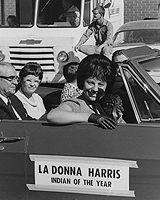
Two filmmakers share and discuss excerpts from their new documentaries that illuminate indigenous stories rarely seen on film. Bering: Balance and Resistance, by Lourdes Grobet—one of Mexico’s most renowned photographers—lyrically reflects on an Inuit community’s search for new values while struggling to reconcile the past. In Indian 101, filmmaker Julianna Brannum focuses on lessons taught by her great aunt LaDonna Harris, the Comanche activist who helped negotiate the return of sacred ground to the Taos Pueblo Indians. Far apart geographically, these two communities are irrevocably linked as they navigate their contemporary history.


Participant(s) Bio

Lourdes Grobet, a contemporary photographer, is best known for her photographs of Mexican Lucha libre wrestlers. Her work has been exhibited widely in more than a hundred individual and joint exhibitions, including MoMA in New York and San Francisco and festivals such as PhotoEspaña in Madrid. Among her many published books are Lourdes Grobet: LuchaLibre, Espectacular de LuchaLibre, and Luchalibremexicana. Among her other projects are: Paisajespintados, Teatrocampesino, Strip Tease. Bering: Balance and Resistance (2013) is her first documentary film, inspired by a photographic exhibition of the same name she authored in 2009. Groubet lives in Mexico.

Julianna Brannum is a documentary filmmaker based in Austin, TX. Her first film, The Creek Runs Red, aired in 2007 on PBS’s national prime-time series, Independent Lens. In early 2008, she co-produced a feature-length documentary with Emmy Award-winning producer Stanley Nelson for PBS’s We Shall Remain – a 5-part series on Native American history. Brannum was a 2007 Sundance Institute/Ford Foundation Fellow and has been awarded many grants and fellowships for her latest documentary LaDonna Harris: Indian 101. She is a member of the Quahada band of the Comanche Nation of Oklahoma.

Yolanda Cruz is a filmmaker from Oaxaca, Mexico. She is a 2011 Sundance Screenwriting and Directing Lab Fellow, whose first feature script, La Raya, will be produced by Canana Films in 2015. Her work has been screened at venues such as the Sundance Film Festival, the Guggenheim Museum in New York, Park la Villette in Paris, the Smithsonian National Museum of the American Indian, and the National Institute of Cinema in Mexico City. She holds an MFA from the UCLA School of Theater, Film, and Television. Cruz is also an alumna of the Sundance Institute Native Lab.


Through Trying Times: Stories of Loss and Redemption in the American South

Charles M. Blow and Jesmyn Ward
In Conversation With Robin Coste Lewis
Thursday, September 25, 2014
01:10:40
Listen:
Episode Summary

New York Times columnist Charles M. Blow grew up in an out-of-time African-American Louisiana town where slavery’s legacy felt astonishingly close, reverberating in the elders’ stories and the near-constant wash of violence. Award-winning author Jesmyn Ward writes powerfully about the poverty of her Mississippi childhood and the pressures it brought on men and women, revealing disadvantages that bred a certain kind of tragedy. In this conversation, two accomplished storytellers take the stage to discuss their memoirs that pay homage to the troubled past of the South with emotional honesty and moments of stark poetry.


Participant(s) Bio

Charles M. Blow has been the visual Op-Ed columnist at the New York Times since 2008, is a CNN commentator and has appeared on MSNBC, CNN, Fox News, the BBC, Al Jazeera, and HBO. Prior to working at The Times, he was Art Director of National Geographic Magazine, and a graphic artist at The Detroit News. Blow lives in Brooklyn with his three children.

Jesmyn Ward is currently an associate professor of creative writing at Tulane University. She is the author of the novels Where the Line Bleeds and Salvage the Bones, the latter of which won the 2011 National Book Award and was a finalist for the New York Public Library Young Lions Fiction Award and the Dayton Literary Peace Prize. Her memoir, Men We Reaped, was a finalist for the National Book Critics Circle Award. Ward grew up in DeLisle, Mississippi, and lives there now.

Robin Coste Lewis is a Provost’s Fellow in Poetry and Visual Studies at USC. A Cave Canem fellow, she received her MFA from NYU and an MTS in Sanskrit from Harvard's Divinity School. A finalist for the International War Poetry Prize, the National Rita Dove Prize, and the Discovery Prize, her work has appeared in various journals and anthologies. Born in Compton, her family is from New Orleans. Her book of poems, Voyage of the Sable Venus, is forthcoming from Knopf.


A Chinaman's Chance: One Family's Journey and the Chinese American Dream

Eric Liu
In conversation with Gregory Rodriguez
Wednesday, July 30, 2014
01:17:52
Listen:
Episode Summary

Weaving history, journalism, and memoir, the author of The Accidental Asian and founder of Citizen University explores the parallel rise of China and the Chinese American—how Chinese immigrants have exceled despite racism and xenophobia, and how they reconcile competing beliefs about what constitutes success, virtue, and belonging in a time of deep flux. From Confucius to the Constitution, Liu discusses his new collection of personal essays that provide insight into the evolving Chinese American dream.


Participant(s) Bio

Eric Liu is an author, educator, and civic entrepreneur. His first book, The Accidental Asian: Notes of a Native Speaker, was a New York Times Notable Book featured in the PBS documentary Matters of Race. He is also the author of Guiding Lights, an Official Book of National Mentoring Month, and co-author of the bestselling Gardens of Democracy. Eric served as a White House speechwriter for President Bill Clinton and later as the President's deputy domestic policy adviser. He is a columnist for TIME.com and a regular contributor to TheAtlantic.com and lives in Seattle with his family.

Gregory Rodriguez is the Publisher & Executive Director of Zócalo Public Square, a nonprofit Los Angeles-based Ideas Exchange that blends live events and humanities journalism. He is also the founder and director of the Center for Social Cohesion at Arizona State University. Formerly a longtime op-ed columnist for the Los Angeles Times, Rodriguez has written for publications including The New York Times, The Wall Street Journal, The Economist, Time, and The Atlantic. He is the author of Mongrels, Bastards, Orphans, and Vagabonds: Mexican Immigration and the Future of Race in America, one of the Washington Post's Best Books of 2007, and is currently at work on a new book on the American cult of hope.


The Interior Circuit: A Mexico City Chronicle

Francisco Goldman
In conversation with Rubén Martínez
Thursday, July 17, 2014
01:11:58
Listen:
Episode Summary

In a follow-up to his masterful Say Her Name, The Interior Circuit is Goldman’s emergence from the grief of his wife’s death as he embraces Mexico’s capital as his home—a city which stands defiantly apart from so many of the social ills and violence wracking Mexico. Yet as the narco war rages on and with the restoration to power of the Institutional Revolutionary Party, Mexico City’s special apartness seems threatened. In setting out to understand the menacing challenges the city now faces, Goldman delivers a poetic and philosophical chronicle that explores a remarkable and often misunderstood metropolis.


Participant(s) Bio

Francisco Goldman is the author of Say Her Name- winner of the Prix Femina Etranger and four other books. He has been a Guggenheim Fellow, a Cullman Center Fellow at the NY Public Library, and a Berlin Fellow at the American Academy, among other awards and honors. His work has appeared in The New Yorker, Harper's, The Believer, and numerous other publications. Every year he teaches one semester at Trinity College in Hartford, Connecticut, and then hightails it back to Mexico City.

Rubén Martínez, an Emmy-winning journalist and poet, is the author of several books, including Crossing Over: A Mexican Family on the Migrant Trail and The New Americans. His most recent book is Desert America: Boom and Bust in the New Old West. He holds the Fletcher Jones Chair in Literature and Writing at Loyola Marymount University.


Dear ONE: Love & Longing in Mid-Century Queer America

A Dramatic Reading Adapted and Directed by Zsa Zsa Gershick
Performed by Dalila Ali Rajah, Zsa Zsa Gershick, Hunter Lee Hughes, Paul Jacek, and Beverly Mickins; Q&A With Letters to ONE Editor Craig M. Loftin
Saturday, June 28, 2014
01:13:26
Listen:
Episode Summary

“Dear ONE,” illuminates the lives of ordinary queer Americans as recounted through letters written between 1953 and 1967, to L.A.’s ONE Magazine, the first openly gay and lesbian periodical in the United States. Looking for love, friendship, advice or understanding, readers wrote of loneliness and longing, of joy and fulfillment, and of their daily lives, hidden from history. This dramatic reading is adapted and directed by Zsa Zsa Gershick from material from ONE National Gay & Lesbian Archives at USC.


Participant(s) Bio

Dalila Ali Rajah is an actress, published poet, dancer, spoken-word artist, and filmmaker. As co-creator, executive producer, and co-host of the successful late-night talk show, Cherry Bomb!, she helped guide the show from its beginnings on the Web to television on Canada’s OutTV. Her most recent project, Secrets & Toys, which she wrote, produced, and stars in, is currently on the festival circuit.

Zsa Zsa Gershick is the writer/director of the award-winning short film Door Prize, which has screened at more than 100 film festivals worldwide; the author of the plays Coming Attractions and Bluebonnet Court (winner of the GLAAD Award for Outstanding Los Angeles Theatre); and the books Gay Old Girls and Secret Service: Untold Stories of Lesbians in the Military. She is a Dramatists Guild member and a USC alumnus.

Hunter Lee Hughes began acting at age 12 in his hometown of Houston. Roles include ‘Bobby’ in the 25th-anniversary production of Thomas Babe’s A Prayer for my Daughter (directed by Dorothy Lyman), ‘Frank Colby’ in the television pilot Project: X (directed by Starling Price) and, most recently, the lead role of ‘Evan’ in the film Narcissist (directed by Eric Casaccio). Hunter has appeared in a number of projects for Fatelink Productions, which he founded, including Fate of the Monarchs, The Sermons of John Bradley, Winner Takes All, and the upcoming feature film, Guys Reading Poems.

Teacher, author, actor, and stand-up comic Paul Jacek received his theater training at the American Academy of Dramatic Arts/West. A regular at the World Famous Comedy Store, he headlines nationwide and has been profiled in The New Yorker and in Edge magazine. He has written for and with Joan Rivers, Jack Burns, and Carl Reiner and is honored to be involved with Dear ONE.

Craig M. Loftin is the author of Masked Voices: Gay Men and Lesbians in Cold War America and the editor of Letters to ONE: Gay and Lesbian Voices in the 1950s and 1960s. He has a Ph.D. in History from the University of Southern California and currently teaches in the American Studies Department at Cal State Fullerton.

Beverly Mickins is an actor, writer, storyteller and singer. She has appeared onstage in New York and Los Angeles and was featured on Thirtysomething and Judging Amy. She is the creator and founder of L.A.’s longest-running storytelling venue Story Salon, for which she earned a Women in Theater Award. Featured on KABC and KNBC, Story Salon recently published The Story Salon Big Book of Stories, a compilation of 40 original stories. Beverly wrote and performed her successful solo show The Driving Piece and started the popular Party Pack series, which combines singing and storytelling. She can be heard regularly on Story Salon podcasts at www.StorySalon.com.


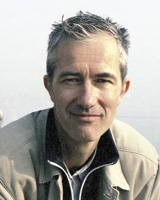
How I Turned into the Writer I Am Not

Geoff Dyer
In conversation with Howard A. Rodman, Professor of Screenwriting, USC School of Cinematic Arts
Thursday, June 26, 2014
01:09:47
Listen:
Episode Summary

The work of British writer Geoff Dyer is frequently classified as “unclassifiable;” his writing is wildly eclectic yet gorgeously coherent. His new book, Another Great Day at Sea—about life on an American aircraft carrier—is at the same time a travelogue, unerring social observation, and honed comedy. Zona, his meditation on the film Stalker, by Russian director Andrei Tarkovsky, was supposed to be a book about tennis; his book about D.H. Lawrence, Out of Sheer Rage, is essentially about not writing a book about D.H. Lawrence; and Yoga for People Who Can’t Be Bothered to Do It is definitely not a self-help book. Rodman and Dyer will attempt to account for the “singular restlessness” of Dyer’s writing while happily digressing on other subjects.


Participant(s) Bio

Geoff Dyer is the author of four novels, a critical study of John Berger, and a collection of essays titled Otherwise Known as the Human Condition. Hi has authored six highly original nonfiction books, including the recent Zona and But Beautiful, awarded the Somerset Maugham Prize, and Out of Sheer Rage, a National Book Critics Circle Award finalist.

Howard A. Rodman is a professor of screenwriting at USC's School of Cinematic Arts, Vice President of the Writers Guild of America, West, and has served as Artistic Director of the Sundance Screenwriting Labs. He wrote the screenplays for the films Savage Grace, August, and Joe Gould’s Secret. Rodman is on the executive committee of the Writers Branch of the Academy of Motion Picture Arts & Sciences and is a Fellow of the Los Angeles Institute of the Humanities.


Sentence After Sentence After Sentence: Three Writers on the Not-Exactly-Random Extraordinary Ordinary Key of Life

Anne Germanacos, Dinah Lenney, Matias Viegener
Moderated by Novelist Jim Krusoe
Tuesday, May 20, 2014
01:17:20
Listen:
Episode Summary

Form is an Extension of Content, wrote Charles Olson. What is a writer’s relationship to form? Three accomplished, innovative and genre-crossing writers explore the power and influence of structure, starting with the sentence, in revealing and shaping their material.


Participant(s) Bio

Anne Germanacos is the author of the short-story collection In the Time of the Girls by BOA Editions. Together with her husband, Nick Germanacos, she ran the Ithaka Cultural Studies Program on the islands of Kalymnos and Crete. She now runs the Germanacos Foundation in San Francisco.

Dinah Lenney wrote Bigger than Life: A Murder, a Memoir, published in Tobias Wolff’s American Lives Series at the University of Nebraska Press, and co-authored Acting for Young Actors. A longtime actor herself, she’s appeared on stage, in movies, and in countless episodes of primetime television. Her prose has been published in many journals and anthologies. A graduate of Yale and the Neighborhood Playhouse, Dinah serves as core faculty in the Master of Professional Writing Program at USC and in the Bennington Writing Seminars, where she earned her MFA. Her new memoir is The Object Parade.

Matias Viegener is an artist, author, and critic who teaches at CalArts. He is one of the members of the art collective Fallen Fruit, which has exhibited internationally in Mexico, Colombia, Denmark, Austria (Ars Electronica), LACMA, the Yerba Buena Center for the Arts, and ARCO 2010 in Madrid. He writes regularly on art for X-tra and ArtUS, has recently published in Cabinet, Journal of Aesthetics & Protest, Radical History Review, and Black Clock, and is the co-editor of Séance in Experimental Writing The Noulipian Analects. His book 2500 Random Things About Me Too was published in 2012 by Les Figues Press.

Jim Krusoe has published five novels and two books of stories,Blood Lake and Abductions. His first novel, Iceland, was published by Dalkey Archive Press in 2002. Since then, Tin House Books has published Girl Factory, Erased, Toward You, and Parsifal. Jim teaches writing at Santa Monica College as well as in Antioch's MFA Creative Writing Program. He has also published five books of poems.


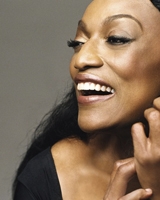
Stand Up Straight and Sing!

Jessye Norman
In Conversation With Deborah Borda
Thursday, May 15, 2014
00:54:52
Listen:
Episode Summary

On the occasion of her new memoir, one of America’s most beloved and accomplished classical singers shares her life story: a descendant of generations of hardworking slaves and free ancestors who grew up amid the challenges of Jim Crow racism in the south as the civil rights movement was at its nascence. Nurtured by a close family and a tight-knit community centered on the local church, Jessye Norman grew up singing songs and spirituals within a tight-knit community. Decades later, after a meteoric rise at the Berlin Opera, a debut at the Metropolitan Opera, and forays into blues, jazz, and other roots music, she has become one of America’s cultural treasures. Join us for an evening with an inspiring artist who has lead an astonishing life.


Participant(s) Bio

Jessye Norman is one of America's greatest and most accomplished classical singers, with five Grammy Awards, dozens of international prizes, and a Kennedy Center Honor (its youngest-ever recipient) among her countless awards. She was born in segregated Augusta, Georgia, during the Jim Crow era and was inspired by singer Marian Anderson and by her loving and supportive parents, who insisted that all four of their children live up to the highest possible standards. She pursued music at Howard University and the University of Michigan and achieved early success with a contract from the Berlin Opera. Her career since then has reached from the stage of the Metropolitan Opera to concerts in honor of the Dalai Lama, the bicentennial of the French Republic, as well as multi-media presentations of American roots music.

Prior to becoming President and CEO of the Los Angeles Philharmonic in 2000, Deborah Borda was Executive Director at the New York Philharmonic and General Manager of the San Francisco Symphony. Under Borda’s leadership, the orchestra is building new bridges to the community, among them the educational initiative YOLA. As Executive Producer, Borda implemented LA Phil LIVE concert transmissions to more than 500 movie theaters. Most recently, Borda launched Take A Stand, a bi-coastal partnership with the Longy School of Music and Bard College which supports social change through music.


Pages

Top