The Library will be closed on Sunday, April 5, 2026, in observance of Easter.

Current Events

LAPL ID: 
13

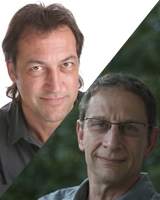
Unveiling North Korea With Fact and Fiction
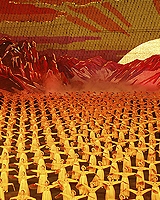
Adam Johnson and Blaine Harden
A Conversation
Monday, March 23, 2015
01:13:51
Listen:
Episode Summary

Coming together for the first time on stage, Pulitzer Prize-winning novelist Adam Johnson and bestselling nonfiction author Blaine Harden explore how their different paths of storytelling led them to similar truths about illusive North Korea. Join Johnson, author of the spellbinding novel The Orphan Master’s Son, and Harden, author of the new historical exposé The Great Leader and the Fighter Pilot: The True Story of the Tyrant Who Created North Korea and the Young Lieutenant Who Stole His Way to Freedom, for a fascinating discussion about the world’s longest-lasting totalitarian regime.


Participant(s) Bio

Adam Johnson teaches creative writing at Stanford University, where he founded the Stanford Graphic Novel Project. He is the author of the novel The Orphan Master’s Son, set in North Korea, which was awarded the 2012 Pulitzer Prize in Fiction. His work has appeared in Esquire, The Paris Review, Harper’s, Tin House, Granta, and Playboy, as well as The Best American Short Stories. His other works include Emporium, a short-story collection, and the novel Parasites Like Us. He lives in San Francisco.

Blaine Harden is the author of Africa: Dispatches from a Fragile Continent A River Lost: The Life and Death of the Columbia and Escape from Camp 14: One Man’s Remarkable Odyssey from North Korea to Freedom in the West. Africa won a PEN American Center citation for the first book of nonfiction. Escape from Camp 14 was both a New York Times and an international bestseller published in twenty-seven languages. Harden formerly served as The Washington Post’s bureau chief in East Asia, Eastern Europe, and Africa. He lives in Seattle.
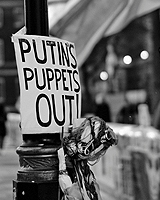
The War in Ukraine: Propaganda and Reality

Timothy D. Snyder and Masha Gessen
In conversation with Justinian Jampol
Tuesday, March 10, 2015
01:25:32
Listen:
Episode Summary

A year ago, Russia invaded Ukraine, destroying a peaceful order in Europe and placing its own regime at risk. We in the West have experienced this historical turning point through a haze of propaganda. According to Snyder, the Kremlin was perhaps wrong about the political weakness of Ukraine but likely right about some intellectual weaknesses of Americans and Europeans. When will the war end? This rare pairing of two essential thinkers on Eastern European politics offers a revelatory look at why what happens in Ukraine is of significant international importance.


Participant(s) Bio

Timothy Snyder is the Bird White Housum Professor of History at Yale University. He is the author of five award-winning books. His 2010 book, Bloodlands: Europe Between Hitler and Stalin, was selected as the best book of the year by The Economist, The New Republic, and The Guardian and received a number of honors, including the Leipzig Prize for European Understanding and the Ralph Waldo Emerson Award in the Humanities.

Masha Gessen is a Russian-American journalist and the author of seven books, including the international bestseller The Man Without a Face: The Unlikely Rise of Vladimir Putin and, most recently, The Brothers: The Road to an American Tragedy, to be published in April. She writes regularly for The New York Times, The Washington Post, The New York Review of Books, Vanity Fair, and other publications. She was born in Moscow, educated in the United States, and spent most of her adult life in Russia before immigrating to America again just over a year ago.

Justinian Jampol is Founder and Executive Director of the Wende Museum. His work focuses on visual cultural studies and the connection between contemporary art and Cold War iconography. The curator of several exhibitions, Jampol has also produced two documentary films on the Cold War, as well as urban art programs, including The Wall Project. His work has been featured in The Atlantic, Frankfurter Allgemeine Zeitung, andThe New York Times. He is the author of Beyond the Wall: Art and Artifacts from the GDR, published by Taschen in December 2014.


Ghettoside: A True Story of Murder in America

Jill Leovy
In Conversation With Warren Olney, Radio Host, "To the Point" and "Which Way L.A." on KCRW 89.9 FM
Thursday, February 5, 2015
01:11:15
Listen:
Episode Summary

Ghettoside tells the kaleidoscopic story of one American murder—one young black man slaying another—and a driven crew of detectives whose creed is to pursue justice for forgotten victims at all costs. This fast-paced narrative of a devastating crime in South Los Angeles provides a new lens into the great subject of why murder happens in America—and how the plague of killings might yet be stopped. KCRW’s Warren Olney sits down with award-winning reporter Leovy to discuss this master work of literary journalism that is equal parts gripping detective story and provocative social critique.


Participant(s) Bio

Jill Leovy is a reporter and editor at the Los Angeles Times, where she has worked for fifteen years. She's the recipient of numerous journalism awards, including, as a member of a six-reporter team, the 1998 Pulitzer Prize for Breaking News. In 2007, Leovy created an innovative blog project called "The Homicide Report" that covered every single one of the 845 murders in Los Angeles that year.

Warren Olney is the host and executive producer of Which Way, LA? and To the Point. WWLA is the signature daily local news program on 89.9 KCRW Santa Monica and KCRW.com. Olney reaches a national audience with To the Point, distributed by Public Radio International and several other public radio markets nationwide. Olney and both of his programs have been honored with nearly 40 national, regional, and local awards for broadcast excellence since its inception. Most recently, Olney received the 2012 Lifetime Achievement Award for his broad achievements in television news, as well as his storied career over 20 years on public radio, both locally and nationally.


Culture Crash: The Killing of the Creative Class

Panel Discussion With Scott Timberg, Barbara Bestor, and John McCrea
Sasha Anawalt, Director, USC Annenberg Arts Journalism Program
Tuesday, January 13, 2015
01:16:44
Listen:
Episode Summary

When artists and artisans can’t make a living, we all pay the price. Scott Timberg’s original and important  new book, Culture Crash: The Killing of the Creative Class, examines the roots of a creative crisis that has put booksellers, indie musicians, architects and graphic designers out of work and struggling to afford healthcare, stable housing and educational opportunities for their kids. This panel of creative thinkers and doers convenes to examine this urgent issue and explore what we can do to change course.


Participant(s) Bio

Scott Timberg is a Los Angeles-based culture writer, contributing writer for Salon, and one-time LA Times arts reporter who has contributed to The New York Times, GQ, and The Hollywood Reporter. His book Culture Crash: The Killing of the Creative Class will be published by Yale University Press in January. He also co-edited, with Dana Gioia, the anthology The Misread City: New Literary Los Angeles. Scott runs ArtsJournal’s CultureCrash blog.

Barbara Bestor, AIA, is the Principal of Bestor Architecture and is the executive director of Woodbury University’s Julius Shulman Institute. Bestor Architecture was founded in 1995; work includes the new headquarters for Beats By Dre and Nasty Gal, an innovative small lot housing complex in Echo Park, and a variety of custom residences and commercial entities. Barbara Bestor is the author of Bohemian Modern, Living in Silver Lake and is a partner in Sisters of Los Angeles (SoLA), which creates design-based gifts and housewares for Los Angeles and California.

John McCrea is a founding member of the band CAKE, which originated in Sacramento, California. McCrea is the lead vocalist, primary writer, and lyricist, in addition to playing rhythm acoustic guitar, piano, and Vibraslap. He and the rest of the band have produced all of their albums. McCrea is a vocal activist for various causes, notably artists' rights, environmental and clean water initiatives, and world poverty. Additionally, John is a founding member of the Content Creator Coalition organization, an artist-run non-profit advocacy group representing all creators in the digital landscape.

Sasha Anawalt is director of USC Annenberg Arts Journalism Programs, including the Master's degree in Specialized Journalism (The Arts) program. She also directs the USC Annenberg/Getty Arts Journalism Program and the NEA Arts Journalism Institute in Theater and Musical Theater. In October 2009, she co-directed and co-produced with Douglas McLennan the first-ever National Summit on Arts Journalism. Anawalt wrote the best-selling cultural biography The Joffrey Ballet: Robert Joffrey and the Making of an American Dance Company. She was chief dance critic for the Los Angeles Herald Examiner, LA Weekly , and on KCRW, 89.9 FM. Her reviews and features have been published widely.


The Warrior's Return: From Surge to Suburbia

David Finkel and Albert "Skip" Rizzo
In Conversation With Tom Curwen, L.A. Times Writer-at-Large
Monday, October 27, 2014
01:25:20
Listen:
Episode Summary

When we ask young men and women to go to war, what are we asking of them? When their deployments end and they return—many of them changed forever—how do they recover some facsimile of normalcy? MacArthur award-winning author David Finkel discusses the struggling veterans chronicled in his deeply affecting book, Thank You for Your Service with Skip Rizzo, Director for Medical Virtual Reality at the Institute for Creative Technologies at USC—who has pioneered the use of virtual reality-based exposure therapy to treat veterans suffering from PTSD.

Presented in association with The L.A. Odyssey Project.


Participant(s) Bio

David Finkel is the award-winning author of The Good Soldiers. A staff writer for The Washington Post, he is also the leader of the Post’s national reporting team. Finkel received the Pulitzer Prize for Explanatory Reporting in 2006 and the MacArthur “Genius” Grant in 2012. He lives in Maryland with his wife and two daughters.

Albert "Skip" Rizzo is a clinical psychologist and Director of Medical Virtual Reality at the University of Southern California Institute for Creative Technologies. He is also a research professor with the USC Department of Psychiatry and at the USC Davis School of Gerontology. Rizzo conducts research on the design, development, and evaluation of Virtual Reality systems targeting the areas of clinical assessment, treatment, and rehabilitation across the domains of psychological, cognitive, and motor functioning in both healthy and clinical populations. This work has focused on PTSD, TBI, Autism, ADHD, Alzheimer’s disease, stroke, and other clinical conditions. In his spare time, he listens to music, rides his motorcycle, and thinks about new ways that VR can have a positive impact on clinical care by dragging the field of psychology, kickin’, and screamin’, into the 21st Century.

Thomas Curwen is an award-winning staff writer at the Los Angeles Times, where he has worked as the editor of the Outdoors section, as a writer-at-large and editor for the features sections, and as the deputy editor of the Los Angeles Times Book Review. He has received an Academy of American Poets Prize, a Rosalynn Carter Fellowship for mental health journalism, and in 2008 he was a finalist for a Pulitzer Prize.


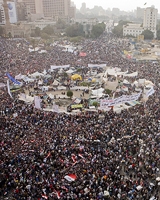
Fomenting Democracy: From Poland's Solidarity to Egypt's Tahrir Square

Adam Michnik and Yasmine El Rashidi
In Conversation With Mike Shuster
Tuesday, October 21, 2014
01:09:14
Listen:
Episode Summary

Co-presented with the Consulate General of Poland.

It’s been twenty-five years since the ultimate victory of the Solidarity movement in Poland, a revolution that ultimately led to the fall of communism. Adam Michnik, a Solidarity activist jailed by the Polish communist regime for his dissident activities, and now among Poland’s most prominent public figures, discusses the legacy of that revolution with Yasmine El Rashidi, a young intrepid Cairo-based journalist whose essays and articles on the (unfinished) Egyptian revolution were nominated for an Amnesty International Media Award. Can a velvet revolution offer any useful lessons to a bloody one?


Participant(s) Bio

Adam Michnik is the founder and editor-in-chief of Gazeta Wyborcza, a daily often referred to as "The New York Times of Eastern Europe." He is among Poland’s most prominent public figures, with a distinctive voice dedicated to dialogue, tolerance, and freedom. He spent a total of six years in prison between 1965 and 1986, detained by the Communist Polish regime for his dissident activities as a prominent "Solidarity" activist. In 1989, he participated in the Round Table Talks, which resulted in Poland’s nonviolent transition to democracy, and he served as a deputy in Poland’s first non-communist parliament (1989-1991). He is the author of several books and countless essays, analyses, and interviews. His four books in English include: Letters from Prison (1987); The Church and the Left (1993); Letters from Freedom ( 1998); In Search of Lost Meaning ( 2011); and The Trouble with History (2013). Among his many honors are the Robert F. Kennedy Human Rights Award and the Order of the White Eagle –the highest distinction attainable in Poland. He regularly travels throughout the world, giving lectures on democracy, totalitarianism, and the paradoxes and dilemmas of contemporary politics. He lives in Warsaw.

Yasmine El Rashidi is an Egyptian writer. She is a regular contributor to the New York Review of Books and a contributing editor to the Middle East arts journal Bidoun. A collection of her writings on the Egyptian revolution, The Battle for Egypt, was published in 2011, and her essays feature in the anthologies Diaries of an Unfinished Revolution, Best American Nonrequired Reading, and The New York Review Abroad: Fifty Years of International Reportage. Her writing on the revolution was nominated for an Amnesty International Media Award, and she was a 2013 Hodder Fellow at Princeton University's Lewis Centre for the Arts. She lives in Cairo.

Mike Shuster is an award-winning diplomatic correspondent and former roving foreign correspondent for NPR News. In recent years, Shuster has helped shape NPR’s extensive coverage of the Middle East as one of the leading reporters to cover this region—from Iraq to Iran and Israel. His 2007 week-long series The Partisans of Ali explored the history of Shi'ite faith and politics, providing a rare, comprehensive look at the complexities of the Islamic religion and its impact on the Western world. He is the recipient of numerous awards for his reporting, including an Overseas Press Club Lowell Thomas Award. He was NPR's senior Moscow correspondent in the early 1990s when he covered the collapse of the Soviet Union and a wide range of political, economic, and social issues in Russia and the other independent states of the former Soviet Union.


Deep Down Dark: The Untold Stories of 33 Men Buried in a Chilean Mine, and the Miracle that Set Them Free

Héctor Tobar
In conversation with author Jesse Katz
Thursday, October 16, 2014
01:08:40
Listen:
Episode Summary

In this master work by Pulitzer Prize-winning journalist, Héctor Tobar tells the miraculous and emotionally textured account of the thirty-three Chilean miners who were trapped beneath thousands of feet of rock for a record-breaking sixty-nine days. Join us to hear this astounding account of the personal histories that brought "Los 33" to the mine and the spiritual elements that surrounded their work in the deep down dark.


Participant(s) Bio

Héctor Tobar is a Pulitzer Prize–winning journalist and a novelist. He is the author of The Barbarian Nurseries, Translation Nation, and The Tattooed Soldier. The son of Guatemalan immigrants, he is a native of Los Angeles, where he lives with his wife and three children.

Jesse Katz is the author of The Opposite Field, a memoir set in the immigrant suburb of Monterey Park. As a staff writer at the Los Angeles Times, Jesse shared in two Pulitzer Prizes—for coverage of the 1994 Northridge earthquake and the 1992 L.A. riots. As a senior editor at Los Angeles magazine, he received the PEN Center USA’s award for literary journalism and the James Beard Foundation’s M.F.K. Fisher Distinguished Writing Award. RatPac Entertainment is producing a movie based on Jesse’s most recent story, "Escape from Cuba: Yasiel Puig’s Untold Journey to the Dodgers."


It's Complicated: The Social Lives of Networked Teens

danah boyd
In conversation with Henry Jenkins
Tuesday, July 29, 2014
01:18:10
Listen:
Episode Summary

Has the Internet ruined everything or is it our savior? boyd, a principal researcher at Microsoft Research, skewers misunderstandings and anxieties about the online lives of teens often voiced by teachers and parents in her eye-opening new book. Integrating a decade’s worth of interviews with teens, boyd injects nuances and complexity into the discussion of how they are trying to carve out a space of their own, as their lives are increasingly mediated through services like Facebook, Twitter and Instagram. Anyone interested in the impact of emerging technologies on society, culture, and commerce in the years to come will want to catch this conversation.


Participant(s) Bio

danah boyd is a principal researcher at Microsoft Research, a research assistant professor in Media, Culture, and Communication at New York University, and a fellow at Harvard’s Berkman Center. Her research examines social media, youth practices, tensions between public and private, social network sites, and other intersections between technology and society. She holds a Ph.D. from the School of Information (iSchool) at the University of California-Berkeley, where her dissertation research was funded as a part of the MacArthur Foundation’s Initiative on New Media and Learning. She holds a Master’s Degree from MIT and a BS in computer science from Brown University.

Henry Jenkins is Provost's Professor of Communication, Journalism, and Cinematic Arts at the University of Southern California. He has written and edited more than fifteen books on media and popular culture, including Spreadable Media: Creating Meaning and Value in a Networked Culture with Sam Ford and Joshua Green. His other published works reflect the wide range of his research interests, touching on democracy and new media, the “wow factor” of popular culture, science-fiction fan communities, and the early history of film comedy. His most recent book, Reading in a Participatory Culture: Remixing Moby-Dick for the Literature Classroom, was written with Wyn Kelley, Katie Clinton, Jenna McWilliams, Erin Reilly, and Ricardo Pitts-Wiley.


Countdown: Our Last, Best Hope for a Future on Earth?

Alan Weisman
In Conversation With Ursula K. Heise, Professor of English and Faculty, UCLA Institute of the Environment and Sustainability
Tuesday, October 15, 2013
01:18:16
Listen:
Episode Summary

Weisman offers a long-awaited follow-up to The World Without Us, his brilliant thought experiment that considered how the Earth could heal if relieved of humanity’s constant pressures. Now, after traveling to more than 20 countries to ask four questions that experts agreed were probably the most important on Earth—he explores the complexity of calculating how many humans this planet can hold without capsizing.


Participant(s) Bio

Alan Weisman is the author of several books, including The World Without Us- an international bestseller translated into 34 languages, a finalist for the National Book Critics Circle Award, and winner of the Wenjin Book Prize of the National Library of China. His work has been selected for many anthologies, including Best American Science Writing. An award-winning journalist, his reports have appeared in Harper's, The New York Times Magazine, The Atlantic Monthly, Discover, Vanity Fair, Wilson Quarterly, Mother Jones, and Orion, and on NPR. A former contributing editor to the Los Angeles Times Magazine, he is a senior radio producer for Homelands Productions.

Ursula K. Heise is a Professor in the Department of English at the Institute of the Environment and Sustainability at UCLA, and a 2011 Guggenheim Fellow. She served as President of ASLE (Association for the Study of Literature and the Environment) in 2011. Her research and teaching focus on contemporary literature, environmental culture in the Americas, Western Europe, and Japan, literature and science, globalization theory, and media theory. Her books include Chronoschisms: Time, Narrative, and Postmodernism, Sense of Place and Sense of Planet: The Environmental Imagination of the Global, and Nach der Natur: Das Artensterben und die moderne Kultur (After Nature: Species Extinction and Modern Culture.) She is currently finishing a book called Where the Wild Things Used to Be: Narrative, Database, and Endangered Species.


Bodies, Women, The World

Eve Ensler and Jody Williams
In conversation with Pat Mitchell
Thursday, May 23, 2013
01:26:46
Listen:
Episode Summary

Eve Ensler, author of The Vagina Monologues and the new memoir In the Body of the World, discusses the female body and the world’s responsibility to protect it with Jody Williams, recipient of the Nobel Peace Prize for her work banning landmines. Williams’ memoir, My Name is Jody Williams, promotes civil society's power to help change the world. These two remarkable women discuss activism, their collaboration on ending violence against women, and bringing women together through the International Campaign to Stop Rape & Gender Violence in Conflict and One Billion Rising.


Participant(s) Bio

Eve Ensler is an internationally bestselling author and an award-winning playwright whose theatrical works include The Vagina Monologues, Necessary Targets, and The Good Body. She is the author of Insecure at Last, a political memoir, and I Am an Emotional Creature. Ensler is the founder of V-Day, the global movement to end violence against women and girls, which has raised over $90 million for local groups and activists and inspired the global action "One Billion Rising."

Jody Williams, who received the 1997 Nobel Peace Prize for her work to ban landmines, is the founding chair of the Nobel Women’s Initiative, launched in January 2006. She is the recipient of fifteen honorary degrees and was named one of the hundred most powerful women in the world in 2004 by Forbes. She is a Campaign Ambassador for the International Campaign to Ban Landmines, which she helped found in 1992. Williams holds the Sam and Cele Keeper Endowed Professorship in Peace and Social Justice at the Graduate College of Social Work at the University of Houston. In 2012–13, she became the inaugural Jane Addams Distinguished Visiting Fellow in Social Justice at the University of Illinois at Chicago.

Pat Mitchell is one of media's most accomplished professionals. From network correspondent to producing award-winning documentaries as an executive in charge of original productions for Ted Turner’s cable networks, she was named Newsweek's 150 Women Who Shake the World and has been recognized with 44 Emmy awards, five Peabody’s, and two Academy Award nominations. Mitchell became the first women President/CEO of PBS and is currently President/CEO of The Paley Center for Media, whose mission is to optimize the power of media to inform, inspire, entertain, and empower. Mitchell is a sought-after speaker and has been honored numerous times for her achievements. She serves on many non-profit and corporate boards


Pages

Top