The Library will be closed on Sunday, April 5, 2026, in observance of Easter.

Business/Tech

LAPL ID: 
5

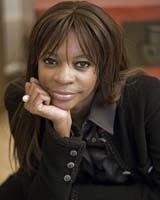
How the West Was Lost
Tuesday, February 22, 2011
01:16:17
Listen:
Episode Summary
One of Time Magazine's 100 most influential people and best-selling author of Dead Aid reveals the economic myopia of the West and the radical solutions it needs to adopt in order to assert itself as a global economic power once again.

Participant(s) Bio
Born and raised in Zambia, Dambisa Moyo received a PhD in economics from Oxford University and went on to work at Goldman Sachs for nearly a decade, as well as at the World Bank in Washington D.C. Ms. Moyo was named by Time magazine as one of the "100 Most Influential People in the World", and was nominated to the World Economic Forum's Young Global Leaders Forum. Her writing regularly appears in economic and finance-related publications such as the Financial Times, The Economist magazine and the Wall Street Journal. She is the author of the New York Times bestseller, Dead Aid.
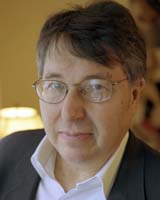

Common as Air: Revolution, Art, and Ownership

In conversation with Peter Sellars
Thursday, September 23, 2010
01:05:49
Listen:
Episode Summary
Hyde--MacArthur Fellow and author of the ground breaking study of art and commerce The Gift--offers a stirring defense of our cultural commons, that vast store of art and ideas we inherited from the past which continues to enrich the present.

Participant(s) Bio
Lewis Hyde is a poet, essayist, translator, and cultural critic with a particular interest in the public life of the imagination. He is author of The Gift: Imagination and the Erotic Life of Property and Trickster Makes This World. A MacArthur Fellow and former director of creative writing at Harvard, he is currently Richard L. Thomas Professor of Creative Writing at Kenyon College and fellow at Harvard's Berkman Center for Internet and Society

Peter Sellars is a renowned theater, opera, and festival director known for his innovative interpretations of classic works which range from Mozart, Handel, Shakespeare, and Sophocles, to the 16th-century Chinese playwright Tang Xianzu.

Hamlet's Blackberry

In conversation with David L. Ulin
Thursday, July 15, 2010
01:17:21
Listen:
Episode Summary
How do the technologies we use every day affect our state(s) of mind? One of the country's leading commentators on the information culture ponders the conundrum of connectedness, and offers a new philosophy of life in a world of screens.

Participant(s) Bio
William Powers is one of the country's leading commentators on the information culture. A former staff writer for The Washington Post, his writing on media, technology and other subjects has appeared in The Atlantic, The New York Times, The Los Angeles Times, McSweeney's, The Guardian and many other publications. He created The New Republic's first media column and for years wrote an influential weekly column for Atlantic Media's National Journal. He is a two-time winner of the National Press Club's Arthur Rowse Award for best American media commentary. Hamlet's Blackberry is his first book.

The Conscience of a Liberal

In conversation with Jon Wiener, professor of history, UC Irvine
Monday, October 29, 2007
01:16:03
Listen:
Episode Summary
Today's most widely read economist weaves together a nuanced account of three generations of history with sharp political, social, and economic analysis.

Participant(s) Bio
Paul Krugman has at least three jobs: professor of economics and international affairs at Princeton University, Centenary Professor at the London School of Economics, and an op-ed columnist for The New York Times. Krugman is the author or editor of 20 books and more than 200 professional journal articles, many of them on international trade and finance. In recognition of his work, he received the John Bates Clark Medal from the American Economic Association, an award given every two years to the top economist under the age of 40. His previous book, The Great Unraveling, was a New York Times bestseller.

Jon Wiener is a contributing editor to The Nation magazine and aprofessor of history at the University of California - Irvine, where he specializes in recent American history. His books include: Historians in Trouble: Plagiarism, Fraud and Politics in the Ivory Tower, Gimme Some Truth: The John Lennon FBI Files; Professors, Politics and Pop; and Come Together: John Lennon in His Time. Wiener hosts an afternoon drive-time radio program on KPFK-90.7 FM in Los Angeles, a listener-supported Pacifica network station, where his show features interviews on politics and culture.

Free Fall: Free Markets, and the Sinking of the World Economy

In conversation with Jim Newton, editor-at-large, Los Angeles Times
Wednesday, February 24, 2010
01:19:05
Listen:
Episode Summary
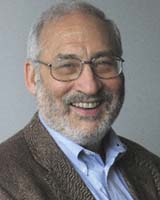
Nobel Prize-winner Joseph Stiglitz explains the current financial crisis-and the coming global economic order.

Participant(s) Bio
Winner of the 2001 Nobel Prize for Economics, Joseph E. Stiglitz is the author of Making Globalization Work; Globalization and Its Discontents; and The Three Trillion Dollar War with Linda Bilmes. He teaches at Columbia University and lives in New York City.

The Value of Nothing: Markets and Democracy in a Time of Crisis

In conversation with David Lazarus, business columnist, Los Angeles Times
Wednesday, January 20, 2010
01:13:51
Listen:
Episode Summary
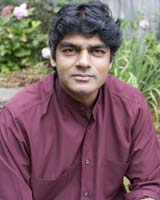
Patel (author of Stuffed and Starved: The Hidden Battle for the World Food System) asks us to reconsider how democracy might be the route by which we can reclaim markets so that they work for rather than against social change.

Participant(s) Bio
Raj Patel has worked for the World Bank, the WTO, and been tear-gassed on four continents protesting against them. Writer, activist, and academic, he is the author of Stuffed and Starved: The Hidden Battle for the World Food System. Patel is currently a visiting scholar at UC Berkeley's Centre for African Studies, a researcher at the School of Development Studies at the University of KwaZulu-Natal, and a fellow at The Institute for Food and Development Policy, also known as Food First.

Common Wealth: Economics for a Crowded Planet

In conversation with Ira Jackson, dean, Drucker School of Management, Claremont Graduate University
Monday, April 7, 2008
01:10:37
Listen:
Episode Summary
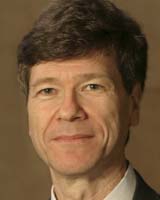
From the author of the bestseller The End of Poverty, a vivid map of the road to sustainable and equitable global prosperity and an augury of the global economic collapse that lies ahead if we don't follow it.

Participant(s) Bio
Jeffrey D. Sachs is Director of the Earth Institute at Columbia University and Special Adviser to United Nations Secretary-General Ban Ki-Moon on the Millennium Development Goals. He is internationally renowned for his work as an economic adviser to governments and international organizations around the world.

The Challenge for Africa

In conversation with Judy Muller, Professor of Journalism, Annenberg School, USC
Co-sponsored by Wachovia
Tuesday, April 21, 2009
00:53:41
Listen:
Episode Summary
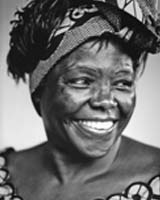
Wangari Muta Maathai is the founder of the Green Belt Movement, which, through networks of rural women, has planted over 30 million trees across Kenya since 1977. In 2002, she was elected to Kenya's Parliament in the first free elections in a generation, and in 2003 was appointed Assistant Minister for Environment, Natural Resources, and Wildlife. The Nobel Peace Prize laureate of 2004, she is the author of Unbowed: A Memoir, and speaks to organizations around the world. Her newest book, The Challenge for Africa addresses the intricacies of African issues, such as the lack of technological developments, the absence of fair international trade, population pressures and enduring hunger, and the dearth of genuine political and economic leadership. Maathai stresses the need for Africans to invent and implement their own solutions, rather than relying on foreign aid and Western visions of change, and calls for a revolution in leadership on both a political and individual level.

Participant(s) Bio
Wangari Muta Maathai was born in Kenya in 1940. The first woman in East and Central Africa to earn a doctorate degree, Professor Maathai obtained a degree in Biological Sciences from Mount St. Scholastica College in Atchison, Kansas, and a Master of Science degree from the University of Pittsburgh. She pursued doctoral studies in Germany and Kenya, obtaining a Ph.D. from the University of Nairobi where she became the first woman chair of the Department of Veterinary Anatomy.

A Visionary Look at the Evolution and Future of India

In conversation with Vijay Sathe, Professor of Management, Drucker School of Management
Wednesday, April 1, 2009
Listen:
Episode Summary
Nilekani, Co-Chairman of Infosys, was named one of the 100 most influential people in the world by Time Magazine in 2006 and Forbes Businessman of the Year in 2007. In his new book Imagining India, he discusses the future of the subcontinent and its role as a global citizen and emerging economic giant.

Participant(s) Bio

The Eco-Barons: The Dreamers, Schemers, and Millionaires Who Are Saving Our Planet

In conversation with Patt Morrison, LA Times Columnist and KPCC Radio Host
Tuesday, March 10, 2009
01:04:11
Listen:
Episode Summary
A Pulitzer Prize-winning author reveals the inspiring and largely untold stories of the country's foremost environmental conservationists, activists, and visionaries.

Participant(s) Bio
Edward Humes is the author of nine previous critically acclaimed nonfiction titles including Monkey Girl, Over Here, School of Dreams, Baby E.R., and the bestseller Mississippi Mud. A recipient of the Pulitzer Prize for his journalism and numerous awards for his books, he is currently writer-at-large for Los Angeles Magazine.

Pages

Top