The Library will be closed on Thursday, December 25, 2025, in observance of Christmas.

Arts & Entertainment

LAPL ID: 
3

Jane Smiley: Thirteen Ways of Looking at the Novel
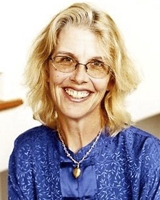
Jane Smiley
In Conversation With Novelist Marianne Wiggins
Thursday, September 22, 2005
00:56:38
Listen:
Episode Summary

Two great writers celebrate the novel—from the 1,000 year-old Tale of Genji to Zadie Smith’s recent bestseller White Teeth; from classics to little-known gems.


Participant(s) Bio

Jane Smiley was born in Los Angeles, California, moved to the suburbs of St. Louis, Missouri as an infant, and lived there through grammar school and high school (The John Burroughs School). After getting her B.A. at Vassar College in 1971, she traveled in Europe for a year, working on an archeological dig and sightseeing, and then returned to Iowa for graduate school at the University of Iowa.

M.F.A. and Ph.D. in hand, she went to work in 1981 at Iowa State University in Ames, where she taught until 1996. She has two daughters, Phoebe Silag and Lucy Silag, and one son, AJ Mortensen. Jane is the author of ten works of fiction, including The Age of Grief, The Greenlanders, Ordinary Love and Good Will, A Thousand Acres, which won the Pulitzer Prize in 1992, Moo, Horse Heaven and Good Faith, as well as many essays for such magazines as Vogue, The New Yorker, Practical Horseman, Harper's, the New York Times Magazine and the New York Times travel section, Victoria, Mirabella, Allure, The Nation and others. She has written on politics, farming, horse training, child-rearing, literature, impulse buying, getting dressed, Barbie, marriage, and many other topics. She is also the author of the nonfiction book A Year at the Races and from Penguin Lives Series, a biography of Charles Dickens. Her new book, Thirteen Ways of Looking at the Novel, will be published by Knopf in Sept 2005.

Jane lives in Northern California, as do several of her horses.

Marianne Wiggins is the author of seven books of fiction, including John Dollar, Almost Heaven, and Eveless Eden, which was nominated for the Orange Prize. She has won the Whiting Writers' Award, an NEA grant, and the Janet Heidinger Kafka prize. She won the Commonwealth Club of California Book Award and was a National Book Award and Pulitzer Prize finalist for Evidence of Things Unseen.

Michael Pollan: In Defense of Food

In Defense of Food
In conversation with Barry Glassner
Wednesday, May 10, 2006
01:16:03
Listen:
Episode Summary

The author of the national bestseller The Omnivore's Dilemma returns with a manifesto for our times: what to eat, what not to eat, and how to think about health.


Participant(s) Bio

Michael Pollan is a contributing writer to The New York Times Magazine and the author of four books, The Botany of Desire: A Plant's-Eye View of the World, Second Nature, A Place of My Own, and The Omnivore's Dilemma. The recipient of numerous journalistic awards, including the Reuters-I.U.C.N. Global Award in Environmental Journalism, Pollan served for many years as executive editor of Harper's. His articles have been anthologized in Best American Science Writing, Best American Essays , and the Norton Book of Nature Writing. At Berkeley, he serves as Director of the Knight Program in Science and Environmental Journalism. He earned his college degree at Bennington College, studied at Oxford University (Mansfield College), and received a master's in English from Columbia University in 1981.

Barry Glassner is a sociologist with his finger on the pulse of American culture. His provocative research has found many Americans' concerns to be largely unfounded. He has studied scary stories in the media; scares about adolescents, crime, minority groups, and related social issues; false fears in marketing and politics; and fear and the power of exploiting it for product sales and political careers. His recent work examines the sources of Americans' assumptions about what and where to eat and the chefs, nutritionists, restaurant critics, journalists, and food marketers who perpetuate those views. USC's Executive Vice Provost, his articles have appeared in American Sociological Review, Social Problems, American Journal of Psychiatry, and Journal of Health and Social Behavior, among other journals.


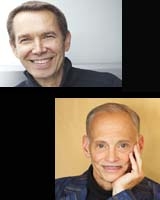
The Un-Private Collection: Jeff Koons and John Waters

Co-presented with The Broad museum
Monday, February 24, 2014
01:15:48
Listen:
Episode Summary

Artist Jeff Koons and filmmaker/author/photographer John Waters discuss Koon’s innovative and ever-changing art-making practice, which ranges from sculpture to painting to digital media. Like Waters, Koons’s art comments on the notion of "good taste," as well as the decadence of capitalist culture, the innocence of childhood, and beauty’s eternal resonance. Waters will speak with Koons about the inspiration and ideas behind his iconic works, such as Michael Jackson and Bubbles, Balloon Dog (Blue), and Girl with Dolphin and Monkey Triple Popeye (Seascape), all of which are part of the Broad's collection.


Participant(s) Bio

Jeff Koons emerged in the 1980s as an innovative sculptor whose works quickly became icons of art history. Celebrating consumer goods and questioning accepted standards of taste, Koons’s art is an ironic comment on the decadence of contemporary culture. However, Koons posits that his relationship with his son, transcendence, and enduring classical aesthetics are motivating factors for his art. According to John Waters: “Koons is never campy or even merely clever. Just smart. Koons has moved way beyond any kind of taste into a new realm of real richness, and I’m not talking about money.”

John Waters was drawn to movies at an early age, particularly exploitation movies with lurid ad campaigns. In 1972, Waters created the most notorious film of 1970s American independent cinema, Pink Flamingos. His one-man spoken-word lecture entitled This Filthy World has been performed around the world. Carsick, Waters’s seventh book, which chronicles hitchhiking from Baltimore to San Francisco, is due next June. In 2011, Waters curated Absentee Landlord at The Walker Art Center and was a 2011 Venice Biennale juror. Waters is a member of The Academy of Motion Picture Arts and Sciences and the Wexner Center International Arts Advisory Council.


The Voices of Women in American Poetry

Marilyn Chin, Toi Derricotte, and Percival Everett
Moderated by Alice Quinn, Executive Director, Poetry Society of America
Thursday, April 24, 2014
01:22:02
Listen:
Episode Summary

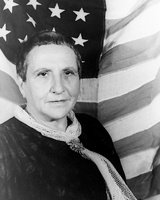
The Poetry of America’s 2014 national series The Voice of Women in American Poetry celebrates an enormous literary heritage. Distinguished contemporary poets—both male and female—will gather in five cities around the country to pay tribute to the immense achievement of a wide range of poets, from Phyllis Wheatley and Anne Bradstreet to Adrienne Rich and Lucille Clifton. In Los Angeles, join poets Marilyn Chin on Ai, Toi Derricotte on Anne Sexton, and Percival Everett on Gertrude Stein.


Participant(s) Bio

Marilyn Chin teaches at San Diego State University and is on the mentor faculty of City University of Hong Kong. She has won numerous awards for her poetry, including the United Artist Foundation Fellowship, the Radcliffe Institute Fellowship at Harvard, the Rockefeller Foundation Fellowship at Bellagio, and the PEN/Josephine Miles Award. She is featured in a variety of anthologies, including The Norton Anthology of Literature by Women and The Norton Anthology of Modern and Contemporary Poetry. In addition to writing poetry and tales, she has translated poems by the modern Chinese poet Ai Qing and co-translated poems by the Japanese poet Gozo Yoshimasu.

Toi Derricotte has published five collections of poetry, most recently, The Undertaker's Daughter. Her literary memoir The Black Notebooks won the 1998 Anisfield-Wolf Book Award for Non-Fiction and was a New York Times Notable Book of the Year. Among her many honors are the 2012 Paterson Poetry Prize for Sustained Literary Achievement and the 2012 PEN/Voelcker Award for Poetry for a poet whose distinguished and growing body of work represents a notable presence in American literature. Cornelius Eady co-founded Cave Canem Foundation. She is Professor Emerita at the University of Pittsburgh and serves on the Academy of American Poets Board of Chancellors.

Percival Everett is the author of twenty-five books. Among them are Erasure, Glyph, I Am Not Sidney Poitier, and Wounded, all from Graywolf Press. His most recent volume of poetry is Swimming Swimmers Swimming, published by Red Hen Press. He is a Distinguished Professor of English at the University of Southern California.

Alice Quinn is Executive Director of the Poetry Society of America and an adjunct professor at Columbia University's Graduate School of the Arts. She was poetry editor at The New Yorker from 1987-2007 and at Alfred A. Knopf from 1976-1986. She is the editor of Edgar Allan Poe & The Juke-Box: Uncollected Poems, Drafts, and Fragments by Elizabeth Bishop. Her articles on and interviews with writers, poets, and artists have appeared in Artforum, the Canadian National Post, The Forward, Poetry Ireland, The New Yorker, and The New Yorker Online. She is currently editing the journals and notebooks of Elizabeth Bishop.


Writing Our Future: Readings from Graduate Writing Programs of the Southland

With Nicole Adlman, KT Browne, Marie Horrigan, Blake Kimzey, Eugenie Montague, Angela Peñaredondo, Amanda Ruud, Rachel Schramm, Emerson Whitney and Victor Yates
Thursday, April 17, 2014
01:10:38
Listen:
Episode Summary

What are the ideas, forms, questions, syntaxes, images, and narratives of our immediate future? Who better as our compass in the wilds of the now than emerging writers? Join students from five Southland graduate writing programs—CalArts, Otis College, UC Irvine, UC Riverside, and USC—as they share recent writings and tune our ears to the future of language.


Participant(s) Bio

Nicole Adlman is a second-year student in the Master of Professional Writing Program at USC, where she has worked to hone her craft in both fiction and nonfiction writing. She has taught Writing and Critical Reasoning—a freshman rhetoric course—for the university’s Writing Program since 2012.

KT Brown is an MFA candidate at CalArts. Her first novel, Spiral Wares, is an experiment in narrative investigating the ambiguous terrain of memory. Her work has appeared in McSweeney's Internet Tendency, Passages North, and The Review Review, where she is a regular contributor. 

Marie Horrigan is working on a collection of short stories focused on brief moments and their emotional undertones. Before turning to fiction, Horrigan was a political journalist in Washington, D.C., who covered presidential and congressional elections. She will receive her Master of Professional Writing from USC in May.

Blake Kimzey short fiction has been broadcast on NPR and published in Tin House, FiveChapters, Short Fiction, Puerto del Sol, The Los Angeles Review, and Surreal South '13. He is currently a student in the Programs In Writing at UC Irvine and is working on his first novel.

Eugenie Montague is pursuing her MFA in fiction from the University of California, Irvine. Her story, "Geometry," was featured on NPR as part of its Three Minute Fiction contest, and her story, "Ritual," received Honorable Mention in Glimmer Train's June 2012 Fiction Open. She lives in Los Angeles.

Angela Peñaredondo is a poet and artist from Los Angeles. She is also a recipient of a University of California Institute for Research in the Arts Grant, Gluck Fellowship, and UCLA Community Access Scholarship. Her work has appeared or is forthcoming in Sin Fronteras, Thrush, Solo Novo, Ghost Town and elsewhere.

Amanda Ruud holds a BA from Tufts University. An MFA student at UC Riverside, she is currently at work on a collection of short fiction.

Rachel Schramm is a 25-year-old poet living in Los Angeles, working on her MFA at Otis College of Art and Design. Her interests include tide pools, weather systems, and large, stately conifers.

Victor Yates’ writing has appeared in Windy City Times, Edge, and Qulture. Recently two of his poems were included in the anthology For Colored Boys, edited by Keith Boykin. The anthology won the American Library Association's Stonewall Book Award. He is also the winner of the Elma Stuckey Writing Award.

Emerson Whitney is an experimental poet, writer, and journalist based in Los Angeles. Emerson’s writing has appeared in CA Conrad’s Jupiter 88, Troubling the Line: Anthology of Trans and Genderqueer Poetry, Work Magazine, Shampoo, Bombay Gin, KCRW’s UnFictional, the Huffington Post, the New York Observer, and elsewhere. Emerson is a 2013 Kari Edwards fellow on behalf of Naropa University’s Jack Kerouac School of Disembodied Poetics. And is the author of the forthcoming documentary poetics project, Ghost Box.


Blood Will Out: The True Story of a Murder, a Mystery, and a Masquerade

Walter Kirn
In Conversation With Author Richard Rayner
Thursday, April 10, 2014
01:13:58
Listen:
Episode Summary

In the summer of 1998, Kirn—then an aspiring novelist struggling with impending fatherhood and a dissolving marriage—set out on a peculiar, fateful errand: to personally deliver a crippled hunting dog from his home in Montana to the New York apartment of one Clark Rockefeller, a secretive young banker and art collector who had adopted the dog over the Internet. In this true and chilling story of a writer being duped by a real-life Mr. Ripley, Kirn invites us into the fun-house world of an eccentric son of privilege who would one day be unmasked as a serial impostor and a brutal double-murderer.


Participant(s) Bio

Walter Kirn is the author of Thumbsucker and Up in the Air, both made into major films. His work has appeared in GQ, New York, Esquire, and the New York Times Magazine.

Richard Rayner is the author of ten books, both fiction and non-fiction, including Los Angeles Without a Map (filmed from his own script with David Tennant, Vinissa Shaw, Johnny Depp, and Julie Delpy), The Blue Suit, Murder Book, and, most recently A Bright and Guilty Place, optioned for film by Christopher Nolan. He writes for the Los Angeles Review of Books, the LA Times, the New Yorker , and other publications as well as for TV and film. He teaches at USC.


The Agony and Fun of Fiction

Lorrie Moore
In Conversation With playwright Brighde Mullins
Wednesday, April 9, 2014
01:09:38
Listen:
Episode Summary

Join us in a celebration of Bark, a new collection of stories (the first in fifteen years, since Birds of America) by one of America’s most beloved and admired short-story writers. With her singular wisdom and in her inimitable voice—"fluid, cracked, mordant, colloquial" (The New York Times Book Review)—Moore plumbs the public and private absurdities of American life in a heartrending mash-up of the tragic and the hilarious.


Participant(s) Bio

Lorrie Moore is author of Birds of America, Like Life, and Self-Help and the novels Who Will Run the Frog Hospital?Anagrams, and A Gate at the Stairs. Her short stories have frequently been reprinted in anthologies, including The Best American Short Stories of the Century, edited by John Updike. After serving as the Delmore Schwartz Professor in the Humanities at the University of Wisconsin-Madison for almost three decades, Moore has been named the Gertrude Conaway Vanderbilt Professor of English at Vanderbilt University. She has received numerous grants and awards, including the Lannan Foundation, the National Books Critics Circle, and the American Academy of Arts and Letters.

Brighde Mullins is a poet and playwright, whose works include The Bourgeois Pig, Monkey in the Middle, Fire Eater, and many others. She received a Guggenheim Fellowship in 2012 and has also won awards from United States Artists, the NEA, and the Whiting Foundation for her plays. She teaches in and directs the Master of Professional Writing (MPW), a multi-genre graduate creative writing program at the University of Southern California.


The Crusades of Cesar Chavez

Miriam Pawel and Luis Valdez
Moderated by Laura Pulido
Tuesday, April 1, 2014
01:13:36
Listen:
Episode Summary

How do you write/convey/film the story of a visionary figure with tragic flaws who founded a labor union, launched a movement, and inspired a generation? Biographer Miriam Pawel, playwright/director Luis Valdez (Teatro Campesino) lend their perspective on the crusades of an unlikely American hero who ignited one of the great social movements of our time.


Participant(s) Bio

Miriam Pawel is the author of The Union of Their Dreams, widely acclaimed as the most nuanced history of Cesar Chavez’s movement. She is a Pulitzer-winning editor who spent twenty-five years working for Newsday and the Los Angeles Times. She was recently awarded a National Endowment for the Humanities fellowship and lives in Southern California.

Luis Valdez is a playwright and founding artistic director of El Teatro Campesino (The Farm Workers’ Theater), the internationally renowned theater company founded on the picket lines of the Delano grape strike in 1965 and still in operation in San Juan Bautista, CA, where it is the longest running Chicano Theater in the United States. Valdez’s involvement with Cesar Chavez, the UFW, and the early Chicano Movement left an indelible mark that remained embodied in all his work even after he left the UFW. Valdez’s influential Zoot Suit was the first Chicano play on Broadway. His numerous feature film and television credits include, among others, La Bamba, Cisco Kid, and Corridos: Tales of Passion and Revolution. Valdez is the recipient of countless awards, including the prestigious George Peabody Award for excellence in television, the Presidential Medal of the Arts, the Governor’s Award OF the California Arts Council, and Mexico’s prestigious Aguila Azteca Award given to individuals whose work promotes cultural excellence and exchange between US and Mexico.

Laura Pulido is a Professor of American Studies and Ethnicity at the University of Southern California. She researches race, political activism, Chicana/o Studies, critical human geography, and Los Angeles. Pulido has done extensive work in the field of environmental justice, social movements, labor studies, and radical tourism.


All Our Names: Dinaw Mengestu

Dinaw Mengestu
In conversation with Laila Lalami
Thursday, March 27, 2014
01:08:43
Listen:
Episode Summary

From the MacArthur Award-winning writer comes a subtle and quietly devastating new novel about love, exile, and the fragmentation of lives that straddle countries and histories. All Our Names is a tale of friendship between two young men who come of age during an African revolution and the emotional and physical boundaries that tear them apart—one drawn into peril, the other into the safety of the American Midwest. In this political novel, Mengestu presents a portrait of love and grace, of self-determination, of the names we are given and the names we earn.


Participant(s) Bio

Dinaw Mengestu is the award-winning author of two novels,The Beautiful Things That Heaven Bears and How to Read the Air.He is a graduate of Georgetown University and of Columbia University's M.F.A. program in fiction and the recipient of a 5 Under 35 award from the National Book Foundation and a 20 Under 40 award from The New Yorker. His journalism and fiction have appeared in such publications as Harper's Magazine,GrantaRolling StoneThe New Yorker, and The Wall Street Journal. He is a recipient of a 2012 MacArthur Foundation genius grant and currently lives in New York City.

Laila Lalami was born and raised in Morocco. She is the author of the short story collection Hope and Other Dangerous Pursuits, and the novel Secret Son. Her essays and opinion pieces have appeared in Newsweek, the Los Angeles Times, the Washington PostThe Nation, the Guardian, the New York Times, and in numerous anthologies. Her work has been translated into ten languages. She is the recipient of a British Council Fellowship, a Fulbright Fellowship, and a Lannan Foundation Residency Fellowship and is currently an associate professor of creative writing at the University of California at Riverside. Her new novel, The Moor’s Account, will be published in 2014.


Plato at the Googleplex: Why Philosophy Won't Go Away

Rebecca Goldstein
In Conversation With Alex Cohen
Tuesday, March 18, 2014
01:19:39
Listen:
Episode Summary

Imagine that Plato came to life in the twenty-first century and embarked on a multicity speaking tour. How would he handle the host of a cable news program who denies there can be morality without religion? How would he mediate a debate between a Freudian psychoanalyst and a tiger mom on how to raise the perfect child? Philosopher and novelist Rebecca Newberger Goldstein provide an original plunge into the drama of philosophy, revealing its hidden role in today’s debates on religion, morality, politics, and science. Does philosophy itself ever make progress? And if it does, why is so ancient a figure as Plato of any continuing relevance? Plato at the Googleplex is Goldstein’s startling investigation into these conundra.


Participant(s) Bio

Rebecca Newberger Goldstein received her doctorate in philosophy from Princeton University. Her award-winning books include the novels The Mind-Body Problem, Properties of Light, and Mazel, and nonfiction studies of Kurt Gödel and Baruch Spinoza. She has received a MacArthur Foundation Fellowship and Guggenheim and Radcliffe fellowships, and she was elected to the American Academy of Arts and Sciences in 2005. She lives in Massachusetts.

Alex Cohen is co-host of KPCC's Take Two show. Prior to that, she was a host of KPCC's All Things Considered. Before joining Southern California Public Radio, Cohen was a host and reporter for NPR's Day to Day. She's also served as a host and reporter for NPR's Morning Edition and All Things Considered as well as American Public Media's Marketplace and Weekend America. Prior to that, she was the L.A. Bureau Chief for KQED FM in San Francisco. She has won various journalistic awards, including the LA Press Club’s Best Radio Anchor prize.


Pages

Top