Celebrating a Century of the Light of Learning (Getty Gallery)
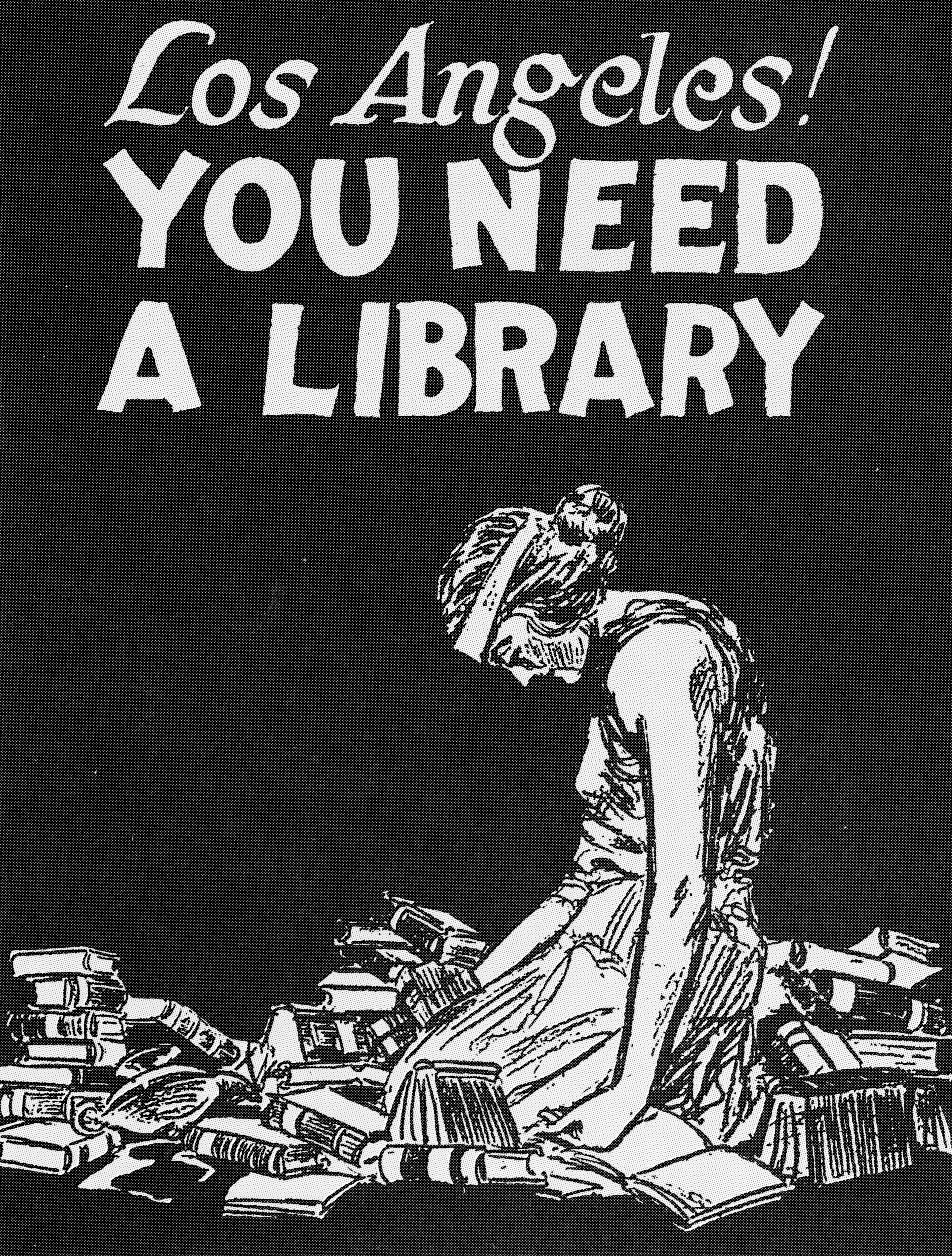
This exhibition, curated by the staff of Central Library Services, highlights the history and current offerings of Central Library's unique subject departments, what goes on behind the scenes, along with touching on the 100-year history of this cultural landmark.
The Centrals That Never Were (First Floor Galleries)
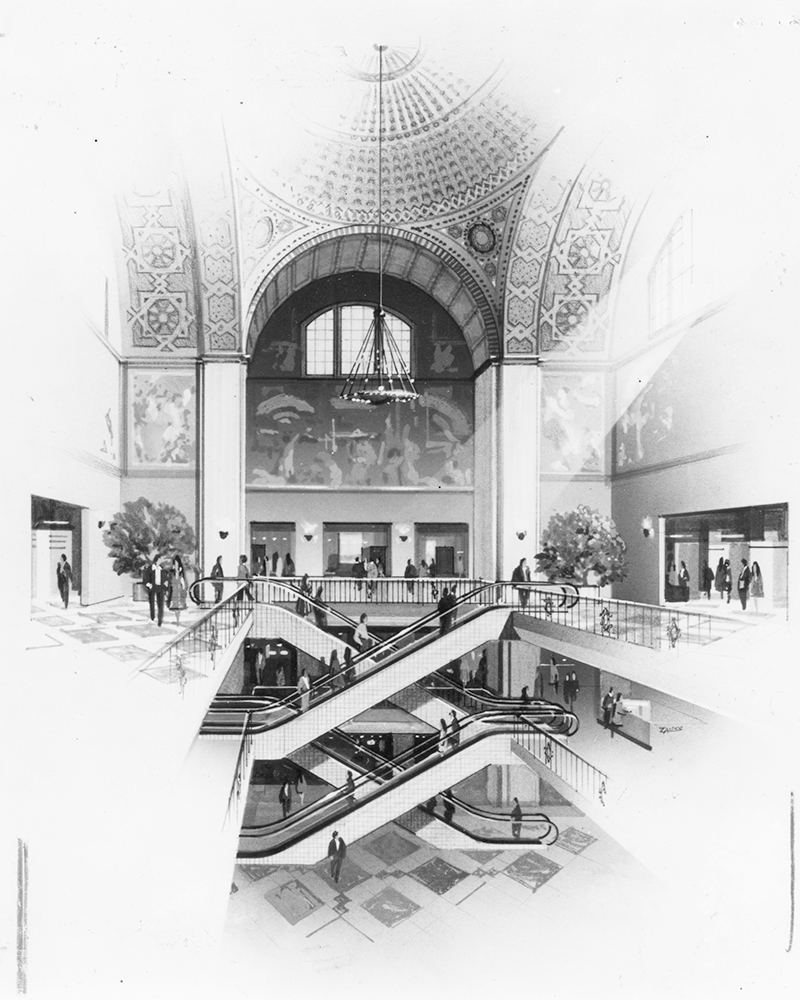
The Los Angeles Public Library system existed for over fifty years before it got a dedicated Central Library. Along the way, there were many Angelenos with many ideas of where their library should be located and what it should look like. This exhibition explores these turn-of-the-century ideas, along with a host of 1970s design recommendations when Central Library was threatened with demolition.
The Artwork That Never Was (First Floor Galleries)
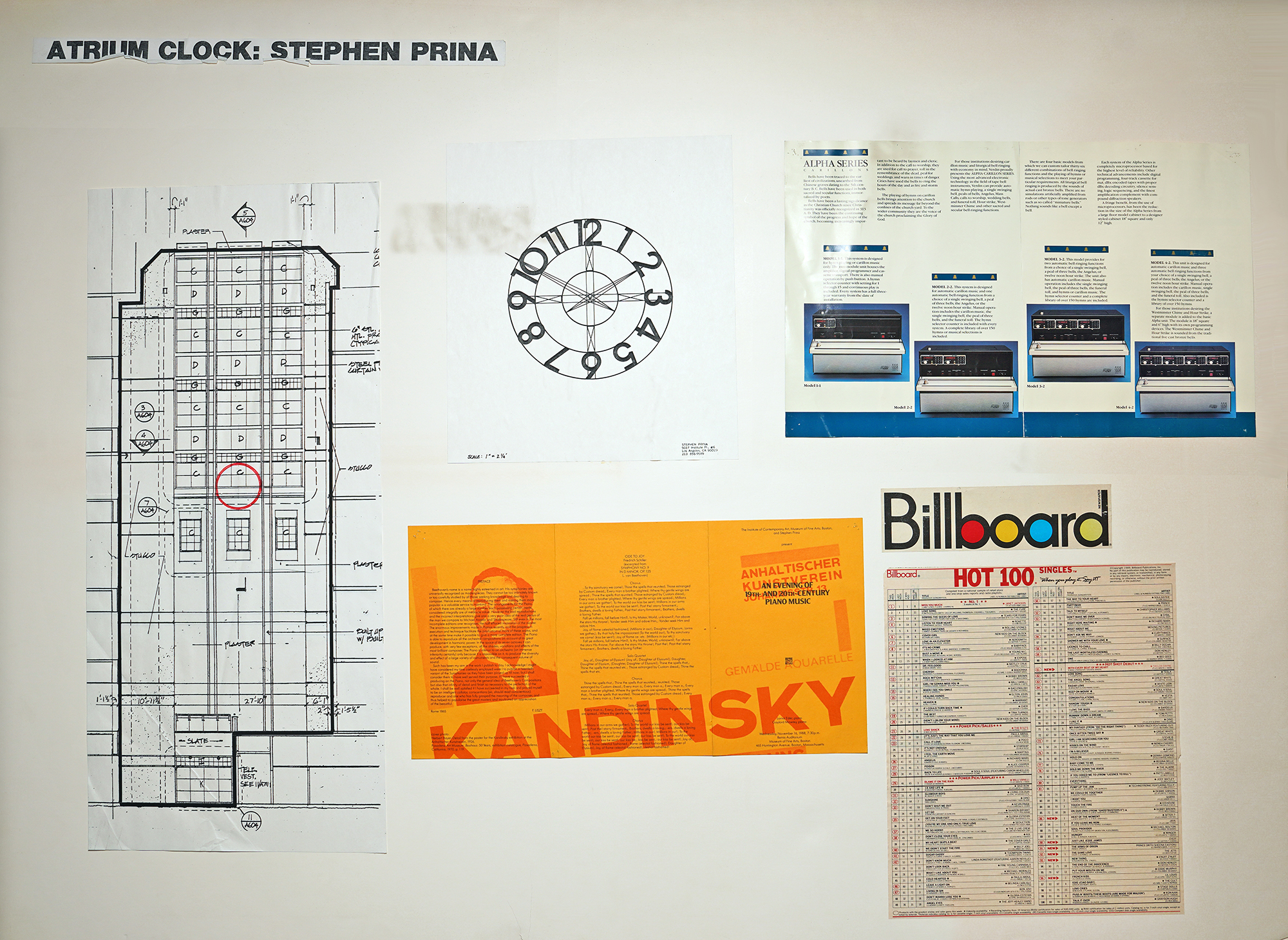
When Central Library was renovated and expanded in the early 1990s, twelve pieces of public art were approved, but only six were implemented, due to budget restraints. Come learn about the other six and explore what could have been.
The Art & Architecture of a Los Angeles Icon (Annenberg Gallery)
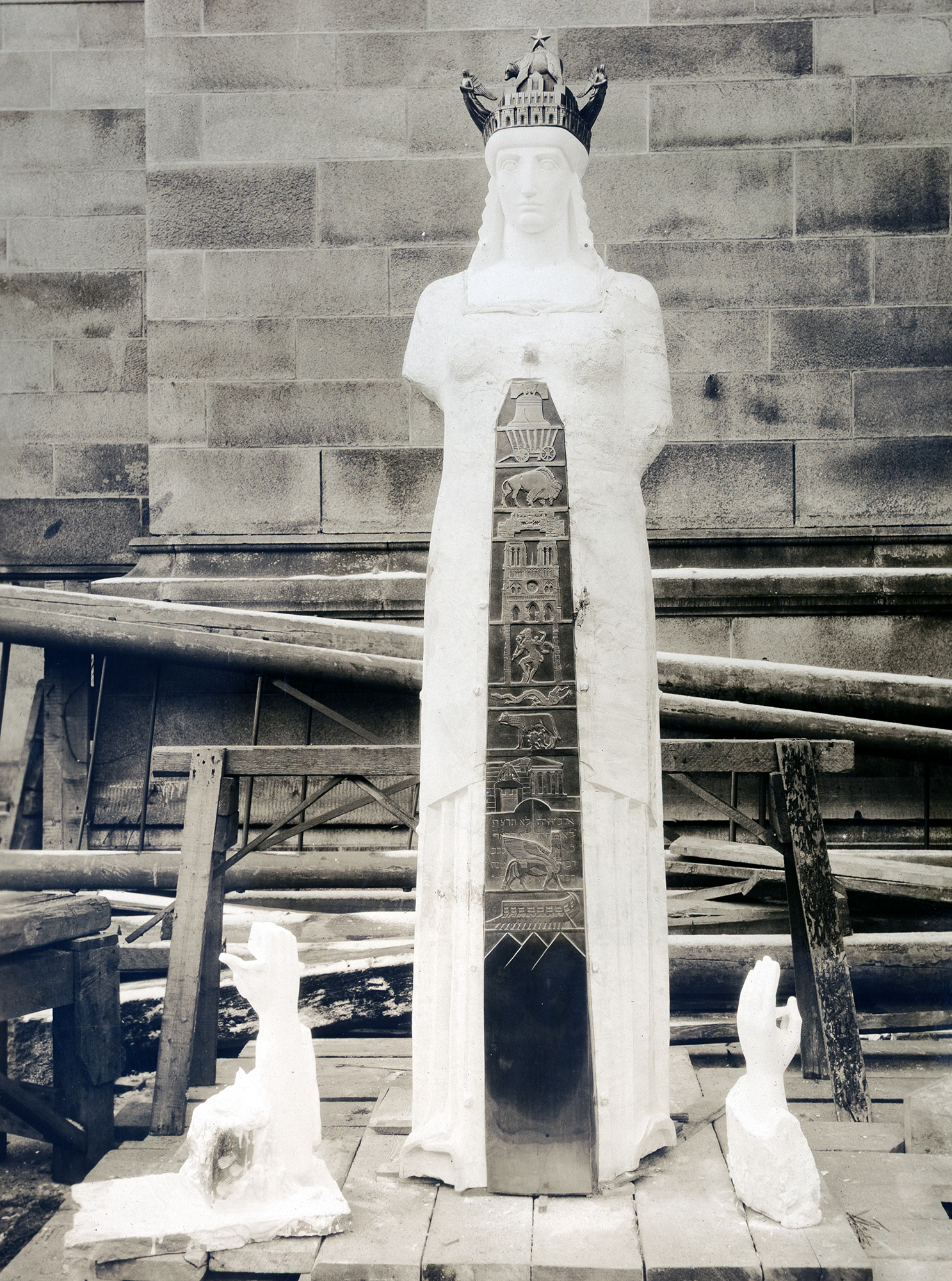
(Institutional Collection)
Central Library became an instant architectural treasure when it opened in 1926, and its reputation grew when it reopened in 1993 after a major renovation. Come meet the architects, artists, and the philosopher who worked together to create Central Library as we know it today.
Constructing a Los Angeles Icon (History & Genealogy Department)
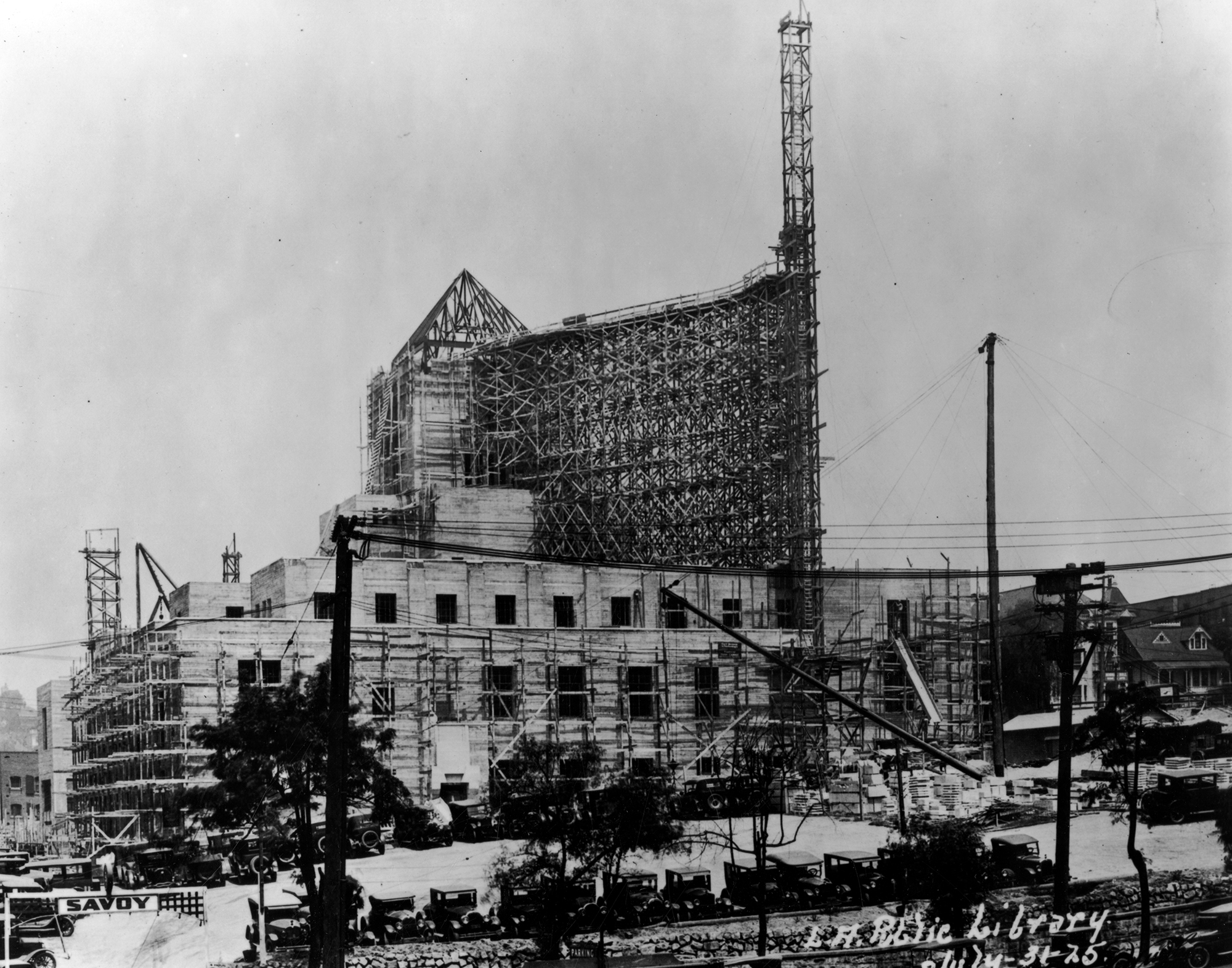
Central Library broke ground on January 14, 1924, and was officially dedicated on July 15, 1926. Journey to the past and view the construction progress with images from the Los Angeles Public Library's historic Photo Collection.
Central Library Time Capsule (3rd Floor Atrium outside Literature & Fiction)
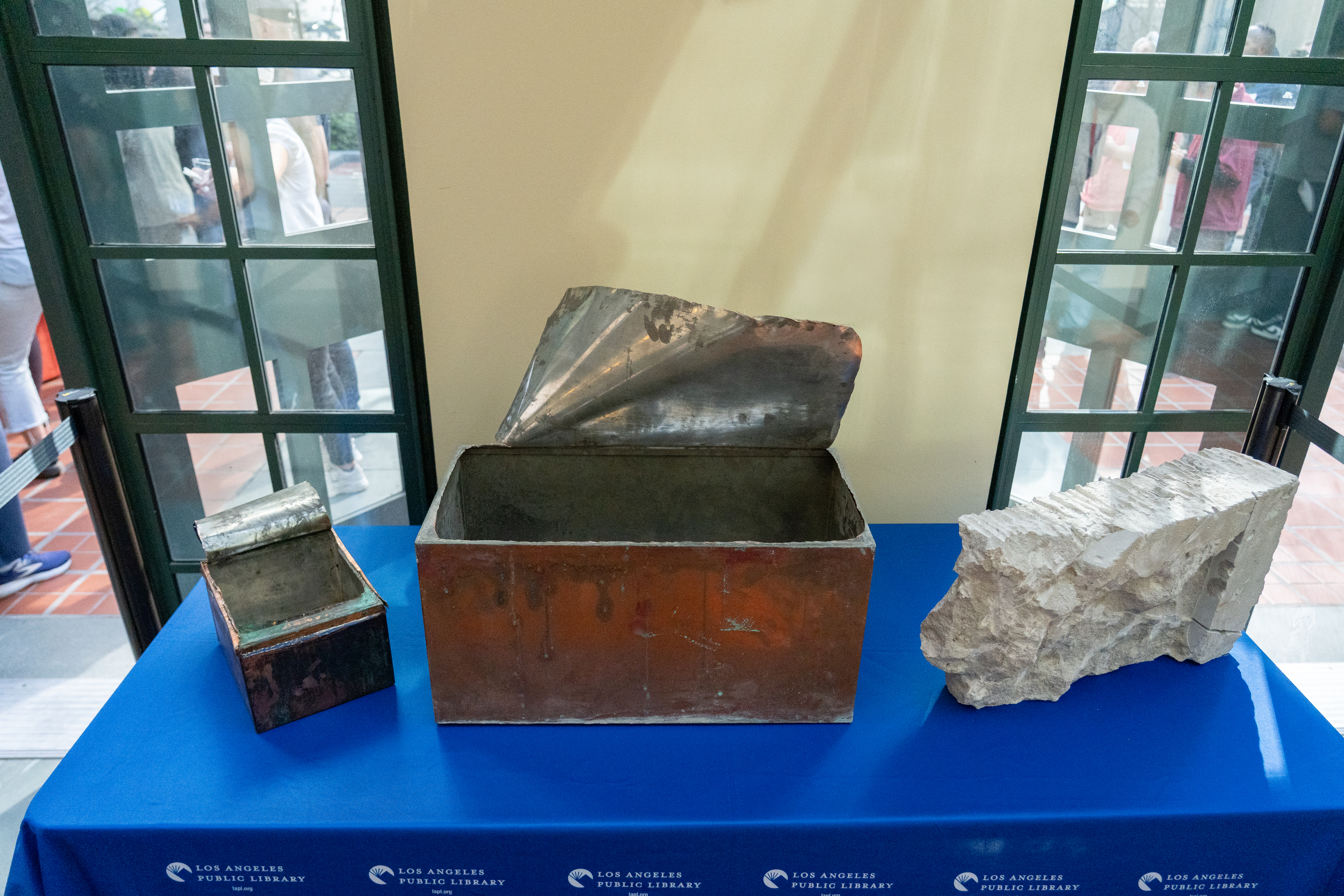
The Central Library Time Capsule is now on view on the 3rd floor Atrium of the Bradley Wing of Central Library, outside the Literature & Fiction Department. In addition to the time capsule(s), there are two cases on either side of the atrium that include contents from the larger 1925 time capsule and the smaller 1881 Normal School time capsule.
Central Library Time Capsule, 1925
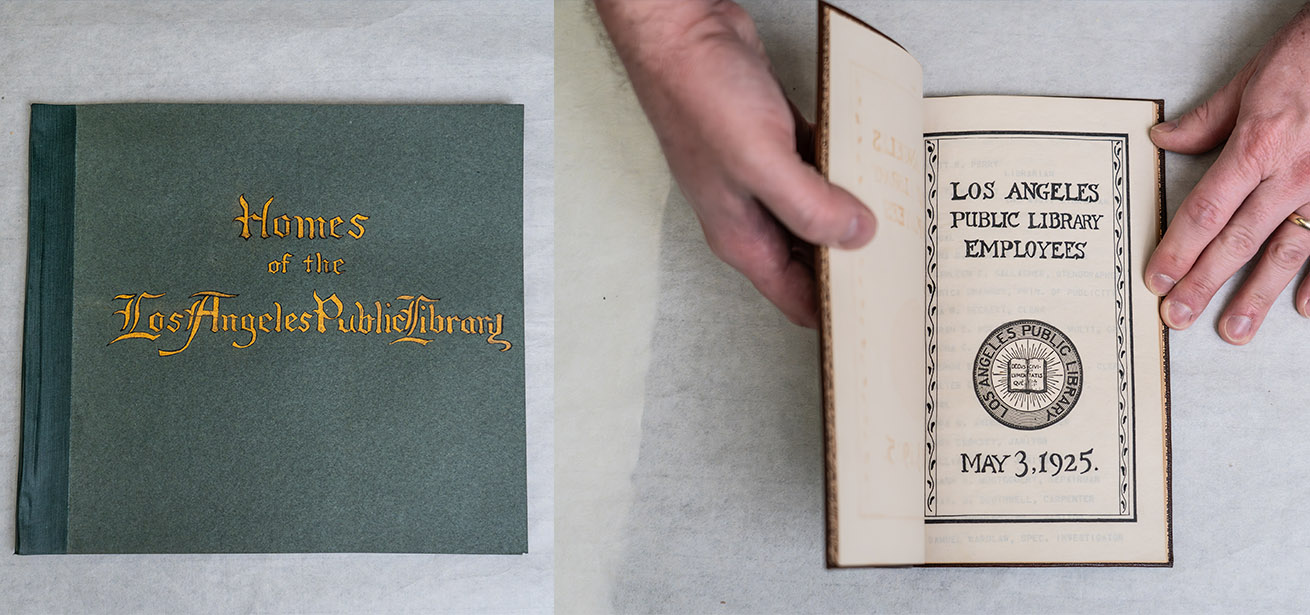
On Sunday, May 3, 1925, City Librarian Everett R. Perry and members of the Board of Library Commissioners gathered on the 5 th Street side of the Central Library construction site. The purpose was twofold: to lay the building’s cornerstone and to place a time capsule for future Los Angeles residents. Absent from the proceedings was Orra E. Monnette, Commission President, who was too ill to attend. Because the small ceremony was held on a Sunday, a special dispensation was granted allowing a tinsmith to work that day to seal the copper box housing the objects.
The cornerstone, made of Indiana limestone, was designed with a large cavity to accommodate the copper box, containing selected objects representing the Los Angeles Public Library and the City of Los Angeles in 1925. After the capsule was positioned inside the wall, the cornerstone was lowered on top of it. Five days later, a list of approved contents was included in the Board of Library Commissioners' minutes. This report also included a reference to unspecified objects found in the time capsule of the State Normal School Building, which had been demolished to make way for the Central Library.
Missing from the Board minutes, or any other library documentation, were instructions on when or how the capsule should be retrieved. The Normal School’s capsule was unearthed during the demolition of that building, but since the Central Library will remain standing for the foreseeable future, the Library determined that the 2026 Centennial Celebration was a perfect time to open it.
Retrieving the capsule proved to be challenging. Given the building's historic nature, reverse-engineering the original placement and risking damage to the exterior were not options. Instead, the interior was targeted as the access point, which happened to be the men’s public restroom. Marble panels, plumbing, drywall, and terra cotta blocks had to be navigated to get to the cornerstone. From there, the back of the limestone block had to be cut and chipped away to provide access to the time capsule.
When the copper box was retrieved, it proved to be in exceptionally good condition. The box had been soldered shut and needed to be carefully cut open, revealing nearly pristine contents. A century in the wall had preserved reports, pamphlets, photographs, newspapers, and other ephemera, giving us a snapshot into what Library Leaders deemed significant in 1925. A selection of items is on display here for the duration of 2026, with additional items available for research by appointment in our Special Collections Department.
State Normal School Time Capsule, 1881
The Board of Library Commissioners' minutes from May 8, 1925, list the full contents of Central Library’s time capsule, but only vaguely reference objects from the State Normal School’s box, which had been retrieved when the school was demolished to make way for the library. When the 1925 capsule, a large copper box, was opened for the Central Library Centennial, staff were surprised to find a smaller sealed copper box inside. Library officials in 1925 had not just included some contents from the State Normal School – they had included the actual 1881 time capsule in total.
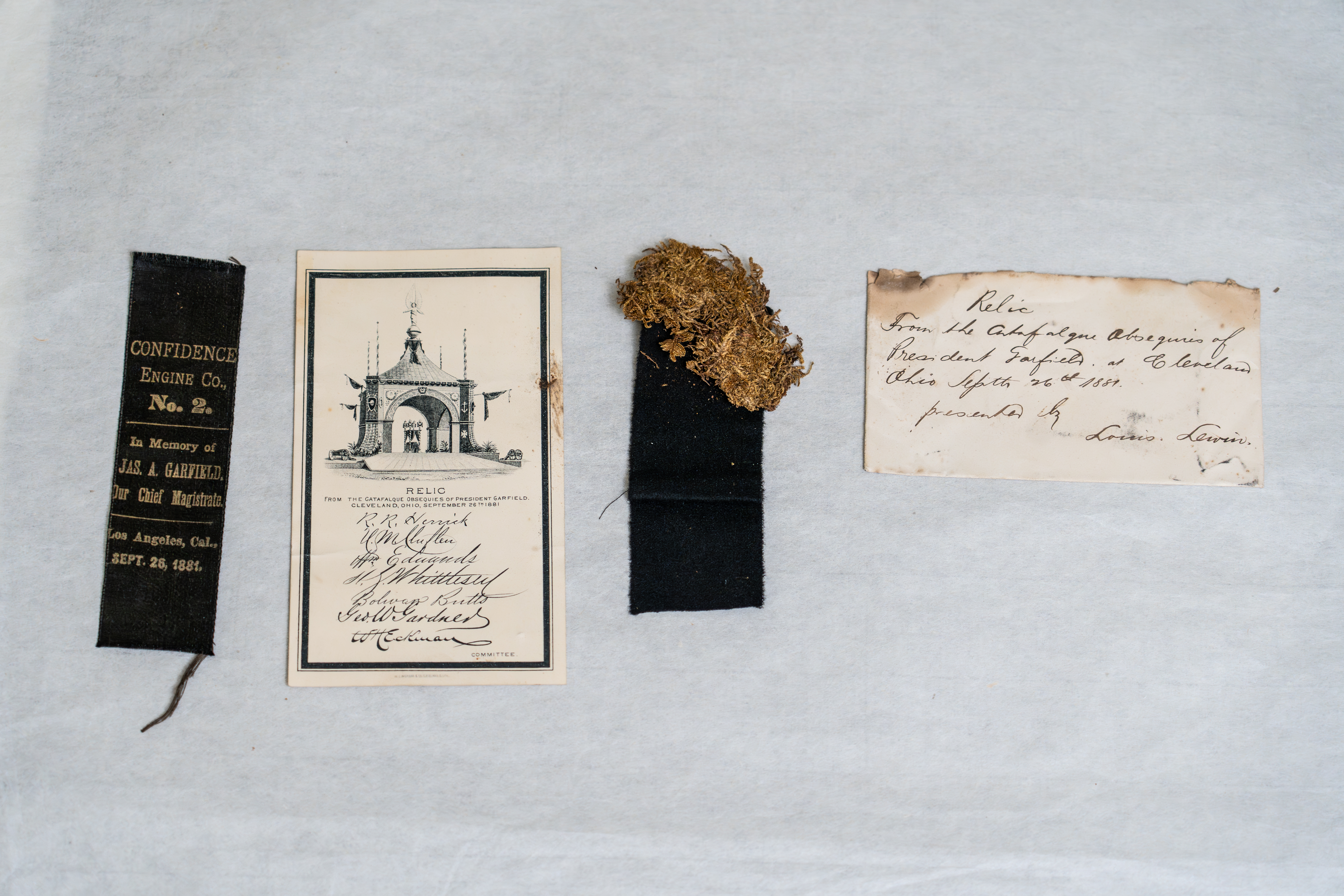
The State Normal School’s physical capsule may be small, but it contained an impressively large number of contents packed into it, including over a dozen different newspaper titles in English, Spanish, German, and French. The dedication of the capsule took place shortly after the assassination of President James A. Garfield, and a local business owner who attended the funeral contributed objects from those proceedings. In addition to Normal School and municipal reports, the 1881 capsule includes unexpected ephemera, such as a ticket for admission to an agricultural fair and Christmas cards that also serve as advertisements for the W.C. Furry Company. Librarians from 1925 created a contents list and added a few notes on catalog cards.
“Normal schools” have existed around the world since the 17th Century and were developed as training institutions for teachers. The California State Normal School was established in the 1850s and later developed into California State University, San Jose. The success of the State Normal School in Northern California led to the establishment of the Southern Branch in Los Angeles, which opened on August 29, 1882, on what is now the site of the Central Library. This branch would eventually become the University of California, Los Angeles (UCLA), relocating to Hollywood in 1914 and to its permanent Westwood campus in 1927.
After the school vacated, the Gothic Revival building was used as Municipal offices until the site was officially selected as the home of the Central Library. When the building was demolished to make way for the library, the 1881 time capsule was retrieved and opened, then carefully resealed for future generations to discover.
A selection of items is here on display for the duration of 2026, with additional contents available for research by appointment in our Special Collections Department.
Plans are underway to create the 2026 Central Library Centennial time capsule. Keep an eye at lapl.org/central100 for updates!