The best books of the year, selected by members of our staff.
COVID-19 may have heightened our understanding of airborne transmission of viruses, but the concept has a long history, which Zimmer recounts in this accessible work.
An important read about Jewish identity in an increasingly antisemitic world.
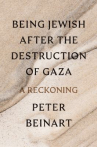
Beinart has spent the bulk of his career writing and analyzing his faith alongside politics, so his voice is a welcome reflection. This work considers the stories that animate contemporary Judaism and how they sit alongside what Said called "the question of Palestine."
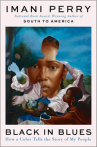
The color blue and the symbolism of it hide in plain sight for Black people of African descent. However, if one has never made the various connections to the culture, this book provides an explanation. Covering pre-colonial days to the present, Perry's book is an easy and great read.
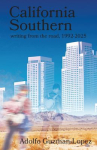
Journalist Guzman-Lopez is a local treasure who has been reporting from our communities and training new journalists for years. This collection finds him in a more reflective mode, collecting short essays and poetry about his life, travels, and more.
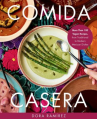
The Mexican chef behind the beloved Dora’s Table blog shares a vibrant collection of plant-based recipes—from chilaquiles and tamales to nopales salad, blue corn tortillas, and conchas—all in a beautiful, approachable cookbook.
The Civil Rights Corp-founder's book is an extension of his work as it explores how law enforcement, the justice system, and media shape our perceptions of safety, power, and authority.
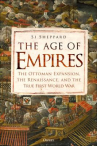
In 1512, the Queen of Ethiopia proposed an alliance with her fellow Christian monarch, the king of Portugal, to rid their dominions of the Turkish threat. They were unsuccessful, and for the next two hundred years, the Ottomans were a great threat to their enemies in Africa, the Middle East, and Europe. This book traces the rise of the Ottoman Empire through the military campaigns of the sultans.
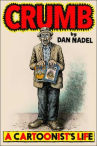
This is the first comprehensive biography of the legendary, eccentric, underground cartoonist, R. (Robert) Crumb. R. Crumb's work is now considered mainstream, but in the 1960s, he created many of the cartoon figures associated with the Counter-Culture (Mr. Natural, Fritz the Cat, the Keep on Truckin' men) while living in Northern California.
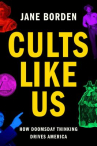
The United States has a unique relationship and history with cults and conspiracy theories that Jane Borden traces with humor and charm, even if that humor feels a little like whistling in a graveyard at the moment.
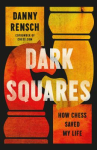
Danny Rensch recounts his difficult childhood in an abusive cult and how chess became his escape and ultimately saved his life.
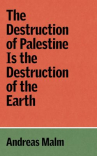
Building on his 2024 lecture and essay, Malm analyzes British colonialism in Palestine from an ecological lens and how this past impacts the ongoing policies of domination and extraction.
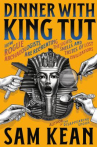
In an effort to understand people's lives in ancient civilizations, Sam Keane turns away from traditional archaeology and tries out experimental archaeology. He writes about his experiences trying to make things like make acorn bread, leather, and knives using ancient methods while considering what life in those various cultures must have been like.
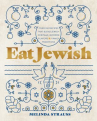
I have already tried some of the recipes, and they are delish!
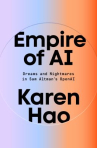
A Wall Street Journal and Atlantic journalist mines the history of Altman and OpenAI and generates a clarifying read.
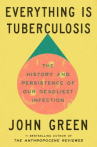
Would you like to be angry and then sad and then angry again, while learning interesting history facts and being inspired? Try reading Everything is Tuberculosis! Tuberculosis was once such a ubiquitous and deadly disease that it started fashions, killed celebrities, and built Pasadena. But now it only kills people (1.23 million in 2024 according to WHO) because we let it.
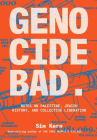
Accessible read for those that have already delved into or are interesting in learning about Palestine, history, and being Jewish. Part memoir, part history lesson, there's something for everyone to learn in this slim book.
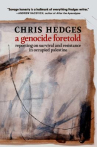
In his characteristic fashion, Hedges writes with raw frankness on the occupation of the West Bank and the ongoing attacks on Gaza.
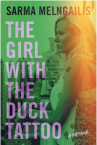
The celebrity chef and author at the center of Netflix’s Bad Vegan tells the story of the meteoric rise and dramatic collapse of her trailblazing restaurant and lifestyle brand, her shocking disappearance and arrest, and the unbreakable bond with Leon, the rescue pitbull who stayed by her side through it all. Candid, raw, and unexpectedly funny.
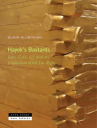
Slobodian consistently draws connections between the worlds of economics and history to our current political moments. In Hayek's Bastards, he focuses on post-Cold War transformations in neoliberalism that led to what we now know as the alt-right.
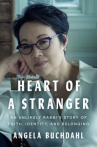
Part memoir, part spiritual guide, Buchdahl's story has a profound impact.
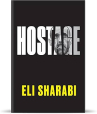
Eli Sharabi recounts, in unflinching detail, the 491 days he spent in Hamas captivity, unaware that his wife and two daughters were brutally murdered. We follow Sharabi, deep in the tunnels underneath Gaza, as he focuses on the positive and his ultimate goal of returning to his family in Israel.
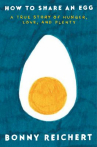
A moving love story between a daughter and her father. Bonny struggles with second-generation Holocaust survivor trauma, and through a life of self-discovery, she overcomes these feelings through her love of food.
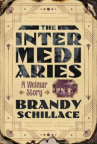
Schillace explores the rise of fascism during Germany's Weimar Republic through the lens of the career of Dr. Magnus Hirschfeld. Hirschfeld, a closeted homosexual and nonpracticing Jew, risked his life to study trans women (and some trans men) and help them receive gender-affirming care at a time when Hitler was becoming increasingly popular. The book also highlights the life of one of Hirschfeld's patients, Dora Richter, the first known person to complete a surgical transition from male to female.
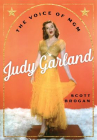
Focusing on her years at MGM, Brogan highlights Garland's ups as a singer and actress, and downs as a drug user with multiple addictions. Interestingly, he does not blame Mayer or her other bosses at the studio for her sobriety struggles, but allows the reader to decide if Garland's dependence was a result of her long hours in front of the camera or due to her lack of self-confidence: she felt, increasingly, that she could not perform without being high.
From 1991 to 1997, the annual touring festival known as Lollapalooza became the showcase for the most groundbreaking artists in the musical genre that came to be known as "alternative." It also helped to kickstart the other traveling festivals that would blossom in its wake, from punk's Warped Tour to the female-centered Lilith Fair. This oral history documents it all, from the artists who commanded the stage to those behind the scenes who made it all happen.
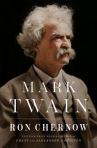
Is Mark Twain still relevant in the 21st Century? Ron Chernow's exhaustive biography of America's first great comic novelist argues that Twain's value as a social commentator provides enough of an incentive to continue to read his work, despite Twain's personal and professional shortcomings.
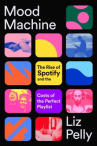
Not only an investigative inquiry into the music streaming platform, this also serves as a meditation on how the company has shaped contemporary listening habits. Historically informed and looking toward independent music cultures, Pelly offers correctives and alternatives that better serve both listeners and musicians, both off and online.
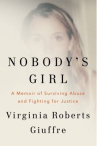
Poignant and Painful.
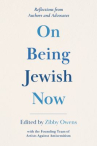
An important read from 75 voices across the Diaspora who speak about what it feels like being Jewish in a post-October 7th world.
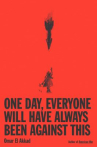
El Akkad deftly weaves together his personal narrative, global histories of colonization, and a profoundly moving understanding of present-day Palestine. Despite its brevity (clocking in at less than 200 pages), "One Day" is heartbreaking, thoughtful, and bound to broaden the perspective of those who read it.
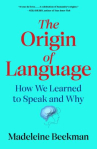
In The Origin of Language, Madeleine Beekman makes the case that language developed from the need to care for our particularly helpless infants. The whole process works in feedback with other changes in physiology and environment. The book is both very interesting and highly accessible; the reader does not need a background in linguistics, biology, or anthropology to follow along.
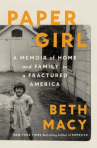
Investigative journalist Beth Macy returns to her childhood hometown of Urbana, Ohio, revisiting family and friends and piecing together a portrait of small town America that stands in as a microcosm for our country today. Macy weaves stories of people who populate the town with factual data and larger elements of our political landscape, mixing in her own sardonic wit for moments of welcome comic relief.
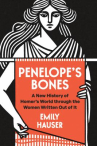
Retellings of Greek myths are having a moment. Penelope’s Bones reminds readers that there is no authoritative, correct version of the women of Homeric myths. Circe shows up in our stories the way we need Circe to show up, based on our culture, our history, who has been telling her story, and the points they are trying to make. Even historians bring their own baggage to the stories. Penelope’s Bones is recommended to anyone who has ever been frustrated by the way the Amazons never seem to win wars, despite being described as such fearsome warriors.
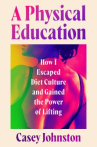
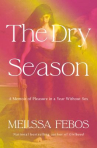
When we obsess over being thin, we seldom think about all the ways that dieting culture is wrapped up in abusive power structures. Johnston brings these issues to light in her memoir, telling the story of how she stopped dieting, took up weightlifting, and eventually became a competitive powerlifter.
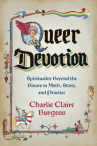
From Dionysus to Joan of Arc, queerness has always existed within spirituality and religion. Burgess explores a variety of queer myths and stories with a scholar's eye and a big heart.
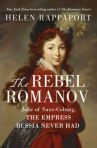
How does a romantic German princess escape a marriage to a sadistic Russian Grand Duke? Julie of Saxe-Coburg got in her carriage and left for a spa cure, eventually establishing herself in Switzerland. After having children with two men, she was granted a divorce and went on to live happily ever after. Lots of great period details here.
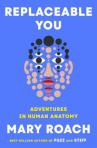
Human beings have been trying to replace bits and pieces of their bodies for centuries, with limited but, occasionally, startling success. Mary Roach’s new book takes you through the history of replacing parts as diverse as hair, hearts, and noses with humor and empathy.
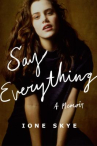
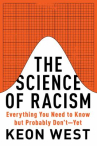
West is a social psychologist who explains scientific research around racism and debunks commonly held misunderstandings about racism in plain, accessible language. Essential reading.
Eye-opening into women's rights and all the struggles of sexual violence that go unheard.
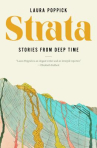
Strata by Laura Poppick is a fascinating look at the history of the Earth through the lens of geology. Poppick divides the book into four sections: Air, Ice, Mud, and Heat; each corresponding to an epoch on the planet after the rise of life. She then takes a deep dive into what rocks reveal about the events that occurred during that period. Her writing is accessible to the non-geologist and is perfect for anyone curious to learn about the world we live in.
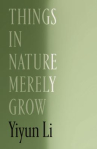
Yiyun Li's astounding book is a clear-eyed examination of loss and grief after the death of her son James. But more than that, it offers a deeply felt look at life in all its mess and complexity, in all its beauty and its pain. An astonishing work by one of our most thoughtful writers, a book not to be missed.
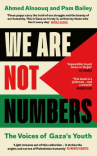
Reflections from young people surviving under occupation.
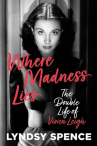
I like how it begins, with her breakdown during the filming, in Ceylon, of Elephant Walk (she was replaced with Elizabeth Taylor). The seeds of what we call today Bipolar Disorder flourished in the hothouse atmosphere of celebrity where she lived, as Lady Olivier. Her husband has a sympathetic portrayal as the medical establishment had no clue how to handle, let alone diagnose, her psychological problems. Frightening descriptions of her treatments.