Library on the Move: Metropolitan Building to Central Library

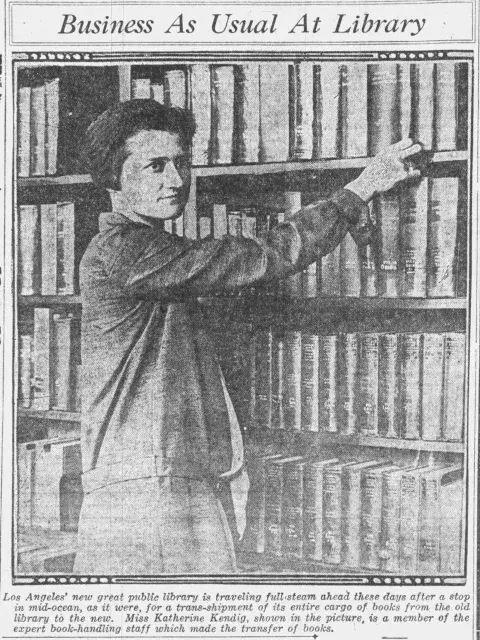
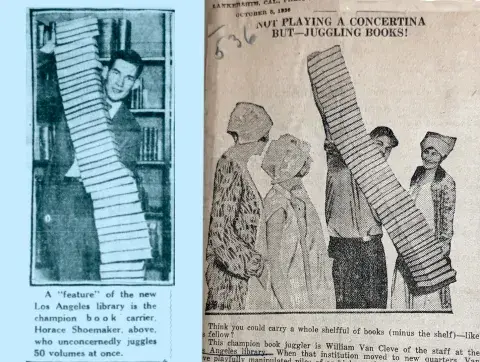
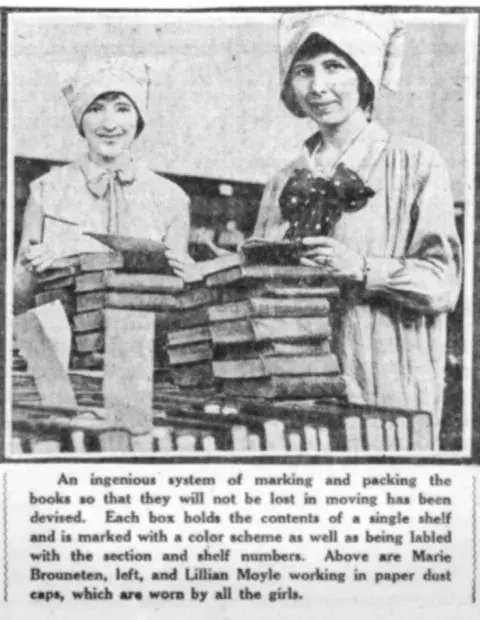
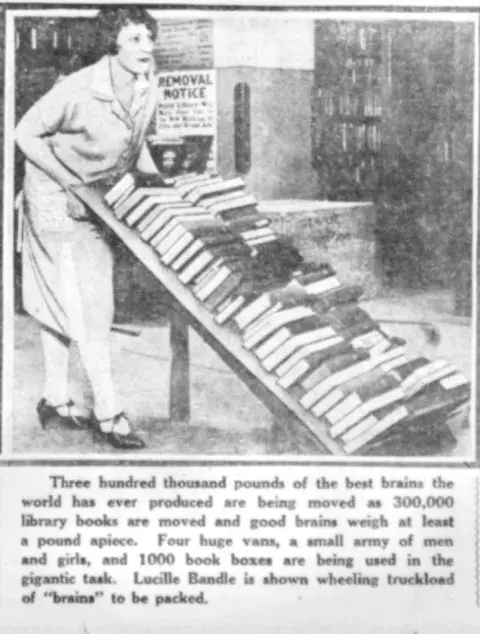
Moving the contents of the Los Angeles Public Library from the seventh, eighth, ninth, and tenth floors of the Metropolitan Building, the Library’s home from 1914 to 1926, to its new Central Library building was an impressive feat. Everything was mapped out by Second Assistant Librarian Helen T. Kennedy with the help of the heads of the different library departments. Even the order in which each department would be dismantled was planned out. Color-coded cards kept the boxes of books, borrower files, desk contents, documents, and library records organized during the move. Staff took books off the shelves and placed them in wooden crates specially made by the Library’s carpentry department. Thirty men from the Los Angeles Warehouse Company and thirty men employed by the Library placed the boxes onto dollies and loaded them onto trucks—then reversed the whole process when they got to the new building. They averaged thirty truckloads each day. The whole book collection (approximately 360,000 books) was moved in just fifteen days with the help of the Library’s hardworking staff members. The local press covered the action, and staffers who could grab a whole shelf’s worth of books were singled out for praise.
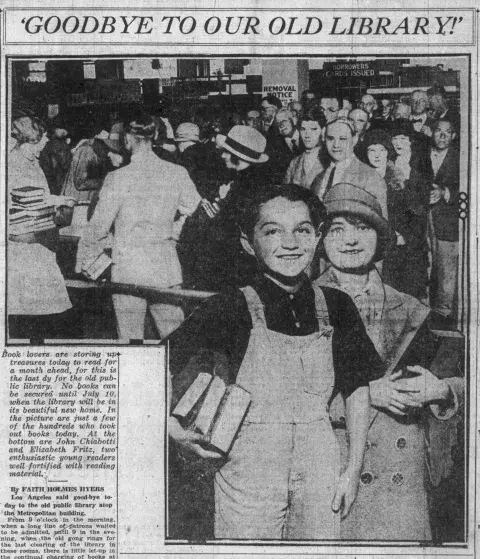
The move started on June 15, 1926, and several of the Library’s behind-the-scenes departments were moved while the Library was still open, including Cataloging, the Order Department, the Bindery, and the Library School. Patrons were encouraged to help with the move by checking out more books so there would be fewer on the shelves to pack. The Library closed to the public when it came time to pack up the Fiction Department and the Reference Department for the move. The public had indeed done their part—according to the annual report, 6,114 items were checked out on the last day the Library was open.
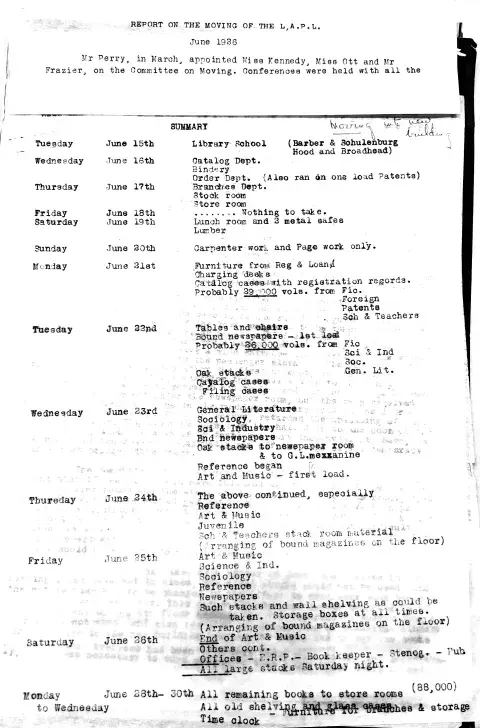
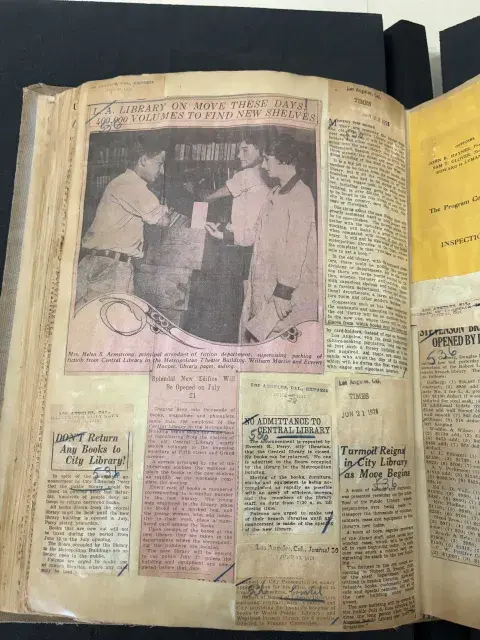
Of course, libraries are more than books. Furniture—desks, tables, and chairs—was moved from the Metropolitan Building to the Central Library, into the branches, or, if not needed, into storage. The drawers of the card catalogs (4000 drawers in total) were carefully tied to ensure no cards were lost during the moving process. Those fully-loaded card catalogs had to be incredibly heavy to move. Filing cabinets were moved along with their contents. Carpenters disassembled the stacks (aka bookshelves) for transportation. Taller pine bookcases (173 in total) and 36 oak bookcases were strengthened by the carpenters and lowered out of a seventh-floor window to the street below. City Librarian Everett Perry was on hand to watch “the big stacks go out” and even witnessed one of them break loose from its rigging and drop to the ground. This was the only part of the move that took place at night for the sake of safety and the availability of (limited) parking space.
Unfortunately, despite a stellar plan, things did not go as planned. The movers preferred the Fifth Street entrance instead of the loading dock because it was right off the street and led to a passenger elevator. According to one report detailing the move, the loading platform was quickly passed over because the freight elevator door was too small. Sadly, many of the new steel stacks at Central were still under construction when the books arrived, and the shelving that was moved from the Metropolitan had to be reassembled, which would take some time. As a result, more than half of the books had to be stored in rooms not meant to have books. Instead of packing up departments of the Metropolitan location in a specific order as planned, books instead had to be packed according to whatever bookshelves were already assembled at the Central Library. Shelving from the Pio Pico Branch was also borrowed.
There was also much concern about the beautiful/expensive/well-made Library Bureau tables in the new building. Boxes of books in need of unpacking were mistakenly put on these special tables and marred the surface. After the tables were carefully dusted—with the cloth moving in one direction only—heavy brown paper was placed on the tables to prevent any future "injury" to the table.
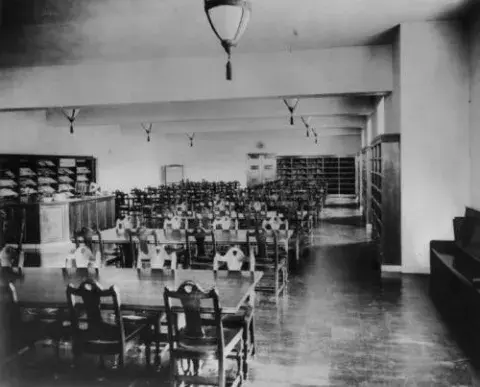
The move from the Metropolitan Building to the Central Library meant reorganizing some of the collections. For example, before the move, performing arts books were shelved in the General Literature Department. In the new building, they were shelved in the Art and Music Departments, which were separate departments in 1926. Periodicals at the Metropolitan Building were kept throughout the Library, depending on the publication’s topic. [Fun fact: When the periodicals were gathered in advance of the move to Central Library, it was discovered that if they were laid side by side on shelves as books were, they would take up a mile and a half of shelving!] At the new Central Library, there was a separate Periodical Reading Room. There was also a room just for Californiana, which must have made Charles Lummis proud to see a collection he championed receive a special location in the new building.
As quick as the move from the Metropolitan Building to Central Library was, shelving the materials themselves must have necessitated all hands on deck. After all, the public was welcomed back into the building on July 5, 1926, less than a week after all of the materials had been delivered. Luckily, the Central Library’s formal dedication took place on July 15, 1926. The whole is truly commendable—the moving of 360,000 books required careful planning, the loading and unloading of trucks, and, finally, the reassembly of the collections in new configurations in a new space. Not unlike Central Library’s rise from the ashes of the April 1986 fire. In each case, the Library’s staff was up to the daunting task.