
They Once Walked the Halls of Central Library: Faith Holmes Hyers, Library Publicist (1925 - 1943)

Faith Holmes Hyers was the awe-inspiring woman behind the successful publicity campaign for the 1926 opening of Central Library. As the Los Angeles Public Library’s first official Publicist, Hyers was in charge of the publicity for the entire library system. In addition to the new Central Library, there were 43 branches and 86 deposit stations across 434 square miles when she started in October 1925. She juggled a huge workload during her eighteen years at the Los Angeles Public Library. Below are a few of her notable projects.
Publicity for Central Library (1926)
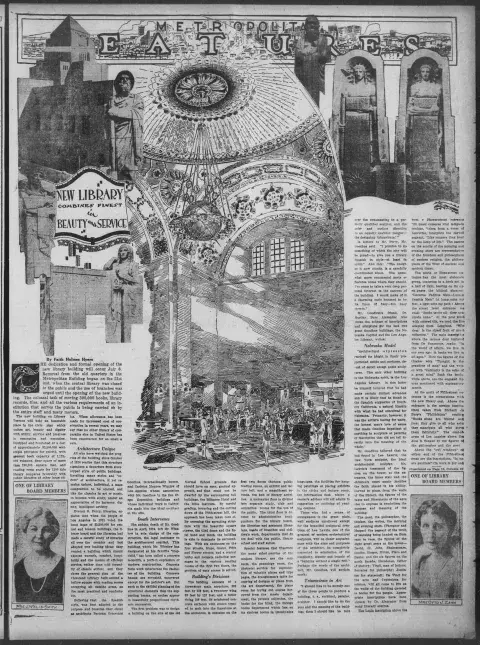
If City Librarian Everett R. Perry hired Faith Holmes Hyers in October 1925 solely to get Angelenos excited to visit their new Central Library, he chose wisely. The recent graduate (at the age of 37) of the Library School of the Los Angeles Public Library, hit the ground running. Her October 25, 1925, Los Angeles Times article "Library Gauges Growth in City" gave a history of the branches and deposit stations (and explained how the stations grew into branches), and ended the article by describing the excitement of staff for the new building alongside the building’s "stats." [You can find this and any of Hyers’ other Los Angeles Times articles by logging onto the Los Angeles Times Historical Archive with your library card.]
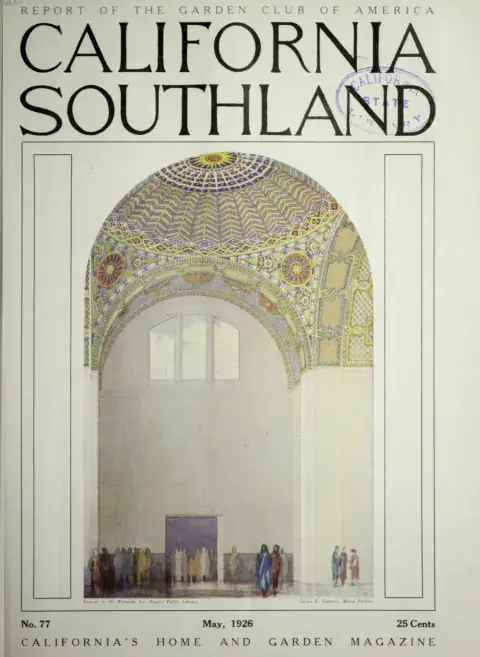
When the Central Library opened in July 1926, news was splashed across the city. In addition to six Los Angeles metropolitan newspapers, the delights of the new library were described in thirty neighborhood newspapers, foreign newspapers printed in Los Angeles, library trade publications such as the Library Journal and the Library Bureau’s Libraries magazine, and local publications like California Southland, Saturday Night, California Graphic, Artland, Southwest Builder & Contractor, Bindery Talk, and The Municipal Employee. [Hyers’ predecessor, Publicity Attendant Monica Shannon, should also be remembered for her work towards the realization of a Central Library for Los Angeles. She resigned in May 1925 after successfully campaigning for the 1921, 1923, and 1925 library bond issues. Read more about the incredible Miss Shannon here.]
Informational Guides and the Handbook of Central Library (1927)
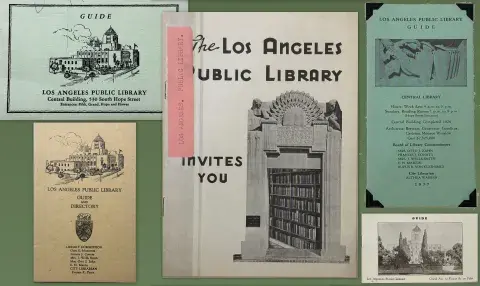
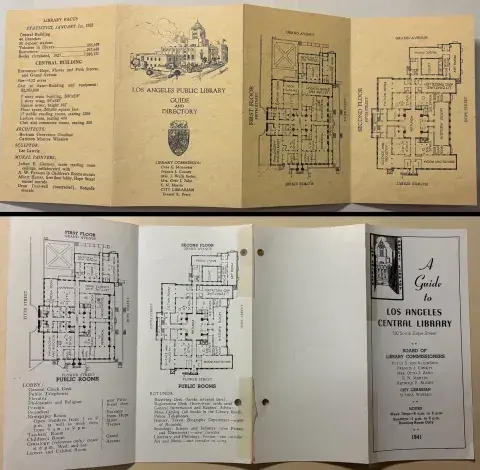
Hyers understood the need to make the library as easy as possible for visitors to navigate. To that end, she produced a "Guide to the Library" when the library opened in 1926 that included floor plans of the Library and descriptions of each floor. There was also an "Inscriptions and Sculptures" booklet that described the art to be found at Central Library. These were immediately helpful, and she continued to update them every few years. [The 1930 guide has been digitized and can be found here.]
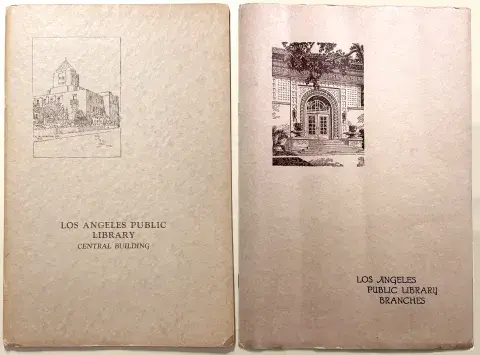
In 1927, Faith Holmes Hyers went the extra mile and created the illustrated forty-nine-page Handbook of the Central Building of the Los Angeles Public Library. The handbook contains remembrances of the late architect Bertram Goodhue—from Goodhue’s architect partner on the project, Carleton M. Winslow, who took over the project upon Goodhue’s death, just as the plans were drawn; from Lee Lawrie, sculptor of Central Library, who also described his sculptures on the buttresses and throughout the property; and philosopher Hartley Burr Alexander, who wrote about the inscriptions he chose to adorn Central Library. Hyers and City Librarian Everett R. Perry then take over the narrative of the guide and describe the ornament of the inside of the library in great detail, complete with maps of the floors to show where everything is—listing the departments and the types of things that can be found there, and explaining the functions of behind-the-scenes library departments like cataloging and the bindery.
Handbook of Branch Libraries (1928)
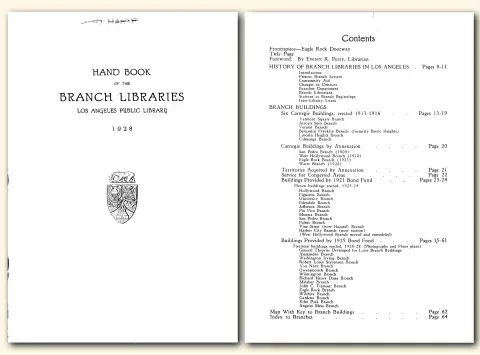
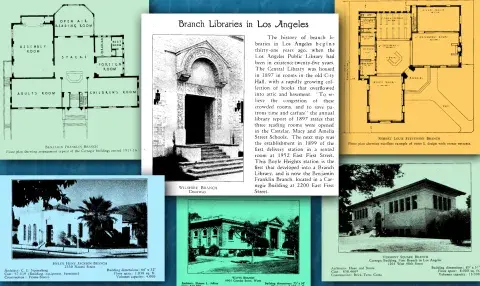
After the Central Library was completed in 1926, Everett R. Perry focused on building much-needed branches throughout the city. A total of fourteen branches were built between 1926 and 1928, thanks to the passing of a 1925 library bond. Faith Holmes Hyers recognized the opportunity to introduce Angelenos to these new buildings by creating the Handbook of the Branch Libraries of the Los Angeles Public Library in 1928. Everett Perry’s foreword in the book describes his (and the Library Board’s) vision for library service in Los Angeles—namely that Angelenos should not have to walk more than one mile from their home to reach a library branch. It was a bold plan given the city's 441 square miles at the time. Hyers follows this with a description of the library’s branch-building endeavors over time, thanks to a 1911 Carnegie grant and the library's 1921 and 1925 bonds. It is a beautifully illustrated book, complete with information on the architects, cost, and size of the branches. Sadly, many of the buildings have been demolished over time; a few buildings still stand but no longer serve as libraries, and a handful still serve their original purpose. [Three Carnegie libraries—Vermont Square, Lincoln Heights, and Cahuenga—are still thriving. Meanwhile, four library branches built in 1927 will soon celebrate their own centennial, including Robert Louis Stevenson (dedicated February 1927), Malabar (May 1927), John C. Fremont (June 1927), Wilshire (August 1927), and Angeles Mesa (opened to the public in August 1927).] Both the Central Library and Branch handbooks acknowledge 'Compiled by Faith Holmes Hyers' on the last page.
Southwest Pacific Expo (1928)
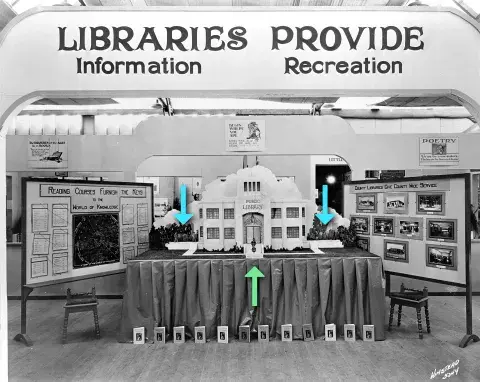
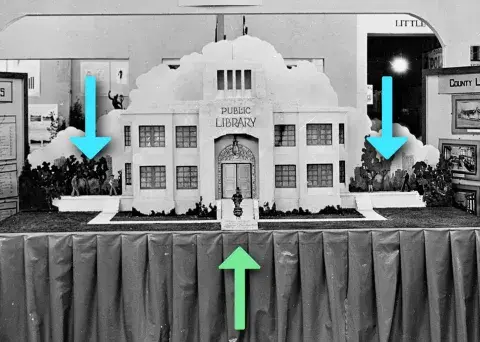
A quick interjection about Faith Holmes Hyers' work in library professional organizations. She was an active and engaged member of both the California Library Association (CLA) and the American Library Association (ALA). One of several library committees she worked on was one for the Pacific Southwest Exposition, which is little remembered today. The exposition was held in Long Beach from July 27 to September 3, 1928, and resembled a miniature World’s Fair. This CLA committee was responsible for creating an engaging library-themed exhibit for visitors. A model of a library, complete with a mechanized line of people entering through its side doors and exiting through the front, with books of varying titles (the titles were large enough to read), was a focal point of the exhibit. The library model even had a slight resemblance to the new Central Library.
American Library Association and California Library Association work, including scrapbooks and tours (1930)
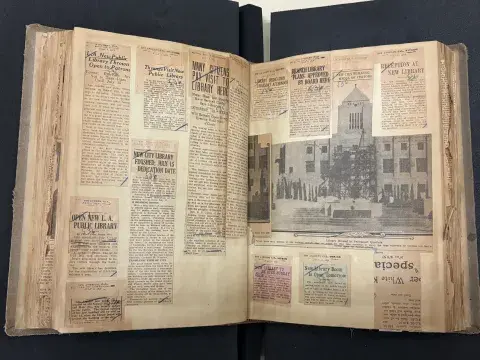
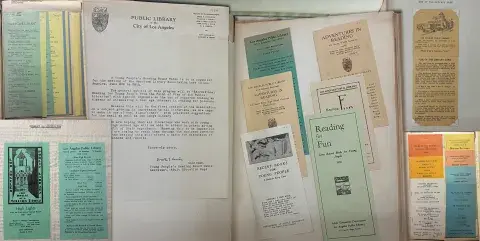
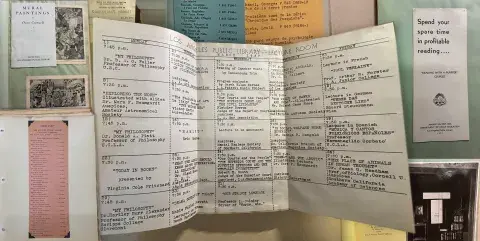
When the American Library Association and California Library Association both converged on Los Angeles in 1930 for their annual meetings, Faith Holmes Hyers was a de facto concierge. She provided information on interesting places for librarians to visit, assisted with tours through Central Library, helped organize tours to other Southern California libraries, and led other excursions for up to 400 librarians a day. She also showed off her scrapbooks. Hyers created truly impressive publicity scrapbooks complete with samples of the guides, flyers, and booklists (including multigraphed, mimeographed, and printed samples). She also had separate scrapbooks of newspaper and magazine clippings. ALA was so impressed with her scrapbooks that they enlisted her aid to create similar scrapbooks that were available to loan out to libraries across the country through the ALA office. Several of her scrapbooks can be viewed today in Special Collections.
The death of Everett R. Perry (1933)
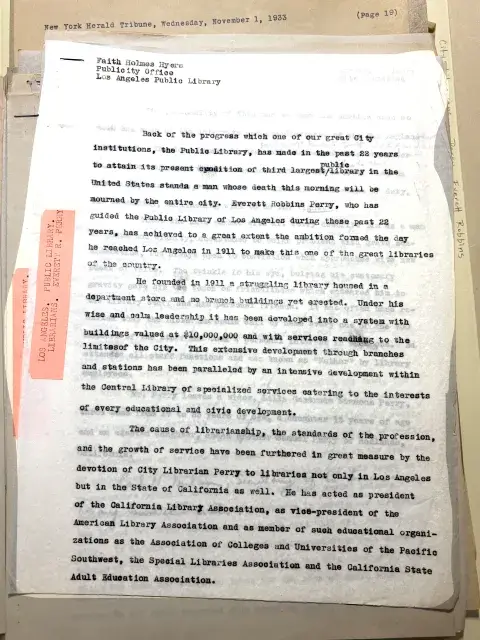
The October 1933 death of beloved City Librarian Everett R. Perry was a blow to the entire staff. Hyers quickly went to work, crafting numerous unique remembrances and obituaries to send to various news outlets in Southern California and throughout the library community. Several of these drafts now live in Special Collections, and I marvel at her expertise in writing different multi-paged versions for so many different outlets, all within a short time of his passing.
Comprehensive library history (1933/1936)
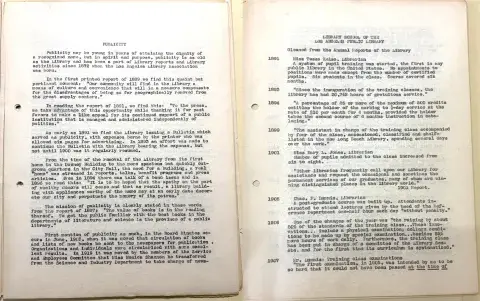
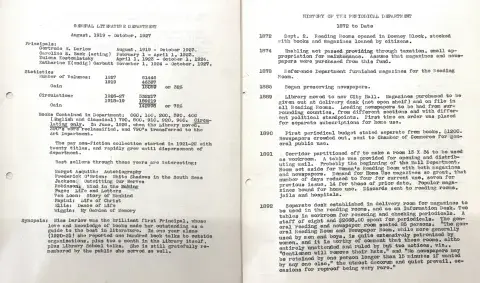
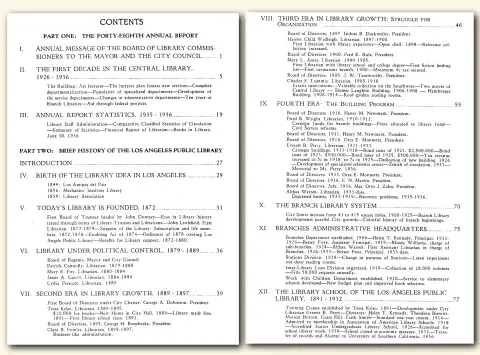
In 1933, Hyers compiled summarized histories of the various departments of the Los Angeles Public Library. Hyers also oversaw the work of WPA worker William S. Lewis, who delved into the library’s history during a six-month assignment. He combed newspapers, read clippings and written reports, and conducted interviews. He was only halfway done when his assignment ended, but he left incredibly detailed card files and references. From this information, Faith Holmes Hyers compiled a history of the Los Angeles Public Library that was printed across 50+ pages of the 1936 annual report. These documents are gold to library researchers, and her contributions cannot be praised enough.
Radio publicity (1938)
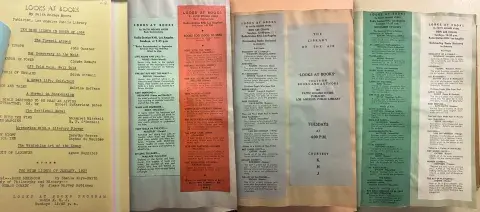
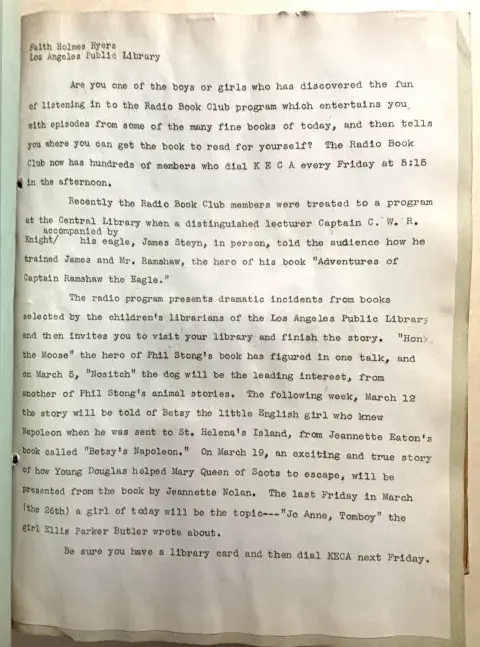
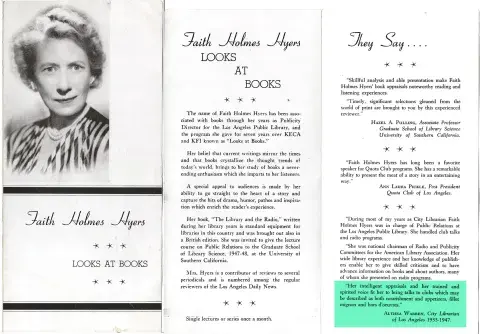
By 1928, the staff of the Los Angeles Public Library could be heard on KFI and KHJ promoting the library. Broadcast book talks were given by Frieda Grindell of the Foreign Department on KHJ. The library also tried its hand at radio contests. For example, Helen Spotts of the Vermont Square branch and Rhoda Williams Marshall would read from a best-selling book of the past, and ask listeners to send in their guess for the book title to the radio station KFI. During the Depression, work on the radio programs was turned over to the Publicity Department (aka Hyers), who expanded the library’s reach to include KECA, KFWB, and KRKD. [Interesting tidbit: The Publicity Director of KFI-KECA suggested a voice test of twelve library employees; the five with the most pleasing radio voices were chosen to work on weekly library-related programs and announcements on KECA.] Faith Holmes Hyers began her weekly broadcast book talk, Looks at Books, on KHJ in 1935. (The KHJ’s program manager insisted that it should only be Hyers reviewing the books and that she always submit her copy a week earlier than the broadcast. With her busy schedule, when did she find time to read these books?!?) Her popular 15-minute book program meant increased circulation for the books she reviewed, increased demand for the booklists she talked about on air, as well as fan letters written to the library.
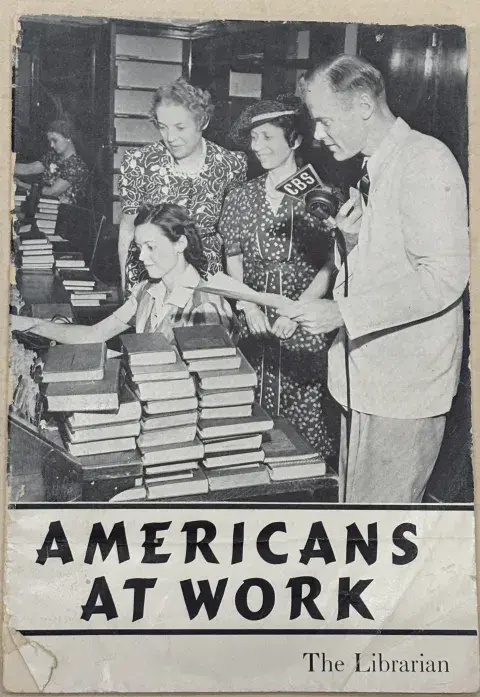
Faith Holmes Hyers took to radio publicity like a duck to water; she saw great potential in radio publicity for libraries. She became a member of ALA’s Library Radio Broadcasting Committee (she was elected chairman of the committee in 1937), and joined the Library Cooperation committee of the National Advisory Council on Radio in Education (NACRE). She attended the 1936 ALA conference in Richmond, Virginia, where she was in charge of seven out of the eight library-related broadcasts on NBC (some of which were national). She acted in a similar capacity during broadcasts from the 1939 ALA conference in San Francisco, where she even participated in the July 1, 1939, episode of the radio show Americans at Work, which featured librarians and starred Faith Holmes Hyers and Nell Steinmetz of the Los Angeles Public Library. [If anyone has a recording of this radio show, I’m all ears!]
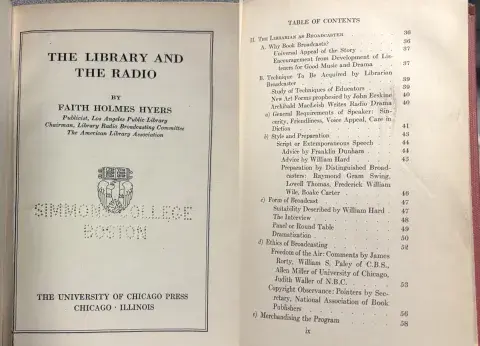
In 1938, the University of Chicago Press published Faith Holmes Hyers’ book The Library and the Radio. In her unique position between ALA and NACRE, Hyers was asked to study how radio and libraries could work together to achieve the best outcomes for libraries and listeners. An estimated 90 million people listened to the radio, so it paid for libraries to be in the game. She suggested that to be most effective, libraries should advertise their radio programs, create displays to complement or contextualize their radio talks, and encourage radio "listening rooms" in their libraries. Library workers who would be presenting on the radio were encouraged to study up on the methods of popular broadcasters.
Round up
Sadly, the library’s budgetary constraints ultimately meant the need to cut departments, and the official role of publicist was abolished on June 15, 1943. Faith Holmes Hyers, as a librarian, was moved to fill a vacancy in the Library’s Adult Education department but soon left to work in the Industrial Relations department of the Douglas airplane plant. In 1948, she was briefly back in the library publicity field when she taught a publicity course at the USC Library School. [Interesting tidbit, USC absorbed the Los Angeles Public Library’s Library School when it closed in 1936.] In her later years, Hyers continued reviewing books, often for the Los Angeles Daily News, and speaking at various meetings. Faith Holmes Hyers passed away in January 1966 at the age of 78.
Postscript: Duties/responsibilities (1925-1943)
Faith Holmes Hyers juggled a huge workload during her 18 years as the Los Angeles Public Library’s publicist. Buckle up, a long list of her responsibilities is coming your way. She was in charge of all print publicity for Central Library and the branches (often supplying two articles a month to community newspapers for each branch). She compiled the Central Library guides, the handbooks for Central Library and the branches, the children’s department’s 1926 booklet Public Library Service to Elementary Schools, the annual reports, the yearly statistics sent to ALA and CLA, the LAPL Library School catalogues, the 1933 histories of the LAPL departments (which are fascinating!), and the LAPL historical information printed in the 1936 annual report. She was also in charge of editing (and getting printed in-house) all of the library’s printed materials, such as booklists and event calendars. Additionally, she served as editor of the LAPL staff publication, The Broadcaster, for a short time.
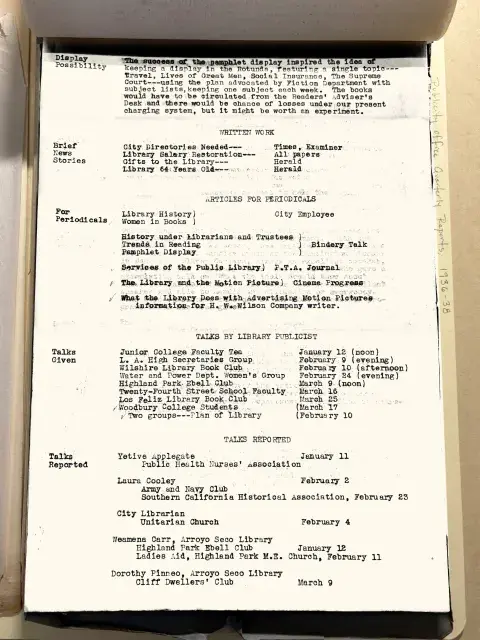
Only a few years of Faith Holmes Hyers’ Publicity Department reports survive, but these snippets of her assignments from the January through March 1937 report give you an idea of her workload. After compiling the Annual Report and the History of the Library, it needed proofreading, "a strenuous task as much re-reading and many corrections were necessary, and the printer needed a great deal of 'jogging' to bring it to a finish." She then created a mailing list of recipients for the reports. The "Guide to the Library" and "Spend Your Spare Time in Profitable Reading" booklets needed revisions and printing (no mention of the number printed). Librarians from Central and the branches sent their booklists to the Publicity Office for mimeographing (she oversaw 10,845 total mimeographed booklist sheets during these three months). Additionally, she prepared news articles on four distinct topics for various local newspapers (these topics were the library’s need for city directories, the restoration of library salaries, the various gifts sent to the library, and the library system at 64 years old). She wrote eight different articles for five different magazines, and gave nine talks to eight different groups and clubs. She oversaw the Lecture Room (booking of lectures and publicity, including the mimeographing of 13,000 lecture calendars) and the outdoor and lobby exhibit spaces (which she coordinated to change weekly). She was also in charge of the publicity for a special program at the library—the Los Angeles Public Library was one of thirty locations across the country chosen to display federal pamphlets on "current social and economic questions," and it was her job to draw in the public to view the pamphlets (which were available for the public to also order). To that end, she prepared a form letter for City Librarian Althea Warren to sign, and then sent it to twenty-seven clubs, twenty-three university professors, and forty-eight school and PTA organizations. She distributed 500 flyers to libraries, schools, and organizations to post. She wrote news stories about the display and distributed them to all six of the daily newspapers (then in Los Angeles) and a handful of local magazines. She arranged radio talks on KFVD (for Althea Warren) and KGFJ (for herself), and gave talks at various women’s clubs about the pamphlet display. Whew! When did she sleep?
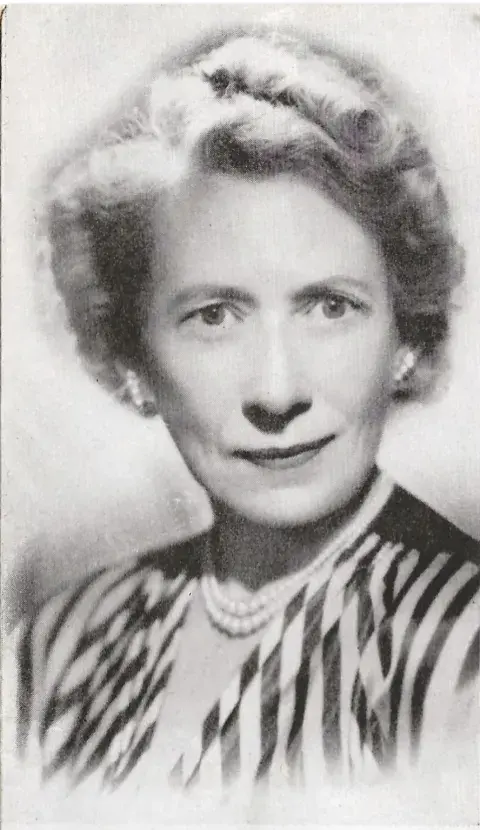
A huge thank you to Sheryn Morris for lighting my path to the work of Faith Holmes Hyers, and to Hyers' great-grandson (also a librarian!) Brent Singleton, for sharing family photos and filling in many blanks of her life. One lasting legacy of Faith Holmes Hyers's work is the Library's incredible historical record up to 1943. It is a model to aspire to. Kudos to everyone involved in preserving the institutional history in the making every day at the Los Angeles Public Library, including the staff involved in the LAPL Institutional Oral History project (available on TESSA) and everyone in Special Collections.

