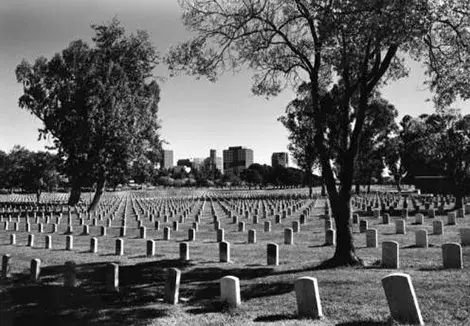
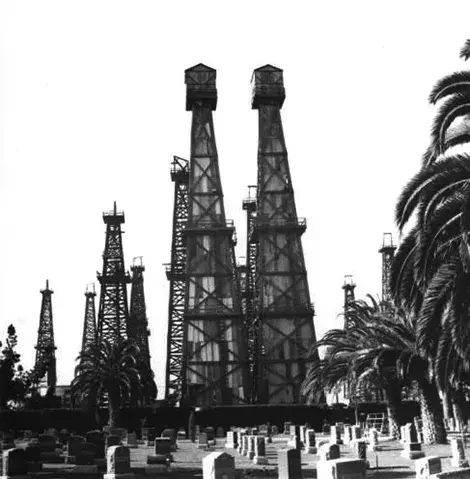
Halloween has become a huge, month-long celebration in these modern times and not just for candy and death as I recall it meant when I was a brat. Adults dress-up as much as kids now, and parties feature less bobbing for apples and more imbibing micro-brews that make participants forget this day is dedicated to the dearly departed. There are around eighty parks of eternal sleep around LA County and we have had such places where spirits might roam since the very beginnings of the pueblo.
The planned plaza, shown below, already had burial plots laid out and the first public cemetery goes so far back the first man buried there was killed by a bear in the Santa Monica Mountains. The very first surveyed map of the city features two cemeteries and Eternity Street which needs little explanation. In the early days, cemeteries were not coop-style and it was up to the families to maintain and protect the graves which often fell away as the years passed, as did the relatives. Many bodies were moved from old cemeteries to new ones and some just got paved over as progress expanded the city of Los Angeles. Included here are some of the prominent cemeteries around the city with some excluded just because they don’t show up well on maps.
Plaza Cemetery - From a plan created by Jose Arguello laying out the original pueblo including the cemetery that served the settlement until they began transferring bodies to the city cemetery up in the hills above the plaza.
Camposanto at the San Gabriel Mission - From 1778 to 1865 these grounds were the resting place of thousands of Gabrieleno Indians and settlers around the Mission.
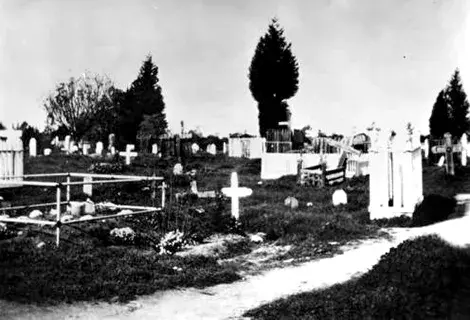
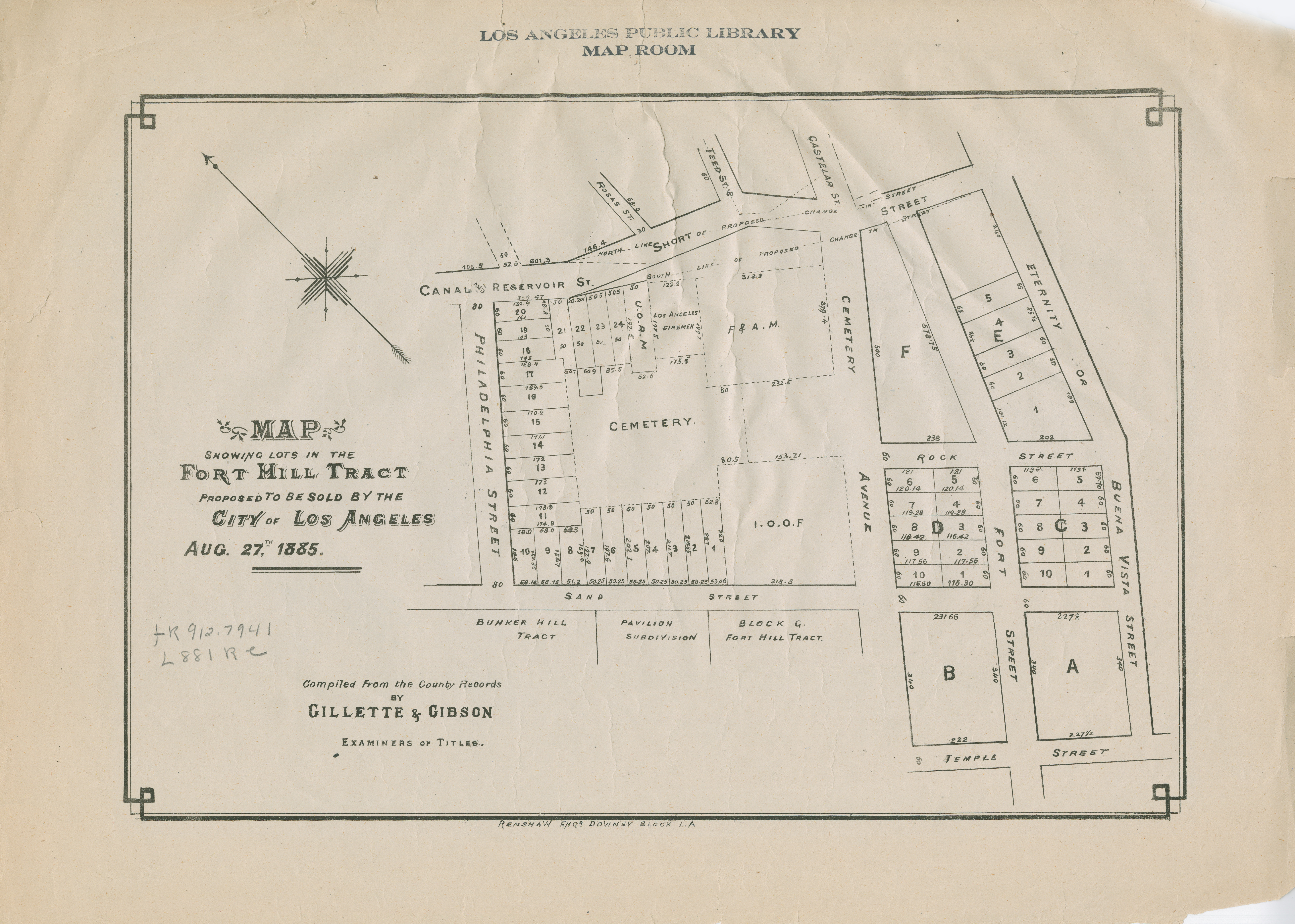
Fort Hill Cemetery - Founded in 1853 where anyone could lay a loved one in the ground but then tend to the plot as there was little public cooperation in this graveyard.
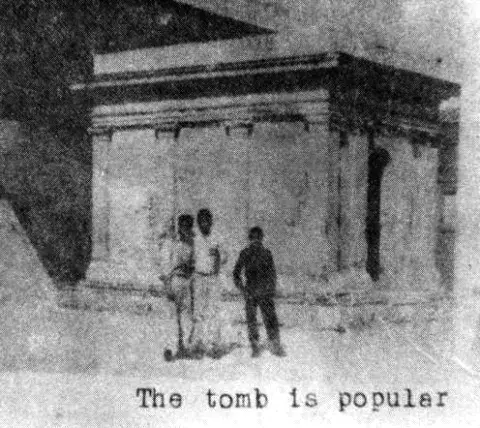
Fort Hill Mausoleum - A type of interment reserved for the wealthy at the time.
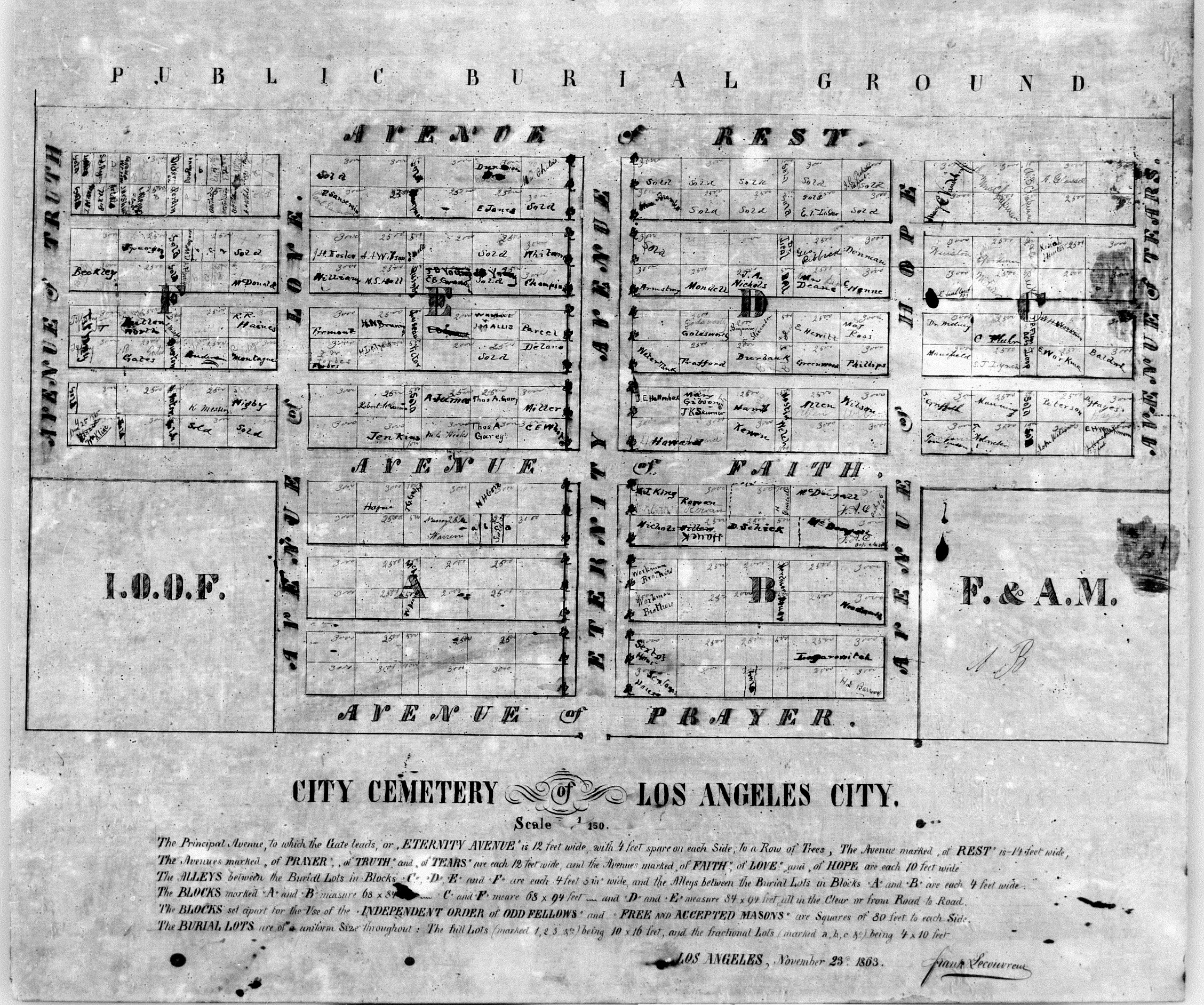
City Cemetery - A detailed look at the first public burial ground around 1863, now fallen into disrepair but bearing the names of those interred in the grounds that would eventually be moved to other cemeteries like Evergreen, Rosedale or New Calvary.
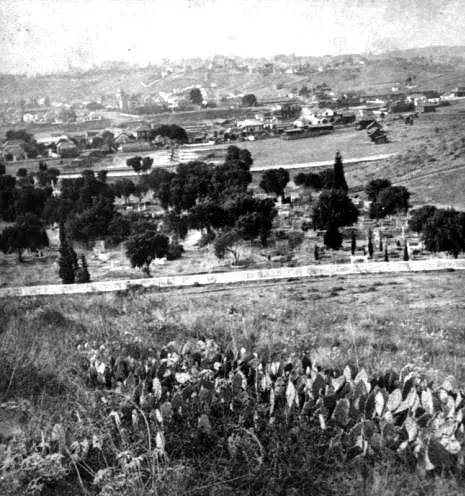
Old Calvary - The early Roman Catholic cemetery that sat in the hills where Cathedral High School now exists. The chapel of the old graveyard is maintained in St. Peter’s church on North Broadway.
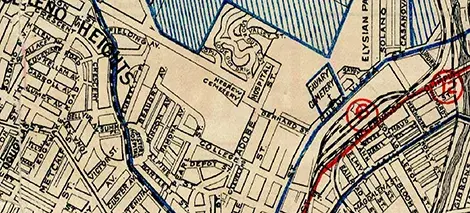
Old Calvary/Hebrew turn of the century map detail showing old Calvary and Hebrew Cemetery.
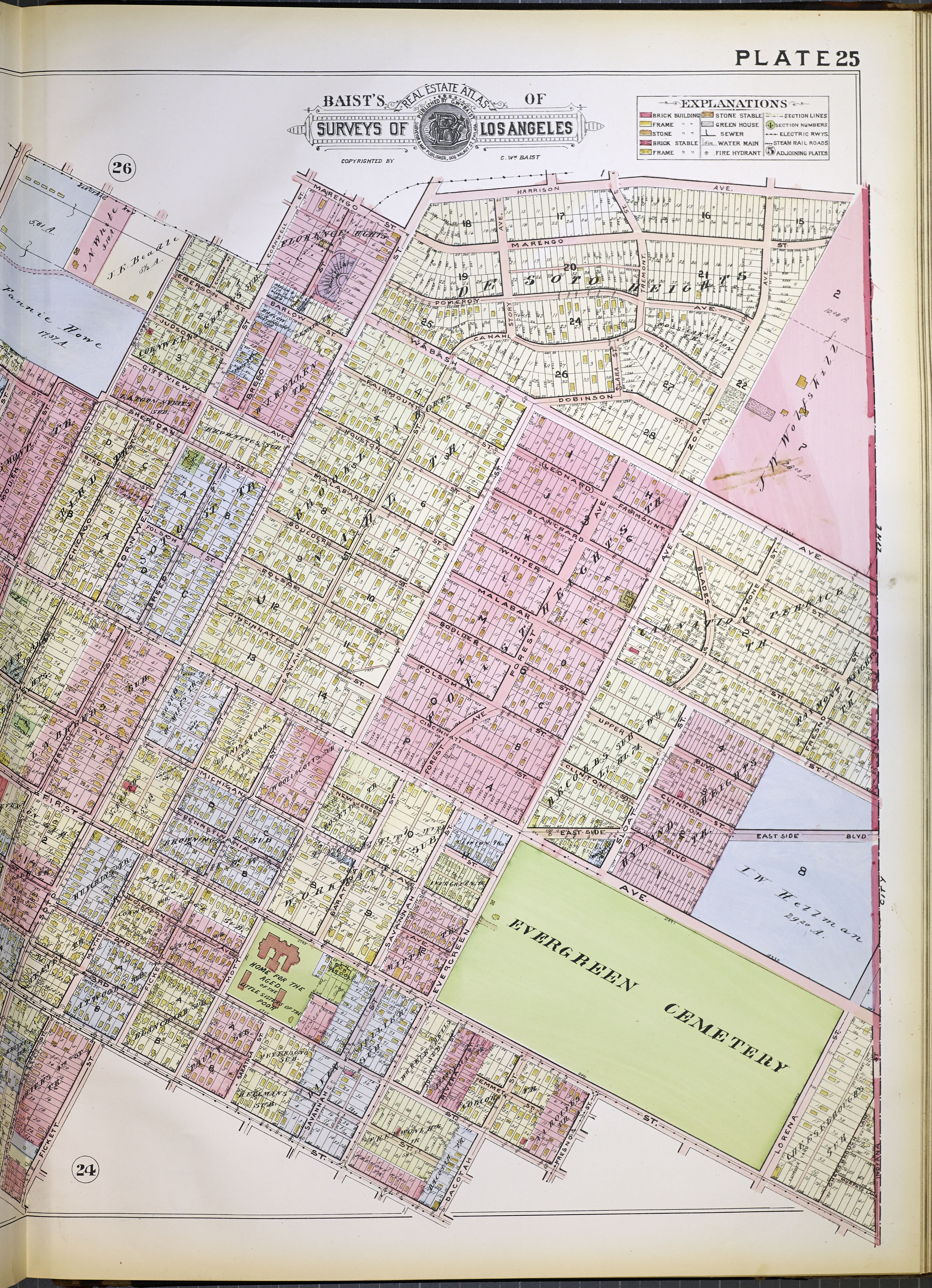
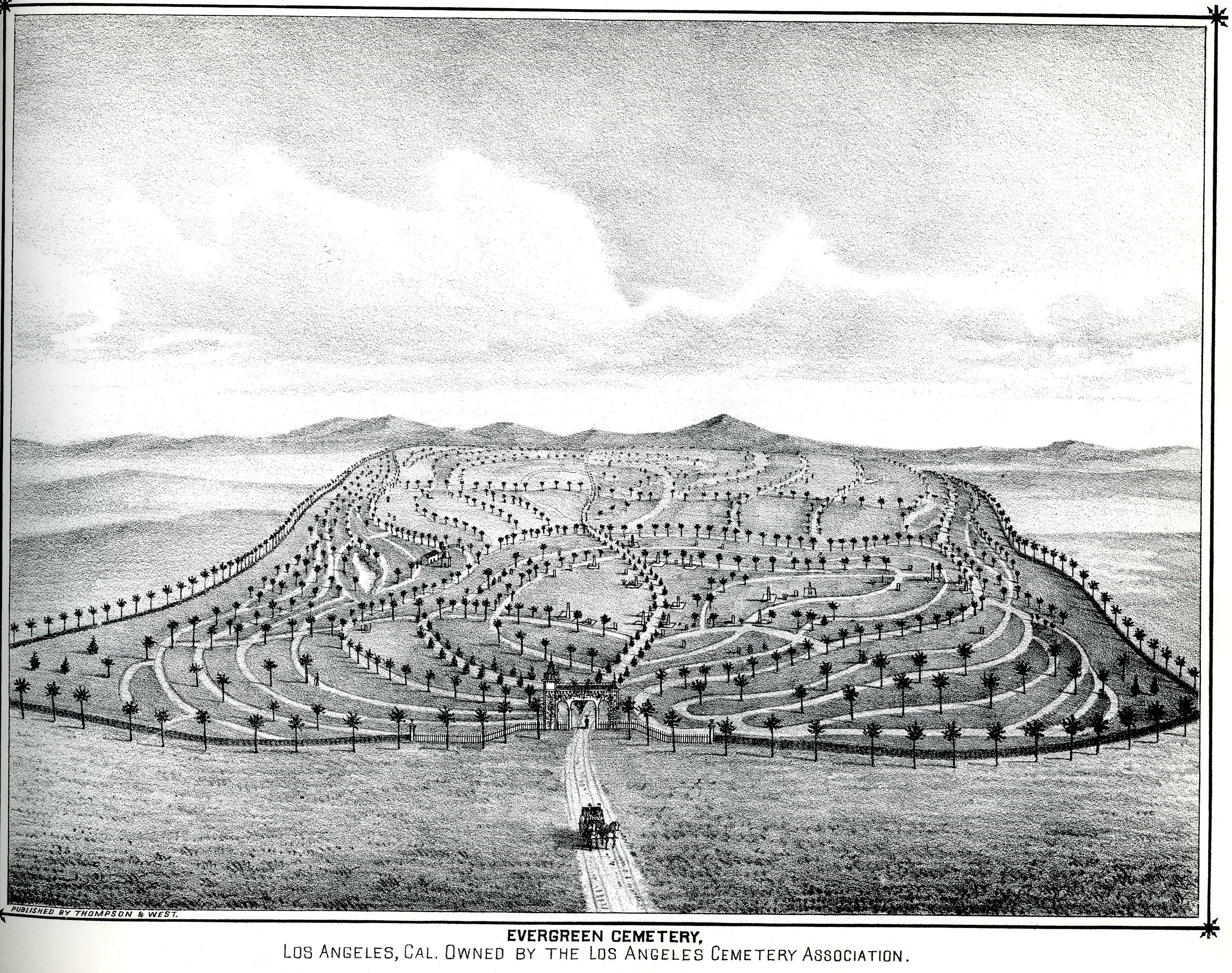
Evergreen Cemetery - Founded in 1877 to accept the overflow from the growing city that eventually grew to 300,000 graves. Evergreen was also the place where a Potter’s field was maintained to bury the poor and indigent.
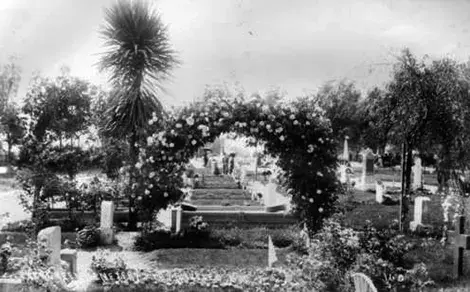
Evergreen - The front gate of the new cemetery adorned with grand landscaping.
Evergreen - Seen in 1921 in the heart of Boyle Heights.
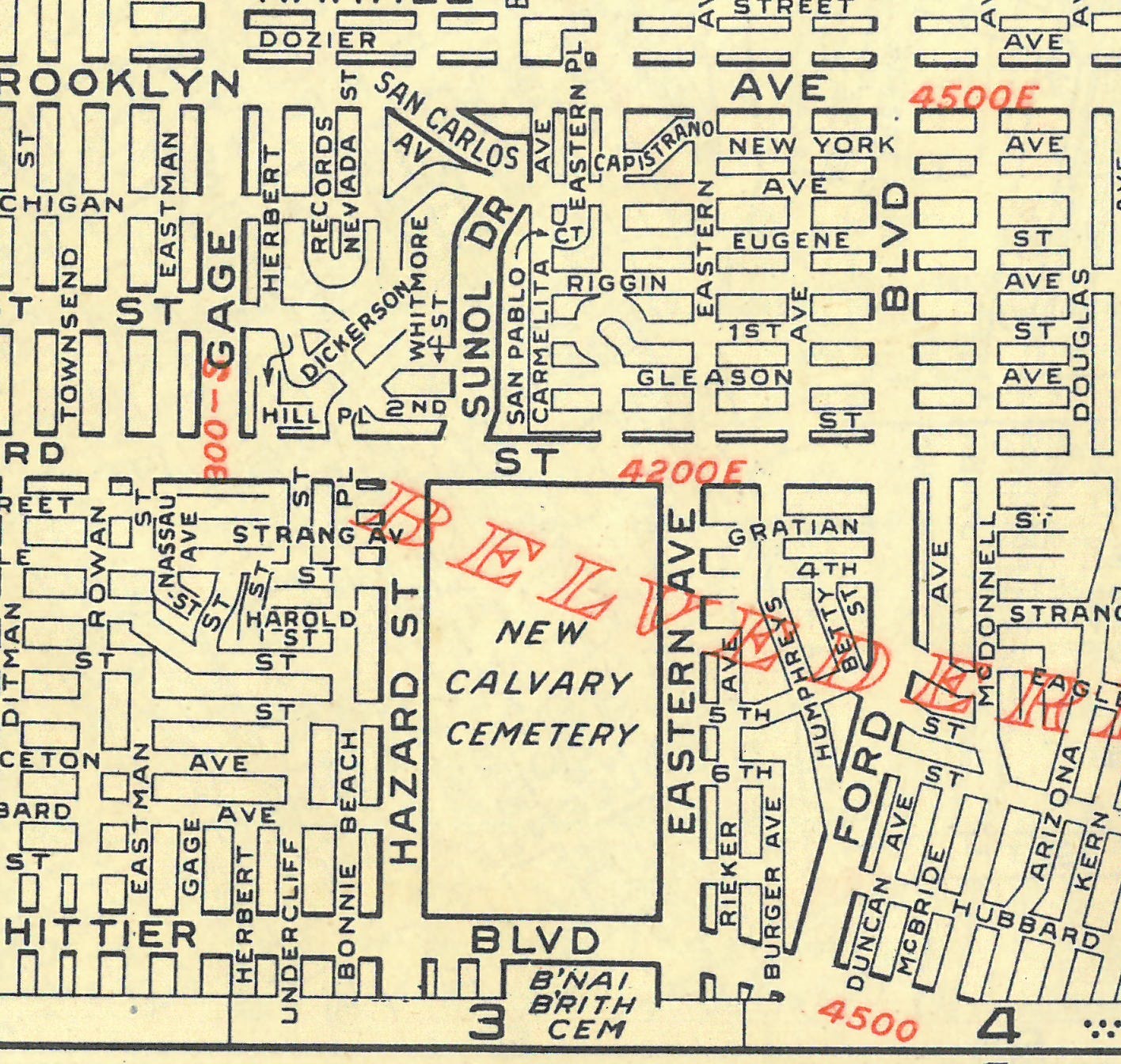
New Calvary - When Old Calvary became overcrowded many of the graves were moved out to this 137-acre spread at the edge of East Los Angeles in 1896. 1931 Gillespie guide. Barely visible at the bottom is the B'nai B’rith Jewish Cemetery that was moved from near Chavez Ravine.
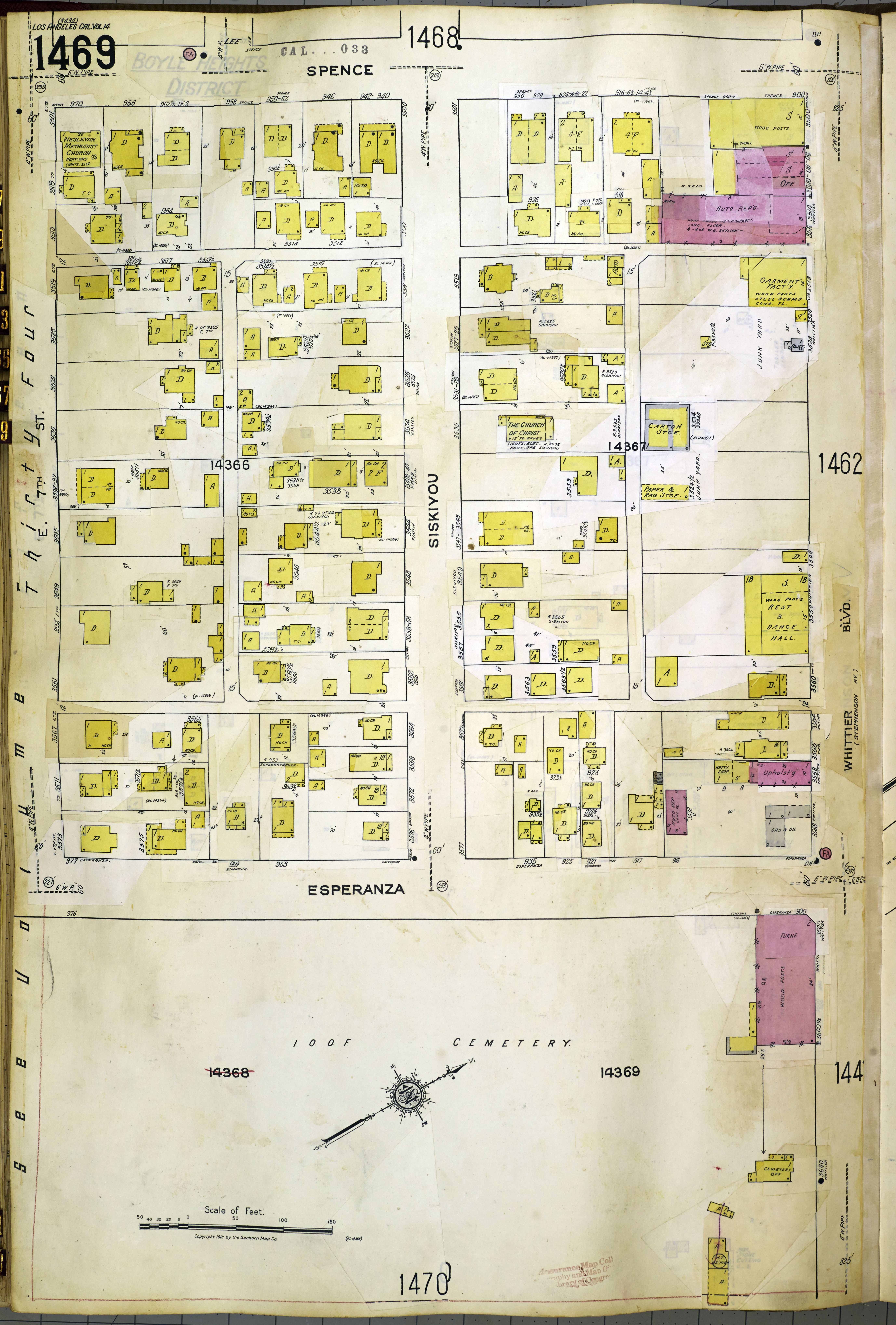
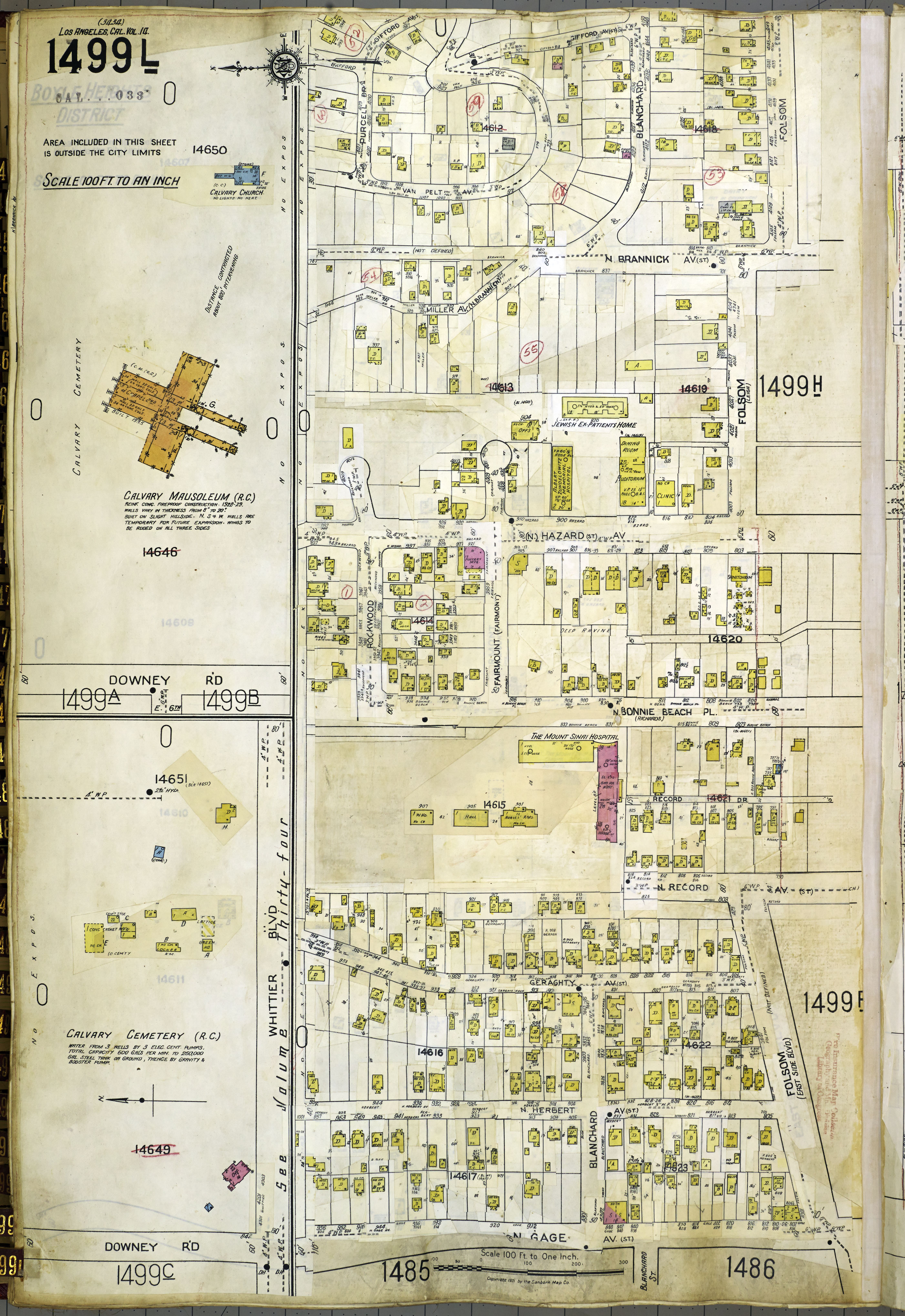
New Calvary grounds - Sanborn Fire Insurance Atlas Vol 14, [1930].
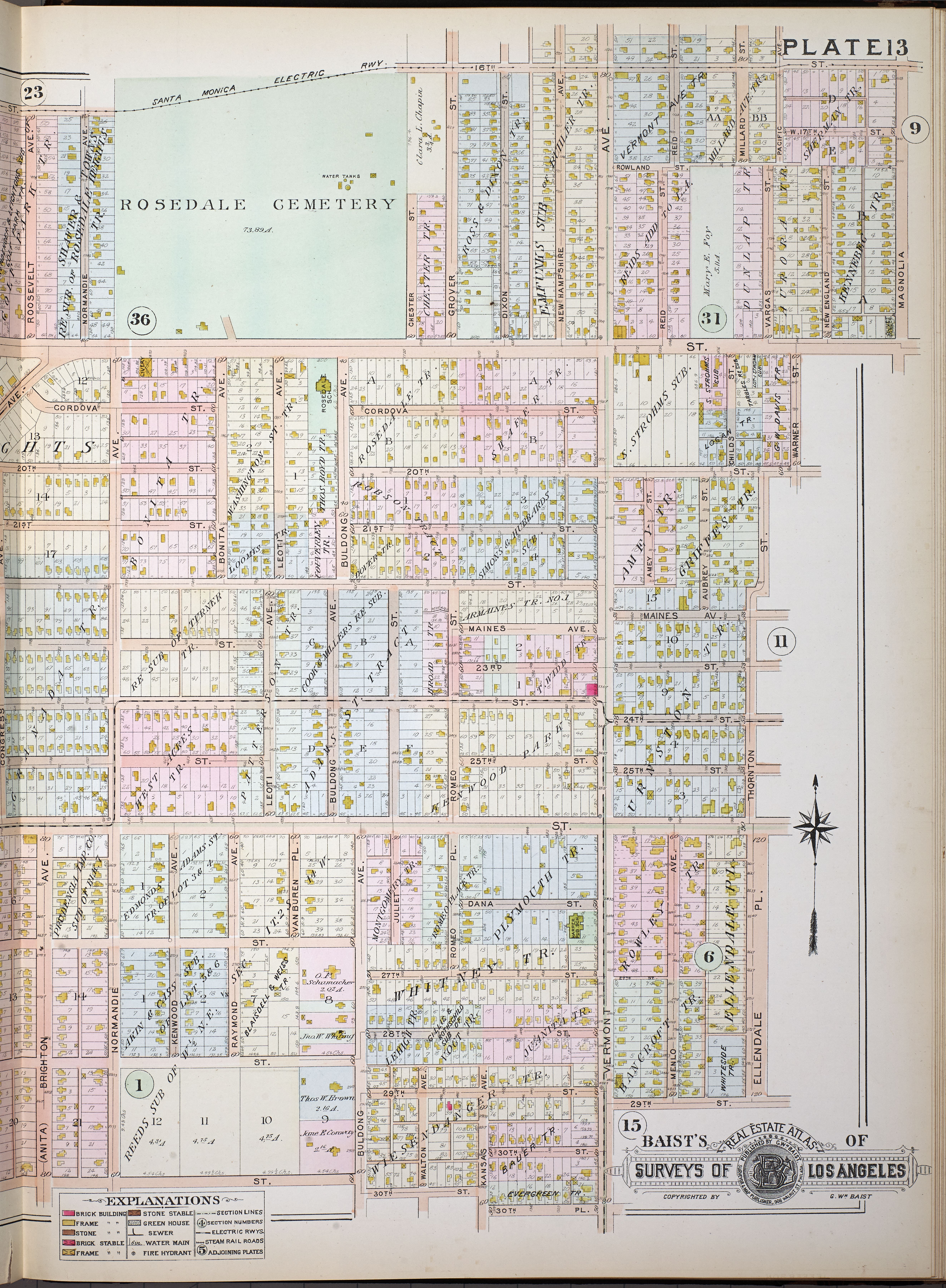
Rosedale founded in 1884 at the peak of the population boom Rosedale offered 65 acres of the new-style lawn cemetery open to all races and creeds.