
The Man Who Got Central Library Built, Carleton Monroe Winslow

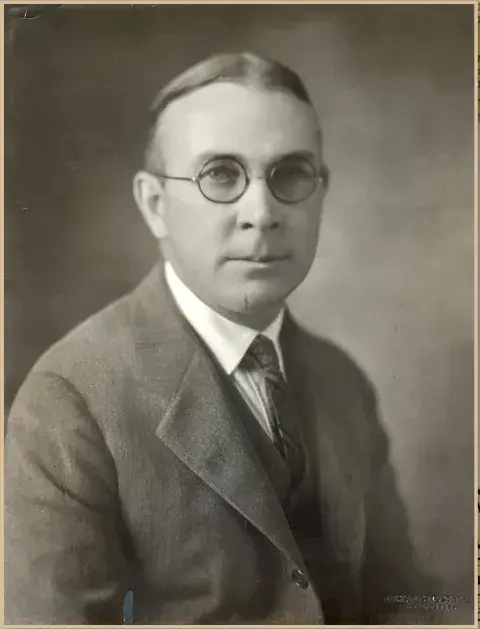
I have tried to see through Mr. Goodhue’s eyes and carry to completion the building as nearly to the Goodhue ideal as possible.
—Carleton M. Winslow quoted in The Art of the Los Angeles Public Library, An Appreciation by Merrell Gage, in Artland magazine, August 1926
New York-based Bertram Grosvenor Goodhue was the lead architect on Los Angeles’ incredible Central Library, but it was his associate architect, Los Angeles-based Carleton Monroe Winslow, who got it built. By stepping in to complete the library in Goodhue’s vision following the architect’s 1924 death, we are able to celebrate 100 years of Central Library. Let’s explore the lasting legacy of Carleton M. Winslow.
The Panama-Pacific Exposition in San Diego
No one can view this noble group [of buildings], built in imperishable concrete, without a feeling of profound obligation to the architect, Mr. Bertram G. Goodhue, and his able assistant, Mr. Carleton M. Winslow, under whose personal supervision it was constructed. The California Quadrangle furnished the artistic keynote to the Panama-California Exposition.
—Architecture of the Exposition by archaeologist Edgar L. Hewitt and architect William Templeton Johnson, 1916
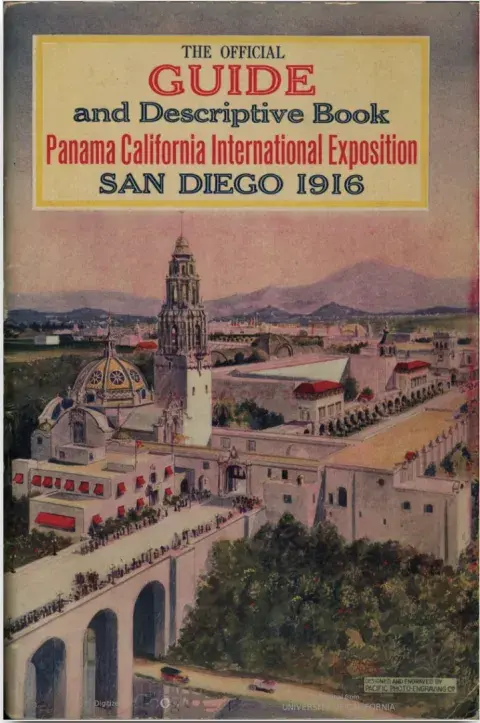
Central Library was not the first time Winslow was responsible for carrying out Goodhue’s vision. Winslow was once part of the Cram, Goodhue, and Ferguson architectural firm in New York and settled in California while working on the Panama-Pacific Exposition. Goodhue was the supervising architect of the 1915 Exposition and garnered much praise for the buildings he designed there, which were known as the California Quadrangle. He left it to Carleton M. Winslow, who was at that point living in San Diego, to oversee the California Quadrangle construction. Additionally, Winslow was allowed to design many of the other buildings in the Exposition, subject to Goodhue’s approval of the plans. Today, most of these buildings can still be seen in San Diego’s Balboa Park. If you are interested in learning more, The Architecture and the Gardens of the San Diego Exposition: A Pictorial Survey of the Aesthetic Features of the Panama California International Exposition, written by Carleton M. Winslow, is available at the Central Library. Winslow opened his own architecture office in San Diego in 1915 and moved to Los Angeles in 1917.
The Central Library Building of the City of Los Angeles
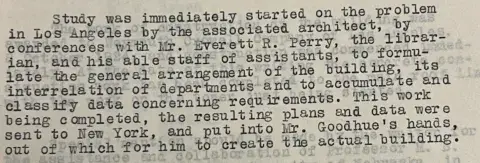
Carleton M. Winslow describes working with library staff on the plans for the Central Library in a document he wrote, Statement of the Architects For the Central Library Building of the City of Los Angeles, California, which was placed in the library’s cornerstone on May 3, 1925. The document was retrieved from the cornerstone in 2026. Los Angeles Public Library Institutional Collection
Bertram Goodhue and Carleton M. Winslow were working together again, this time on the Central Library, when Goodhue died unexpectedly in 1924. With the blessing of Goodhue’s widow, Goodhue’s colleagues in New York (who reorganized as Bertram Goodhue Associates to complete his projects) completed the Central Library drawings, and Carleton M. Winslow was made responsible for the building of the library.
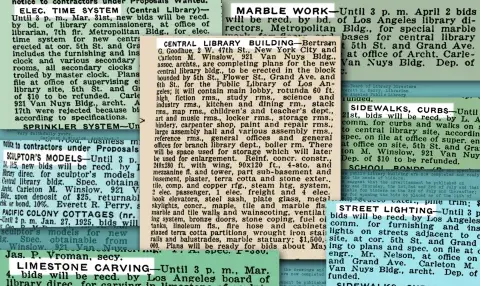
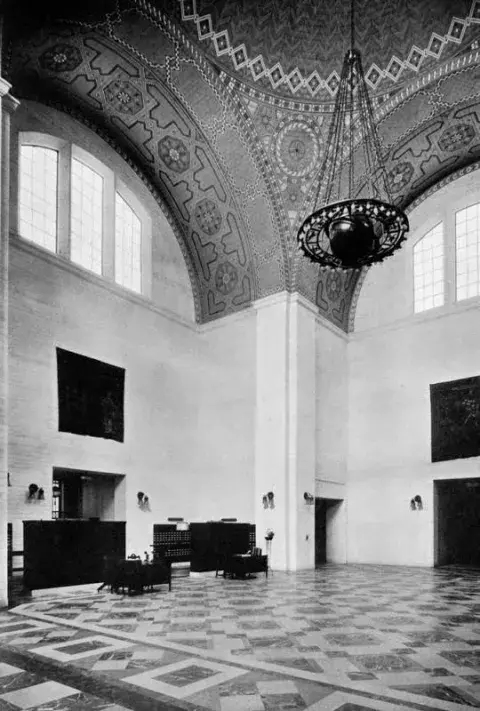
The conscientious architect oversaw all aspects of Central Library’s construction. What follows is just a short list. Winslow insisted on honoring Goodhue’s triumvirate vision—the successful collaboration of architect, sculptor, and painter—and championed the hiring of sculptor Lee Lawrie and painter Julian Garnsey. He advocated for stone carver Edward Ardolino, who brought Lawrie’s designs to life. He worked with Beverly Hills Nurseries to flesh out Goodhue’s landscaping preferences. He gathered tile samples from Los Angeles-based B.V. Collins for the pyramid. He had opinions on the preferred types of finish on the wrought iron stairs, and the styles of street lamps that should illuminate the sides of the library along Fifth Street, Grand, and Flower. Winslow even helped negotiate the loan of (banker and “Father of Palos Verdes”) Frank Vanderlip’s tapestries to hang in the rotunda in the years before Dean Cornwell’s murals were installed.
The Los Angeles Public Library Seal
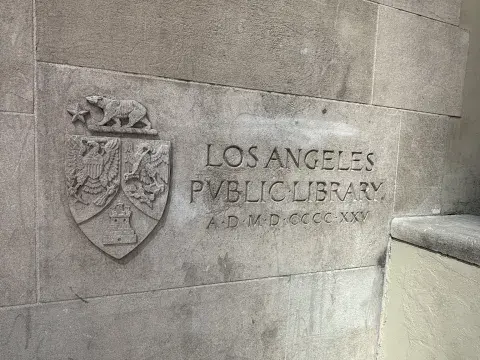
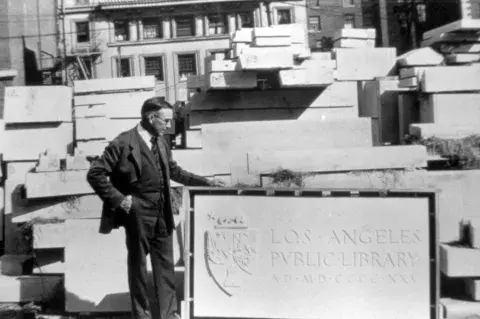
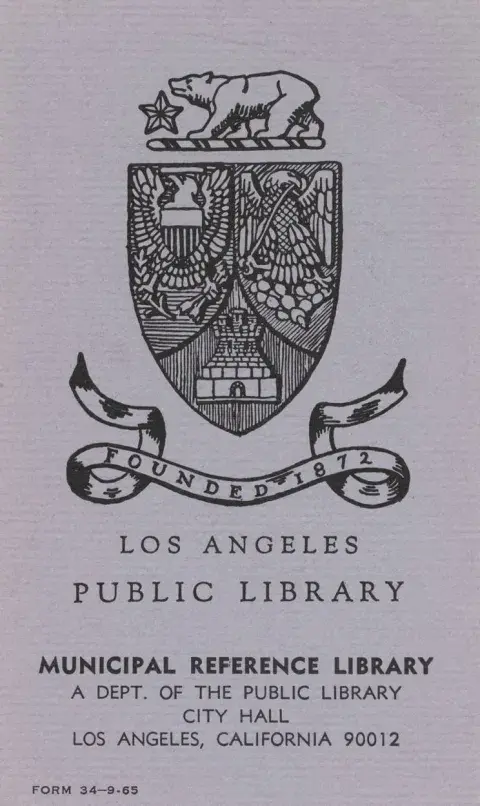
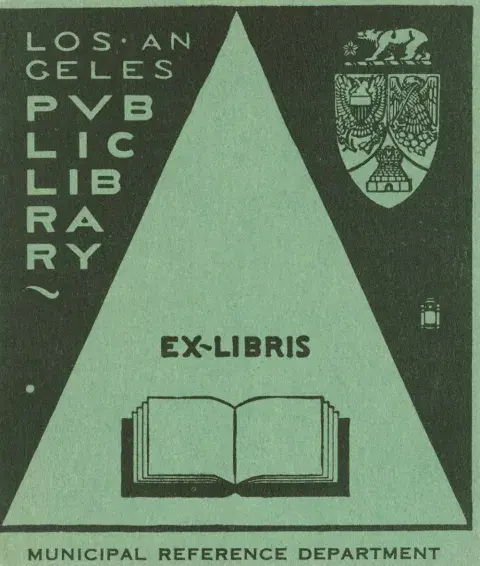
The library seal was designed by Carleton M. Winslow in 1925 for the Central Library cornerstone. According to information found in the library’s Institutional Collection, this was the third design that Winslow submitted to the Board of Library Commissioners. The design was an adaptation of the coats of arms for both Los Angeles and the United States. It features symbols representing the countries that have governed Los Angeles. The castle on the lower half of the seal represents the rule of Spain (1542-1821); on the upper right corner is an eagle holding a snake from the coat of arms of Mexico (ruled from 1822-1846); the United States is represented on the upper left by the eagle, olive branch, arrows, and escutcheon (ruled since 1846); plus the bear and star are from the California state flag. The cornerstone ceremony took place on May 3, 1925. Today, the cornerstone can be seen near the Library's Fifth Street entrance. His library seal was also used on the library's bookplates and letterhead.
Central Library Dedication
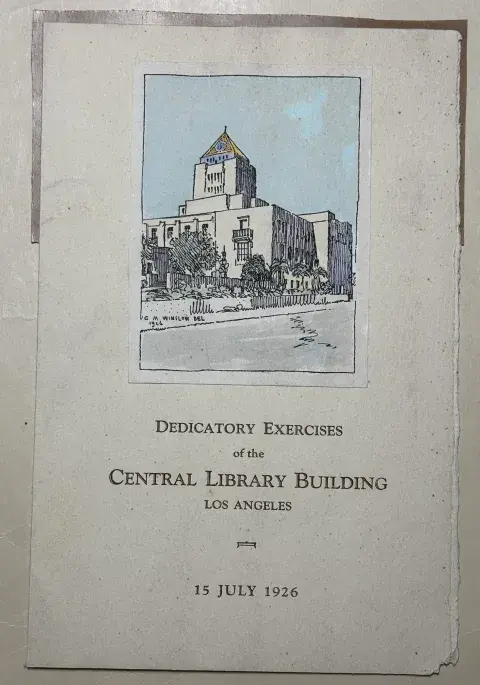
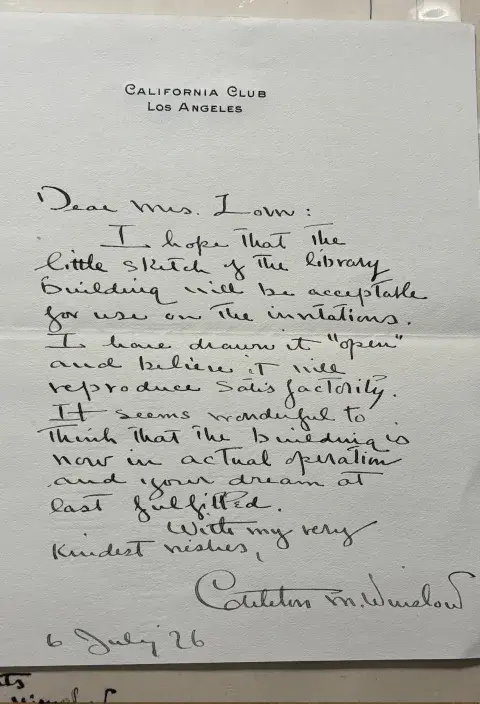
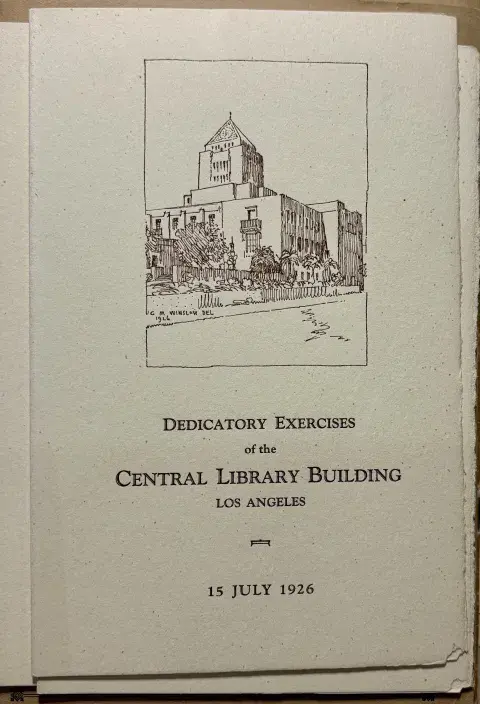
The formal dedication of the Central Library took place on July 15, 1926. Winslow drew (and painted) a small portrait of the library building as seen from the corner of Grand Avenue and Fifth Street, to be used on the dedication booklet. Speeches given that day, including those by Winslow, Orra E. Monnette (President of the Board of Library Commissioners), and City Librarian Everett R. Perry, are reproduced in the dedication booklet. It also includes an “in memoriam” to architect Bertram Grosvenor Goodhue.
[Read more about Goodhue’s life and work: Article 1; Article 2; Article 3.]
Beyond Central Library
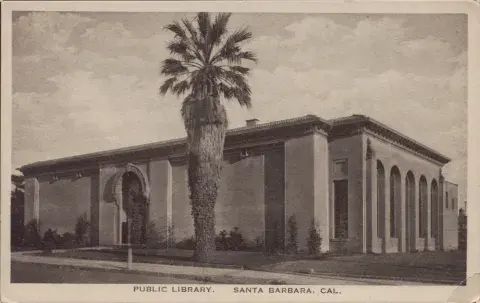
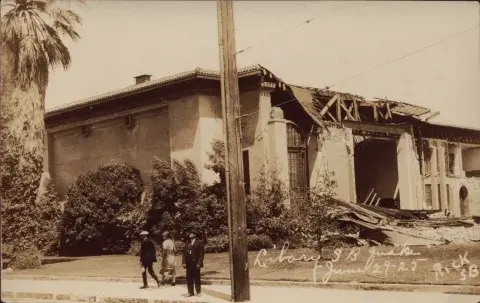
Carleton M. Winslow had other architectural projects in Southern California while Central Library was actively being built. Most of them were residential or churches (he was known for his religious architecture), but I want to highlight one other special job Winslow worked on. A devastating earthquake struck Santa Barbara on June 29, 1925, heavily damaging its library. Winslow, who had offices in Los Angeles and Santa Barbara, oversaw the library's reconstruction and monitored its progress. The rebuilt Santa Barbara Public Library reopened two months after the Los Angeles Central Library’s dedication.
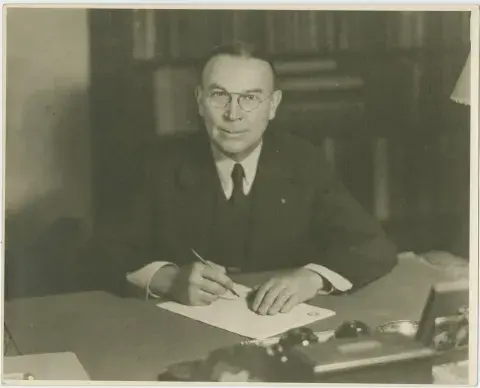
Many thanks to Mr. Winslow, who helped steer two libraries out of tragedy—stepping up to complete the Los Angeles Central Library after the untimely death of lead architect Bertram Grosvenor Goodhue, and leading the reconstruction of the Santa Barbara Public Library following the devastating 1925 earthquake. In appreciation of his work, Carleton Monroe Winslow will be inducted into the California Library Association Hall of Fame at their 2026 conference. Many thanks to Mr. Winslow’s family for sharing their photos. Thanks also to librarians Nicholas Beyelia and Jace Turner, as well as the incredible docents Karina Buck and Kate Kaplan, for their help.


