

Monitoring Water Quality
Why Do Scientists Study Water Quality?
Rising sea levels and increasing average global temperatures due to climate change are threatening the quality of water essential to ecosystems worldwide. Scientists study data such as pH, electrical conductivity (EC), and temperature from samples of different water sources to better understand the effects that climate change may have on the quality of water.
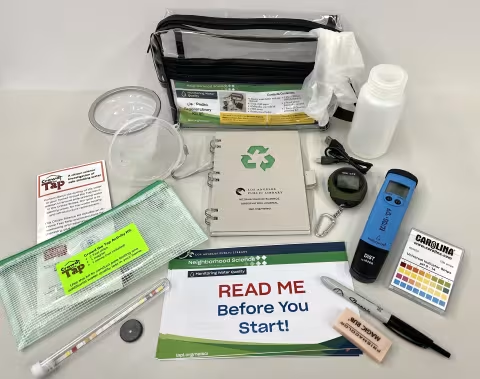
What's in the Kit?
- 1 distilled water wash bottle
- 1 empty water bottle with cap
- 1 pack of pH paper
- 2-3 glass vials with caps
- 1 HANNA DiST TDS meter
- 1 mini GPS location finder
- 1 USB charging cable
- 1 instructions packet
- 1 sharpie
- 1 eraser
- 1 observation journal
- 1 pair of gloves
- Safety rules
How to Help Scientists Collect Data
- Turn on the GPS feature on your smart device for accurate location coordinates and elevation. You can also use Google Maps or download a free GPS-Map app for your iOS Apple or Android device.
- Access the complete mWater Surveyor app tutorial and reference guide.
- Download the mWater Surveyor app for Android or iOS Apple. Launch the app and follow the instructions to create an account using your e-mail address.
Collecting and Surveying Water Samples
Step 1
Fill the clear 250 mL bottle in the kit with freshwater from the source you want to sample (e.g. faucet, hose, etc.). To test water from additional sources, fill the glass vials in the kit for sample collection.
Step 2
Immerse 1 pH testing strip into the water sample for up to 2 seconds and then remove. Shake off excess liquid. Wait 10 seconds and then compare the colors produced on the indicator pads with those on the color chart before the indicator pads dry. Record the pH value that contains colors that best reflect the colors that are on the strip. Keep all unused pH testing strips in the original packaging.
Step 3
Record the pH value on the data card using the Sharpie included in the kit (marking is erasable using the included eraser).
Step 4
Turn on the TDS meter in the kit and dip the probe into the filled bottle (included) or a clean paper cup (not included) containing your water sample. You will use TDS meters to test Total Dissolved Solids (TDS) in parts per million (PPM), and Electrical Conductivity (EC). Measuring water conductivity is important because it reveals water's salinity and the concentrations of other minerals and contaminants. Record the values displayed on the data card.
Only use the TDS meter for freshwater testing. Do not use it to test ocean/saltwater.
Step 5
Return to the mWater app or mWater website and input and submit the data you collected.
Useful Tip
If you prefer to submit your observation data anonymously, go to Observation Anonymous, and select Monitoring Water Quality to access the observation form. Complete all fields on the form, then select Submit.
Step 6 - Cleaning
Drain the water sample in the collecting bottle or vials. Use the included distilled water to rinse the bottle and vials. Leave the cap off of the vials and bottle to dry. Place the caps back on the dried bottles and vials, then put them back into the kit bag along with any other equipment and materials to be returned.
Rinse the TDS meter probe with tap water only to neutralize the acidic fluid tested. Do not rinse it with distilled water.
Step 7
Be sure to put all equipment, supplies, and instructions packet back into the bag and return the kit to the library so someone else can contribute.
Monitoring Water Quality Curriculum
Lessons
Lessons are short moments of NGSS (Next Generation Science Standards)- aligned direct instruction, delivered in video or slide format, that inform participants of the knowledge necessary to participate in Citizen Science activities.
Activities
Activities frame moments of Citizen Science participation through hands-on exploration and creation, including using the Neighborhood Science kits to collect data.