

Exploring Biodiversity
Why Do Scientists Study Biodiversity?
Biodiversity—the variety of life in a habitat or ecosystem—is a good indicator of an ecosystem's health, which is why it is important for scientists to understand the different types of species living in a particular area. Studying biodiversity helps scientists and researchers better understand the impacts of human activity and climate change on ecosystems.
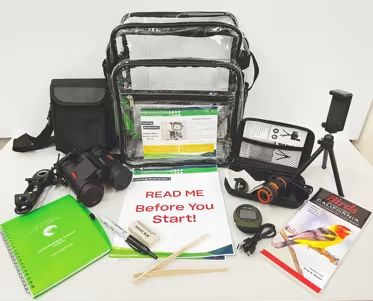
What's in the Kit?
- 1 8x32 binoculars and carrying case
- 1 Birds of Southern California pamphlet
- 1 clip-on lens kit
- 1 tweezer
- 1 mini GPS location finder
- 1 USB charging cord
- 1 instructions packet
- 1 sharpie
- 1 eraser
- 1 observation journal
- Safety rules
How To Help Scientists Collect Data With an Internet-Connected Smart Device
Step 1
Turn on the GPS tracker on your smart device for accurate location coordinates and elevation. Geospatial information is critical data for biodiversity research. You can also use Google Maps or download a free GPS-Map app for your iOS Apple or Android device.
Step 2
Download the iNaturalist app for Android or iOS Apple. Launch the app and follow the instructions on screen to create an account and sign in.
Step 3
Go to the iNaturalist video tutorials and watch the Adding an Observation on a Mobile Device video for step-by-step instructions on how to make and add observations using the iNaturalist app.
Step 4
Open the iNaturalist app and tap the camera icon to choose an observation method:
- Tap the Camera icon to take pictures of species of plants, animals, and insects you observed.
- Tap the Photo Library to share an observation you already photographed and saved to the photo album on your smart device.
- Tap Record Sound to record the sound of the species you observed in your surroundings.
Step 5
To take pictures of small things like insects or flowers, use the clip-on macro lens in the kit from about an inch away. To take pictures of things far away, clip the zoom or telephoto lens onto your smart device.
Step 6
Open the iNaturalist app and click on the camera icon to take pictures of and submit your observations.
Useful Tip
If you prefer to submit your observation photo anonymously without creating an iNaturalist account, go to Observation Anonymous and select iNaturalist to access the observation form. Complete all fields on the form and select Submit.
Suggested Activity
Use the binoculars and the Birds of Southern California guide in the kit and see how many different species of native birds are in your neighborhood.
Step 7
Be sure to put all equipment, supplies, and instructions packet back into the bag and return the kit to the library so someone else can contribute.
Exploring Biodiversity Curriculum
Lessons
Lessons are short moments of NGSS (Next Generation Science Standards)- aligned direct instruction, delivered in video or slide format, that inform participants of the knowledge necessary to participate in Citizen Science activities.
Activities
Activities frame moments of Citizen Science participation through hands-on exploration and creation, including using the Neighborhood Science kits to collect data.