Finally Carved in Stone: The Entrances of Central Library


As rapidly as the plaster models come from the [New York] studio of Mr. Lawrie, the carvers set to work with compressed air chisels, hewing out the measured outlines.
Flower Street (aka West Facade)
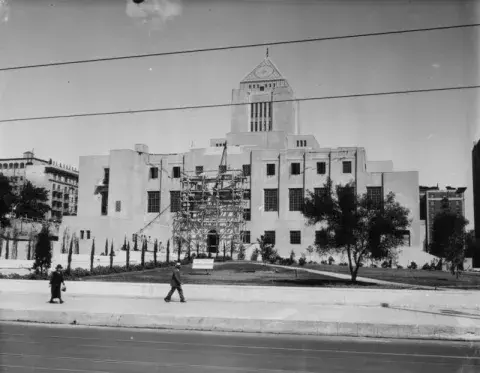
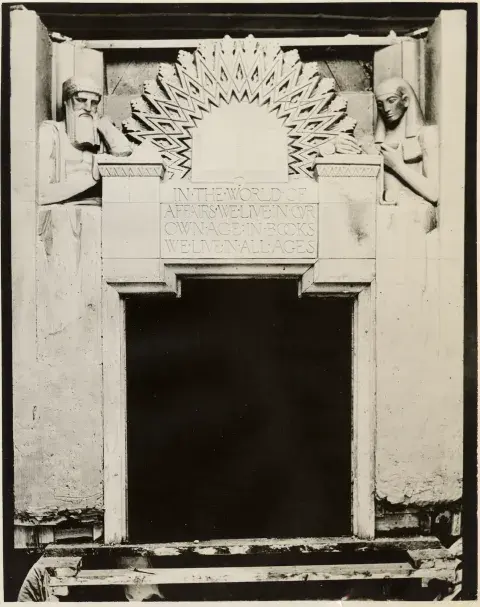
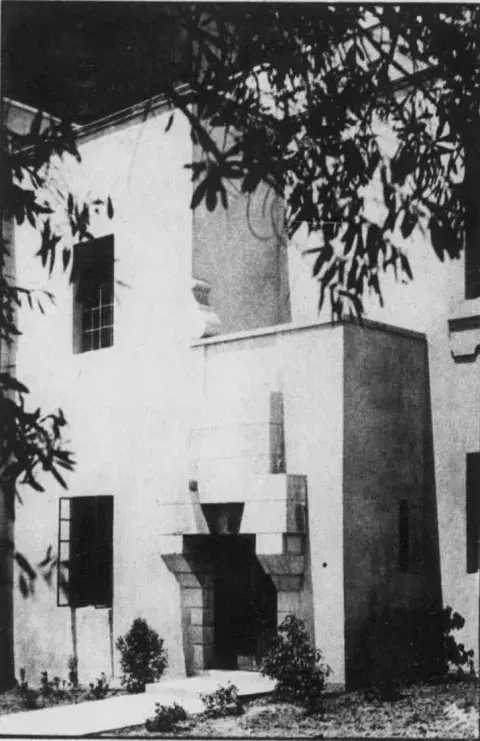
A small article ran in the Daily News on October 25, 1926, about the opening of the Central Library’s Flower Street entrance, "Public Library Main Entrance Now Open." It's hard to imagine now when we gaze up to see the stone figures around its doorways but when the Library originally opened in July 1926, none of the entrances had been carved yet. A newspaper article written at the time noted that it might be a year before all of the carving was completed. The photo above would have been the scene greeting you in the Library’s early months. It was three months after opening before the Library’s main entrance on Flower Street was fully carved and ready to greet the public. The themes for each of the Library’s entrances were suggested by architect Bertram Goodhue and finalized by philosophy professor Hartley Burr Alexander and sculptor Lee Lawrie. Let’s take a look at what went into the work of decorating each side of the Central Library.
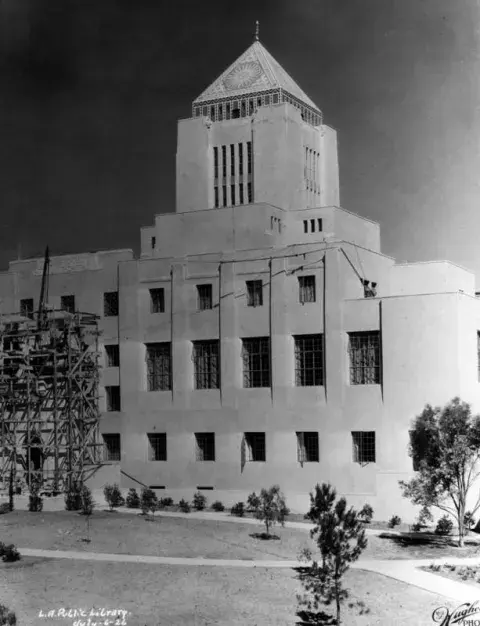
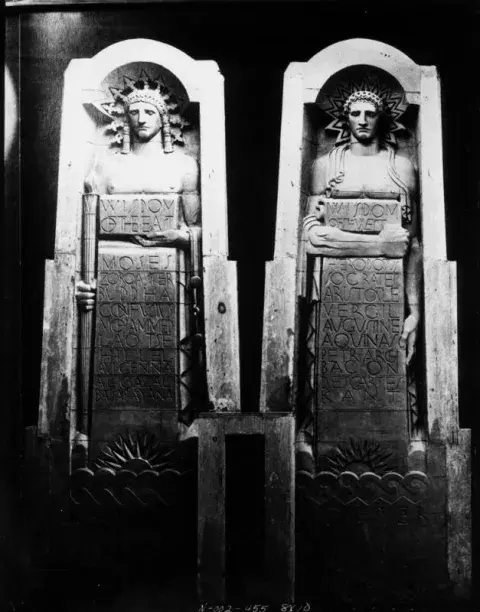
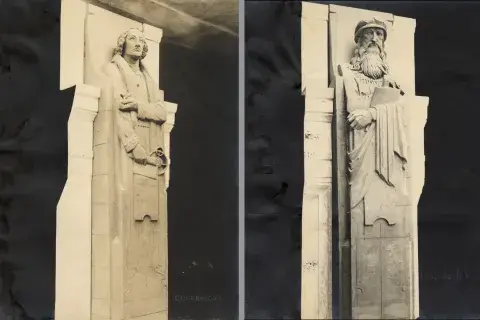
The stone carvers, working under lead carver Edward Ardolino, first tackled the sides of the library on Flower Street and Hope Street. The carving, which took place directly on the building, was a lengthy process. Sculptor Lee Lawrie would create clay models at half scale in his New York studio, cast them in plaster, and send photographs to the Library Board for approval. Once approved by the Board, Lawrie would ship his plaster models from New York to Los Angeles. The carvers would use Lawrie’s models to "rough in" the design on blocks of Indiana limestone embedded into the concrete building, and Edward Ardolino would complete the carving.
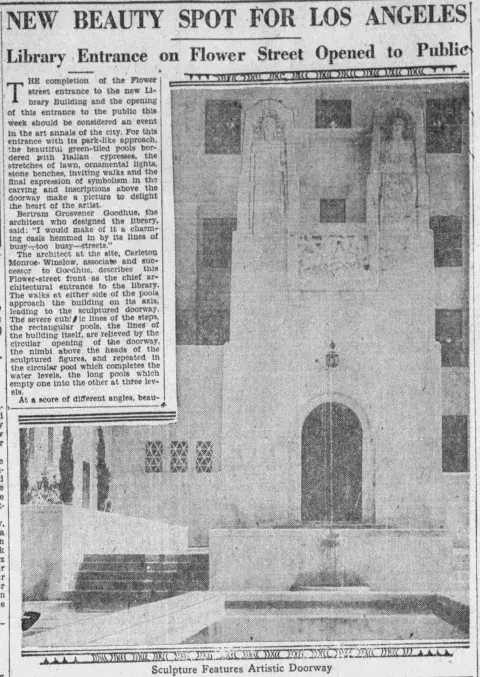
The opening of the library’s main entrance on the Flower Street side more formally took place in the first week of November 1926 as what the Los Angeles Times called "an event in the art annals of the city," and praised its landscaped and pooled entrance with its "inviting walks" featuring stone benches and ornamental lighting. The article also described the carvings as well as the light and shadows to be found on the Flower Street entrance throughout the day. The carving on the Hope Street entrance was completed shortly thereafter, but I’ve yet to find the exact date it was opened to the public. Learn more about the entrance carvings in the article "Themes and Inscriptions: Goodhue Building."
Hope Street (aka South Facade)
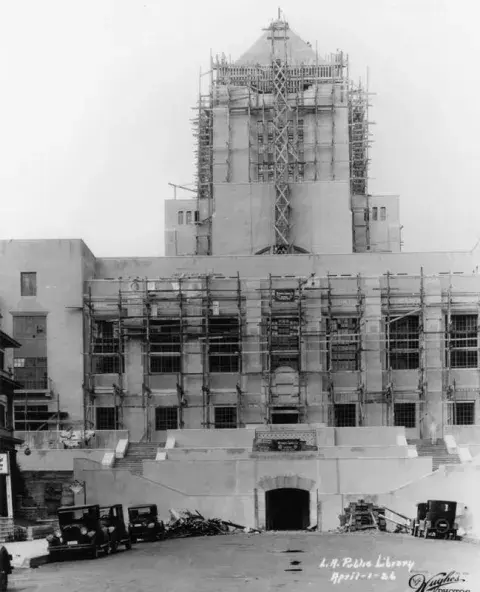
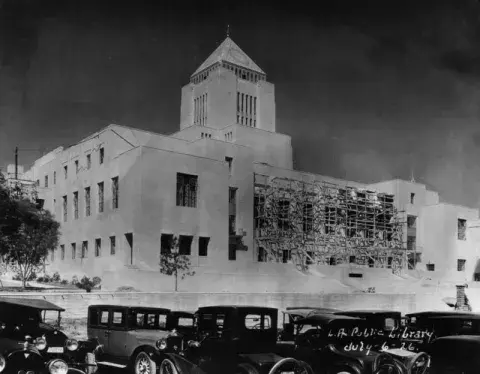
Grand Avenue (aka East Wing)
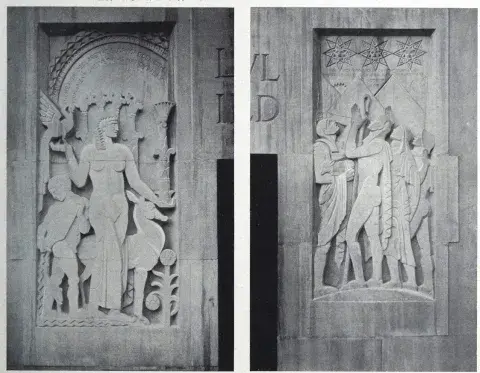
The Garden Terrace door, reached from the corner of Grand Avenue and Fifth Street and through a garden-like space, reopened in February 1927. Prior to being carved, the doorway had welcomed up to 2600 people per day into the new Central Library, according to the Los Angeles Times. For more on the Garden Terrace entrance, check out the article, "Central Library: A Charming Oasis." The Children’s entrance was also on the Grand Avenue side. This part of the original building was demolished to make way for the Tom Bradley Wing.
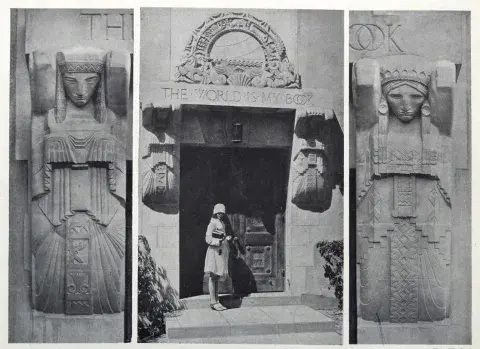
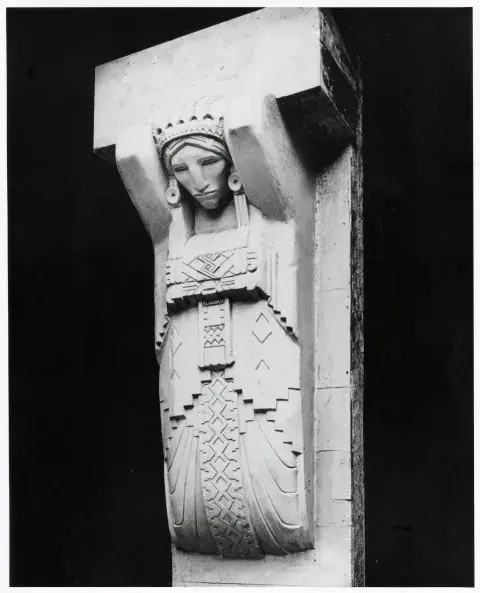
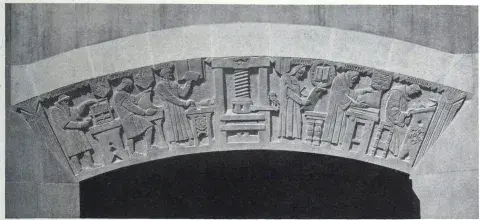
The entrance on Grand Avenue, which led to the children’s department, was closer to the ground and therefore easier to see. Although the Ivanhoe Room, as the children’s room was called, was officially opened in November 1926 to coincide with Children’s Book Week, the door carving had yet to be completed. The carving for this entrance was completed in July 1927.
Fifth Street (aka North Facade)
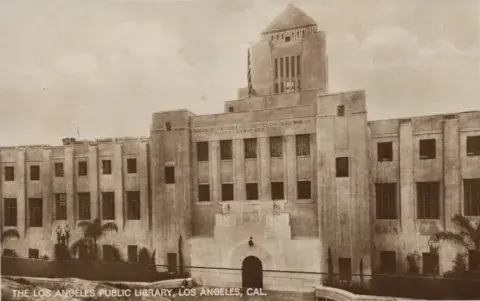
According to Kenneth A. Breisch in The Los Angeles Central Library: Building an Architectural Icon, 1872-1933, the Fifth Street entrance was finished in Spring 1927 and unveiled in May 1927. Surprisingly, few historic photos of this entrance are available.
Who was Edward Ardolino?
"...Mr. Ardolino has proved the most able and at the same time the most reasonable considering the artistic value of the finished work. For many years he has been executing the carving of Lee Lawrie’s work and has his approval and endorsement."
—Architect Bertram Grosvenor Goodhue regarding his choice of stone carver for the Nebraska State Capitol Building in a letter dated December 9, 1922, Lincoln (Nebraska) Journal Star
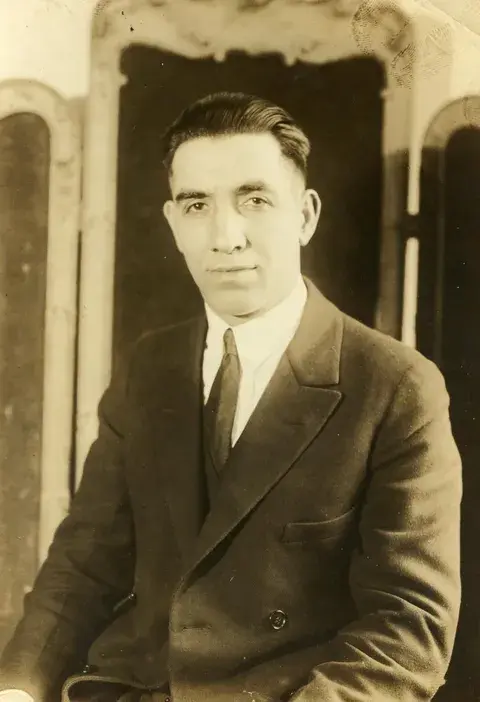
Edward Ardolino was born into a family of stone carvers on November 20, 1883, in Torre Le Nocelle, Italy. As a young man, Ardolino immigrated to the United States and joined his brother’s architectural sculpture firm in Boston before opening his own firm in New York. He was dubbed "the greatest architectural carver in America" in a June 27, 1926, Los Angeles Times article about the soon-to-open Central Library. Ardolino and his stone carvers worked on many Bertram Goodhue and Lee Lawrie collaborations, including the Nebraska State Capitol and the Cathedral of St. John the Divine in New York City.
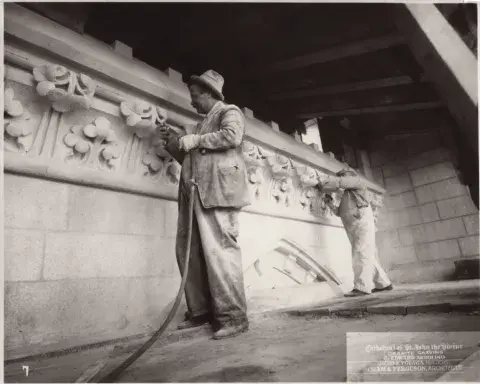
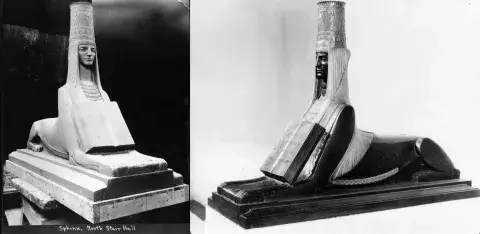
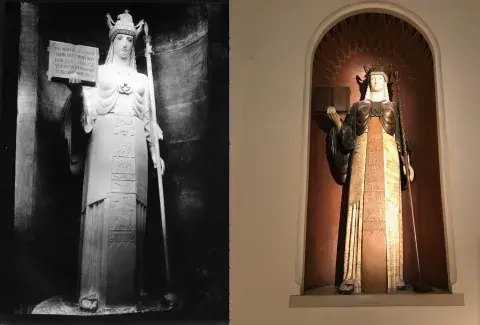
In March 1927, Edward Ardolino received a certificate of merit in the fine arts from the Southern California Chapter of the American Institute of Architects for his work on the Central Library sculptures. After the exterior carving for Central Library was completed, another contract was drawn up for Edward Ardolino Inc. to carve Lee Lawrie’s sculptures Civilization and the two sphinxes. These three sculptures, which still guard the north stairway, were installed in 1930. The next time you visit Central Library, don’t forget to look up as you enter the building and admire the work of Edward Ardolino and his stone carvers.