Una imagen puede decir más que mil palabras, aunque posiblemente haya otra historia escondida fuera del marco.
A primera vista, estas selecciones de la Colección Fotográfica de la LAPL podrían parecer una colección aleatoria de imágenes relacionadas con crímenes del pasado de Los Ángeles. Desde las muertes, tan discutidas y aún sin resolver, de Thelma Todd y Elizabeth Short hasta los casos menos conocidos de la acusada de asesinato Nellie Short y los bandidos recién casados Thomas y Burmah White, todas las fotografías tienen dos cosas en común: Los Angeles Herald y Aggie Underwood.
Agness “Aggie” Underwood entró en el mundo del periodismo por casualidad cuando aceptó un trabajo temporal en Los Angeles Record en 1926 como telefonista para comprarse unas medias nuevas. La energía de la redacción la emocionó y se decidió a convertirse en reportera. Bajo la tutela de Gertrude Price, redactora de la columna femenina del Record , Aggie demostró ser una persona de rápido aprendizaje y con una intuición asombrosa. En pocos años, comenzó a labrarse una reputación como una excelente reportera de sucesos.
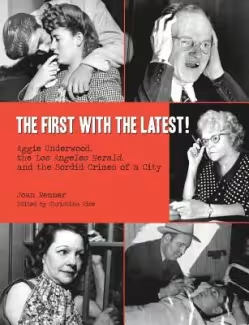
En 1935, Aggie aceptó un puesto en Los Angeles Evening Herald and Express , uno de los dos periódicos locales propiedad de William Randolph Hearst (el otro era Los Angeles Examiner ). Rápidamente estableció una estrecha relación con el fotógrafo Perry Fowler y juntos pasaron la siguiente década documentando muchos de los crímenes más sórdidos de la ciudad, a la vez que ayudaban a su periódico a hacer honor a su lema: "Lo primero con lo último".
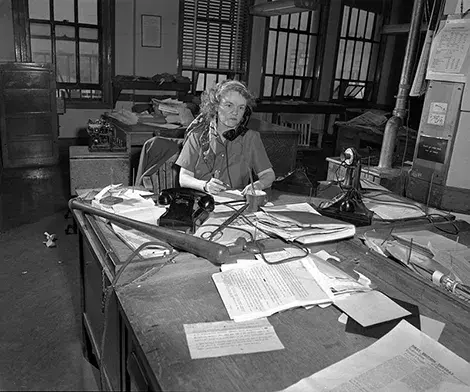
En 1947, mientras cubría el infame caso de la Dalia Negra, Aggie fue ascendida a editora de la sección de la ciudad, convirtiéndose en la primera mujer de un importante periódico metropolitano en ocupar ese puesto. Durante los siguientes veintiún años, Aggie consolidó su reputación como una editora firme pero justa, que guardaba un bate de béisbol en su escritorio para lidiar con publicistas demasiado entusiastas y una pistola de salida en un cajón para cuando la sala de redacción se quedaba demasiado silenciosa. Agness Underwood permaneció como editora de la ciudad tras la fusión del Herald y el Examiner en 1962, y se jubiló en 1968. Falleció en 1984 a los 81 años.
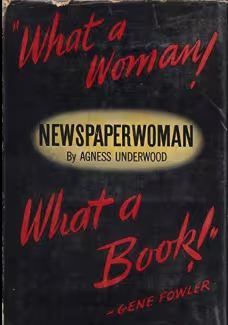
El Los Angeles Herald Examiner cerró en 1989 y la Biblioteca Pública de Los Ángeles adquirió posteriormente su archivo fotográfico. En esos archivos, que cobran vida con luces y sombras, se encuentran imágenes de los casos que Aggie Underwood cubrió como reportera del periódico en las décadas de 1930 y 1940, y que relató en su autobiografía de 1949 , "Newspaperwoman". Las fotos seleccionadas no solo cuentan la historia del crimen en Los Ángeles, sino también de la mujer que estaba cerca (y a veces en el marco) con su fiel bolígrafo y bloc de notas, lista para ser "la primera en contar lo último".
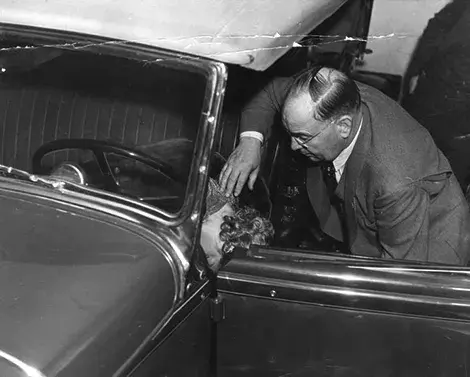
Actress Thelma Todd was found slumped over in driver’s seat of her Lincoln in December 1935. She had succumbed to carbon monoxide poisoning, though the exact circumstances still remain a mystery. Thelma’s autopsy was the first Aggie Underwood ever attended. By the time it was over, all of Aggie’s colleagues had turned green and fled the room—only she and the coroner’s staff remained upright. (Los Angeles Herald Examiner Collection)
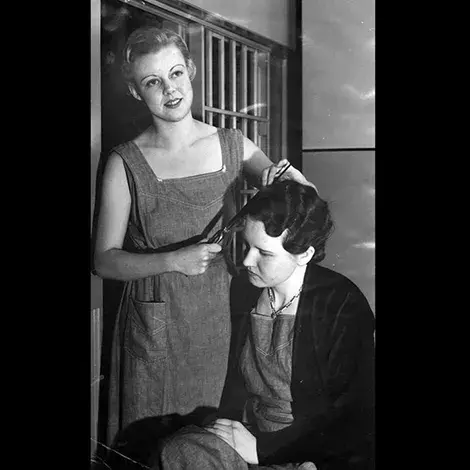
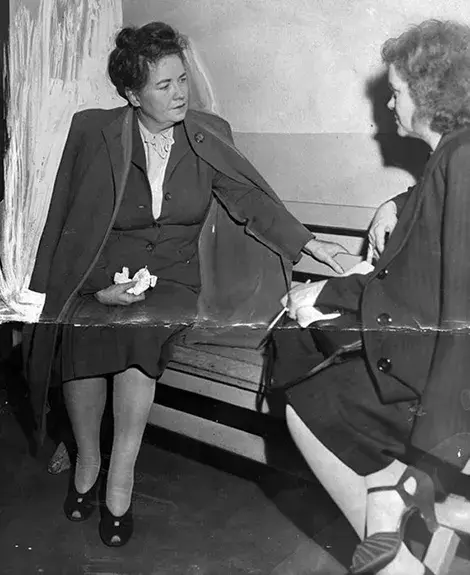
Burmah White (standing) was a hairdresser in Santa Ana before she married Thomas and embarked on a short but bloody life of crime. The 19-year-old is smiling in the photo but during her trial, she was surly and unrepentant. Aggie Underwood interviewed Burmah two years later at Tehachapi prison and her attitude had completely changed. She even wrote an open letter to young women entitled “Crime Never Pays.” (Los Angeles Herald Examiner Collection)
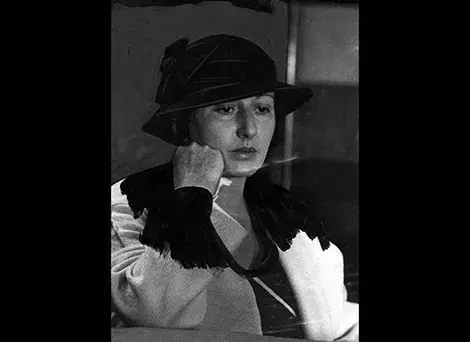
Nellie Madison testifies during her trial for the murder of her husband, Eric. She was convicted and sentenced to hang. She would have been the first woman executed in California, but Aggie Underwood wrote articles in defense of Nellie who had suffered severe physical abuse at the hands of her husband. Aggie’s articles and public outcry convinced the governor to commute Nellie’s sentence to life in prison. Aggie traveled to Tehachapi to deliver the news. Overcome with emotion, Nellie embraced her and wept. She said, “You did it! You did it! I owe it all to you!” (Los Angeles Herald Examiner Collection)
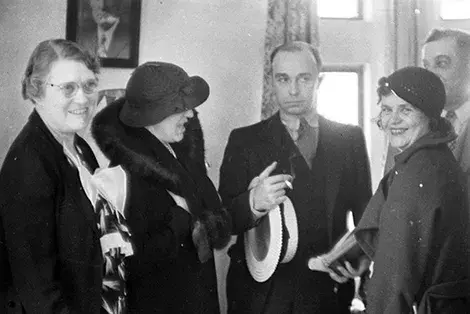
Clara Phillips (center) served 12 years in prison for the 1922 brutal hammer slaying of Alberta Meadows, and had been extradited from Honduras for the trial. Aggie Underwood (right foreground) journeyed to the California Institution for Women, Tehachapi for the killer’s release on June 17, 1935. Her piece on Clara’s return to the world made the front page. Clara left prison with a fanfare, but then slipped quietly into obscurity as a dental assistant in San Diego. (Los Angeles Herald Examiner Collection)
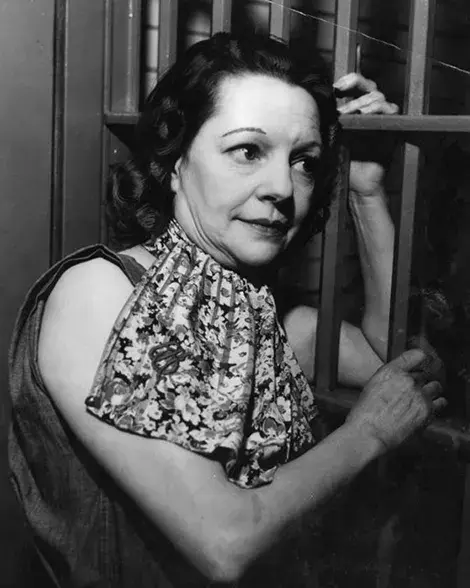
Hazel Glab poses next to the bars in her cell at the Hall of Justice Jail. She was facing trial for the murder of her husband eight years earlier. Prior to her arrest, Hazel had granted Aggie Underwood an exclusive interview. To keep the other newshounds from stealing her thunder, Aggie took Hazel home with her. They arrived to find 40 little girls from Aggie’s daughter’s Girl Scout troop enjoying a potluck dinner. Hazel pitched in and helped serve and then clean up. Unfortunately, there is no merit badge for dining with a murderess. (Los Angeles Herald Examiner Collection)
Leroy Drake cooling his heels in a cell after being charged with the poison murders of his aunt and uncle. This photo was taken by Aggie Underwood’s colleague and friend, Perry Fowler. Perry couldn’t believe his ears when he heard Aggie say to Leroy, “…you poor thing. Now suppose you tell me all about it.” It was part of her technique to get the suspect talking, and it worked perfectly. (Los Angeles Herald Examiner Collection)
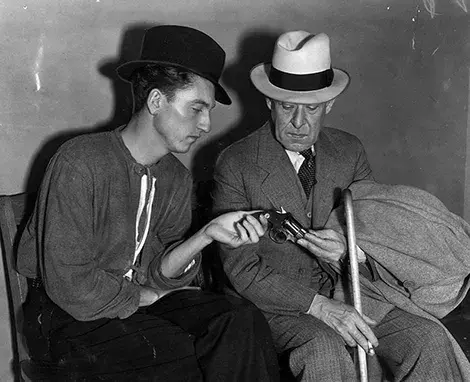
Samuel Whittaker (left) was a retired church organist and a man with a plan. He hired drifter James Culver (right) to fake a holdup. Ostensibly Whittaker wanted to teach his wife not to be careless with her jewelry. Whittaker’s actual plan was to kill both his wife and Culver, and then blame the dead robber for everything. Whittaker was caught out by Aggie Underwood when she saw him wink conspiratorially at Culver during this photo shoot. She told LAPD detective Thad Brown what she’d seen and Whittaker was subsequently busted. (Los Angeles Herald Examiner Collection)
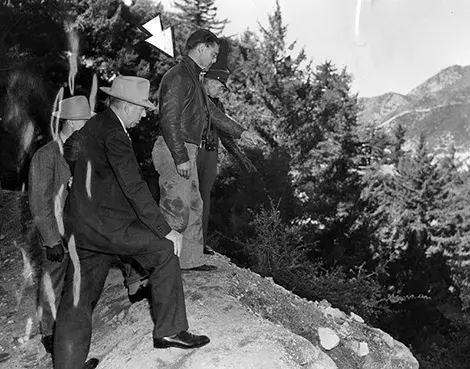
Laurel Crawford points down the slope of 1000 foot cliff over which his automobile plunged killing his entire family. Crawford claimed that he had leaped from the car at the last moment and was spared. When Aggie Underwood arrived she had a hunch that Crawford’s display of grief was phony. Sheriff’s investigator Lieutenant Garner Brown asked her for her opinion. Without hesitation, she said, “I think it smells. He’s guilty as hell.” She was right. and Crawford was later convicted of murdering his family for insurance money. (Los Angeles Herald Examiner Collection)
Louise Peete (left) interviewed by Aggie Underwood (right) for the last time. Louise was sentenced to death in the gas chamber for murder. When the death sentence was handed down Louise turned to Aggie, pinched her under the chin, and said, “Now don’t you cry.” Three years later, Aggie was present for the execution where Peete passed around a box of chocolates to the gathered reporters just before entering the gas chamber. (Los Angeles Herald Examiner Collection)
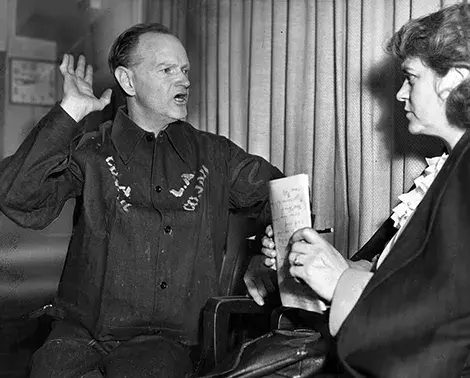
Arthur Eggers raised his right hand and swore to Aggie Underwood that he could not possibly have murdered his wife, Dorothy, or cut off her head and hands because, “As God is my judge, we had rabbits once and I couldn’t even butcher them.” He was ultimately executed for the crime. (Los Angeles Herald Examiner Collection)
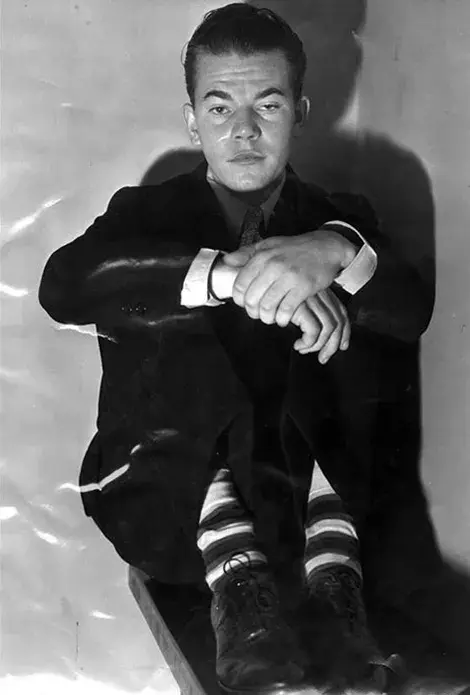
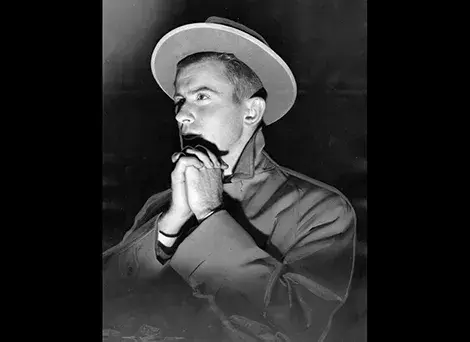
Robert Manley’s portrait looks like a still from a film noir. He was the first suspect in the slaying of Elizabeth Short, aka the Black Dahlia. Aggie Underwood interviewed Manley and concluded that he was innocent—the cops agreed and released him. The infamous unsolved murder was the last case that Aggie covered as a reporter. A few weeks into the case she was promoted to city editor of the Herald. (Los Angeles Herald Examiner Collection)
Aggie at her desk in 1949, two years after becoming the city editor for the Los Angeles Herald and Express. Visible is the baseball bat she kept handy in case she needed to keep overzealous Hollywood press agents in line. Not seen is the starter pistol she also kept on hand in case the newsroom became too quiet. Aggie remained city editor until she retired in 1968. (Los Angeles Herald Examiner Collection)