Memorias de estadounidenses de origen japonés encarcelados durante la Segunda Guerra Mundial

  • Published
  • Updated
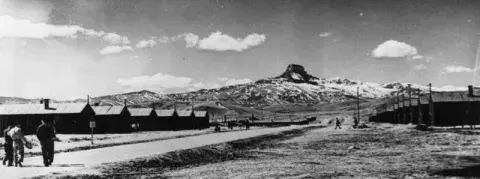
Panoramic view of Heart Mountain Relocation Center, the WWII Japanese American internment camp in Wyoming, [ca 1943]. Shades of L.A.: Japanese American Community

A finales del siglo XIX, la Costa Oeste de Estados Unidos albergaba prósperas comunidades japonesas. Tras la Ley de Exclusión China de 1882, que prohibió la inmigración de trabajadores chinos, se buscaban trabajadores japoneses para diversas industrias, como la agricultura y la pesca. A principios del siglo XX, numerosas mujeres japonesas habían llegado a Estados Unidos para reunirse con sus maridos y formar familias. Localmente, dos comunidades japonesas prosperaron: Little Tokyo, cerca del centro de Los Ángeles, y la comunidad pesquera de Terminal Island, conocida como Fish Harbor. Rafu Shimpo, el periódico en japonés más antiguo de Estados Unidos, comenzó a publicarse en 1903. Se construyeron templos e iglesias, y se fundó la Cámara de Comercio Japonesa-Estadounidense.

Todo cambió para los estadounidenses de origen japonés el 7 de diciembre de 1941, cuando aviones japoneses atacaron la base naval estadounidense de Pearl Harbor. Los estadounidenses de origen japonés rápidamente cayeron bajo sospecha, considerados espías o saboteadores. Su lealtad fue cuestionada, independientemente de su ciudadanía. El 19 de febrero de 1942, Franklin Roosevelt firmó la Orden Ejecutiva 9066, que ordenaba la expulsión y el encarcelamiento de los residentes de la Costa Oeste de ascendencia japonesa.

Una organización civil llamada Autoridad de Reubicación de Guerra estableció rápidamente una red de Centros de Reunión y Centros de Reubicación. Las familias tenían seis días para guardar sus pertenencias y presentarse en un centro de reunión, trayendo solo lo que pudieran cargar. Los centros de reunión solían estar ubicados en hipódromos o recintos feriales. Las familias vivían en establos de caballos acondicionados o en pabellones feriales.

Las familias eran finalmente asignadas a un centro de reubicación, donde vivían durante varios años. Estos eran, en realidad, campos de prisioneros donde las familias compartían barracones. Las cocinas y las letrinas eran comunes. Los centros de reubicación también eran como pequeños pueblos, con oficinas de correos, escuelas y lugares de trabajo para adultos. A menudo había espacio para ganado y cultivos. Estos campos solían estar en zonas aisladas y áridas, con inviernos gélidos y veranos calurosos. Los campos de prisioneros estaban rodeados de alambre de púas y vigilados por guardias en torres. Uno de los centros de reubicación más famosos es Manzanar, a unos 320 kilómetros al norte de Los Ángeles. Hoy en día, es un sitio histórico administrado por el Servicio de Parques Nacionales.

Más de 100,000 estadounidenses de origen japonés, la mayoría ciudadanos estadounidenses, fueron enviados a centros de reubicación lejos de casa, donde se vieron obligados a vivir en condiciones difíciles e incómodas. Tuvieron que dejar atrás a sus mascotas. Numerosos niños pasaron parte de su infancia en campos rodeados de alambre de púas. Las familias perdieron sus hogares, sus negocios y la mayoría de sus pertenencias. El último de los centros de reubicación no cerró hasta marzo de 1946.

Japanese Americans at internment camp

Tras la evacuación de los japoneses, el barrio angelino de Little Tokyo quedó vacío. Los afroamericanos comenzaron a mudarse allí, intentando evadir las leyes de segregación que restringían su residencia y establecimiento de negocios. Little Tokyo pasó a conocerse como Bronzeville. Los nuevos negocios incluían clubes de jazz, bares y restaurantes. Después de la guerra, los afroamericanos se marcharon y, con el tiempo, Little Tokyo volvió a prosperar como una vibrante comunidad japonesa.

Es fundamental que sigamos recordando la experiencia de los estadounidenses de origen japonés durante la Segunda Guerra Mundial. Lamentablemente, muy pocas personas que vivieron esta dura experiencia siguen vivas para contar sus historias. La Sociedad Histórica de Little Tokyo y el Museo Nacional Japonés-Americano son dos instituciones locales que preservan y honran la experiencia de los estadounidenses de origen japonés durante la Segunda Guerra Mundial. El Departamento de Historia de la Biblioteca Central de la Biblioteca Pública de Los Ángeles cuenta con una extensa colección de libros sobre el internamiento de los estadounidenses de origen japonés, que incluye memorias personales y obras pictóricas. Los siguientes títulos representan la amplia y creciente colección del Departamento de Historia.
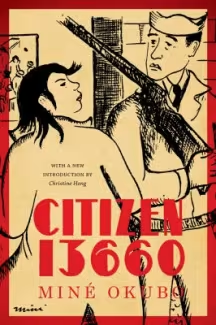
Cover image for Citizen 13660

Citizen 13660

Published in 1946, Citizen 13660 is one of the earliest and one of the most famous first-person accounts of life in the internment camps. It is also one of the first examples of what is now known as a graphic novel. In this book, Mine documents her family’s experiences in relocation centers in California and Utah. 13660 is the identification number assigned to her family. Okubo’s drawings illustrate the conditions in the camps, including spiders and mice in the barracks, the lack of hot water in laundry centers, and the lack of privacy in the latrines.

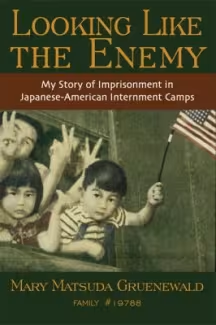
Cover image for Looking Like the Enemy: My Story of Imprisonment in Japanese-American Internment Camps

Looking Like the Enemy: My Story of Imprisonment in Japanese-American Internment Camps

Mary lived her early life in a Japanese island community just north of Tacoma, Washington. She was seventeen years old when her family was assigned the number 19788 and removed from their community. They lived in several relocation centers in California, Wyoming, and Idaho. She describes her fear when she arrived at a relocation center and saw that the barbed wire was facing inward. They were not being sent to camps for their protection, as they had been told. They were prisoners.

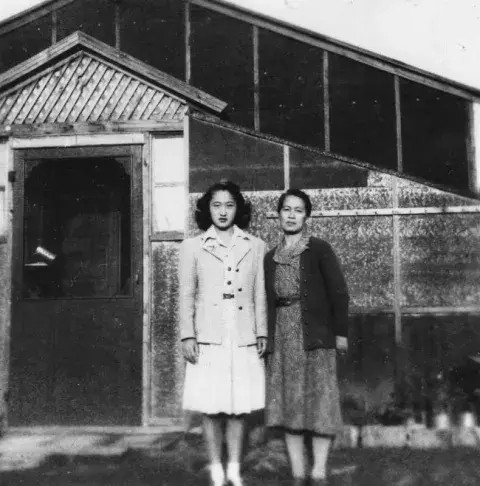
Japanese quarters at Santa Anita
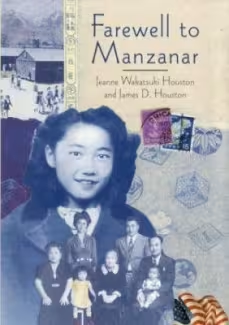
Cover image for Farewell to Manzanar: A True Story of Japanese American Experience During and After the World War I

Farewell to Manzanar: A True Story of Japanese American Experience During and After the World War I

First published in 1973, Farewell to Manzanar has become a classic work, widely taught in schools. Jeanne was seven when her family was ordered to close their fishing business and leave their Long Beach home with only what they could carry. She writes of attempts at normalcy in Manzanar, including dances and a dance band, and sports teams. She also describes the lack of space and privacy. Her father struggled with drinking. He was arrested and sent to a prison camp in North Dakota for a year before rejoining the family at Manzanar. After three years in Manzanar, the Wakatsuki family returned to Long Beach and lived in public housing. Wakatsuki Houston was inspired to write her memoir when she returned to Manzanar with her husband in 1972.

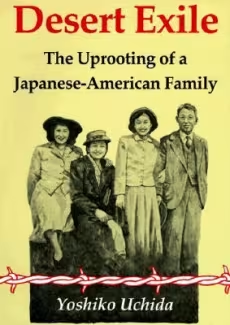
Cover image for Desert Exile: The Uprooting of a Japanese-American Family

Desert Exile: The Uprooting of a Japanese-American Family

Yoshika Uchida was born in Alameda, California and raised in Berkeley. During her senior year at U.C. Berkeley, her family was sent to the assembly center at the Tanforan Racetrack, just south of San Francisco. They lived in converted horse stables for several months before being sent to the Topaz Relocation Center in Utah. Like Manzanar, Topaz was hot in the summer and bitterly cold in the winter. Housing was hastily constructed and inadequate. Latrines were shared and lacked basic privacy features, such as stall dividers. Yoshiko’s experience there shaped her future. In 1971, she wrote a children’s novel called Journey to Topaz, based largely on her experience there. She went on to write numerous children’s books based on the Japanese American experience.

Cover image for Gasa Gasa Girl Goes to Camp: A Nisei Youth Behind A World War II Fence

Gasa Gasa Girl Goes to Camp: A Nisei Youth Behind A World War II Fence

Lily was born in Los Angeles. When she was ten years old, her family was sent first to the Santa Anita assembly center and then to the Amache Relocation Center in Colorado. Her memoir of her time in the camp includes water colors, family photos, and drawings. She writes of the difficulty of approaching adolescence in the camp, and of her conflicting emotions over her identity as an American of Japanese descent. Her memories include a birthday celebration featuring a cake made of crackers, peanut butter and jam.

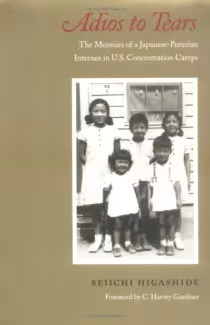
Adios to Tears: The Memoirs of a Japanese-Peruvian Internee in U.S. Concentration Camps

Adios to Tears: The Memoirs of a Japanese-Peruvian Internee in U.S. Concentration Camps

Seiichi Higashide brings a unique perspective to his memoir. He was born in Japan and emigrated to Peru in 1931. At the outbreak of World War II, he and other Latin American Japanese were deported to the United States. He was held at the Immigration and Naturalization facility in Texas for over two years. After the war, he became an American citizen and was active in the movement seeking reparations for Japanese American internees.

Japanese American women at internment camp
Cover image for My Life in Camps During the War and More

My Life in Camps During the War and More

Saito wrote this book for his nieces and nephews, so that they would know what their family had experienced during World War II. He was eight years old when his family had to carry their belongings to a storage facility. They were put on a train headed from their hometown of San Jose to the Santa Anita Assembly Center near Los Angeles. The family, assigned the number 32418, lived in horse stall barracks and slept on mattresses filled with straw. His relatives were eventually split up. He and his immediate family were sent to Heart Mountain, Wyoming. He speaks of the freezing conditions and having to eat standing up in the mess hall. Families from California were not equipped for the Wyoming climate. He states: “We are locked away by the Federal government, who think we may be spies for a foreign country that most of us have no ties with.”

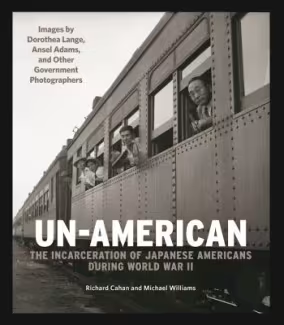
Cover image for Un-American: The Incarceration of Japanese Americans During World War II

Un-American: The Incarceration of Japanese Americans During World War II

The Federal government hired photographers to document the process of Japanese Americans being moved from their homes to internment camps. Among these photographers was the noted photojournalist and photographer, Dorothea Lange. Ansel Adams, perhaps best known for his images of Yosemite, obtained permission to photograph inside Manzanar. He later stated that his Manzanar photos were his most important work. This book collects 170 poignant black and white images taken before, during, and after the relocation of Japanese Americans. Lange photographed families in front of their homes and on their farms shortly before they would be forced to leave, highlighting all that was left behind. Numerous photos show the conditions in the camps and document daily life, including weddings and funerals.

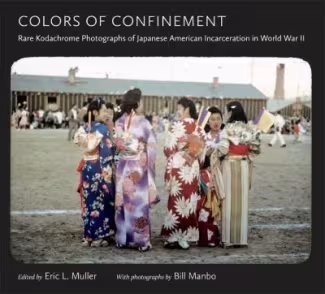
Cover image for Colors of Confinement: Rare Kodachrome Photographs of Japanese American Incarceration in World War

Colors of Confinement: Rare Kodachrome Photographs of Japanese American Incarceration in World War

Manbo and his family were forced to leave their Hollywood home and were eventually sent to the relocation center in Heart Mountain, Wyoming. He used his Kodak camera to take rare color photographs of life inside the camps. Many of these photographs show normal daily life: parades, sports events, and children playing. The guard towers and the barbed wire are reminders that the subjects of these photographs were prisoners.

Heart Mountain Relocation Center