Interview With an Author: Meghan O'Gieblyn

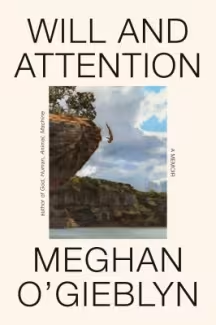
Meghan O'Gieblyn is the author of the books Will and Attention, God Human Animal Machine, and Interior States. She has written essays, features, and criticism for Harper's Magazine, The New Yorker, n+1, The Point, The Baffler, Wired, The Yale Review, The New York Review of Books, The Guardian, The New York Times, BookForum, and other publications. She is the recipient of three Pushcart Prizes and the 2023 Benjamin H. Danks Award from the American Academy of Arts and Letters, and her essays have been included in The Best American Essays and The Contemporary American Essay anthologies. She lives in Madison, Wisconsin.
We spoke with O'Gieblyn about her "double return" to addiction and religion, the failure of will in approaching challenges, and the relationship of attention to creative practice.
To start off, could you tell us about Will and Attention—what this book is, and where it came from?
For some background, I've written a lot over the years about my experience with Christianity. I grew up in a fundamentalist, evangelical Christian household, studied theology at a small Bible college, Moody Bible Institute, and ended up leaving the faith in my early 20s after having something of a faith crisis. I identified as an atheist for a long time. I had a pretty bad addiction that developed during the years that I left Bible school, then got sober in my late twenties. I started writing about Christianity around that time because I was still fascinated by it, and I was trying to make sense of my own experience in the church.
This book begins during a period that started about eight years ago, when I had this double return to things from earlier in my life. First, I became unexpectedly attracted to Christianity, not just as an intellectual subject, but as a spiritual practice. I started going to Mass, meeting with a priest, and considering conversion. I didn't ultimately convert, but shortly after that, I did return to drinking. This was after I'd been sober for 11 years.
It was a completely bewildering experience because these were things that I thought I understood intellectually. I knew why religion hadn't worked for me in the past and all of these intellectual problems I had with the theology. I also knew from experience that drinking ruined everything and made my life very bad and unmanageable. I returned to them anyway, and I was faced with this experience that I think a lot of people have had at one point or another, whether it's addiction or something else, which is: "Why am I doing this thing that I know is bad for me?"
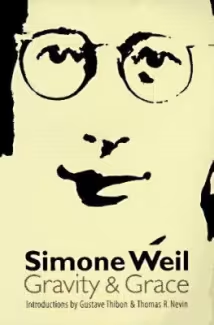
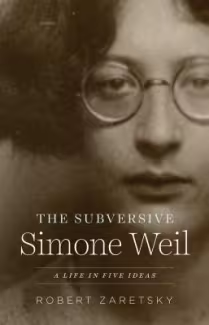
The book began as a way to make sense of those two returns. It was spurred in part by this quote I came across by the French mystic and philosopher Simone Weil: "We have to try to cure our faults by attention and not by will." I really identified with the notion that willpower is limited or ineffective, because that was my experience with addiction. I couldn't will myself to stop drinking, or to control my drinking, which had failed many times. I had also been unable to will myself to believe in God, no matter how much I wanted to.
I was curious about this idea of attention, which you don't often see paired with will or construed as an opposite to will. The book began as an exploration of those two ideas.
Can you talk about the concept of 'will' and what it means in this book?
I think about will as being narrowly zeroed in, focused on a problem, and trying through brute effort to solve it. What that looked like for me in addiction was trying to limit how many drinks I had, trying to say, "Okay, I'm only going to drink during these certain days of the week." For me, that failed because I always overstepped the boundaries I'd set for myself.
I have enormous will in other areas of my life. My will is very effective when it comes to completing writing assignments on time, for example, or even with other substances. I quit smoking, just cold turkey. With alcohol, I just could not control it. What worked for me finally, and what kept me sober for 11 years, was admitting that I was out of control, basically surrendering to this truth that I am an alcoholic. I have a disease that means that I don't know what's going to happen when I start drinking, and it's difficult, even, to swear off drinking because I talk myself back into doing it again.
I got sober in recovery communities by listening to other people tell their stories and hearing their experiences. That, for me, was a completely different way of going about the problem. Instead of persisting in thinking, "Okay, how can I try to just grit my teeth and try harder?" I finally admitted that I was mystified by my own actions and needed help to get out of that cycle. Success required defeat, paradoxically.
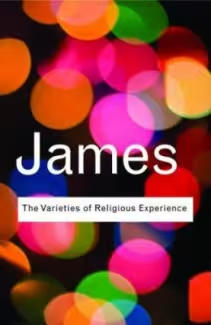
William James talks about this in The Varieties of Religious Experience. He discusses this type of person he calls the "sick soul," or the divided soul: people who are at war with themselves over some inner problem, and the more they fight, the worse the problem gets. The solution for these people often comes through what he calls a "crisis of self-surrender," where they finally admit they can't solve the problem on their own. And then this remarkable thing happens, where all of a sudden what felt impossible becomes possible, even easy.
James did not believe that this was supernatural by any means. He was writing about religious experiences, but he attributed these transformations to the unconscious. When your mind is especially rigid, beating your head against the wall, you're often ignoring these wider capacities within your brain, like imagination, that can facilitate the solution you're seeking. I think about it a lot in terms of the creative life too, or even intellectual problems. When I'm writing, I often get stuck on an obstacle, or I have writer's block, and I can't get through. In those moments, staying at your desk, gritting your teeth, and trying to solve the problem through sheer determination is counterproductive. What works is going for a walk or taking a shower, turning your attention elsewhere. Physicists have this phrase, "The three B's," about places that are most conducive to breakthroughs: the bed, the bath, and the bus, and the bath. Everyone has had this experience, where a solution comes to you, seemingly out of nowhere, as you're waking up from a nap, or when you're sitting on a bus looking out the window.
I was fascinated by the ways in which a wider, more open and receptive mode of attention might be a better route out of certain problems, as opposed to brute force.
To follow from that, can you talk about attention?
I think the tricky thing with Weil's concept of attention is that it's very different from how we talk about attention in contemporary life. When I first encountered the Weil quote about attention and will, my thought was: doesn't attention require a lot of willpower? But there's another type of attention that we've largely forgotten about, which is open, receptive attention. It's the mindset that you might cultivate in meditation, or when you're trying to understand a painting and have to keep looking at it, moving from one side of the room to the other to consider it from different angles. Weil called it "negative effort." What you're trying to do in those moments is to look, to listen, and to wait, and to try to see the object properly without the distortions of your ego.
The idea is that when you're trying really hard to grasp something, you're myopic; you're not seeing the whole picture. Iris Murdoch, another writer and philosopher I discuss at length in the book, argued that we can't act properly in a world that we can't see. When you're trying to solve a personal problem, or an artistic or creative problem, the most effective thing is often to just look and listen without trying to act. In my experience, this can lead to the kind of insight that is completely unexpected and that you couldn't have gotten through a more active engagement with the problem.
The book's name comes from a Simone Weil quote. Could you explain a little bit about Weil and the ideas that come into the book from her?
Weil was a French philosopher and mystic. She was born in Paris into a bourgeois secular Jewish family. Her dad was a doctor. She studied philosophy at a very prestigious school, the École normale supérieure, and taught philosophy for many years in industrial cities. She was really involved in the trade union movement and various leftist circles in France in the 1930s. She wrote a lot of political essays for leftist journals during those years.
Then, in her late 20s, she had a series of experiences that led her to become attracted to Christianity. She writes about how, while on vacation in Italy, she walked into a chapel in Assisi and immediately had this overwhelming impulse to kneel and pray. She began attending Mass after that. She was meeting with a Dominican priest. She was also reading a lot of Eastern spiritual sources, including the Upanishads and some Zen texts.
She kept notebooks where she began jotting down some very strange spiritual writing that she did not ever try to publish. She was essentially trying to synthesize all these ideas from Christianity and from Eastern spirituality, and she ended up creating a startling and totally original theology. She had her own terms that she coined, like "de-creation," which is essentially this idea of relinquishing the ego. She believed that attention was one means of doing that. She said we have to pay attention to the point where the 'I' disappears.
Her ideas about God were very strange, too. She talked about God being the void, and said we have to fix our attention on the void, which I take it to be a form of negative theology. Anything that we can say or imagine about God is anthropomorphic, so in order to connect with some greater intelligence in the universe, you have to let go of all those preconceived notions about God.
She is most known, for better or for worse, for how she died. She fasted and starved herself for many periods of her life, going back to childhood. There's a lot of debate about whether this was a spiritual discipline. Sometimes it was for political reasons. A lot of people have said she was just a garden-variety anorexic. She took her fasting to such an extreme that when she was 34 years old, she came down with tuberculosis and was taken to the hospital, refused food on her deathbed. The coroner ruled her death a suicide because she refused to eat.
After her spiritual work was published, some years after her death, she slowly gained a following through writers like Camus and T.S. Eliot, who became fascinated by her thinking. I'd read her political writing years before I came to her spiritual writing, which I'd resisted because it struck me as so severe and extreme. She says at one point that every time she thinks about Christ on the cross, she commits the sin of envy. There's this strain of masochism running through her writing.
At the same time, I found her writing about willpower to be incredibly insightful. She captured so precisely the experience of being at war with oneself, trying to overcome some persistent problem. And she documented this with such wisdom and clarity, despite the fact that she did not overcome her own internal struggles in her lifetime.
You have this dual return in the book: first to religion and then to drinking. Is there a relationship between those? In which ways are they tied together, or are they not?
That's definitely something I wanted to explore in the book. I sensed that they were tied together. For me, I think the primary link between them is the experience of surrender. In the Christian tradition in which I was raised, there's this idea that moral aspiration through sheer determination can only get you so far. At some point, because of original sin, because we're doomed to failure all the time, you have to rely on grace. Basically, you have to give up your efforts, even your efforts to be good, and allow God to transform you in some way that is mysterious and that you can't understand.
I know from my experience as a Christian that there is a deep sense of relief that comes when you realize you're not in control and turn a situation, or a sin, over to God. You're giving up your free choice, but you're also liberating yourself from all the anxiety, the chatter in your head, that comes from trying to control your life. That's exactly what alcohol felt like for me too: you are surrendering to some larger force, giving up again the rational mind, your better judgment, your critical mind, all these parts of the self that you lose access to when you're intoxicated.
For me, addiction was a very destructive substitute for religion. The root word of addiction, in Latin, it's addicere, and one meaning of that word is "devotion." Alongside the promise of surrender, there is, in both addiction and religion, this idea of giving your life over to one overarching thing. The thing that's so baffling about addiction for people who are outside of it and watching somebody struggle is that the addict appears willing to sacrifice anything and everything for this one thing. I'm thinking about people who lose their jobs, who lose their marriages, all for this one substance, which seems to have some kind of ultimate value that makes it capable of transcending everything else in the person's life.
There's this parable in the New Testament about the pearl of great price, which is about this guy who is willing to sell all of his possessions just to have this one single pearl. In biblical commentary, the pearl is often seen as a metaphor about the kingdom of heaven, which should be something you are willing to make any sacrifice for. But it's also very similar to what happens when people are enslaved to an addiction.
Near the conclusion of the book, you seem to arrive at a rejection of the idea of non-dualism. You basically come to the conclusion that you are in fact, dual. Can you explain that?
It's funny because it's a conclusion that I didn't arrive at until I had finished writing the book. I really thought that by writing this book, I was going to find some solution to becoming whole. [chuckles] Then of course, I got to the end and thought: "Is that really what we want?"
The thing that distinguishes us as humans, as opposed to both animals and machines, is that we have this sense of inner doubleness. It's not just that we have desires. It's that we're capable of wanting different desires or changing those desires. Self-awareness is basically built on that two-ness. Hannah Arendt called consciousness the "two-in-one," the notion being that anytime you're thinking, you're in dialogue with yourself.
We associate that doubleness with a lot of negative thought patterns, like self-criticism or self-doubt, but it's also the basis of any moral life. It's what allows you to bear witness to your actions and ask yourself, for example, "Is this really the person I want to be?"
Arendt believed that to reject that dialogue with oneself is to become like Adolf Eichmann. This was her example of somebody who just deferred to simplistic bureaucratic clichés and refused to think. The way she put it was that he refused to come home to himself. I love that phrase, which I take to mean a refusal to look at yourself in the mirror, to have these internal ethical debates with oneself.
I think there's something really beautiful in the fact that we can be in dialogue with ourselves. This whole book was just basically me arguing with myself—and also with other writers and thinkers. The delusion I had throughout much of my life was that I could eliminate this second self, so that I'd feel unified the way I did when I was intoxicated, or the way I'd heard people speak about feeling during mystical experiences. But multiplicity is a beautiful thing, so long as it can be harmonized. Socrates has this very beautiful metaphor where he said, essentially, "I don't want to be out of tune with myself. I want to be in harmony with myself." Harmony requires two notes, but they're synthesized. This is what I'm continually striving to work toward in my own spiritual practices, trying to harmonize those warring desires within myself. And I've come to see harmonizing oneself as the real work of attention.
That begs the question: where do you feel you've arrived? You've gone on a journey through this book, and now where do you find yourself?
It's difficult to talk about what I believe spiritually because I've let go of a lot of certainties. I do believe in something transcendent. I believe there's some sort of intelligence in the universe, but it's not the God of my childhood, which is to say this intensely personal entity who had a special plan for my life. I became attracted to this idea I encountered in Simone Weil's work, and also in Plotinus, which is that "providence is of the whole." There is some sort of order and goodness in the universe, but it's not about any individual person's life. It's about the whole picture.
Part of my spiritual practice is about simply striving to see myself properly within that whole order, and to understand that even when things are going poorly in my own life, there's still an essential grace in the world that keeps everything going. Sometimes it's very basic: the fact that there's something instead of nothing. That's really the basis of the spirituality that I've come to.
Probably the biggest insight that I discovered while writing the book, though, was this notion about attention as an alternative to willpower. Iris Murdoch, who built a lot of her moral philosophy on Weil's ideas, writes about how we tend to think of willpower as the ability to act deliberately and effectively in a single moment of choice, or a moment of temptation: you're an alcoholic who's faced with a drink. You're a parent who is about to lose your temper with your children. Murdoch believed that when you're in that moment, you are incapable really of choosing. It's not just because you're in an emotional state. It's also because everything you've done in your life has already made you the kind of person who is going to choose one course of action. You're not really free in that moment.
Murdoch and Weil were not determinists, though. They did believe in free will, but that freedom was something that could only be exercised in a more daily, piecemeal way by trying to condition our desires. The idea is that if you are turning your attention each day toward something, whether a moral quality, like wisdom, or some ultimate ideal, like God, you're doing the work that will ultimately lead you to make the right decision in a moment of choice. If you're doing that slow work of attention, you're not going to feel at war with yourself when the chips are down. You'll choose the good almost automatically because, again, you've conditioned your mind, or perhaps even your unconscious, to want it.
I like this as a theory of self-transformation. It's not about trying to be strong in moments of temptation. It's about the smaller, indirect choices that I make every day: Am I connecting with other people in my life? Am I interrogating my own thoughts and making sure that I'm not developing fantasies? Because that's where it starts, for me: in the mind. I try to be vigilant about my thought patterns, because indulging in certain thoughts or fantasies do eventually make it impossible to resist going astray.
I'm glad you got to that. I wanted to ask about this idea of the 'attention to the good' as a practice. That's Murdoch?
Yes, that's mostly Murdoch in her book—I have it right here, actually—The Sovereignty of Good. It's a very slender book, and one of her most accessible philosophical texts. You don't have to have experience formally studying philosophy to read and benefit from it.
What is this 'good'? Where does the good reside?
This is the trickiest question, probably one that's impossible [laughter] to answer. Murdoch and Weil were both Platonists. They believe that good is something real and transcendent, like a Platonic form or something. It feels very archaic and very different from how we tend to think about goodness or truth today, which is to say as linguistic constructs that differ across cultures and languages.
I've moved a bit closer to that view, even though it can sound a bit mystical. It's true that "the good" is very difficult to describe, or even talk about. It's this ultimate abstraction that you can't define without referring to other abstractions: What is good is what is true, or what is good is what is beautiful. But those words can similarly only be defined in terms of other abstractions, and it's just this endless cycle.
What Murdoch says is, "Well, but we know intuitively what people mean when they're talking about those things." She believed there was some sort of reality that connected all of these things, love, truth, beauty, and the good, and that it was so difficult to describe them because they express themselves in so many different, contextually distinct, specific human actions and objects in the world. She said, good is like the sun. You can't look directly at it because it's too bright. It's overwhelming. It's something we can't understand. But we can see objects that are illuminated by light, and we know that there's something else there, something that is beyond this world, possibly.
I can't say, metaphysically, whether that idea is true, obviously, but practically, it's been useful to imagine striving for something that is non-negotiable. That's the great thing about having some ultimate ideal. If I think: "I'm going to be sober because it makes me a better writer, or it makes me a better partner, or it makes my life more successful," or something like that, it doesn't work. I have negotiated my way out of those things when I wanted to drink. Sometimes I don't want a stable life. Or sometimes my stable life feels kind of depressing and dull.
The thing that's so bewildering about an addiction is it does have that transcendent position in your life where you're willing to sacrifice anything for it. In order to counteract that, you need some other absolute that serves as a rationale for the life that you are living. For me, that's just trying to be a good person and live in a way that's not ugly. I think about it in aesthetic terms. When I drink, my life gets very ugly; my actions, the way I hurt people is really, really ugly. Goodness is beautiful, and you can't argue with beauty. We love it for its own sake.
This idea of the good reminded me of the way we saw people responding recently to immigration raids—the way that it felt like a very natural thing for people to respond in a certain way, almost without thinking, simply because they felt it to be the right thing or the good thing.
Oh, that's such a great example. It's easy to think about truth through the lens of these political binaries. Like, "Well, people on the left have one point of view, and that's their truth, and then people on the right have their truth." But there was this moment last winter where that relativism broke down. Many people I know, including some evangelical Christians who had voted for Trump, said, essentially, "I can't stand by and watch this anymore."
It's so powerful to witness moments like that, where there emerges some deeper consensus about the good, a recognition of some collective conscience. It's not satisfying to me, or to anyone who is moved by injustice, to say, "Well, this is my truth, but other people who are supporting ICE have a different truth." No, there are some things that are just wrong. We know intuitively that they're wrong, and people who deny that are clearly deluded or lying to themselves in some way.
What's the connection between this concept of 'attention' and the process of writing?
Writing is interesting because it often feels like an act of will. When I tell people that I've published three books, they often say, "Oh, you must have such great willpower and discipline." Writing for me has never felt like discipline. Yes, it's one of the hardest things I do. It involves a great deal of struggle, but it's almost compulsive. I feel like I can't not write, especially when it comes to something I care about deeply.
It's also true that there's a point during the writing process, especially when working on something very long, when you realize that there's no direct line between what you want to write and what you're going to end up writing. Anytime you enter into a complex system, you realize that you don't have top-down control. I'm thinking about the standard engineering mindset: I want to make this argument, and I'm going to therefore do X, Y, and Z.
I don't think any kind of artistic practice works like that. You realize as you're writing that your assumptions are not right. Or that they're more complicated than you anticipated. The work surprises you, and sometimes takes on a life of its own. There's a way of writing where you just ignore all those contingencies, and the discoveries that come along with them, and ignore this whole complex process that's happening around you. A lot of bad writing comes from that rigid approach, this willful insistence on telling the story one way, or sticking to a "plan."
The best writing, on the other hand, comes from a place of open receptivity, where you write something, and then you think about it. You read it again, you sit with it over a long period of time and try to listen to what the work is actually telling you about yourself, or about the world, and then try to incorporate that into the process. Ideally, when it works well, you end up with something that's so much bigger and more expansive and surprising than what you thought you were writing at the beginning.
I teach writing workshops, and I'm always trying to convey this to my students. I think anybody who's engaged in a creative practice understands that these moments of surprise and discovery are the whole game.
Are there any other books you'd like to mention that were influential in this book, or your work in general?
At the risk of sounding absurd, Augustine's Confessions was a source of inspiration and courage as I was writing this. I'm so amazed, whenever I return to that book, by the fact that something that was written in the 4th century can still feel so incredibly relevant and alive, capable of offering insight into problems I've struggled with myself. He was really a genius when it came to articulating his inner life, especially the experience of having two wills, or wanting two things. He describes having a will that wants the things of the world and a will that wants spiritual things and says that they're constantly at war within him.
That book was important to me formally because one of the things I dreaded as I was writing this book was producing another standard recovery narrative. There are writers whom I admire who have written about addiction extraordinarily well, and in ways that feel fresh and original, Melissa Febos and Leslie Jamison, among others. Their work has given me a lot of courage and inspiration.
The breakthrough for me was when I started to conceive of the book not necessarily as a recovery narrative, but as part of a larger tradition of spiritual autobiography, a genre that really began with the Confessions. I was interested in both the possibilities and the limitations of that form, which I write about in the book, even as I'm working within its constraints. I guess I think of the book as a spiritual autobiography that's in conversation with the lineage of spiritual autobiography.
That reminds me of your writing about two ways of viewing autobiography. The first turns complex experience into a predictable arc. But there's also this idea, apparently coming out of the tradition of spiritual autobiography, that it has this possibility of working through something.
Yes, working through it in a more circular manner. The thing that bothered me about a lot of recovery narratives was not the trauma porn or whatever else people complain about in the genre. It was this linear arc "I was lost and now I'm found. I was sick and now I'm well." That is part of spiritual autobiography, too, this idea that you died and were born again, and you now have this second life that gives you a detached position of authority to speak back on your old life, as though it's completed.
Firstly, that was not my story. I was lost. I was found. I was lost again. [chuckles] It's like you keep going around in circles. I'd also become suspicious of that authority, of this idea that you can project yourself out of life and speak about it with some sort of privileged access to your motives. I began this book from a place of utter bewilderment. I didn't know why I was doing what I was doing.
I guess I was trying to find a way out of that arc. What I discovered along the way, of course, is that a lot of spiritual autobiography is actually very circular. If you read Thomas Merton's The Seven Storey Mountain, for example, or even Bill Wilson's story in the text of Alcoholics Anonymous, the journey toward transformation is quite repetitive and recursive. Merton keeps being drawn to religious life, but then he's back at the jazz scene again. Wilson keeps trying to get sober, has these moments of insight and self-knowledge, and then he returns to the bar.
Oftentimes, it takes a lot of relapsing, or returning to sin, before you reach that moment of transformation. I wanted to do justice to the complexity of those journeys in my book as well.